Juicy summer fruit salad works best when every piece stays crisp, bright, and distinct, and the dressing just ties it together instead of drowning it. The right balance is what keeps the bowl tasting fresh all the way to the bottom. When the fruit is cut to similar sizes and the dressing is light, you get a salad that looks like a centerpiece and eats like the best part of the table.
The honey-lime dressing is doing a lot of quiet work here. Honey softens the sharp edge of the lime juice, while the zest adds the citrus aroma that makes the whole bowl smell fresh the second it hits the fruit. A short chill gives the juices time to mingle without turning the softer berries mushy, which is the main mistake in fruit salad recipes that sit too long before serving.
Below, I walk through the one chilling step that matters, how to keep the berries from breaking down, and a few easy swaps if you need to work with what’s already in your kitchen.
The honey-lime dressing was light enough to keep the fruit tasting fresh, and the mint gave it a clean finish. I chilled it for 20 minutes like suggested and the watermelon stayed crisp instead of turning watery.
Save this honey-lime summer fruit salad for the next potluck when you want something cold, colorful, and gone fast.
The Trick to Fruit Salad That Doesn’t Turn Watery
The biggest problem with fruit salad isn’t flavor. It’s timing. Once cut fruit sits around, some of it starts releasing juice fast, and the whole bowl can go from glossy to soggy before anyone gets a second serving. The fix is to use fruit that holds its shape well, keep the pieces dry after washing, and add the dressing right before the short chill.
Watermelon and berries are the first to soften, so the cut size matters. Bigger chunks stay cleaner and less fragile than tiny dice. Pineapple, grapes, and kiwi bring structure and contrast, which keeps the salad from feeling mushy even after the honey-lime dressing has had time to settle in.
- Watermelon — Use it cold and cut it into cubes, not wedges. Extra juice is the enemy here, so let any cut pieces drain briefly before they go in the bowl.
- Strawberries — Halve them or quarter larger berries. Whole berries don’t absorb enough dressing, while tiny cuts collapse too fast.
- Pineapple — Fresh pineapple keeps the bowl bright and sturdy. Canned pineapple works in a pinch, but drain it well and expect a softer texture.
- Honey and lime — This is the dressing, not a glaze. If you add too much, the fruit starts tasting wet instead of fresh.
What Each Ingredient Is Actually Doing in This Bowl
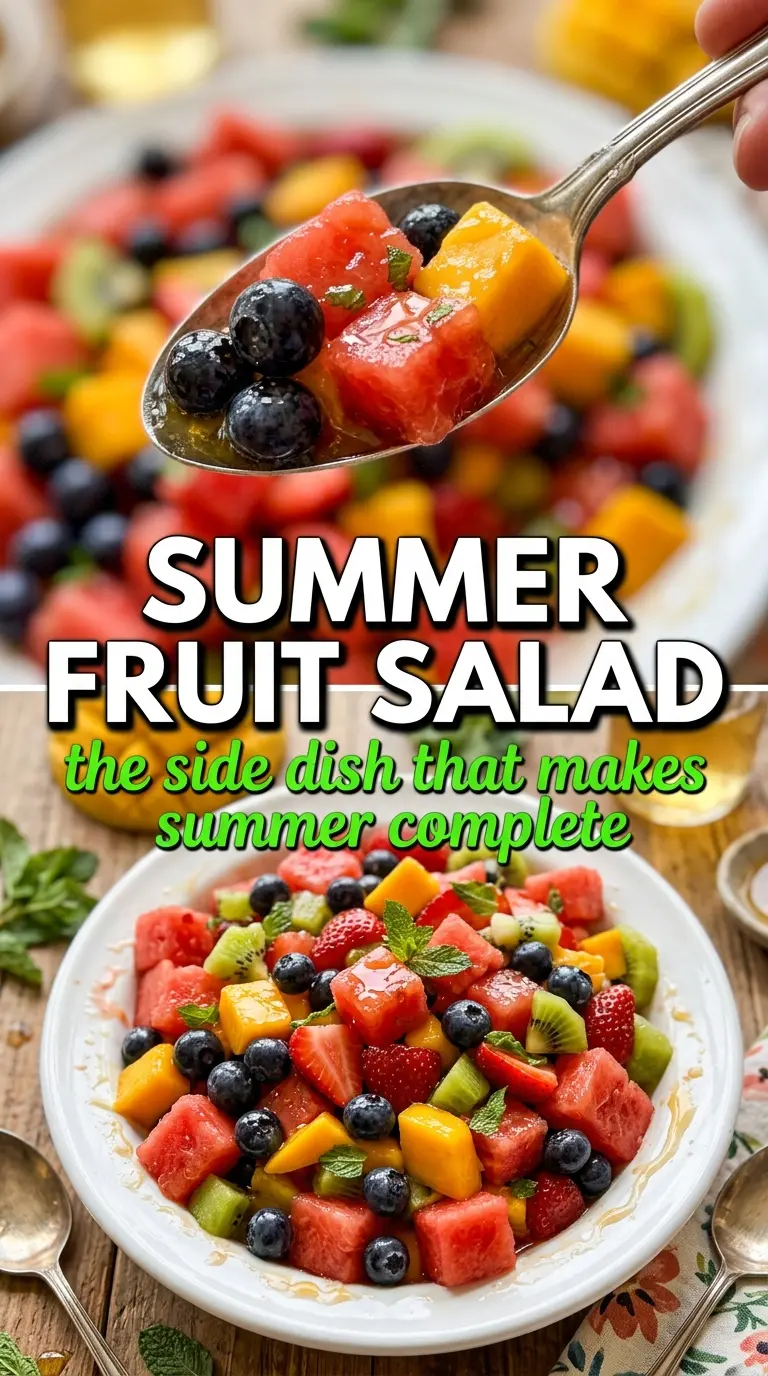
The ingredient list looks straightforward, but each piece has a job. The sweetest fruit gives the salad body, the tart fruit keeps it from tasting flat, and the citrus dressing sharpens everything so the bowl tastes clean instead of syrupy. If one element is missing, the whole thing feels less intentional.
- Watermelon — Adds juiciness and volume. Choose one that feels heavy for its size and has a deep red interior, because pale watermelon tastes thin.
- Strawberries — Bring aroma and a little tang. If strawberries are very firm and not deeply ripe, let them sit with the dressing a few extra minutes.
- Pineapple — Gives acidity and a firmer bite. This is the ingredient that helps the salad taste balanced instead of overly sweet.
- Blueberries and raspberries — Blueberries hold up well and stay poppable; raspberries add softness and color. If raspberries are extra delicate, fold them in at the end.
- Kiwis — Their tang wakes up the sweeter fruit. Slice them thick enough to stay intact, or they’ll disappear into the juice.
- Seedless green grapes — These add crunch and a cool snap. Halve larger grapes if you want the dressing to coat them more evenly.
- Peach slices — Use ripe but still firm peaches so they don’t fall apart. If your peaches are hard, let them sit at room temperature first rather than forcing them into the salad too soon.
- Honey, lime juice, and lime zest — Honey softens the edge of the citrus, while the zest carries the bright aroma. Fresh lime juice matters here; bottled juice tastes flatter and less clean.
- Mint — Adds a cooling finish. Tear it lightly or leave the leaves whole so the mint reads as fresh rather than grassy.
The 20 Minutes That Matter Most
Building the Bowl Without Bruising the Fruit
Start with fruit that is washed and fully drained. Water trapped on the surface dilutes the dressing and pools at the bottom of the bowl. Add the sturdier fruit first, then the more delicate berries so they don’t get crushed as you toss everything together. A wide bowl helps more than a deep one because it gives you room to fold instead of stirring hard.
Whisking the Honey-Lime Dressing
Whisk the honey, lime juice, and zest until the honey disappears into the liquid and the mixture looks glossy. If the honey clings in a thick ribbon, it hasn’t dissolved enough yet, and you’ll get uneven pockets of sweetness. Taste it before it goes over the fruit. It should be bright and lightly sweet, not sharp enough to make the berries taste sour.
Coating the Fruit Gently
Pour the dressing over the fruit and toss with a large spoon or silicone spatula. The goal is a thin shine on every piece, not a puddle in the bottom of the bowl. If you stir aggressively, the raspberries and peaches break down fast and the salad turns cloudy. Stop as soon as the fruit looks lightly glazed.
Chilling and Finishing
Refrigerate the salad for 20 minutes so the flavors settle together. That short rest is long enough for the lime to perfume the fruit but short enough to keep the texture crisp. Just before serving, scatter the mint over the top. Add it too early and it loses its fresh scent.
How to Adapt This for Different Tables and Fruit Bins
Dairy-Free and Naturally Vegan
This salad is already dairy-free and vegan as written, which makes it easy to bring to mixed gatherings. Keep the honey in mind if you need it fully vegan; swap in maple syrup or agave and use the same amount. The result is a slightly different sweetness, but the fruit still tastes bright and clean.
When You Need to Use Different Fruit
Swap in cherries, mango, blackberries, or nectarines if that’s what looks best. The rule is to keep a mix of sturdy fruit and soft fruit so the bowl still has texture after chilling. If you replace the pineapple with a sweeter fruit, add a little more lime juice to keep the salad from tipping flat.
Making It Ahead for a Crowd
Cut the fruit a few hours ahead and keep it chilled separately, then whisk the dressing and toss everything together just before the 20-minute rest. That keeps the berries from softening too early. If you need to hold it longer, add the mint at the very end so it stays bright.
Storage and Reheating
- Refrigerator: Best the day it’s made, but it will keep for 1 to 2 days. Expect more juice at the bottom and softer berries after the first day.
- Freezer: Don’t freeze this salad. The texture of watermelon, berries, and peaches breaks down too much once thawed.
- Reheating: Not applicable. Serve it cold straight from the refrigerator, and give it a gentle stir before serving if any juice has settled.
Answers to the Questions Worth Asking
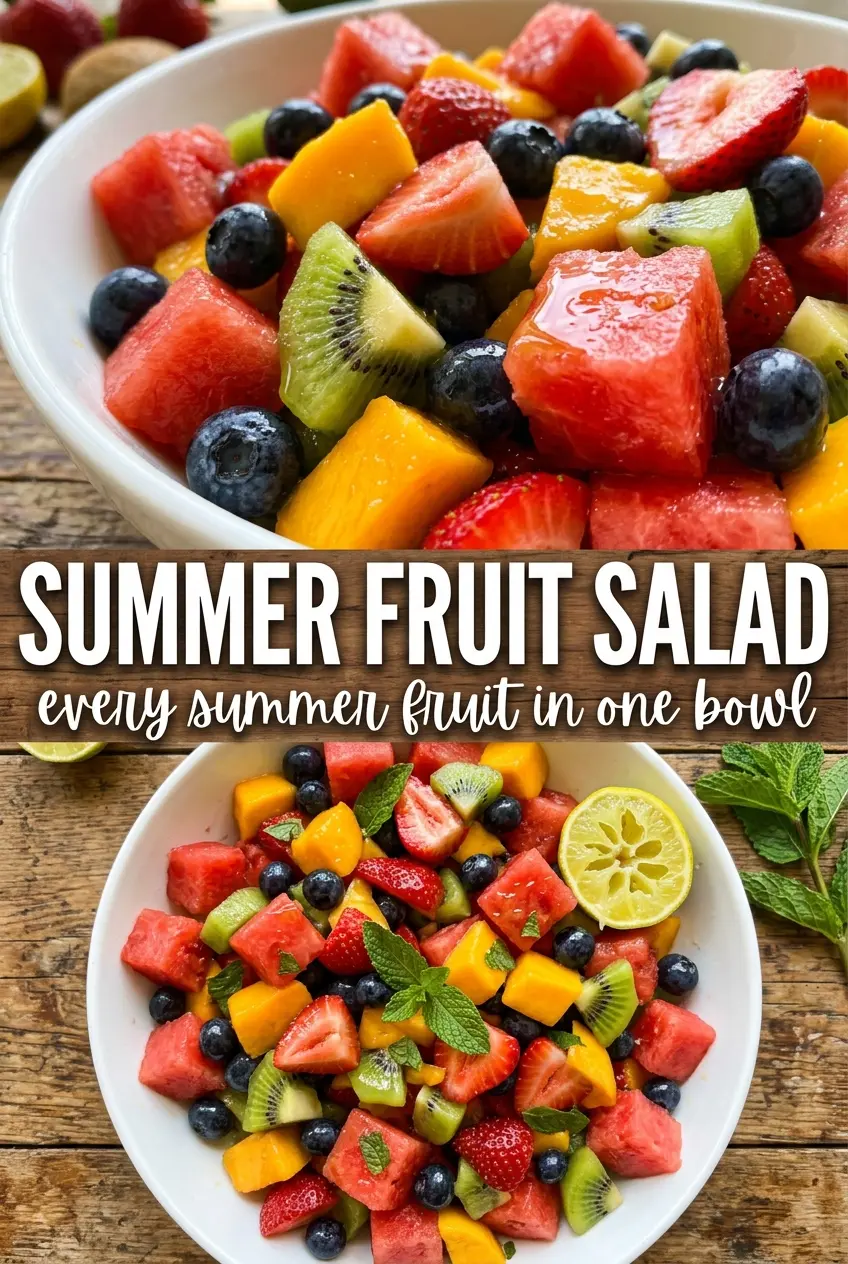
Summer Fruit Salad
Ingredients
Equipment
Method
- Prepare all fruit and place in a large serving bowl.
- Whisk together honey, lime juice, and lime zest until combined.
- Pour the honey-lime dressing over the fruit and gently toss to coat every piece.
- Taste and adjust honey or lime juice as desired.
- Refrigerate for 20 minutes to let the flavors meld.
- Scatter fresh mint leaves over the top and serve chilled.