Golden parmesan-crusted pork chops are the kind of dinner that disappear fast because the crust stays crisp, the pork stays juicy, and every bite has that salty, nutty edge that makes simple ingredients taste finished. The best part is the contrast: a deeply browned panko-parmesan shell on the outside and tender pork that still has a little give in the center.
This version works because the crust isn’t just sprinkled on top and hoped for. The Dijon and mayonnaise give the coating something to cling to, and the wire rack keeps hot air moving around the chops so the bottom doesn’t steam soft. Grating the parmesan finely helps it melt into the crumbs instead of falling off in clumps, which is what gives you that even, crunchy top.
Below, I’ll walk through the small details that matter here: how to keep the crust attached, why bone-in chops give you more margin in the oven, and what to do if your pork is thick enough that timing needs a little adjustment.
The crust got so crisp in the oven, and the Dijon-mayo layer kept everything in place. My chops were juicy at 145 and the lemon at the end made the parmesan pop.
Save these parmesan baked pork chops for a crisp, juicy oven dinner with a real parmesan crust.
The Reason This Crust Stays Crunchy Instead of Going Soggy
The biggest mistake with baked pork chops is piling on breading and then baking them in a way that traps steam underneath. That gives you a coating that looks good for about two minutes, then softens fast. A wire rack fixes most of that problem because the hot air can move under the chops, and the crust browns instead of sitting in its own moisture.
The other part is the binder. Dijon mustard adds tang and helps the coating grip, while mayonnaise brings fat and a little richness so the top browns before the pork dries out. If you skip that layer or spread it too thin, the parmesan mixture tends to slide off when you move the chops from the board to the pan.
What Each Ingredient Is Actually Doing in This Dish
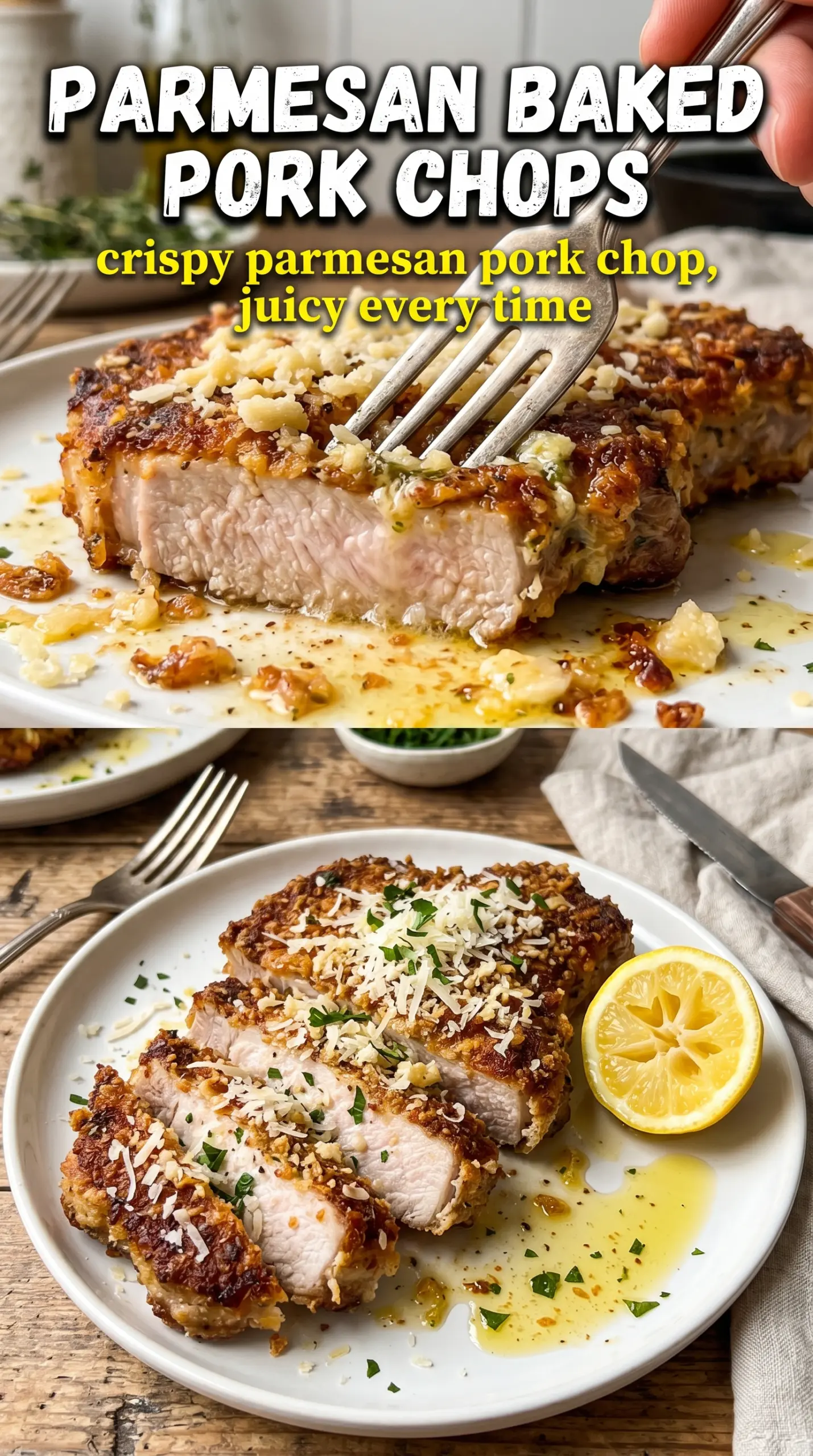
- Bone-in pork chops — The bone gives you a little more forgiveness in the oven and helps the meat stay juicier. Thick chops, about 1 inch, work best because they can handle the time it takes for the crust to turn deeply golden without overcooking the center.
- Parmesan — Use a finely grated parmesan, not big shreds. Fine parmesan melts into the panko and forms a tighter crust; coarse shreds can fall off before they brown. Freshly grated usually tastes better, but a good refrigerated grated parmesan works here.
- Panko breadcrumbs — These keep the crust light and crisp instead of dense. Regular breadcrumbs will work in a pinch, but the texture turns a little more compact and less crunchy.
- Dijon mustard and mayonnaise — This is the glue layer. Dijon sharpens the flavor, and mayo helps the coating brown and cling. If you don’t want mayonnaise, plain Greek yogurt can stand in, but the crust will be a touch less rich and slightly tangier.
- Italian seasoning and smoked paprika — Italian seasoning brings the herb note that keeps the crust from tasting flat, while smoked paprika adds a little warmth and color. They don’t dominate; they round out the parmesan.
Press the Coating On Harder Than You Think
Mix the crust first
Stir the parmesan, panko, garlic powder, Italian seasoning, and smoked paprika together before you touch the pork. A dry, even mixture coats more uniformly, and you’ll spot clumps before they end up in one patchy corner of the chop. If the parmesan is lumpy, break it up now; once it’s on the pork, it’s harder to fix.
Build the binder layer
Season the chops with salt and black pepper, then spread the Dijon-mayo mixture in a thin, even coat over the top and sides. The layer should look glossy, not thick or paste-like. Too much binder can turn the crust soft underneath, but too little leaves bare spots where the coating won’t stick.
Pack on the crust
Press the parmesan mixture firmly onto the chops instead of sprinkling it over them. Use your hands to mound it on top, then pat it down so it adheres. If the coating seems loose, hold the chop over the bowl and press the crumbs back on until the surface looks fully covered.
Bake until the top is deep gold
Place the chops on the rack and bake at 425°F for 22 to 25 minutes, depending on thickness. You’re looking for a crust that’s golden, bubbling in spots, and firm when tapped, with an internal temperature of 145°F in the thickest part. If the crust colors before the pork is done, leave the oven temperature alone and move the pan lower rather than turning the heat up or covering it.
Let the juices settle
Rest the chops for 3 minutes after baking. That short rest keeps the juices from running all over the cutting board the moment you slice in. Finish with parsley and lemon wedges; the lemon cuts through the parmesan and makes the whole plate taste cleaner.
How to Adapt These Parmesan Pork Chops Without Losing the Crunch
Make it gluten-free with one breadcrumb swap
Use gluten-free panko in place of regular panko. The crust still bakes up light and crisp, and the parmesan does most of the flavor work anyway. Avoid finely ground gluten-free crumbs that bake into a sandy coating instead of a crunchy one.
Dairy-free version with a different crust
Swap the parmesan for a dairy-free parmesan-style topping that melts and browns well. The flavor won’t be as sharp or savory, so add an extra pinch of salt and a little more garlic powder to keep the crust from tasting flat. This version works best when the substitute is finely grated, not bulky.
Boneless chops for a faster dinner
Boneless pork chops work, but they cook faster and dry out sooner, so start checking them early. They won’t have quite the same juicy cushion as bone-in chops, which means the exact 145°F target matters even more. Keep them thick if you can; thin cutlets can overcook before the crust has time to brown.
Storage and Reheating
- Refrigerator: Store leftovers in an airtight container for up to 3 days. The crust softens a little, but the flavor holds up well.
- Freezer: These freeze best after cooking and cooling completely. Wrap each chop tightly and freeze for up to 2 months, though the crust won’t stay as crisp after thawing.
- Reheating: Reheat on a wire rack in a 375°F oven until hot through. The oven helps bring back some crunch; the microwave will steam the coating and flatten the crust.
The Things That Trip People Up With This Dish
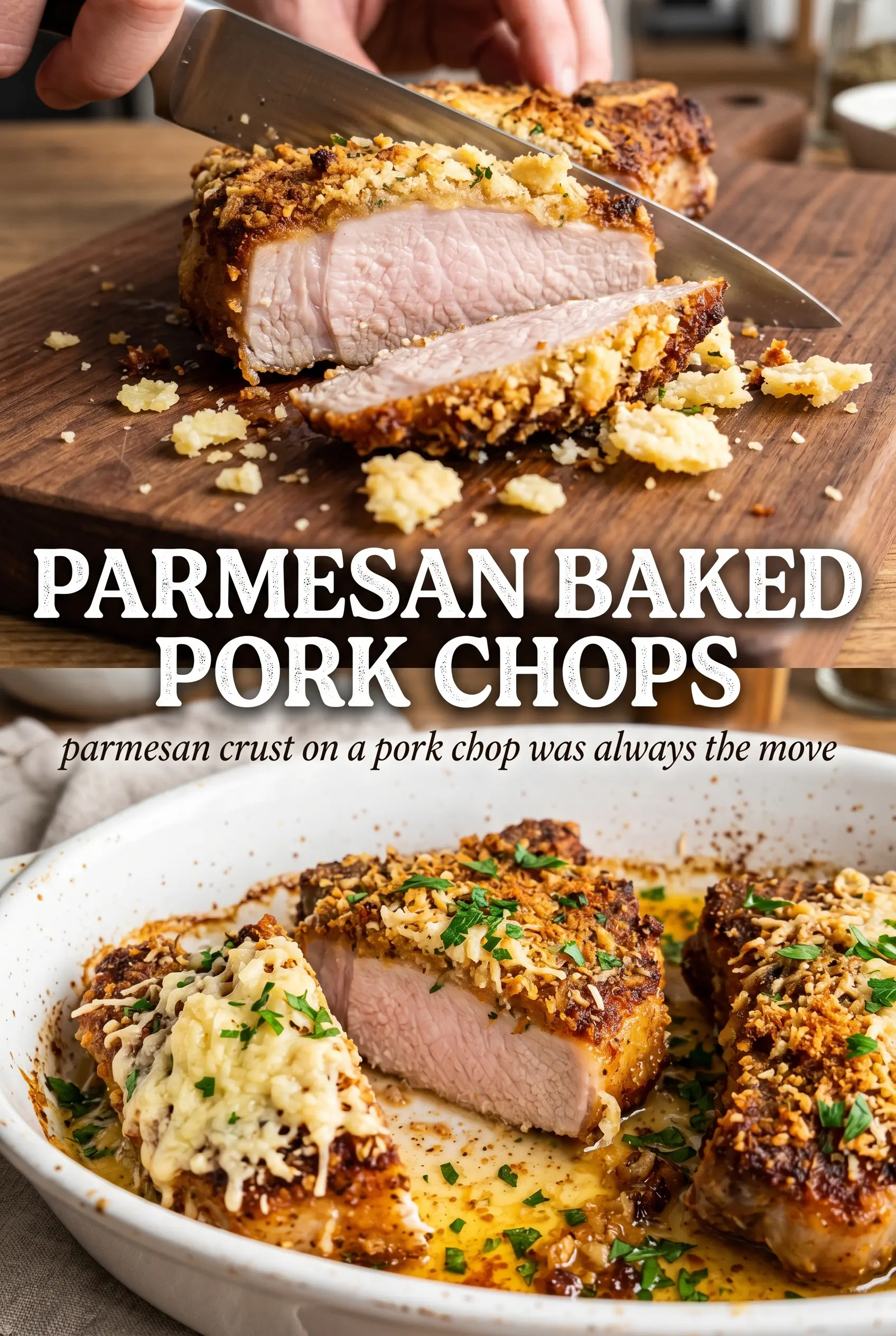
Parmesan Baked Pork Chops
Ingredients
Equipment
Method
- Preheat the oven to 425°F, line a sheet pan with foil, and place a wire rack on top so air circulates around the chops.
- In a bowl, mix the parmesan, panko, garlic powder, Italian seasoning, and smoked paprika until evenly combined.
- Season the pork chops with salt and pepper.
- Stir the Dijon mustard and mayonnaise together, then spread a thin layer over the top of each chop.
- Press the parmesan mixture firmly onto the top and sides of each chop to form a thick, even crust.
- Place the coated chops on the wire rack and bake at 425°F for 22–25 minutes, until the crust is deeply golden and bubbly and the internal temperature reaches 145°F.
- Rest the chops for 3 minutes so the juices settle, then garnish with fresh parsley and serve with lemon wedges.