Juicy chicken breasts with a deep balsamic glaze and a blanket of melted mozzarella earn a permanent place in the dinner rotation because they hit the sweet spot between simple and special. The chicken sears first, so the outside gets a little color before it finishes in the oven, and the sauce tightens up just enough to cling to every bite without turning syrupy. When the mozzarella softens over the top and the cherry tomatoes start to collapse, the whole dish turns into a caprese-style bake that tastes a lot more finished than the effort suggests.
The balance matters here. Balsamic vinegar brings sharpness, honey rounds it out, and Dijon keeps the glaze from tasting one-note. Searing the chicken before baking gives you better texture and helps the sauce pick up those browned bits in the pan, which is where a lot of the flavor lives. Fresh mozzarella melts into soft pockets instead of a greasy layer, so it works much better than pre-shredded cheese for this one.
You’ll find the timing that keeps chicken breast juicy, the reason the marinade gets split, and a few smart ways to adapt the dish without losing that glossy balsamic finish.
The balsamic glaze thickened up beautifully in the pan, and the mozzarella melted into the tomatoes without turning watery. I served it with pasta, and everyone went back for seconds.
Love that glossy balsamic chicken with melted mozzarella? Save it for an easy Italian-American dinner with a caprese-style finish.
The Part That Keeps the Chicken Juicy Instead of Drying Out
Chicken breast goes dry fast when it’s cooked like an afterthought. The fix here is twofold: a short marinade that adds flavor without turning the meat mushy, and an oven finish that stops as soon as the center hits 165°F. That’s the difference between a breast that slices cleanly and one that turns stringy at the first cut.
The other mistake is rushing the sear. Those first few minutes in the hot skillet give you color and a better base for the sauce, but they also start the cooking process in a controlled way. If the pan is too cool, the chicken steams and the glaze slides off instead of clinging.
- A short marinade — 20 minutes is enough here. Balsamic is acidic, so you get flavor fast, but leaving chicken in it for hours can make the surface soft instead of pleasantly seasoned.
- Medium-high sear heat — You want a deep golden exterior, not a pale one. If the chicken sticks hard, give it another minute; it usually releases when the crust is ready.
- Oven finish — The oven evens out the cooking so the outside doesn’t overcook before the center is done.
What the Balsamic, Honey, and Mozzarella Each Bring to the Pan
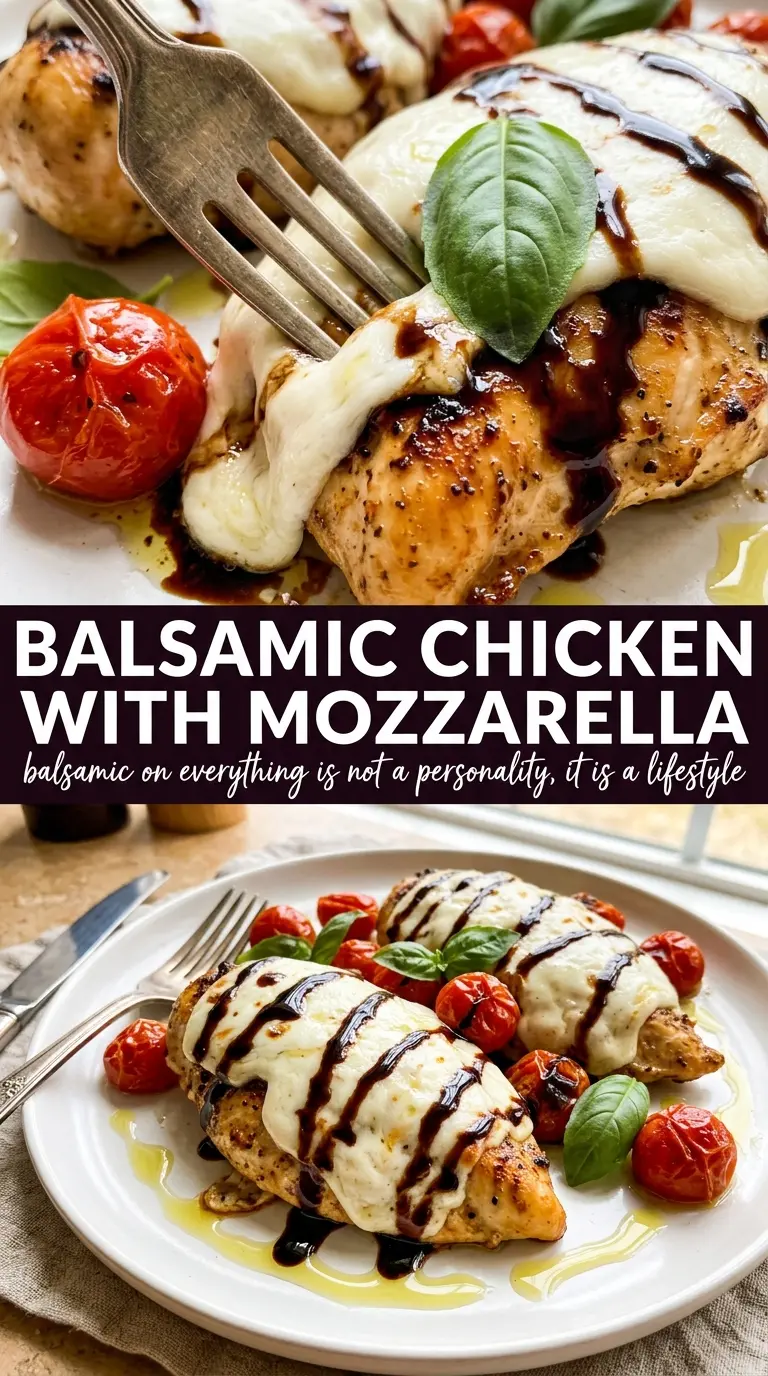
- Balsamic vinegar — This is the backbone of the glaze. Use a decent bottle if you can; the flavor concentrates as it cooks, so a harsh vinegar will stay harsh.
- Honey — It smooths the acidity and helps the glaze lightly caramelize in the oven. Maple syrup can work in a pinch, but it gives the dish a different, rounder sweetness.
- Dijon mustard — This doesn’t make the dish taste like mustard. It helps the marinade emulsify so the oil and vinegar stay blended long enough to coat the chicken properly.
- Fresh mozzarella — Slice it thick enough that it melts into soft, milky pockets. Pre-shredded mozzarella won’t give you the same texture, and it tends to dry out before the chicken is finished.
- Cherry tomatoes and basil — They’re not just garnish. The tomatoes soften into little bursts of juice, and the basil lifts the whole dish at the end so the glaze doesn’t feel heavy.
Building the Glaze, Searing the Chicken, and Finishing It Cleanly
Mix the Marinade Until It Looks Cohesive
Whisk the balsamic, olive oil, honey, garlic, and Dijon until the mixture looks glossy and slightly thickened. If the honey sits in streaks at the bottom, it hasn’t come together yet, and the chicken won’t marinate evenly. Season the chicken before it goes in so the salt has a chance to work from the outside in. Reserve some marinade before it touches the raw chicken so you have something clean to add back to the pan later.
Sear for Color, Not for Doneness
Set the skillet over medium-high heat and lay the chicken in once the oil shimmers. Cook it until the first side is deeply golden and it releases without force, then flip and repeat. The goal is a browned exterior with enough raw center left to finish in the oven. If the pan is crowded, the chicken will steam and you’ll lose that good crust.
Bake Until the Center Hits 165°F
Transfer the skillet to the oven and let the chicken finish cooking in the marinade. Start checking early if your breasts are on the smaller side, because a couple of extra minutes is enough to push them from juicy to dry. Pull them at 165°F in the thickest part, then let the carryover heat do the last bit of work while the cheese goes on top.
Melt the Cheese, Then Add the Fresh Finish
Layer the mozzarella over the hot chicken and scatter the tomatoes around it. A few minutes back in the oven is enough to melt the cheese without collapsing it into a greasy puddle. Finish with balsamic glaze and basil after it comes out, not before, or the basil will wilt into nothing and the glaze will lose its shine.
How to Adapt the Chicken Without Losing the Caprese Feel
Dairy-Free Version
Skip the mozzarella and finish with extra tomatoes, torn basil, and a drizzle of balsamic glaze. You lose the creamy melt, but the dish still reads clearly as balsamic chicken with a bright caprese-style finish.
Lower-Sugar Swap
Use 1 tablespoon honey instead of 2 and lean on the balsamic glaze at the end for sweetness. The sauce will be a little sharper and less lacquered, but the flavor stays balanced.
Gluten-Free and Naturally Full-Flavored
This recipe is already gluten-free as written, as long as your Dijon and balsamic glaze are certified gluten-free. That’s worth checking because some bottled glazes use thickeners or additives that don’t always fit.
Turn It Into a Pasta Dinner
Slice the finished chicken and serve it over pasta that’s been tossed with a spoonful of the pan juices. The glaze clings to noodles beautifully, and the tomatoes act like built-in sauce, which makes the whole dish feel more substantial.
Storage and Reheating
- Refrigerator: Store leftovers in an airtight container for up to 3 days. The tomatoes soften more as they sit, but the chicken stays tender if you don’t overcook it the first time.
- Freezer: The chicken can be frozen, but the mozzarella and tomatoes lose their texture after thawing. Freeze the chicken without the garnish if you want the best result.
- Reheating: Warm it covered in a 325°F oven until heated through. The biggest mistake is blasting it in the microwave, which makes the chicken rubbery and the cheese oily.
Answers to the Questions Worth Asking
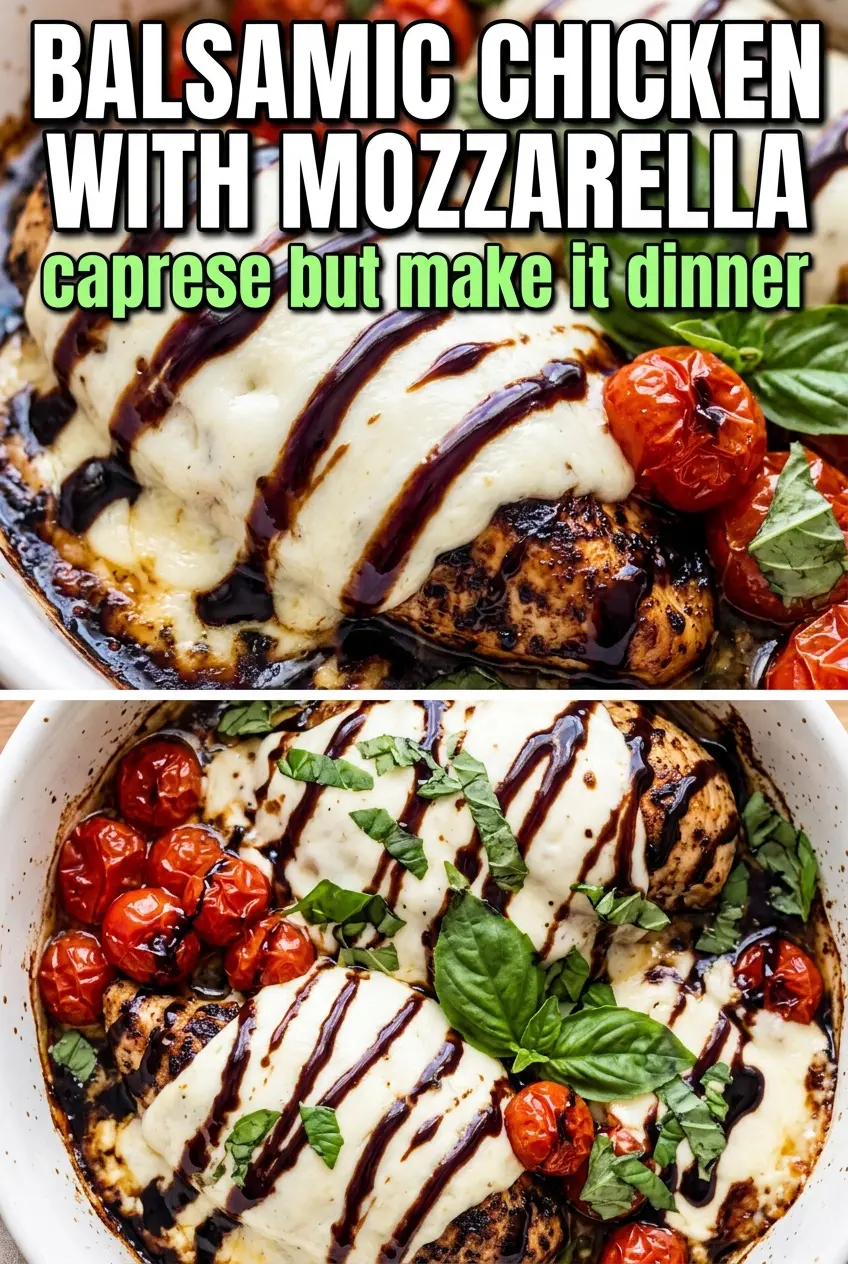
Balsamic Baked Chicken Breast with Mozzarella
Ingredients
Equipment
Method
- Whisk balsamic vinegar, olive oil, honey, garlic, and Dijon mustard together until smooth. Season the chicken breasts with salt, pepper, garlic powder, and Italian seasoning, then place them in the mixture to marinate for 20 minutes.
- Reserve some of the marinade in a separate container while the chicken rests. This will be used later to bake the chicken with extra flavor.
- Preheat the oven to 400°F. Heat an oven-safe skillet over medium-high heat and sear the marinated chicken for 3 minutes per side until golden.
- Transfer the skillet (with the remaining reserved marinade) to the oven. Bake for 18-20 minutes, until the internal temperature reaches 165°F.
- Remove the chicken from the oven and top each breast with sliced fresh mozzarella and halved cherry tomatoes. Return to the oven for 4-5 minutes at 400°F until the cheese is melted and lightly set.
- Drizzle with balsamic glaze and garnish with fresh basil leaves. Rest 2 minutes before serving so the juices settle and the glaze clings to the chicken.