Honey Mustard BLT Chicken Sliders hit that sweet spot between party food and a real meal: soft Hawaiian rolls, salty bacon, juicy chicken, melted provolone, and a honey mustard spread that ties everything together without turning the buns soggy. The first bite gives you contrast in every direction — buttery tops, crisp edges from the oven, cool lettuce, and tomato that keeps the sliders from feeling heavy.
What makes this version work is the order of assembly. The honey mustard goes on the cut sides of the rolls first, so it seasons the bread and helps the flavor spread evenly through the pan. The lettuce and tomato wait until the end, which keeps them fresh instead of wilting under heat. The butter topping finishes the tops with a glossy, savory crust that tastes like it took more effort than it did.
Below, I’ve included the few details that matter most: how to keep the rolls from drying out, why the cheese belongs under the chicken, and the smartest swaps if you need to work with what’s in your fridge.
The rolls stayed soft on the bottom but still got that buttery top, and the honey mustard soaked into the chicken just enough without making everything wet. I baked them for the full time and the cheese melted perfectly into the bacon layer.
Save these honey mustard BLT chicken sliders for game day, potlucks, or any night when you want a pull-apart pan of buttery, bacon-stacked sandwiches.
The Trick to Keeping the Rolls Soft, Not Soggy
The biggest mistake with slider pans is treating the buns like a casserole base. Once the bread sits under wet fillings for too long, the bottom loses its structure and turns pasty. The fix here is simple: build the sliders with the honey mustard on the cut sides, but keep the lettuce and tomato out until after baking. That gives you flavor inside the roll without flooding the bread with extra moisture.
The other detail that matters is the foil cover. It traps steam for the first part of baking, which melts the cheese and warms the chicken without drying out the rolls. Then the uncovered finish lets the tops turn deep golden instead of soft and pale. If the tops are browning too fast, your oven is running hot; tent the pan loosely rather than sealing it tight.
What Each Layer Is Doing in These Sliders
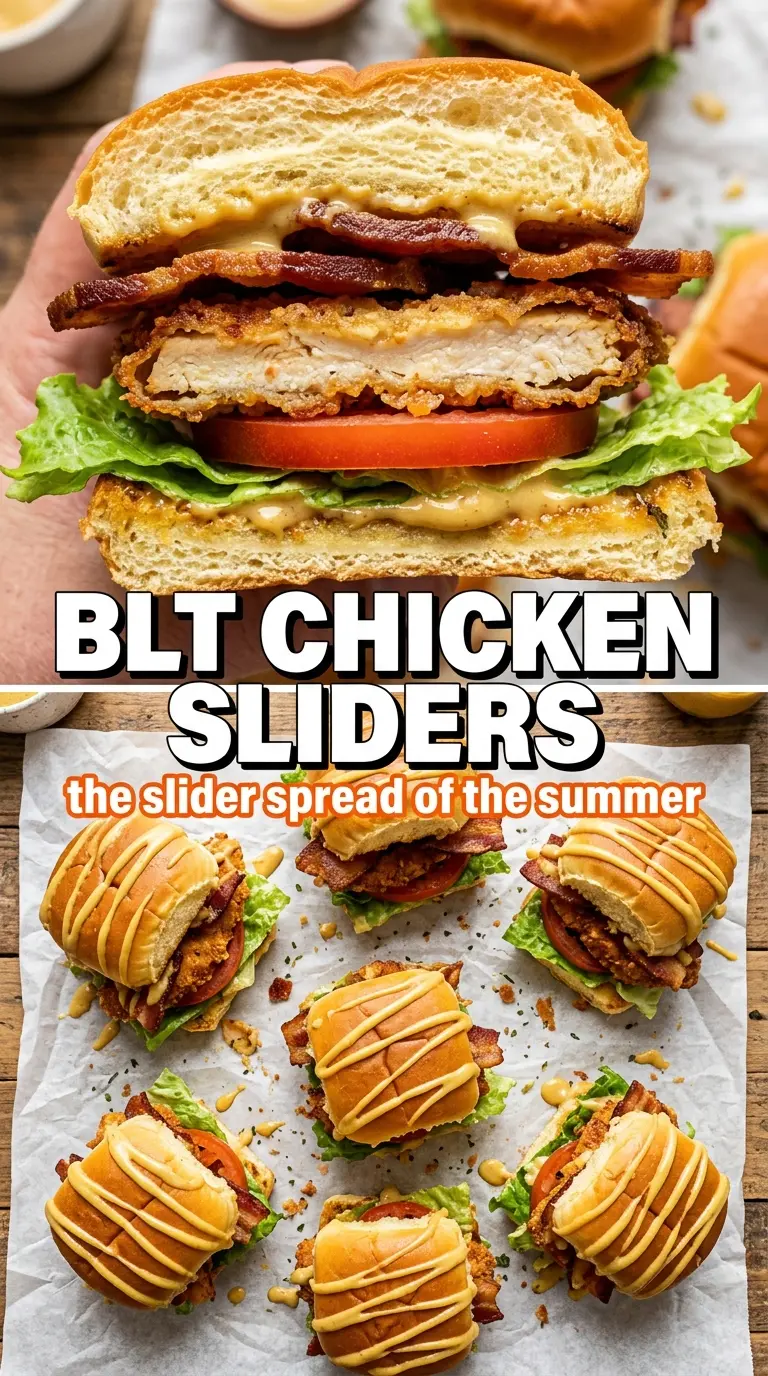
- Hawaiian sweet rolls — These bring a soft, slightly sweet base that plays well with the mustard and bacon. A standard dinner roll works in a pinch, but you lose some of the contrast that makes these sliders pop. Slice the whole slab horizontally so the tops stay aligned and the sliders bake as one neat pull-apart pan.
- Grilled chicken — This is the main structure, so slice it thinly and evenly. Thin slices warm faster and stack cleanly without making the sliders bulky. Rotisserie chicken works if you need a shortcut, but grilled chicken gives you a little more bite and keeps the filling from feeling soft.
- Honey mustard — The mayo gives it body, the Dijon gives it sharpness, the honey rounds it out, and the vinegar keeps it from tasting flat. Don’t swap in yellow mustard here; it reads harsher and loses the creamy balance that coats the rolls well. Whisk it smooth so it spreads instead of clumping.
- Provolone — It melts into a mellow layer that holds the chicken and bacon together without overwhelming the sandwich. Swiss also works, but provolone stays a little smoother and less assertive. Put it under the hot fillings so it begins melting right away and acts like edible glue.
- Bacon — Crisp bacon is nonnegotiable here. If it’s limp, the texture gets lost against the soft rolls. Cook it until it snaps cleanly, then drain it well so extra grease doesn’t soak into the bread.
Building the Sliders So the Bottom Stays Intact
Assembling the Pan
Lay the bottom half of the rolls in a baking dish and spread the honey mustard across the cut surface all the way to the edges. That thin layer seasons every bite and helps the rolls stay connected when you slice them later. Layer on the provolone first, then the chicken, then the bacon so the cheese can catch heat from the fillings above it. If you pile the lettuce or tomato in now, they’ll collapse under the oven heat and release too much water.
The Covered Bake
Cover the pan with foil and bake at 350°F for about 12 minutes. You’re not chasing color yet; you’re melting the cheese and warming the chicken through. The foil should sit snugly enough to trap steam but not smash the tops. If the pan looks dry after the covered bake, the chicken was probably sliced too thick or the rolls were left open too long before baking.
The Buttery Finish
Brush the tops with melted butter mixed with garlic powder and parsley before the uncovered bake. This gives the rolls a savory crust and keeps them from tasting one-note sweet. Bake uncovered for about 5 minutes, just until the tops are glossy and golden and the edges look toasted. Pull them as soon as the tops color; waiting for deep brown will dry out the filling.
The Fresh Finish
Add the lettuce and tomato after the sliders come out of the oven. This keeps the lettuce crisp and the tomato cool instead of wilted. Slice between the rolls while the cheese is still soft enough to hold the sandwiches together. If you slice too late, the bottoms can firm up and the layers shift around.
How to Adapt These Sliders for Different Crowds and Diets
Dairy-Free Version
Use a dairy-free mayo in the honey mustard and swap the provolone for your favorite meltable plant-based cheese. The texture won’t be quite as stretchy, but the sliders still hold together well if you keep the bake covered until the cheese softens fully. Brush the tops with olive oil instead of butter for the finish.
Use Rotisserie Chicken on a Busy Night
Shredded or sliced rotisserie chicken saves time and works well because the honey mustard and cheese carry the flavor. Warm it briefly before assembling so the sliders bake evenly and don’t need extra time in the oven. The only tradeoff is a softer texture compared with grilled chicken.
Make Them a Little Spicier
Stir a little hot sauce or a pinch of cayenne into the honey mustard if you want sharper contrast against the sweet rolls. That extra heat works especially well with the bacon and provolone, but don’t overdo it or you’ll drown out the honey. Start small; the spread should still taste balanced, not aggressive.
Storage and Reheating
- Refrigerator: Store leftover sliders in an airtight container for up to 3 days. The rolls soften a bit from the filling, which is normal.
- Freezer: Freeze the baked sliders without lettuce and tomato for up to 1 month. Wrap them tightly and thaw in the fridge before reheating; fresh vegetables don’t freeze well here.
- Reheating: Warm them covered in a 300°F oven until heated through. The common mistake is using the microwave, which makes the rolls tough and the bacon rubbery.
Questions I Get Asked About This Recipe
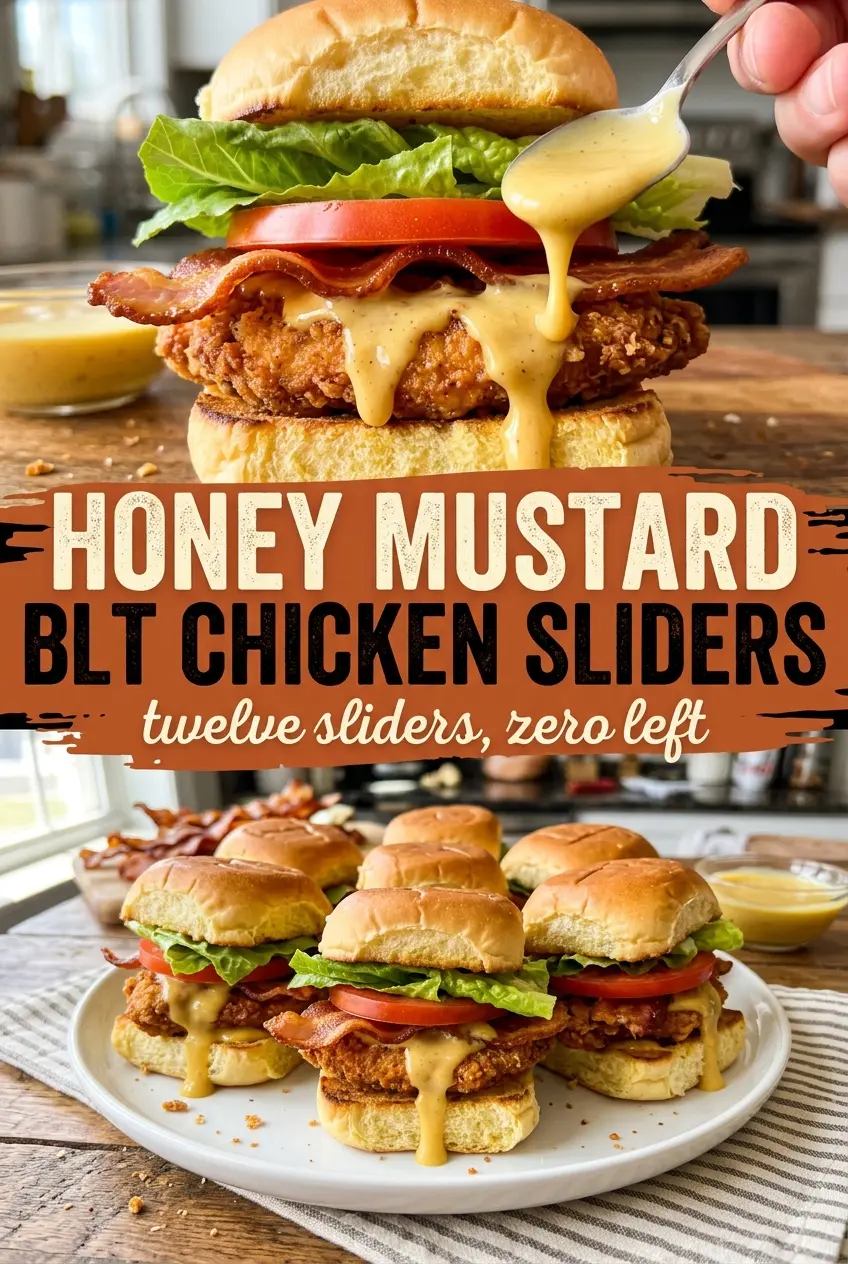
Honey Mustard BLT Chicken Sliders
Ingredients
Equipment
Method
- Preheat the oven to 350°F and slice the Hawaiian sweet rolls in half without separating.
- Whisk together the mayonnaise, Dijon mustard, honey, and apple cider vinegar until smooth.
- Spread the honey mustard mixture on the cut sides of the rolls.
- Layer provolone cheese, grilled chicken, and crispy bacon on the roll bottoms, then place tops on.
- Brush the sliders with melted butter mixed with garlic powder and parsley, coating the top evenly.
- Bake covered with foil for 12 minutes so the cheese melts and the chicken heats through.
- Bake uncovered for 5 more minutes until the tops are golden and the butter is lightly browned.
- Add the shredded lettuce and sliced tomatoes just before serving so they stay crisp.
- Slice into individual sliders and serve while warm.