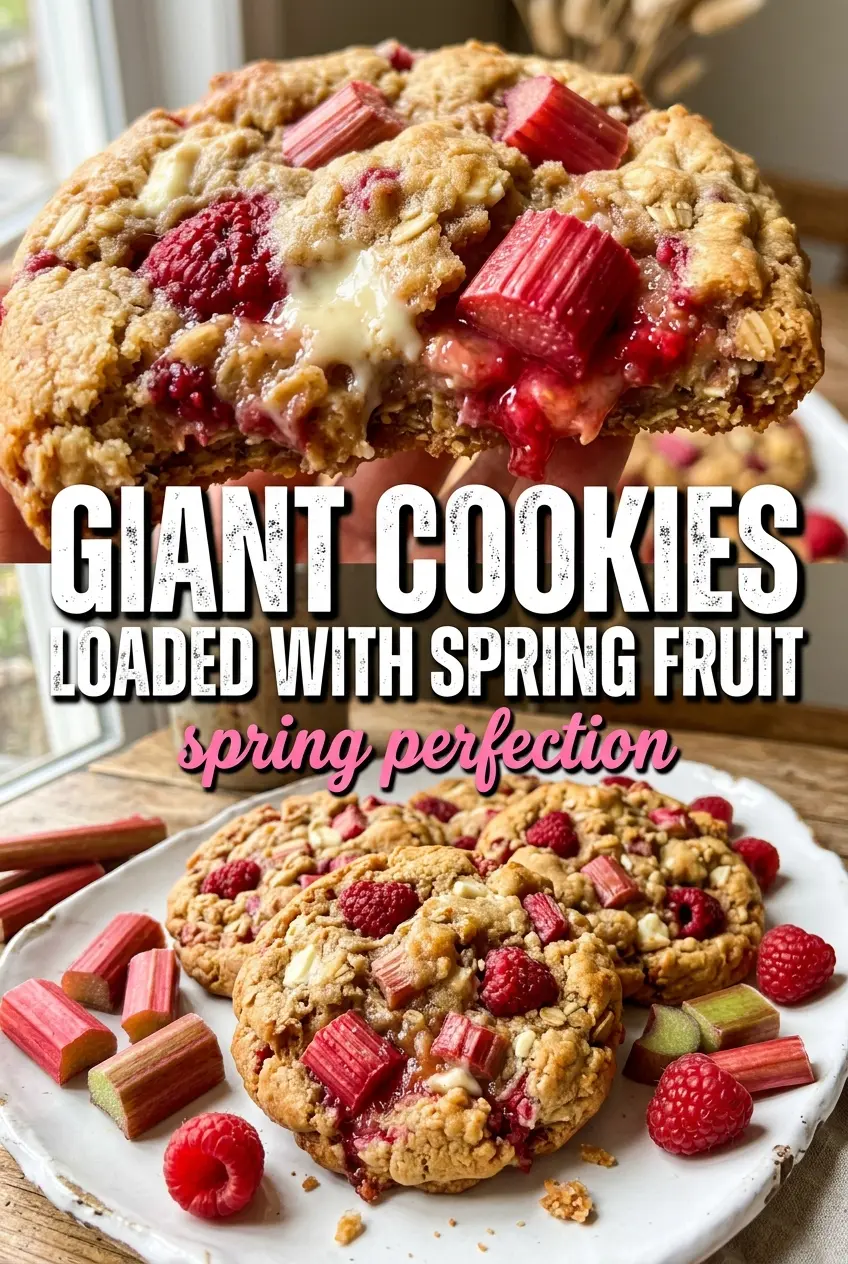
These XXL rhubarb raspberry cookies bake up thick at the edges, soft in the middle, and packed with little bursts of tart fruit that keep each bite lively instead of one-note. The white chocolate rounds out the sharpness from the rhubarb and raspberries, so you get a bakery-style cookie that tastes bright without turning overly sweet.
What makes this version work is the way the fruit is handled. Rhubarb needs to be diced small so it softens fast and blends into the dough instead of staying crunchy, and the raspberries should be folded in gently so they don’t streak the whole bowl pink. The dough is intentionally sturdy enough to hold a full 1/4 cup scoop, which is what gives these cookies their oversized shape and that soft, chewy center.
Below, I’ll walk through the one detail that keeps these cookies from spreading too thin, plus a few smart swaps if you need to adjust for what’s in your kitchen. If you’ve wanted a fruit cookie that still feels substantial, this is the one to keep close.
The cookies stayed thick instead of spreading flat, and the tart fruit with the white chocolate was the perfect balance. I baked mine for 17 minutes and the centers were still soft the next day.
Save these XXL rhubarb raspberry cookies for when you want a thick, bakery-style fruit cookie with chewy centers and bright tart bites.
Why These Cookies Stay Thick Instead of Spreading into Fruit Puddles
The biggest risk with fruit-heavy cookies is excess moisture. Rhubarb and raspberries both soften fast, and if the dough is too loose, the cookies spread before the centers set. Here, the flour amount is doing important work, and the oversized scoops help the cookies rise tall before the fruit juices can run everywhere.
There’s also a small but important timing detail: these cookies should come out when the edges are golden and the centers still look a little underdone. That carryover heat finishes the middle without drying out the fruit or turning the whole tray cakey. Pull them too late and you lose the thick, chewy center that makes them worth baking.
- Large scoops — A 1/4 cup scoop gives the dough enough height to bake into a bakery-style cookie instead of flattening out.
- Fresh rhubarb — Fresh rhubarb keeps its shape better than frozen and gives cleaner little tart bites in the cookie.
- Raspberries — Use them straight from the fridge if you can. Warmer berries break down faster and bleed more.
- White chocolate chips — These soften the tart fruit and help the cookie taste balanced instead of sharp.
What Each Ingredient Is Actually Doing in the Dough

- All-purpose flour — This gives the dough enough structure to hold the fruit. I wouldn’t swap in cake flour here; the cookies would lose that dense, chewy center.
- Brown sugar — Brown sugar keeps the texture soft and adds a deeper, caramel note that works well with tart fruit.
- Butter — Softened butter creams into the sugars and traps air, which helps the cookies bake up thick. If the butter is melted, the dough will spread.
- Rhubarb — Dice it finely so it softens in the bake time. Big pieces stay too firm and make the cookie harder to portion neatly.
- Raspberries — Fold them in last and gently. Stirring too much crushes them and turns the dough streaky and wet.
- White chocolate chips — These are the sweet counterpoint. If you don’t love white chocolate, chopped milk chocolate works, but the cookie will taste richer and less bright.
Building the Dough Without Crushing the Fruit
Cream the Butter and Sugars Until They Look Fluffy
Beat the softened butter with both sugars until the mixture looks pale and holds little ridges on the paddle or beaters. That step matters because it gives the cookies some lift before the fruit goes in. If the butter is too cold, the dough looks grainy and the cookies bake up dense. If it’s greasy and melty, the dough spreads.
Stop Mixing as Soon as the Flour Disappears
Once the dry ingredients go in, mix only until you no longer see streaks of flour. Overmixing tightens the dough and makes the cookies tougher, especially once the fruit is added. The dough should feel thick enough to scoop, not pour.
Fold in the Rhubarb and Raspberries at the End
Use a spatula and fold gently so the fruit stays in pieces. The goal is streaks of fruit throughout the dough, not crushed berries in every bite. If the dough looks a little uneven, that’s fine. Uneven mixing here is better than overworking the batter into a wet mess.
Bake Until the Edges Set but the Centers Still Look Soft
These cookies finish on the pan, so pull them when the edges are golden and the centers still look slightly underbaked. Let them sit on the baking sheet for 10 minutes before moving them to a rack. If you move them too early, they can break; if you leave them in the oven until the centers look fully done, they dry out.
Three Ways to Make These Cookies Fit Your Kitchen
Gluten-Free Version
Use a cup-for-cup gluten-free flour blend that includes xanthan gum. The cookies will still be soft and thick, but they may spread a touch less and taste a little more delicate at the edges.
Dairy-Free Swap
Use a plant-based butter stick, not a tub spread. Tub margarines hold more water and can make the dough too loose, which changes the shape and softens the edges too much.
No White Chocolate
Swap in chopped toasted almonds or chopped milk chocolate. Almonds add crunch and keep the fruit front and center, while milk chocolate makes the cookie richer and a little less tart.
Smaller Cookies
Scoop 2 tablespoons of dough instead of 1/4 cup and shorten the bake time by a few minutes. You’ll get more cookies, but they’ll lose some of that thick, oversized bakery look.
Storage and Reheating
- Refrigerator: Store in an airtight container for 4 days. The fruit keeps the centers extra soft, but the tops will lose some of their fresh-baked texture.
- Freezer: These freeze well after baking. Wrap individually and freeze for up to 2 months, or freeze scooped dough balls and bake from frozen with 1 to 2 extra minutes.
- Reheating: Warm a cookie in a 300°F oven for 3 to 5 minutes. The mistake to avoid is microwaving too long, which makes the fruit seep and turns the cookie gummy.