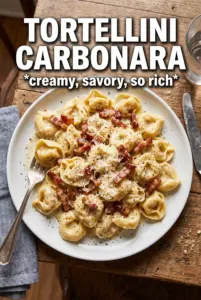
Plump cheese tortellini coated in a silky carbonara sauce is one of those dinners that disappears fast and somehow still feels special at the table. The pasta brings its own creamy center, so the sauce doesn’t have to work as hard as a classic spaghetti carbonara, and the result is rich without being heavy. Crispy pancetta, a lot of black pepper, and a shower of parmesan give every bite that salty, savory finish people keep chasing with one more forkful.
What makes this version work is the timing. The egg and cheese mixture goes onto the pasta off the heat, which keeps it from scrambling, and the starchy cooking water turns the mixture into a glossy sauce instead of a clumpy coating. Tortellini also needs a little less sauce than dry pasta, so the pan stays balanced and the filling inside the pasta doesn’t get lost. The garlic is brief and gentle here; it should perfume the fat, not brown and turn bitter.
Below, I’ll show you the texture cues I watch for so the sauce stays smooth, plus a few practical swaps if you need to use bacon, want to skip the pork, or need to reheat leftovers without ruining the emulsion.
The sauce turned out silky instead of scrambled, and the tortellini held onto it beautifully. The extra black pepper and pancetta made it taste like something from a little Italian place, but it was on the table in under 30 minutes.
Save this tortellini carbonara for a fast, silky pasta dinner with crispy pancetta and plenty of black pepper.
The Part That Keeps Tortellini Carbonara Creamy Instead of Scrambled
Carbonara fails when the eggs hit heat that’s too high. With tortellini, that risk is even more obvious because the pasta comes straight from boiling water and carries enough heat to cook the eggs quickly. The fix is simple: pull the pan off the burner before the egg mixture goes in, then toss hard enough that the residual heat and the fat in the pan turn everything into a sauce. If the pan stays over flame, the eggs seize at the edges and you get tiny curds instead of a glossy coating.
Parmesan helps stabilize the sauce, but it doesn’t replace temperature control. The cheese needs to melt into the eggs, not sit on top of them as dry clumps. That’s why the pasta water matters too. The starch in it loosens the sauce just enough to coat the tortellini without thinning it out into soup.
- The goal is a sheen on the pasta, not a puddle in the bottom of the bowl.
- If the mixture looks tight, add another splash of pasta water and toss again.
- If it starts to look grainy, the pan was too hot; move fast, add more water, and keep stirring off heat.
What Each Ingredient Is Actually Doing in This Dish
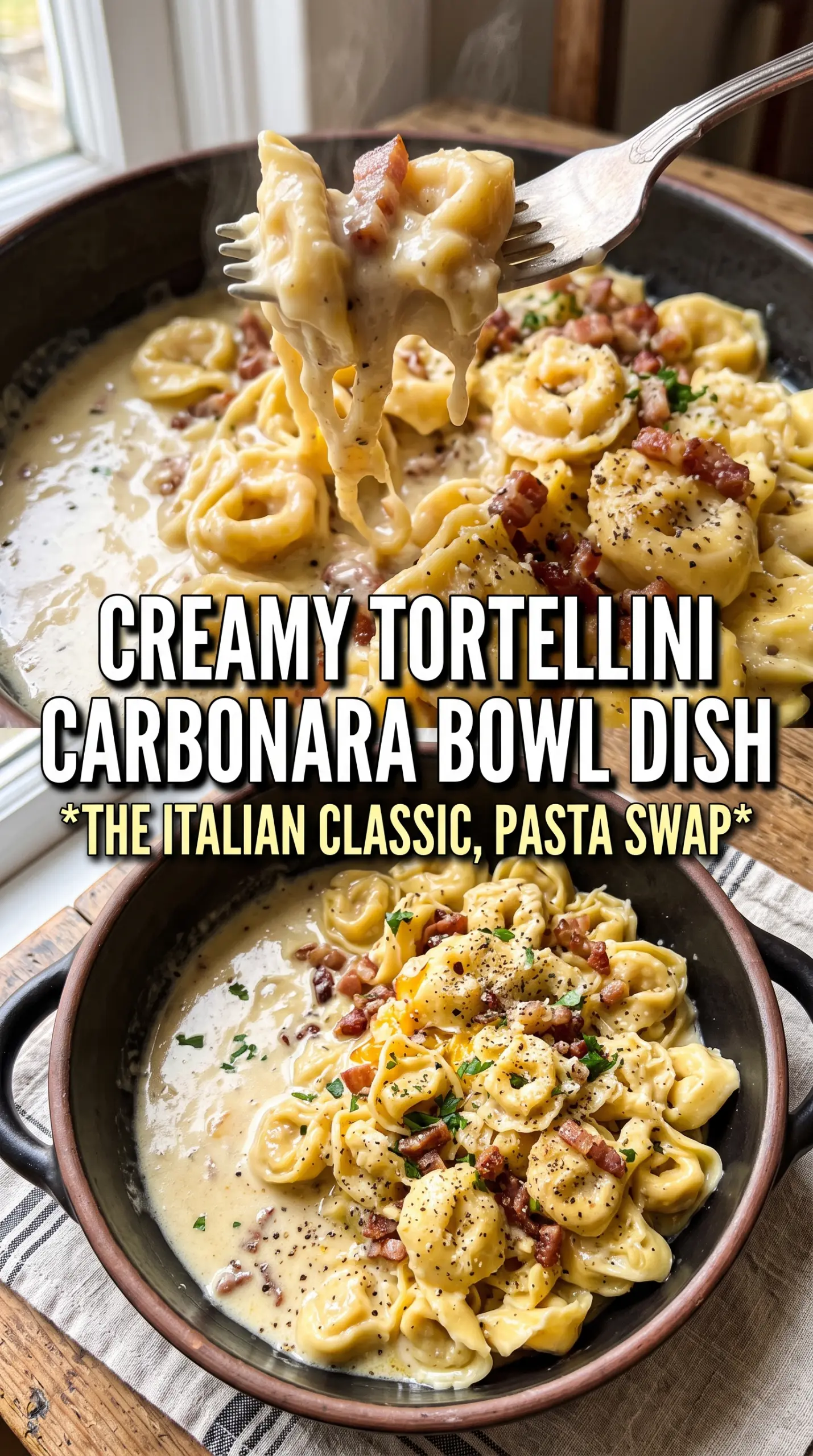
- Refrigerated cheese tortellini — This is the shortcut that makes the dish feel generous without extra work. Fresh-style tortellini cooks fast and brings its own cheese filling, which gives the sauce a richer, rounder taste than plain pasta. Frozen tortellini works too, but it usually needs a minute or two longer and can release a little more water.
- Pancetta or thick-cut bacon — Pancetta gives the cleanest salty pork flavor and stays a little firmer when crisped. Bacon is easier to find and still works well, though it can be smokier and a touch sweeter. Dice it small so the fat renders evenly and you get little crisp bites in every forkful.
- Egg yolks plus one whole egg — The yolks provide the velvety body, and the whole egg keeps the sauce from feeling too heavy. All yolks would be richer but a little thicker and more temperamental. Whisk them thoroughly so the sauce starts smooth before it ever hits the pan.
- Finely grated parmesan — Fine grating matters here because it melts fast and blends into the eggs instead of clumping. The pre-shredded kind usually has anti-caking agents that can make the sauce feel grainy. If parmesan is all you have, grate it as finely as you can.
- Pasta cooking water — This is the emulsifier that turns eggs, cheese, and fat into a sauce that clings. Reserve more than you think you need, because adding it a spoonful at a time is the easiest way to control the texture.
- Nutmeg and black pepper — Nutmeg is subtle, but it adds warmth that makes the carbonara taste fuller. Black pepper should be bold; this dish needs that sharp bite to cut through the richness.
How to Build the Sauce So It Stays Silky
Crisping the Pork Without Burning the Garlic
Start the pancetta in a cold pan and let the fat render slowly until the pieces are browned and crisp at the edges. That gives you enough fat in the pan to carry the sauce later. Add the garlic only after the pork is crisp and the heat is moderate; one minute is enough, because garlic goes from fragrant to bitter fast once the pan is hot and dry.
Whisking the Egg Base Until It’s Uniform
Combine the egg yolks, whole egg, parmesan, nutmeg, and plenty of black pepper in a bowl and whisk until the mixture looks thick and cohesive. You want the cheese distributed through the eggs, not sitting in a dry layer at the bottom. If the mixture seems pasty, that’s normal; the pasta water will loosen it once you start tossing.
Tossing Off Heat for the Final Emulsion
Add the hot tortellini to the pan with the pancetta, then take the pan off the burner before the eggs go in. Pour in the egg mixture and toss immediately, then start adding pasta water a splash at a time while you keep everything moving. The sauce should go from glossy clumps to a creamy coating within seconds. If it looks too thick, add water and toss again; if it looks loose, keep tossing for a moment and it will tighten as the cheese and eggs emulsify.
The Finish That Brings It Together
Taste before you salt, because the pancetta and parmesan may already have plenty of seasoning. Add only what the dish needs, then finish with parsley and extra parmesan. The parsley is there for freshness, not decoration, and a final hit of black pepper makes the whole bowl taste sharper and more balanced.
Bacon instead of pancetta
Use thick-cut bacon if that’s what you have. It brings a smokier flavor and usually renders a little more fat, so spoon off excess grease before adding the garlic. The dish will be a touch sweeter and more familiar-tasting, but it still gives you the same crisp-savory contrast.
Vegetarian tortellini carbonara
Skip the pork and cook the garlic in 2 tablespoons of butter or olive oil, then add a handful of sautéed mushrooms for savory depth. You’ll lose the salty crunch from the pancetta, so finish with a little extra parmesan and black pepper to bring the bowl back into balance. The sauce texture stays the same.
Gluten-free version
Use a gluten-free cheese tortellini and watch the cooking time closely, since some brands soften faster than wheat-based pasta. Reserve extra pasta water because gluten-free pasta often needs more help binding into a sauce. The flavor stays true, but the texture is best when you toss and serve it right away.
Leftovers and reheating
- Refrigerator: Store in an airtight container for up to 3 days. The sauce will tighten as it chills, so expect a firmer texture.
- Freezer: Not ideal. Egg-based sauces and stuffed pasta both suffer after freezing, and the sauce can turn grainy when thawed.
- Reheating: Warm gently in a skillet over low heat with a splash of water or milk, stirring constantly. High heat is what breaks the eggs and makes the sauce look oily, so go slow and stop as soon as it loosens.
Answers to the Questions Worth Asking
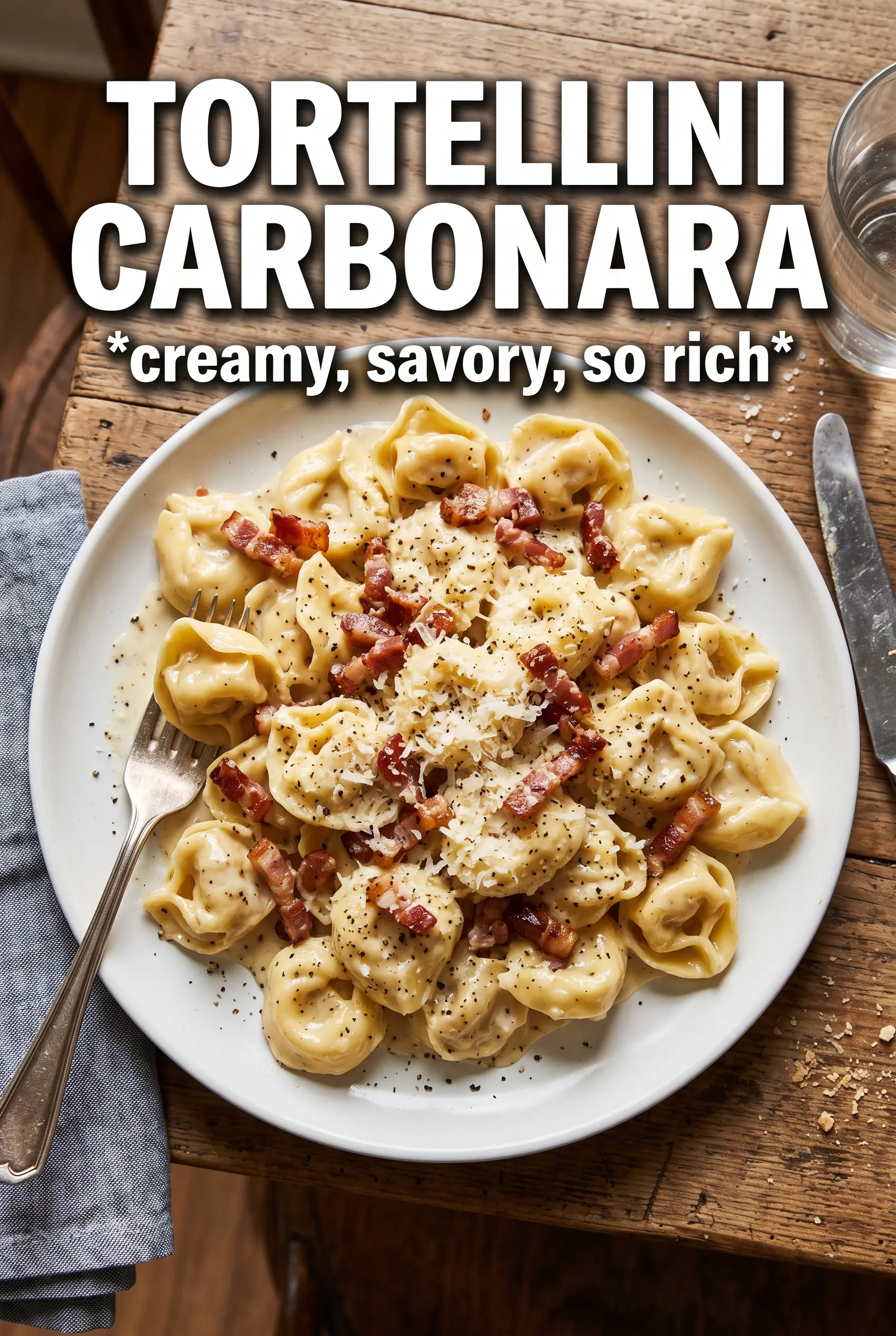
Tortellini Carbonara
Ingredients
Equipment
Method
- Bring a large pot of well-salted water to a boil and cook the cheese tortellini until tender, then reserve 1 cup of cooking water for the sauce.
- In a dry skillet over medium heat, cook the pancetta or thick-cut bacon until crispy, then add the minced garlic and cook for 1 minute before removing from heat.
- In a bowl, whisk together the egg yolks, whole egg, finely grated parmesan, nutmeg, and generous black pepper until smooth and thick.
- Add the hot tortellini to the pancetta pan off heat, then quickly pour in the egg mixture.
- Toss vigorously until the sauce turns silky and creamy, adding pasta cooking water a splash at a time to loosen and emulsify.
- Season with salt to taste, then top with fresh parsley and extra parmesan, finishing with additional cracked black pepper if desired.