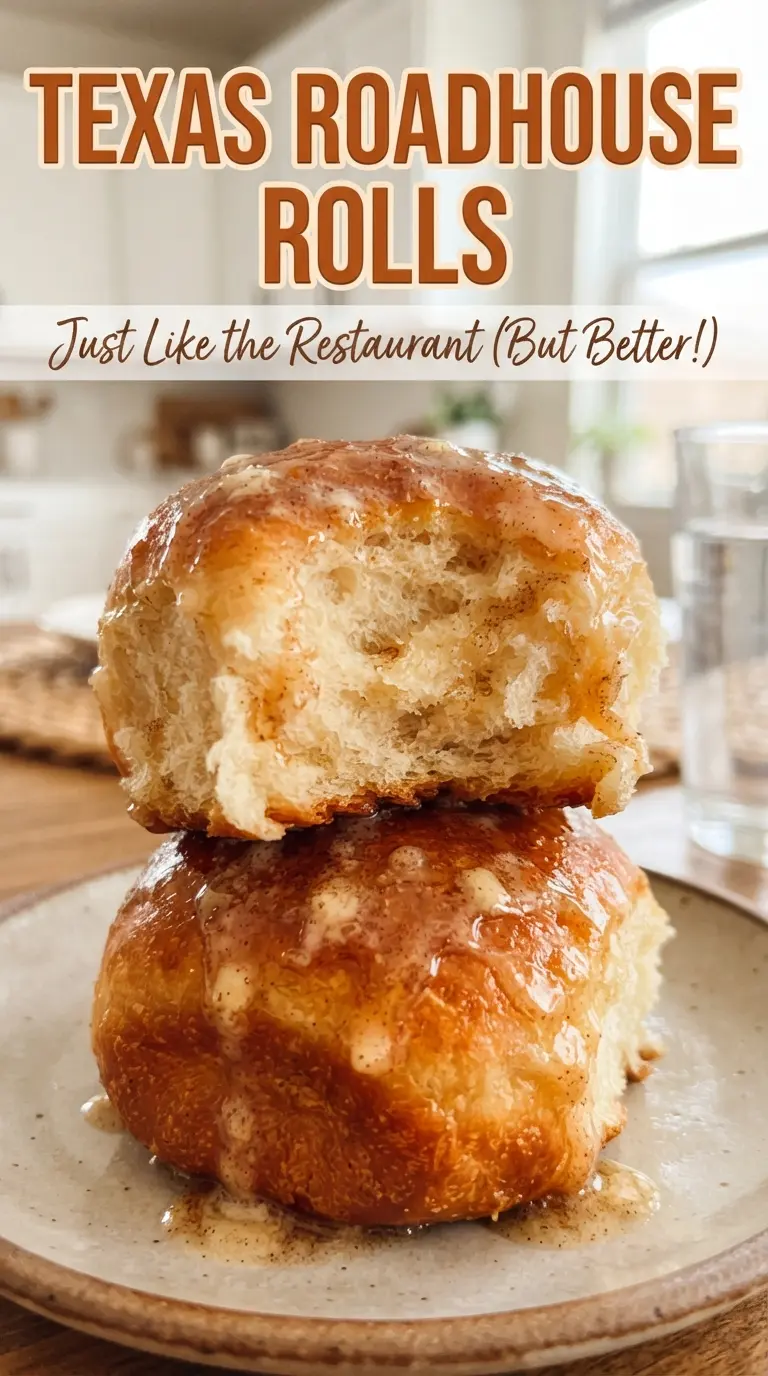
Texas Roadhouse rolls bake up soft, lightly sweet, and pillowy in the middle with a tender golden crust that begs for a swipe of butter the second they leave the oven. The texture is the whole point here: airy enough to pull apart in fluffy layers, sturdy enough to hold a thick spread of cinnamon honey butter, and rich enough to taste like something from a restaurant basket instead of a basic dinner roll.
The dough gets its softness from milk, butter, and a full two rises, and the shaping keeps the rolls evenly thick so they bake up with the same delicate crumb all the way through. A little sugar feeds the yeast and gives the rolls their gentle sweetness, while the final brush of melted butter locks in that glossy, bakery-style finish. The cinnamon honey butter is just sweet enough to match the rolls without turning them into dessert.
Below, you’ll find the small details that matter most: how to judge the dough by feel, why the second rise is worth waiting for, and how to keep the rolls soft even after they cool.
The dough rose beautifully and the rolls came out unbelievably soft with that same sweet buttery taste we get at the restaurant. The cinnamon honey butter was the part my kids kept asking for, and the whole pan disappeared before dinner was over.
Love these soft Texas Roadhouse rolls? Save them for the next dinner when you want fluffy, buttery squares with cinnamon honey butter.
The Trick to Getting Rolls This Soft Starts Before the First Rise
These rolls stay tender because the dough is mixed to soft-smooth, not stiff. Too much flour is the fastest way to turn them bready, so the dough should feel slightly tacky when you finish kneading but still pull cleanly from the bowl. If it clings like glue, it needs a spoonful or two more flour; if it feels dry before the first rise, the rolls will bake up dense and lose that signature pillowy crumb.
The other part that matters is the second rise after shaping. That rest gives the squares enough time to puff so the oven can finish the job without forcing them to expand too fast. If you rush it, the rolls will still taste good, but they won’t have that soft, layered middle that makes them look and eat like the restaurant version.
What the Milk, Butter, and Cinnamon Honey Butter Are Each Doing Here
- Whole milk — Warm milk feeds the yeast gently and adds richness you won’t get from water alone. Use it around 110°F; if it’s too hot, it can slow or kill the yeast before the dough ever rises.
- Active dry yeast — This gives the rolls their lift and that airy, pull-apart texture. If the yeast doesn’t foam in the first five minutes, start over, because dead yeast will leave you with flat squares.
- Butter in the dough — Melted butter keeps the crumb soft and gives the rolls that bakery-style flavor. Real butter matters here; margarine won’t taste the same and usually doesn’t give the same tender finish.
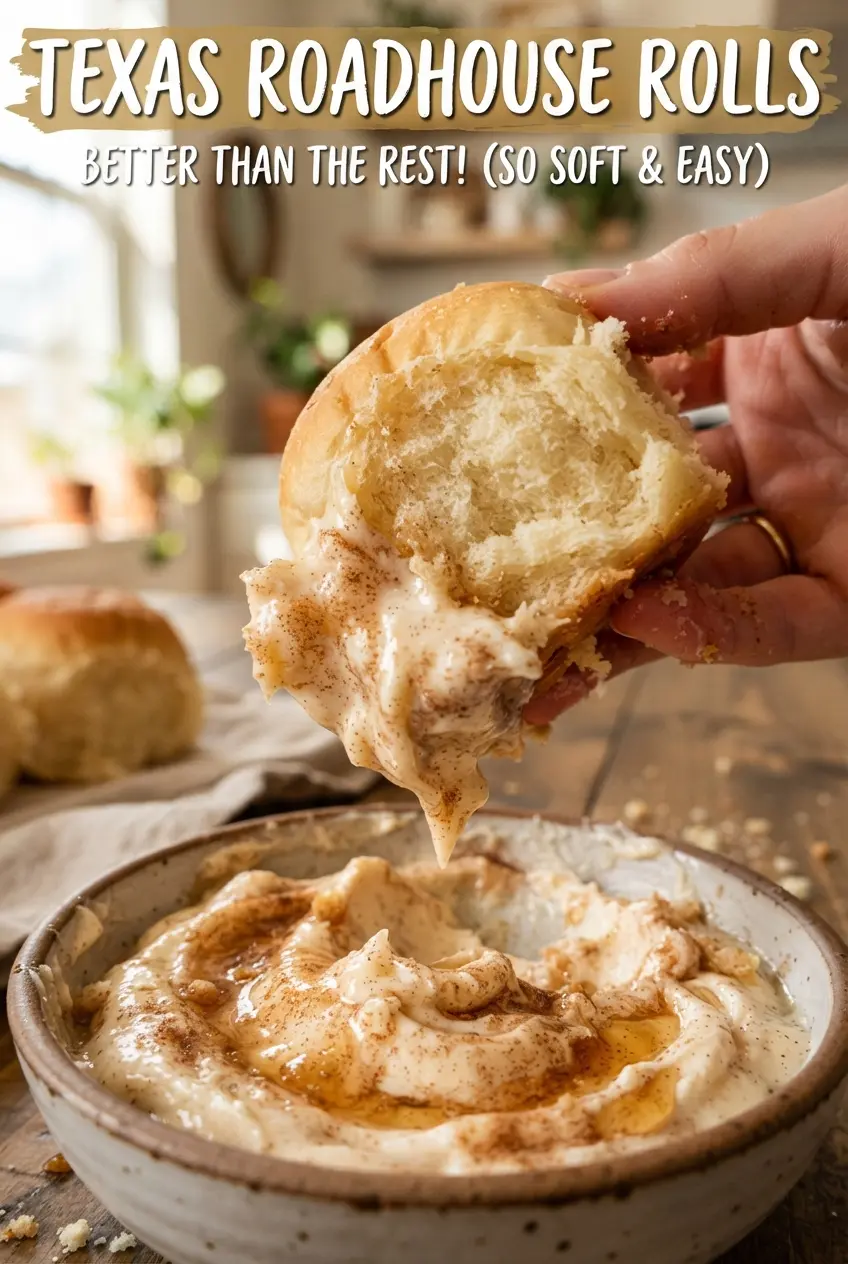
- Powdered sugar, honey, and cinnamon — This is the cinnamon honey butter that makes the rolls unmistakable. Powdered sugar blends smoothly, honey adds that rounded sweetness, and cinnamon gives it warmth without making it taste like frosting.
Shaping, Baking, and Brushing the Rolls So They Stay Tender
Mixing the Dough Until It Feels Soft, Not Sticky
Stir the yeast mixture with the sugar just until it foams, then add the remaining ingredients and knead until the dough turns smooth and elastic, about eight minutes. The dough should bounce back when pressed lightly with a finger. If it tears easily or looks shaggy after kneading, it needs another minute or two. If you keep dumping in flour to chase dryness, the rolls will bake up tight instead of fluffy.
Rolling and Cutting the Squares Evenly
Pat the dough into a half-inch rectangle, fold it in half, and cut clean two-inch squares. That fold gives the rolls a little extra height and helps them rise in tidy layers. Use a sharp knife or bench scraper so the edges don’t get smashed shut, which can keep the rolls from opening up properly in the oven. Space them on the pan with a little room so they can puff without merging into one big slab.
Baking Until the Tops Just Turn Golden
Bake at 350°F until the tops are lightly golden and the centers spring back when touched, usually 12 to 15 minutes. Pull them before they get dark; these rolls finish with carryover heat, and overbaking is what dries out the soft center. Brush the tops with melted butter as soon as they come out of the oven so the crust stays tender and glossy instead of turning dry.
Whipping the Cinnamon Honey Butter
Beat the softened butter with powdered sugar, honey, and cinnamon until it looks fluffy and spreadable. If the butter is too cold, it will stay grainy and won’t melt into the warm rolls the way it should. This spread is best used right away, while the rolls are still warm enough to soften it into the crumb.
How to Adapt These Rolls Without Losing the Soft, Sweet Crumb
Dairy-Free Version
Use unsweetened oat milk or almond milk in place of the whole milk, and swap in a good plant-based butter for both the dough and the topping. The rolls will still rise and bake up soft, though the flavor loses a little of the classic milk richness. Pick a dairy-free butter that behaves like real butter when softened, not a spread that gets oily.
Slightly Less Sweet Version
Cut the sugar in the dough to 1/4 cup if you want the rolls a little less sweet, but leave the cinnamon honey butter as written. The texture stays the same, but the rolls taste a touch more breadlike and work better alongside savory mains. Don’t cut the sugar much farther or you’ll lose part of the flavor that makes these taste like Texas Roadhouse rolls.
Make-Ahead Option
Shape the rolls, cover the pan tightly, and refrigerate them overnight after the first rise and cutting. The next day, let them sit at room temperature until puffy before baking. Cold dough won’t spring properly in the oven, so that last rise matters more than people think.
Storage and Reheating
- Refrigerator: Store in an airtight container for up to 4 days. The rolls will firm up a little in the fridge, but they soften again when warmed.
- Freezer: Freeze baked rolls for up to 2 months. Wrap them well and thaw at room temperature before reheating.
- Reheating: Warm the rolls in a 300°F oven for 5 to 8 minutes, loosely covered with foil if needed. Microwaving works in a pinch, but it can make the crumb rubbery and dry around the edges.
Questions I Get Asked About This Recipe
Texas Roadhouse Rolls
Ingredients
Equipment
Method
- Combine the warmed milk, warm water, active dry yeast, and 1 tablespoon of the sugar, then let stand 5 minutes until foamy, visibly swollen, and aromatic.
- Add the remaining sugar, egg, melted butter, salt, and all-purpose flour, then knead for 8 minutes until the dough is soft and smooth with a supple texture.
- Cover the dough and let rise for 1 hour until doubled in size, with noticeable puffing and a lighter feel.
- Roll the dough into a 1/2-inch thick rectangle, fold it in half, and cut into 2-inch squares.
- Place the squares on a parchment-lined sheet, cover, and rise for 1 hour until puffy with visible air pockets.
- Preheat the oven to 350F, then bake for 12-15 minutes until golden, with the tops turning a warm brown.
- Brush the hot rolls with melted butter right after baking so the sheen soaks in while they’re still warm.
- Whip the softened butter, powdered sugar, honey, and ground cinnamon until fluffy, then serve with the warm rolls as it melts into the soft centers.