Browned taco meat should be juicy, deeply seasoned, and coated in a light sauce that clings to every crumble instead of sliding to the bottom of the pan. The best versions taste like more than plain ground beef with seasoning sprinkled on top. They have a savory base, a little warmth from cumin and cayenne, and just enough tomato richness to round everything out.
The trick is keeping a little fat in the pan after browning, then building the seasoning mixture right into that fond. Tomato paste gives the meat a fuller, almost slow-simmered taste in just a few minutes, while the small amount of water helps the seasoning bloom and turn into a glossy coating. If the pan is too dry or the heat is too high, the spices can taste dusty instead of integrated, so the last simmer matters more than most people think.
Below, you’ll find the small details that keep taco meat from going greasy or bland, plus a few smart ways to stretch it into burritos, nachos, rice bowls, and fast weeknight dinners.
The tomato paste made the meat taste way richer than my usual taco seasoning alone, and the sauce thickened up just enough to coat every crumble. I used it for tacos one night and nachos the next.
Like this taco meat? Save it to Pinterest for quick tacos, burritos, and nachos with a rich, saucy beef filling.
The One Mistake That Makes Taco Meat Taste Flat
Most taco meat goes wrong before the seasoning even hits the pan. If you drain every bit of fat after browning, the spices never have anything to cling to, and the filling turns dry and a little chalky. Leave a tablespoon or two in the skillet. That small amount carries the taco seasoning through the meat and helps the tomato paste cook into something deeper than a raw tomato taste.
The other trap is rushing the simmer. Water loosens everything up at first, but it needs a few minutes to cook down so the meat ends up coated instead of soupy. When the liquid reduces, the seasoning concentrates and the beef takes on that proper taco-shop texture: crumbly, saucy, and spoonable without being wet.
What the Tomato Paste and Cumin Are Really Doing Here
Taco seasoning gives you the familiar base, but tomato paste and cumin are what make this taste like a finished dish instead of seasoned ground beef. Tomato paste adds body and a deeper savory note, and it also helps the sauce tighten around the meat as it simmers. Cumin brings warmth and that classic earthy taco smell you notice the second it hits the pan.
If you don’t have tomato paste, a little salsa can stand in, but the meat will be looser and brighter, not as rich. The tomato paste is concentrated, so you only need a tablespoon. Let it cook for a minute with the beef and seasoning so it loses that raw edge and blends into the sauce.
- Ground beef — An 80/20 blend gives you the best balance of flavor and tenderness. Leaner beef works, but you’ll want to be careful not to overcook it or the filling gets dry. If yours is very lean, leave a little extra fat in the pan.
- Taco seasoning — This is the backbone of the dish, and packaged seasoning works well because it’s already balanced with salt, chile, and spice. If you’re using a homemade blend, taste before adding extra salt, since some mixes run much saltier than others.
- Tomato paste — This is the ingredient that gives the meat a richer, more cooked flavor. Stir it in early so it has a chance to bloom in the heat instead of tasting sharp.
- Cumin, garlic powder, and cayenne — These round out the seasoning and let you control the heat. Cayenne is optional in practice, but even a small pinch wakes up the whole skillet. If you want milder taco meat, cut it back instead of skipping the spice completely.
- Water — A small splash helps the seasoning dissolve and turn into a light sauce. Don’t replace it with too much broth or the mixture can get murky and too salty.
Building the Sauce in the Skillet
Brown the Beef First
Start with a hot skillet and break the beef into small crumbles as it cooks. You’re looking for no pink spots and some browned edges, not a steamed gray pile. If the pan is crowded, the meat will simmer in its own moisture instead of browning, so use a wide skillet and keep stirring only enough to prevent big clumps.
Drain Just Enough Fat
Pour off the excess grease, but leave a little behind. That thin film of fat is what carries the spices and keeps the final meat from tasting dry. If the beef is very lean and there isn’t much fat in the pan, a teaspoon of oil can help the seasoning bloom instead of sticking.
Let the Seasoning Turn Into a Sauce
Once the water, seasoning, tomato paste, cumin, garlic powder, and cayenne go in, stir until everything looks evenly coated. Then let it simmer for 3 to 5 minutes. The mixture should go from loose and glossy to just thick enough to cling to the crumbles; if it still looks watery, keep it on the heat for another minute or two.
Finish With a Taste Test
Salt is the last adjustment, not the first guess. Taco seasoning blends vary a lot, and the best way to avoid an over-salted filling is to taste after the sauce has reduced. Add pepper if you want more bite, then pull the pan off the heat once the meat looks saucy and cohesive.
Make It Leaner Without Losing the Sauce
Use 90/10 beef if that’s what you buy, but don’t drain it completely dry. Add an extra teaspoon of oil before the seasoning goes in so the spices still have something to bloom in. The texture will be a little less rich, but the seasoning will stay bright and well-coated.
Lower the Heat for a Mild Taco Filling
Leave out the cayenne and use a mild taco seasoning blend. You’ll still get plenty of savory depth from the cumin and tomato paste, just without the back-of-the-throat heat. This version works especially well for kids or for serving with hot salsa on the side.
Make It Dairy-Free and Gluten-Free
The meat itself already fits both diets as long as your taco seasoning is certified gluten-free and doesn’t include hidden dairy-based fillers. Check the label if you’re using a store-bought blend. The cooking method doesn’t change at all, which is why this is such an easy filling to keep on repeat.
Double It for Meal Prep
This recipe scales cleanly, but use a larger skillet so the beef still browns instead of steaming. If the pan is packed, cook the meat in two batches and combine everything when you add the seasoning. The flavor holds up well, and the extra batch saves time on burrito bowls and quesadillas later in the week.
Storage and Reheating
- Refrigerator: Store in an airtight container for up to 4 days. The flavor deepens a little as it sits, and the sauce may thicken in the fridge.
- Freezer: Taco meat freezes well for up to 3 months. Cool it completely, pack it flat in a freezer bag or sealed container, and thaw overnight before reheating.
- Reheating: Warm it in a skillet over medium-low heat with a splash of water to loosen the sauce. The common mistake is blasting it in a dry pan, which makes the beef tough and the seasoning taste stale.
Questions I Get Asked About This Taco Meat
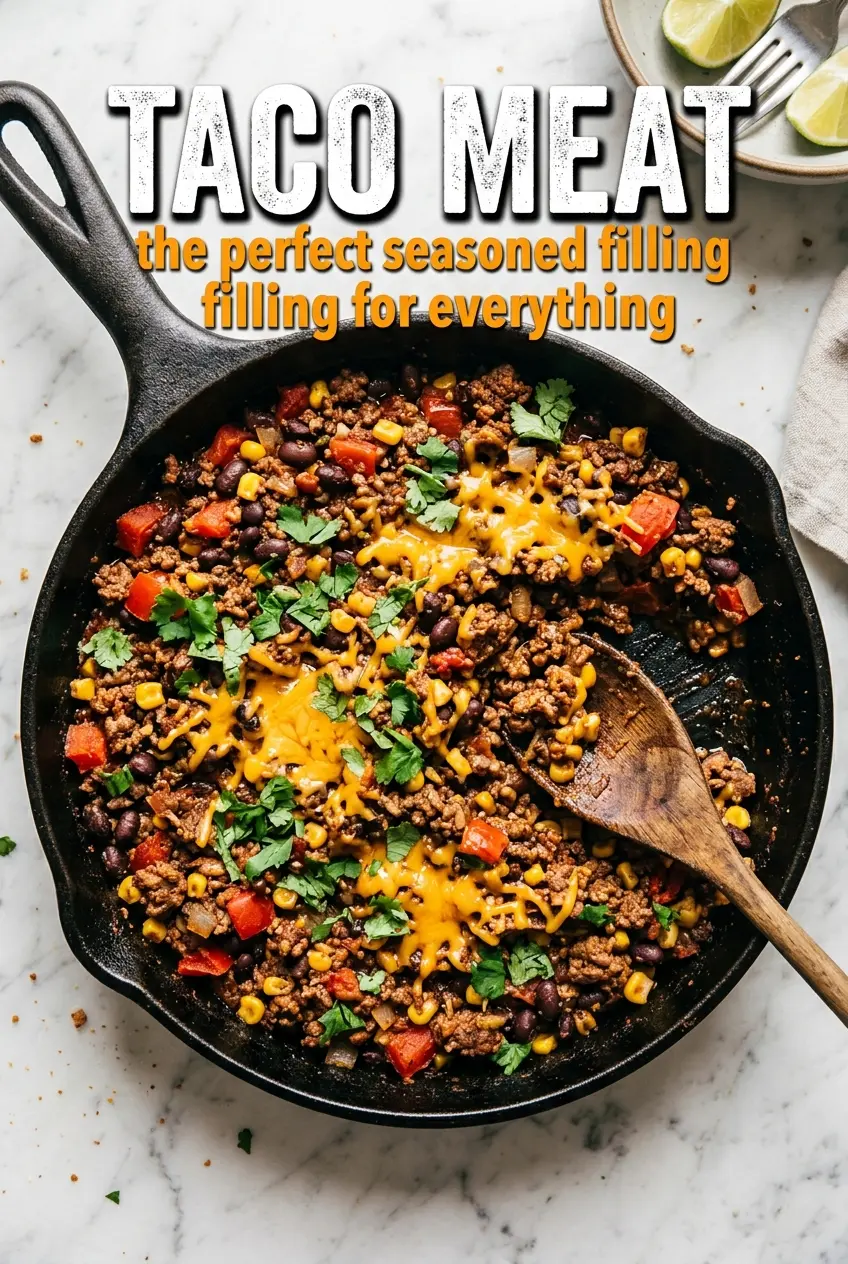
Taco Meat
Ingredients
Equipment
Method
- Heat a large skillet over medium-high heat. Add the ground beef and break it into small crumbles as it cooks for about 5-7 minutes until browned.
- Drain excess fat, leaving about 1-2 tablespoons in the skillet. You should see a thin coat of fat clinging to the meat.
- Add the water, taco seasoning, tomato paste, cumin, garlic powder, and cayenne pepper to the skillet. Stir well to combine and coat the browned beef.
- Simmer for 3-5 minutes, stirring occasionally, until the sauce thickens and coats the meat. It should look glossy and cling to the crumbles.
- Season with additional salt and pepper to taste. Taste and adjust until the flavor is balanced.
- Use immediately in tacos, burritos, quesadillas, or other Mexican dishes. For storage, cool completely and keep in an airtight container in the refrigerator up to 4 days.