Steak and shrimp cook fast on the grill, but putting them on the same skewer gives you a meal that lands with a little drama and a lot of flavor. The steak picks up charred edges, the shrimp turn juicy and firm, and the chimichurri cuts through the richness with fresh herbs, garlic, and vinegar. It’s the kind of dinner that looks like you worked harder than you did.
The trick is treating the steak and shrimp like two different proteins with two different needs. The steak wants enough heat to pick up color and stay tender in the middle, while the shrimp only need a few minutes before they turn snappy and opaque. Cutting the steak into even cubes and keeping the chimichurri bright and loose keeps the whole plate balanced instead of heavy.
Below, I’ll walk you through the part that matters most: how to keep the shrimp from overcooking before the steak is ready, plus a few smart swaps if you want to change up the herbs or make the dish work with what you already have.
The chimichurri was the star here — bright, garlicky, and just loose enough to spoon over everything. My shrimp stayed tender and the steak had great grill marks without drying out.
These chimichurri-topped surf and turf kebabs are made for the grill and disappear fast.
The Part That Keeps the Shrimp from Turning Rubbery
Most mixed-protein skewers fail because everything gets cooked as if it has the same timeline. Shrimp don’t forgive that. They go from juicy to tight fast, so the goal is to give the steak a head start without leaving the shrimp lagging behind. Cutting the steak into 1.5-inch cubes helps them hold up to the grill time, and medium-high heat gives you color before the shrimp overcook.
There’s also a practical reason for alternating the pieces: the shrimp act like little temperature markers. When they turn pink and opaque, you’re close. If the shrimp are curling hard into little rings, they’ve gone too far. Pull the skewers as soon as the steak reaches the doneness you want and the shrimp look just set.
What the Chimichurri Needs to Taste Bright, Not Flat
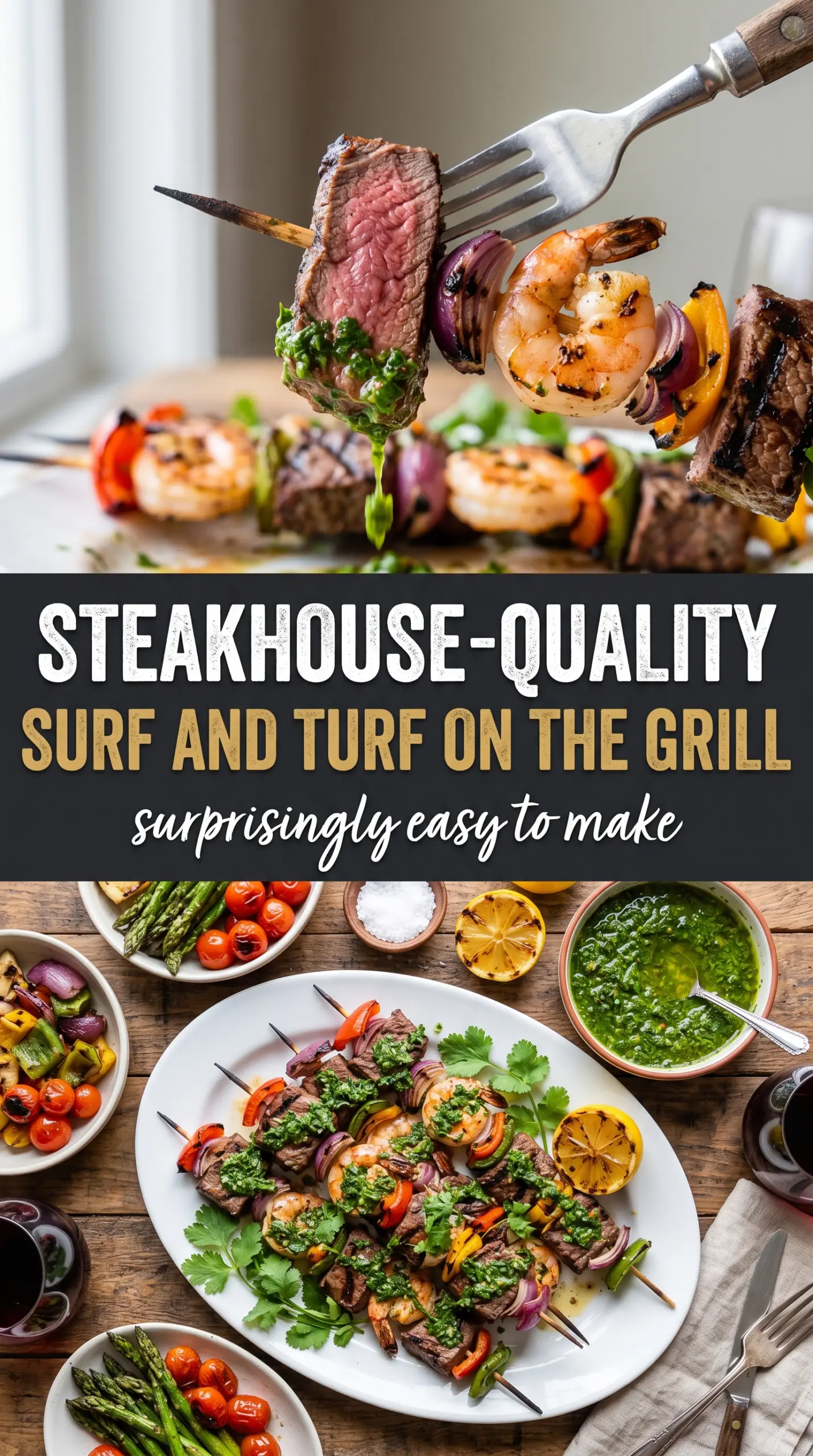
- Sirloin steak — Sirloin gives you enough beefy flavor and structure for the grill without needing a long marinade. Ribeye works too if you want more richness, but don’t use a very lean cut or it’ll dry out before the shrimp are done.
- Large shrimp — Use truly large shrimp so they match the steak cubes in cook time better. If you only have smaller shrimp, skewer them separately and cook them for less time, because they’ll finish before the beef.
- Fresh parsley and cilantro — This is the backbone of the sauce. Fresh herbs matter here; dried herbs won’t give you the same clean, sharp finish. If cilantro isn’t your thing, swap in more parsley and a little extra vinegar for balance.
- Red wine vinegar — This keeps the chimichurri lively and helps it cut through the char and fat. Lemon juice can work in a pinch, but it tastes softer and less traditional.
- Olive oil — Use a good olive oil if you can, because the sauce is mostly oil and herbs. It doesn’t need to be your fanciest bottle, just something that tastes clean and not bitter.
- Garlic — Fresh minced garlic gives the sauce its bite. If you’re sensitive to raw garlic, let the chimichurri sit 15 to 20 minutes before serving so it mellows a little.
How to Keep the Grill Work Moving at the Same Pace
Season the Steak and Shrimp Separately
Toss the steak cubes and shrimp in separate bowls so you can coat each one evenly without breaking up the shrimp. The olive oil helps with browning and keeps the seasonings from blowing off on the grill. If the shrimp sit too long with the salt, they can start to weep and lose some of their plump texture, so season them right before skewering.
Build the Skewers with Enough Space
Thread the steak and shrimp in an alternating pattern, but don’t pack them so tightly that they steam against each other. A little space between pieces helps the heat move around the skewers and gives you better char. If you’re using wooden skewers, soak them long enough that they don’t scorch at the ends.
Make the Chimichurri First
Mix the chimichurri before the skewers hit the grill so the flavors have time to settle and the garlic can soften in the vinegar and oil. It should look loose and spoonable, not like a paste. If it seems too thick, add a small splash of olive oil. If it tastes flat, it usually needs more salt or another teaspoon of vinegar.
Grill Hot, Then Turn on a Schedule
Preheat the grill to medium-high and cook the kebabs for 10 to 12 minutes, turning them every 3 minutes so the steak browns evenly and the shrimp don’t overcook on one side. You want a deep grill mark, not a dry crust. Pull the kebabs when the shrimp are pink and opaque and the steak is at the doneness you like; waiting for the steak to become perfect after the shrimp are done is how this kind of recipe goes sideways.
Serve the Sauce Generously
Spoon the chimichurri over the kebabs while they’re still hot so it loosens on contact and drips into the gaps between the pieces. Serve extra on the side. The best bites here are the ones where the char, the garlicky herbs, and the bright vinegar hit all at once.
Three Ways to Change the Skewers Without Losing the Balance
Make It Dairy-Free and Gluten-Free Without Any Extra Work
This recipe already fits both needs as written, which is one reason it’s such an easy grill-night dinner. Just check your spices if you’re using a blended garlic powder, and serve it with sides that keep the plate clean and simple. The flavor stays bold because the chimichurri carries the whole dish.
Swap the Steak for Chicken Thighs
Boneless chicken thighs work if you want a slightly cheaper version with a little more forgiveness on the grill. Cut them into similar-sized chunks and cook until they reach 165°F. You’ll lose some of the steakhouse feel, but the chimichurri keeps the dish bright and satisfying.
Use All Steak or All Shrimp When Timing Matters
If you’d rather not juggle two doneness targets, make either steak skewers or shrimp skewers and serve the chimichurri the same way. All-steak skewers give you more char and a meatier bite, while all-shrimp skewers cook in a flash and work well for a lighter plate. You lose the surf-and-turf contrast, but the sauce still makes the meal feel complete.
Storage and Reheating
- Refrigerator: Store the cooked steak and shrimp separately from the chimichurri for up to 3 days. The shrimp will tighten a bit after chilling, so don’t expect the same just-grilled texture.
- Freezer: The cooked kebabs freeze, but the shrimp can turn a little mealy after thawing. The chimichurri does not freeze well because the herbs lose their fresh texture, so keep that part fresh.
- Reheating: Warm the meat gently in a skillet over low heat or in a 300°F oven just until heated through. High heat will push the shrimp past tender and make the steak tough, which is the fastest way to ruin leftovers.
Questions I Get Asked About This Recipe

Surf and Turf Kebabs with Chimichurri Sauce
Ingredients
Equipment
Method
- Toss the steak cubes separately with olive oil, garlic powder, salt, and pepper until evenly coated, then set aside.
- Toss the shrimp separately with olive oil, garlic powder, salt, and pepper until evenly coated, then set aside.
- Thread steak and shrimp onto skewers, alternating between the two with a tight, even pattern.
- Combine parsley, cilantro, minced garlic, red wine vinegar, olive oil, and red pepper flakes in a bowl, then mix well until the sauce is uniformly green.
- Set the chimichurri aside while the grill heats and the kebabs cook.
- Preheat the grill to medium-high heat, then lightly oil the grates if needed.
- Grill the kebabs for 10-12 minutes total, turning every 3 minutes, until char marks appear and the surfaces look caramelized.
- Remove the kebabs when the steak reaches your desired doneness and the shrimp are pink and opaque.
- Serve immediately with generous portions of chimichurri sauce alongside the kebabs.