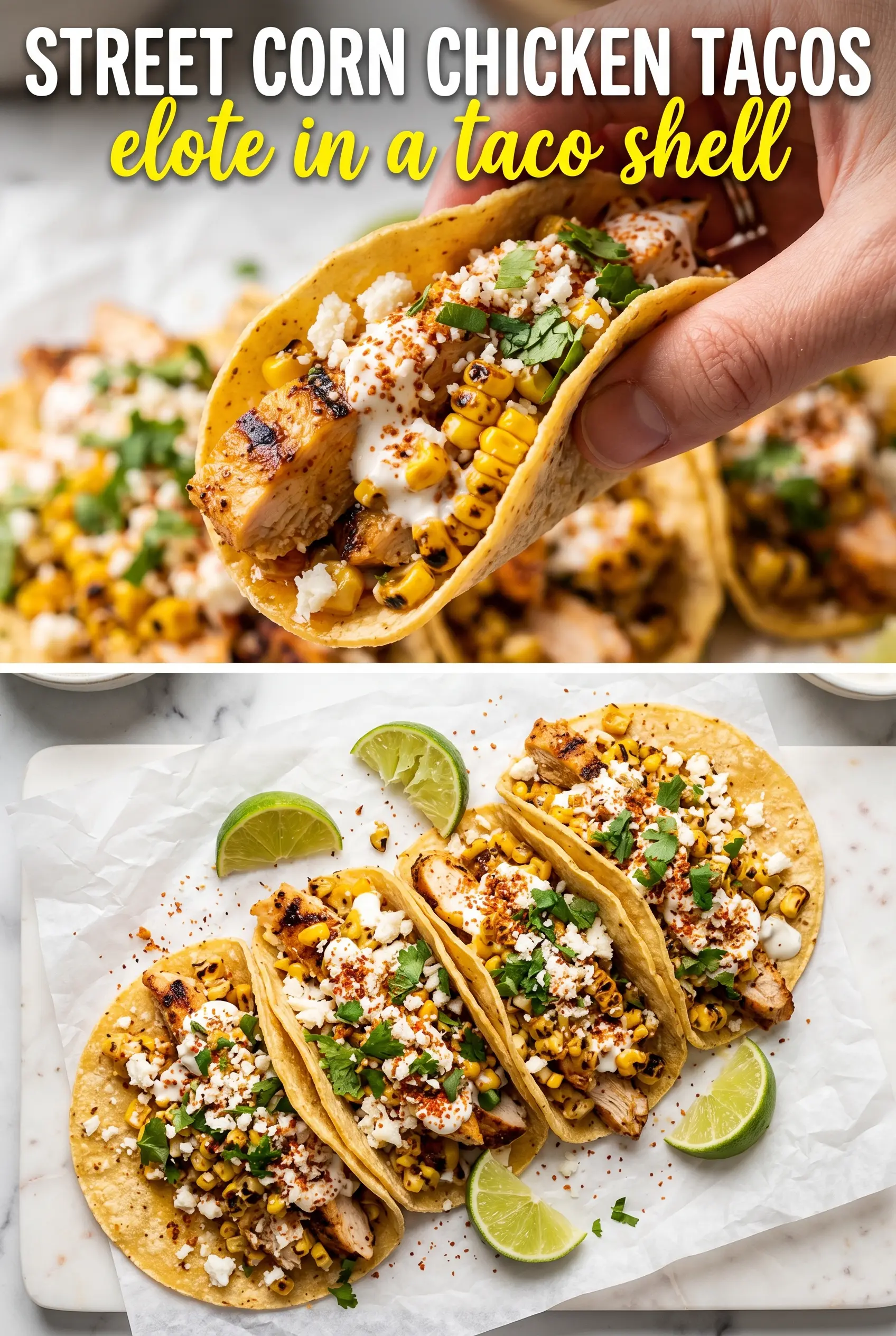
Juicy chicken, buttery charred corn, and salty cotija tucked into warm tortillas make these street corn chicken tacos the kind of dinner that disappears fast. The chicken stays simple and savory, while the corn mixture brings the creamy, tangy finish that makes each bite taste layered instead of flat. It’s the contrast that keeps this recipe on repeat: tender meat, sweet corn, bright lime, and a little crunch from the cabbage.
The trick is keeping the corn hot enough to pick up a little color before the cheese goes in. That quick sauté gives you the sweet, toasty flavor street corn is known for, and the lime juice wakes everything up at the end instead of dulling it down. Cotija softens into the corn without fully melting, which is exactly what you want here — it clings, it seasons, and it gives the filling that crumbly, creamy finish.
Below, I’ll walk through the one part that matters most if you want the corn to taste charred instead of steamed, plus a few easy swaps if you only have frozen corn or need to make these gluten-free. The method stays fast, but the payoff tastes like you spent a lot longer at the stove than you did.
The corn got those little browned spots and the cotija melted into the butter just enough to coat everything. I served them with extra lime and my husband went back for seconds before I even sat down.
Save these street corn chicken tacos for the nights when you want juicy chicken, buttery corn, and fresh lime in one fast taco.
Why the Corn Needs Heat Before the Cheese Goes In
The biggest mistake with street corn filling is rushing the pan. If the corn goes in and out too quickly, it tastes sweet but flat, and the tortillas end up carrying most of the flavor load. Letting the kernels sit against the hot skillet for a few minutes gives you those browned edges that make the filling taste like it came off the grill.
Garlic goes in first, but only for a short moment. After about 30 seconds, it should smell fragrant, not browned. If it takes on color before the corn hits the pan, the whole filling turns bitter. Cotija and lime are the finishers here, not the starting point, because both taste sharper and cleaner when they’re stirred in off the direct heat.
- Fresh corn — Best for the deepest sweetness and the best char. Frozen corn works too, but cook off the water first so it can brown instead of steam.
- Cotija — This is what gives the filling its salty, crumbly street corn character. Feta is the closest backup if you need one, though it’s a little tangier and softer.
- Butter — It carries the garlic and helps the corn brown. Oil will work in a pinch, but you’ll lose some of that rich, rounded flavor.
- Lime juice — Stir it in at the end so it stays bright. If it cooks too long, the filling tastes muted.
What Each Part Is Doing Once the Tacos Come Together
The chicken should be seasoned simply so it doesn’t fight the corn. Salt, pepper, and a good hot pan are enough here. You want clean chicken flavor that gives the tacos structure, not another heavily spiced layer competing with the street corn topping.
Warm tortillas matter more than people think. Cold tortillas crack, and even slightly stiff ones make the tacos feel dry. A quick pass in a skillet or wrapped in a towel in the microwave keeps them flexible so the filling stays tucked in instead of falling out when you pick them up.
- Chicken breasts — Slice them after resting so the juices stay in the meat instead of running onto the board. If you slice too soon, the tacos get wet and the chicken tastes less tender.
- Cabbage — This is the crunch that keeps the tacos from feeling soft all the way through. Shred it thin so it gives texture without taking over.
- Cilantro and lime wedges — Use them at the table, not just in the filling. That final squeeze of lime makes the corn taste fresher and keeps the whole taco from leaning heavy.
Cooking the Chicken and Filling the Corn Without Losing the Juices
Seasoning and Searing the Chicken
Pat the chicken dry, season both sides, and cook it over medium-high heat until it’s deeply golden outside and just cooked through inside. On breasts that are around the same thickness, 6 to 7 minutes per side is usually enough, but the real cue is a firm center that still feels springy, not hard. If the pan is too hot, the outside will scorch before the middle cooks; if it’s too low, the chicken will steam and stay pale. Let it rest for 5 minutes before slicing so the juices settle back into the meat.
Making the Street Corn Filling
Melt the butter, add the garlic, and give it just enough time to smell sweet and sharp. Add the corn and keep it moving every so often so some kernels can brown while others stay juicy. When the corn looks glossy and a few spots are golden, turn off the heat and stir in the cotija, cilantro, and lime juice. If you add the cheese too early over high heat, it can turn greasy instead of creamy.
Warming and Filling the Tortillas
Warm the tortillas until they’re soft and bendable. Then layer in the sliced chicken first, followed by the corn mixture, cabbage, and extra cilantro. That order keeps the cabbage crisp and stops the hot corn from making the tortillas soggy before they hit the table. A final squeeze of lime is worth it every time because it cuts through the butter and wakes up the cheese.
How to Adapt These Tacos When You’re Missing One Thing
Frozen Corn Works, But Dry It Out First
Frozen corn is a good backup, especially when fresh corn isn’t in season. Thaw it first and let the excess water cook off in the skillet before you expect any browning. If you skip that part, the filling tastes boiled instead of charred.
Swap Cotija for Feta When Needed
Feta gives you the same salty crumble, though it’s a little tangier and softer. Use a light hand with any extra salt if you make the swap, because feta can push the filling over the edge faster than cotija.
Make It Gluten-Free With Corn Tortillas
Corn tortillas work well here and bring their own toasted flavor. Warm them carefully so they stay flexible; if they dry out, they’ll crack the second you fold them around the filling. Stack them and wrap them in a towel while you finish the chicken.
Use Chicken Thighs for a Richer Bite
Boneless thighs stay juicy and handle a little extra heat better than breasts. They take a few minutes longer, but the result is richer and more forgiving if you’re not watching the pan constantly.
Storage and Reheating
- Refrigerator: Store the chicken and corn mixture separately for up to 3 days. The cabbage is best added fresh so it stays crisp.
- Freezer: The cooked chicken freezes well for up to 2 months, but the corn mixture doesn’t hold its texture as nicely once thawed. Freeze the chicken only if you can.
- Reheating: Warm the chicken gently in a skillet or covered in the microwave with a splash of water, then reheat the corn filling just until hot. High heat dries out the chicken and turns the corn mixture greasy.
Answers to the Questions Worth Asking
Street Corn Chicken Tacos
Ingredients
Equipment
Method
- Season the boneless, skinless chicken breasts with salt and pepper. Grill or pan-fry over medium-high heat for 6-7 minutes per side until cooked through, using a visible golden-brown exterior.
- Let the chicken rest for 5 minutes, then slice into strips. The slices should look juicy with clear, steaming pores rather than dried-out edges.
- In a skillet, melt the butter and sauté the garlic for 30 seconds. Stir until the garlic is fragrant and lightly softened, not browned.
- Add the corn kernels and cook for 3-4 minutes, stirring occasionally. Look for charred-looking kernels and slightly glossy, caramelized edges.
- Stir in the cotija cheese, cilantro, and lime juice. The mixture should thicken lightly and cling to the corn.
- Warm the flour tortillas until pliable, stacking them as they get hot. They should show light steam and flexible spots without cracking.
- Fill each tortilla with sliced chicken and the corn mixture. The filling should look layered, with visible corn and crumbles of cotija on top.
- Serve with shredded cabbage, fresh cilantro, and lime wedges. Finish with extra lime juice at the table for brightness.