Strawberry Margarita Cake brings together a soft pink crumb, bright lime frosting, and fresh strawberry layers in a way that tastes cheerful without getting cloying. The cake stays tender, the strawberry flavor comes through cleanly, and the lime keeps the whole dessert from feeling heavy. It’s the kind of layer cake that looks festive on the table but still eats like something you’d happily go back for a second slice of.
What makes this version work is the balance. Fresh strawberry puree adds moisture and color, while the lime juice sharpens the berry flavor instead of letting it turn flat. The batter uses the classic creaming method, so beating the butter and sugar until fluffy gives the cake enough structure to hold those layers without turning dense. The frosting leans on cream cheese for tang, which plays nicely with the citrus and keeps the sweetness in check.
Below, I’ve included the one technique detail that keeps the cake from baking up heavy, plus a few swaps and storage notes for the times you want to make it ahead.
The cake layers baked up so light, and the strawberry puree gave it a real berry flavor instead of that artificial pink-cake taste. The lime frosting was the perfect finish and held its shape after chilling.
Save this Strawberry Margarita Cake for the next time you want a layer cake with fresh berry flavor, a bright lime finish, and a frosting that slices cleanly.
The Secret to Keeping the Strawberry Layer Cake Light Instead of Dense
The main thing that can go wrong here is overloading the batter with too much liquid from the strawberry puree. Fresh puree should be thick, not watery. If it looks loose, the cake can bake up gummy in the center and lose that tender crumb you want from a layer cake.
The other trap is rushing the mixing once the flour goes in. Alternate the dry ingredients with the strawberry-lime mixture and milk, and stop as soon as the batter looks combined. Overmixing after the flour is added develops too much gluten, which turns a soft cake into something tight and bready.
- Fresh strawberry puree — This gives the cake its natural color and berry flavor. Use ripe strawberries and blend them smooth, then measure after pureeing. If your berries are very juicy, let the puree sit in a fine strainer for a few minutes so the batter doesn’t get too wet.
- Lime juice — The acid brightens the strawberries and makes the cake taste like a true margarita-inspired dessert instead of plain berry cake. Bottled lime juice will work in a pinch, but fresh juice tastes sharper and cleaner.
- Cream cheese — This is what gives the frosting its tang and keeps it from reading as straight buttercream. Full-fat cream cheese sets up best; reduced-fat versions can turn loose and soft.
- Butter — Softened butter is important in both the cake and the frosting because it traps air when beaten. That air gives the cake lift and keeps the frosting smooth. If it’s too warm, the frosting can go greasy.
- Lime zest — Don’t skip it. The zest carries the lime aroma that juice alone can’t give you, and it makes the frosting taste fresher and more vivid.
Building the Batter and Frosting the Layers Without Losing the Texture
Mixing the Butter and Sugar Until It Lifts
Beat the butter and sugar until the mixture looks pale and fluffy, not just combined. That step sets up the cake’s structure and helps the final crumb stay light. If you move too quickly here, the cake still bakes, but it comes out heavier and less even. Add the eggs one at a time so the batter stays smooth instead of looking curdled.
Adding the Strawberry-Lime Mixture in the Right Order
Whisk the strawberry puree with the lime juice before you start alternating it into the bowl. That keeps the citrus distributed through the batter instead of landing in sharp pockets. Begin and end with the flour mixture so the batter has something to hold onto; if you finish with liquid, the bottom of the bowl often turns loose and overmixed while the top stays dry.
Baking and Cooling the Cake Layers Cleanly
Divide the batter evenly between the pans so both layers bake at the same pace. Pull them when the tops spring back and a tester comes out with a few moist crumbs, not wet batter. Let the cakes rest in the pans for 15 minutes before turning them out. If you move them too soon, they can tear. If you leave them in too long, condensation forms and the crumb can turn damp.
Whipping the Lime Cream Cheese Frosting
Beat the cream cheese and butter until the mixture is completely smooth before adding the sugar. If there are lumps now, they’ll still be there after the powdered sugar goes in. Add the lime juice gradually so the frosting stays spreadable, then finish with zest for flavor that actually comes through after chilling. If the frosting gets too soft, refrigerate it for 10 to 15 minutes before assembling the cake.
Make it more lime-forward
Add another teaspoon of lime zest to the frosting and replace a tablespoon of the milk with lime juice in the cake batter. That pushes the citrus flavor higher without making the cake sour. The crumb stays the same, but the finish tastes brighter and more like a margarita-inspired dessert.
Dairy-free version
Use a plant-based butter and a dairy-free cream cheese that’s meant for baking. The texture will be a little softer and the frosting may need a short chill before spreading, but the cake still holds together well. Choose an unsweetened non-dairy milk so the batter doesn’t get overly sweet.
Gluten-free adjustment
A good 1:1 gluten-free flour blend will work here, but the cake will be a touch more delicate. Let the batter rest for 10 minutes before baking so the flour hydrates evenly. That small pause helps the crumb bake up less gritty and more cohesive.
Storing slices for later
Store the assembled cake covered in the refrigerator for up to 4 days. The crumb stays moist, and the frosting firms up nicely, which makes clean slices easier. For freezing, wrap unfrosted cake layers tightly and freeze for up to 2 months; thaw them in the refrigerator before frosting so condensation doesn’t soften the surface.
Questions I Get Asked About This Strawberry Margarita Cake
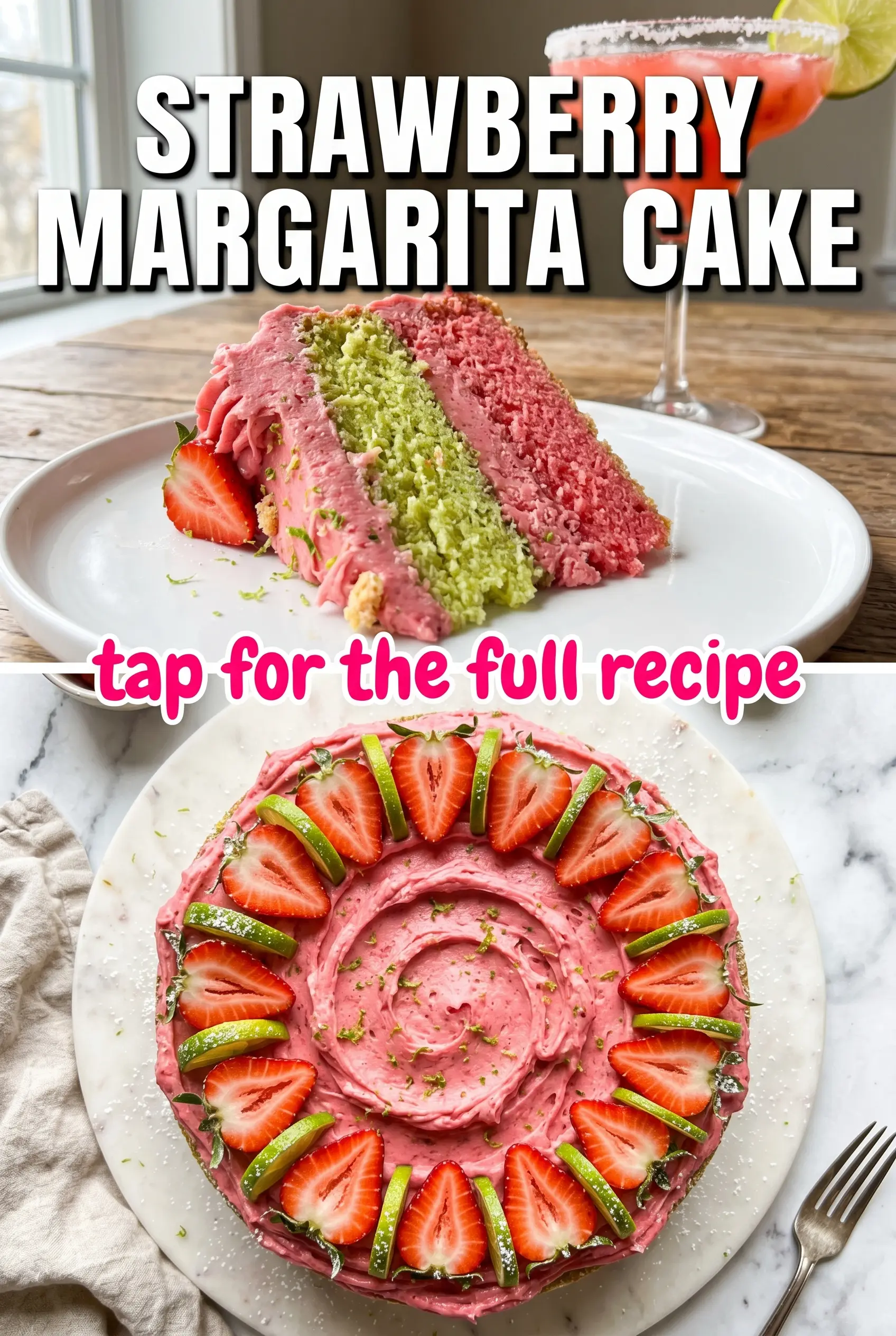
Strawberry Margarita Cake
Ingredients
Equipment
Method
- Preheat oven to 350°F and grease two 8-inch round cake pans. Make sure the pans are coated so the cakes release cleanly.
- Whisk together all-purpose flour, baking powder, and salt. Keep whisking until the dry ingredients look evenly combined.
- Beat butter and granulated sugar until fluffy. Stop and scrape the bowl once the mixture turns lighter in color.
- Add eggs one at a time and beat just until incorporated after each addition. The batter should look smooth and glossy.
- Combine fresh strawberry puree and lime juice. Stir until the mixture is fully blended and pourable.
- Alternate adding the flour mixture and the strawberry-lime mixture with whole milk, beginning and ending with flour. Mix only until each addition disappears to keep the crumb tender.
- Stir in vanilla extract. The batter should be thick, smooth, and evenly pink.
- Divide the batter between the two prepared pans. Tap the pans lightly to release large air bubbles.
- Bake at 350°F for 28-30 minutes. Look for lightly golden tops and a toothpick that comes out mostly clean.
- Cool in pans for 15 minutes, then turn out onto racks to cool completely. Don’t frost until fully cool to prevent melting.
- Beat cream cheese and butter until smooth. Continue until no lumps remain and the frosting looks silky.
- Add powdered sugar, lime juice, and lime zest and beat until thick and spreadable. Stop when the frosting holds soft peaks.
- Place one cake layer on a plate and spread frosting on top. Use an offset spatula to push frosting to the edges.
- Add fresh strawberries, sliced in an even layer over the frosting. Keep the slices spaced so every bite gets fruit.
- Place the second cake layer on top and press gently to level. A light press helps the layers adhere without squishing.
- Frost the top and sides of the cake. Smooth the surface for a neat finish and remove drips.
- Garnish with fresh strawberries and mint for a bright, fresh look. Chill the cake for 1 hour before slicing so the layers set.