Tender steak over creamy queso rice hits the kind of comfort-food balance that keeps this dish in the regular rotation: browned edges, juicy slices, and a skillet full of rice that soaks up every bit of beefy, cheesy flavor. The best part is that it eats like something you spent a lot longer on than you did. The steak rests while the rice cooks, and that timing works in your favor instead of against it.
What makes this version work is the order. The steak sears first so the pan keeps those flavorful browned bits, then the rice goes in and picks them up before the broth hits. That gives the rice a deeper savory base than plain simmering ever could. The queso goes in at the end, off the heat, so it melts into the rice instead of tightening up or turning grainy.
Below, I’m breaking down the part that matters most: how to keep the rice fluffy, the steak tender, and the queso smooth. There’s also a short guide for swapping in what you already have without losing the texture that makes this dish worth making.
The rice came out fluffy, the queso stayed silky, and the steak was still juicy after resting. I loved that the corn and peppers gave it a little sweetness without making the skillet heavy.
Save this steak and queso rice for the night you want a one-skillet dinner with a creamy finish and real seared flavor.
The Sear Comes First, or the Whole Skillet Tastes Flat
The steak needs to go into a hot pan before anything else. If you start with the rice, you lose the fond from the meat, and that browned layer is what gives the whole dish its backbone. A dry steak and a properly heated skillet matter more here than a long ingredient list. You want a fast sear that builds color without cooking the meat all the way through.
The other place people go wrong is rushing the rest. Slice too soon and the juices run onto the cutting board instead of staying in the meat. Five minutes is enough for thin flank or skirt steak, and that short pause makes the difference between tender slices and a pan of dry shreds.
What Each Ingredient Is Actually Doing in This Skillet
The steak matters most here, and flank or skirt are the right cuts because they sear fast and slice cleanly against the grain. Ribeye will work if that’s what you have, but it brings more fat and less of the firm, sliceable bite this dish is built around. Season it simply with salt and pepper so the queso can stay in charge of the final flavor.
- Long-grain white rice — This is the safest choice because it cooks up fluffy and separate. Short-grain rice can turn sticky once the queso goes in, and that makes the skillet heavy.
- Beef broth — Use a broth you’d actually sip on its own if possible. It’s the main seasoning for the rice, so a bland broth gives you a bland base.
- White queso dip — This is what gives the dish its creamy finish. A jarred dip or homemade queso both work, but add it off the heat so it melts smoothly instead of tightening into a paste.
- Red bell pepper and corn — These add sweetness and a little pop against the rich queso. Frozen corn is fine straight from the freezer; there’s no need to thaw it first.
- Onion and garlic — They build the base in the same pan the steak used, which means they absorb the savory bits left behind. Don’t rush their sautéing, or the rice will taste raw in the final dish.
- Lime wedges and cilantro — These finish the skillet with brightness. The lime cuts through the queso, and the cilantro keeps the dish from tasting flat.
Building the Rice So It Stays Fluffy Under the Queso
Getting Color on the Steak
Heat the oil until it shimmers, then lay the steak in without crowding the pan. It should sizzle immediately. If the pan is too cool, the meat will gray before it browns, and you’ll lose the crust that makes the final slices taste rich. Four to five minutes per side gets you medium-rare on most flank and skirt steaks, but thickness matters more than the clock.
Toasting the Rice in the Pan
After the steak comes out, the onions and garlic go into the same skillet. Once they soften, add the rice and stir until the grains look slightly translucent at the edges and smell nutty. That quick toast keeps the rice from tasting boiled, and it helps the grains hold their shape once the broth is in.
Simmering Without Stirring It Apart
When the broth goes in, bring it to a boil, then drop the heat low and cover the pan. A steady simmer matters here; a hard boil can break the rice before it finishes cooking. Leave the lid alone for most of the cook time so the steam stays trapped. If the lid keeps lifting, the rice will dry out before the liquid is absorbed.
Finishing With Queso and Steak
Stir in the peppers and corn near the end so they stay bright and just tender. Pull the pan off the heat before adding the queso, then fold it in until the rice turns creamy and glossy. If the queso goes in over high heat, it can separate or turn grainy. Top with the sliced steak last so it stays juicy and doesn’t overcook in the hot rice.
Three Smart Ways to Adapt the Skillet
Make It Dairy-Free Without Losing the Creamy Finish
Use a dairy-free queso-style sauce that melts smoothly, not a cold vegan cheese that stays firm. The texture will be a little softer and the flavor less sharp, but the skillet still gets that creamy coating over the rice.
Turn It Into a Chicken Skillet
Swap the steak for thin-sliced chicken thighs or breast strips and cook them until just done before starting the rice. Chicken gives you a lighter skillet, but it needs to be removed promptly so it doesn’t dry out while the rice cooks.
Use Brown Rice for a Heartier Bowl
Brown rice works, but it needs more broth and a much longer simmer, so plan on a different cook time than the one listed here. The result is nuttier and firmer, with less of the creamy, restaurant-style texture that white rice gives you.
Storage and Reheating
- Refrigerator: Store in an airtight container for up to 3 days. The rice will firm up as it chills, and the queso will look thicker.
- Freezer: It freezes, but the queso can separate a little after thawing. If you freeze it, portion it first and expect the texture to be softer when reheated.
- Reheating: Warm it gently in a skillet or microwave with a splash of broth or water to loosen the rice. High heat dries out the steak and makes the queso clump, so reheat just until hot.
Answers to the Questions Worth Asking
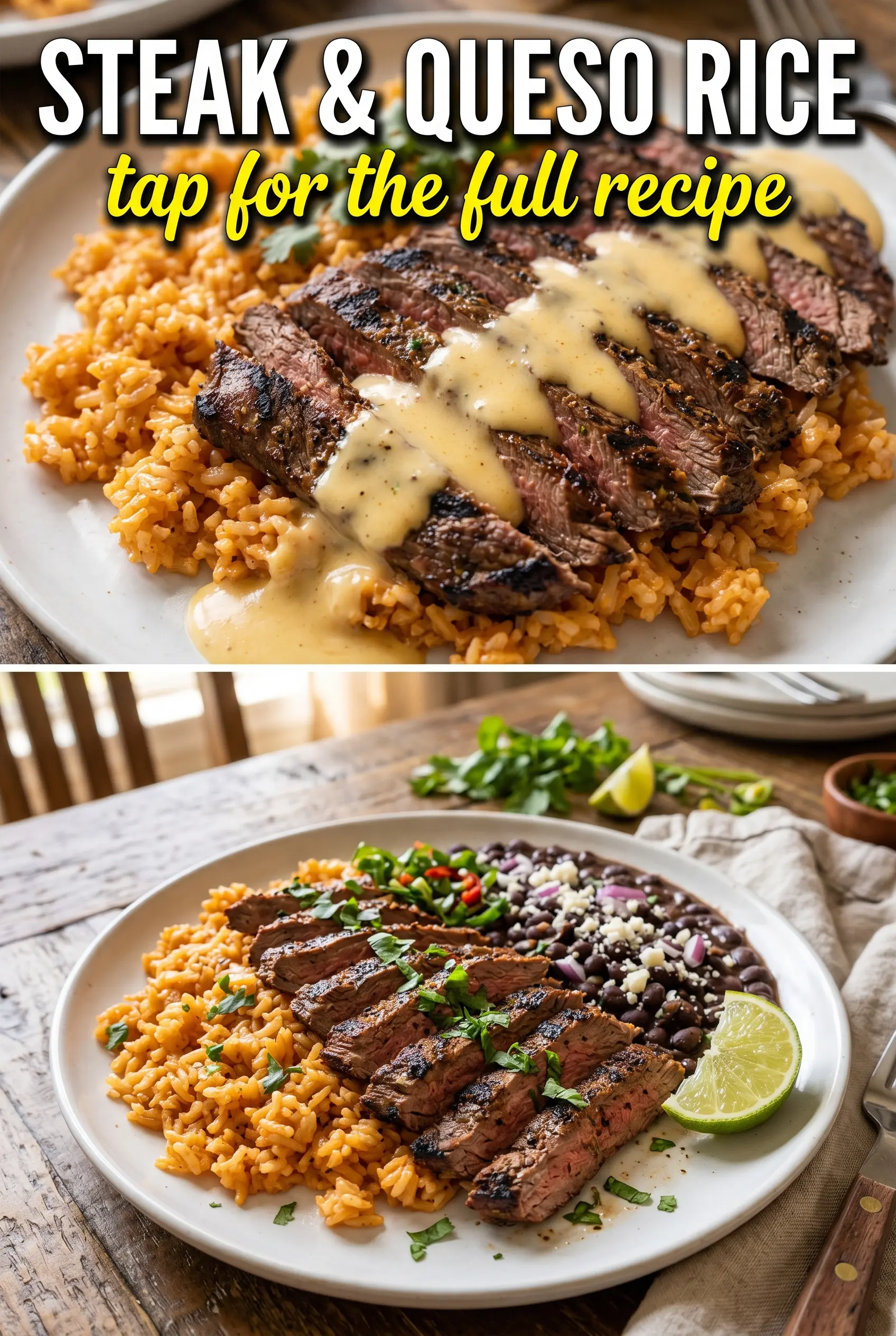
Steak & Queso Rice
Ingredients
Equipment
Method
- Heat 2 tbsp olive oil in a large skillet over medium-high heat until shimmering. Sear the seasoned steak for 4-5 minutes per side until medium-rare, then remove it to a plate.
- Rest the steak for 5 minutes, then slice it thinly so it fans easily over the rice.
- In the same skillet, sauté the diced onion over medium-high heat for 2 minutes until softened and lightly sizzling.
- Add the minced garlic and long-grain white rice, then toast for 2 minutes, stirring, until the rice looks slightly glossy and fragrant.
- Pour in the beef broth and bring everything to a boil, scraping up any browned bits from the bottom of the pan.
- Reduce heat to low, cover, and simmer for 12 minutes until the rice is tender and most of the liquid is absorbed.
- Stir in the diced red bell pepper and corn, then cook for another 2-3 minutes until the vegetables are tender.
- Remove from heat and stir in the white queso dip until melted into a creamy sauce.
- Top the queso rice with the sliced steak and garnish with fresh cilantro, then serve with lime wedges.