Steak kabobs with garlic butter hit that sweet spot between casual grilling and a meal that looks like you planned ahead. The steak stays juicy in the middle, the vegetables pick up some char at the edges, and the hot garlic butter at the end ties everything together with a glossy finish that sinks into the meat and drips down onto the peppers and onions.
What makes these work is keeping the steak in fairly large cubes and giving it a short marinade that seasons the outside without turning the beef soft or muddy. Sirloin is a smart choice here because it holds up on the grill and still stays tender when you pull it off at the right moment. The vegetables get cut to a similar size so they cook at the same pace as the meat instead of turning limp while the steak finishes.
Below, I’ll walk through the one timing detail that matters most, how to keep the garlic butter from losing its punch, and a few easy swaps if you want to change up the vegetables or make the kabobs fit what’s already in your kitchen.
The steak stayed tender and the mushrooms soaked up all that garlic butter at the end. I loved that the peppers still had a little bite instead of going mushy on the grill.
Steak Kabobs with Garlic Butter are the kind of grilled dinner that stays juicy, charred, and worth making on repeat.
Why the Steak Needs Space Before It Hits the Grill
The biggest mistake with kabobs is packing the skewers too tightly. When the meat and vegetables are pressed together, they steam instead of sear, and you lose the edge that makes grilled kabobs worth serving in the first place. Leave a little space between pieces so the heat can move around each one and the surface can brown instead of turning pale and soft.
Sirloin is sturdy enough for direct heat, but it still rewards a short marinade and a hot grill. The Worcestershire sauce brings depth and salt, while the garlic in the marinade and again in the butter gives the steak a layered finish instead of one flat garlic note. If your kabobs dry out, it usually means they stayed on the grill too long after the outside was already done. Pull them when the steak is just cooked through and let the garlic butter do the rest.
What Each Ingredient Is Actually Doing in These Kabobs
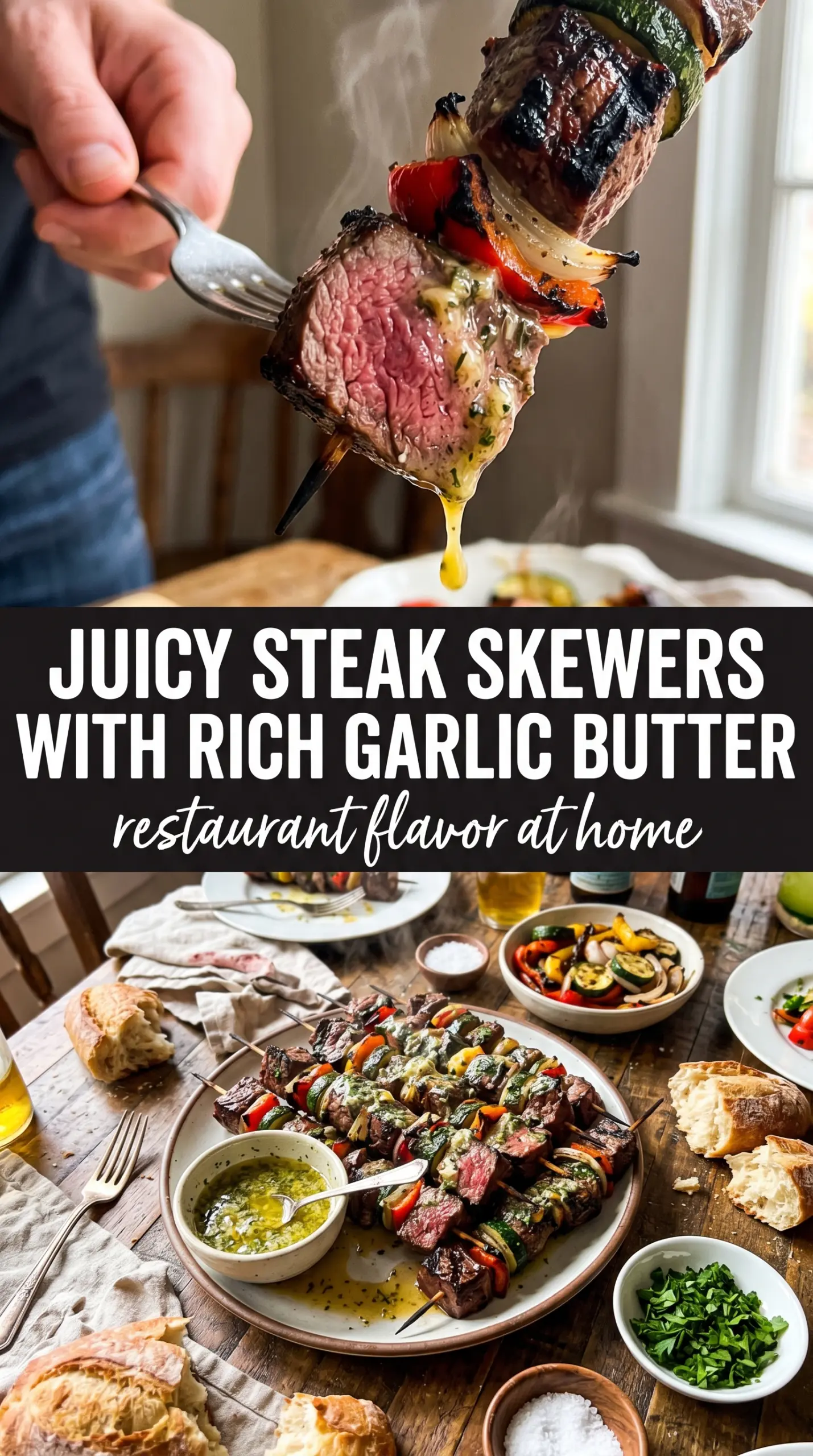
- Sirloin steak — This is the right balance of tenderness and structure for skewers. Ribeye is richer, but it can get overly soft and greasy on the grill, while leaner cuts can dry out before the vegetables finish. Cut the steak into even 1.5-inch cubes so every piece cooks at the same pace.
- Olive oil and Worcestershire sauce — The oil carries the seasonings across the meat, and the Worcestershire adds savory depth that tastes like the grill did more work than it actually did. You can swap in avocado oil if that’s what you keep around, but don’t skip the Worcestershire unless you replace it with another salty, umami-rich ingredient.
- Bell peppers, red onion, and mushrooms — These hold up well over high heat and give you a mix of sweet, sharp, and earthy bites. Keep the chunks large enough that they won’t fall apart on the skewer. If your mushrooms are huge, halve them instead of leaving them whole so they cook through with the steak.
- Butter, garlic, and parsley — This finishing sauce is what makes the kabobs taste complete. Brush it on while the meat is still hot so it melts into the surface instead of sitting on top. Fresh garlic matters here; powdered garlic won’t give you the same bright, sharp finish.
Building the Kabobs So the Grill Does the Work for You
Marinating the Steak Without Overdoing It
Stir the olive oil, Worcestershire sauce, minced garlic, salt, and pepper together, then coat the steak cubes and let them sit for 30 minutes. That short rest seasons the outside and loosens the surface just enough to help with browning. Go much longer and the texture can turn soft on the edges, especially with a salty marinade like this one. If you’re short on time, even 15 minutes helps, but don’t skip the rest entirely.
Threading the Skewers Evenly
Alternate steak, peppers, onions, and mushrooms so every skewer has a mix of colors and textures. Keep the pieces snug but not jammed together; the grill needs a little room to get around each bite. If you’re using wooden skewers, soak them long enough that they don’t scorch during the cook. Metal skewers are easier because they heat through and help the inside of the meat cook a little more evenly.
Grilling to the Right Doneness
Set the kabobs over medium-high heat and turn them every 3 to 4 minutes. You’re looking for browned edges on the steak, softened onions, and peppers with dark spots where they touch the grates. If the vegetables are charred but the steak still needs time, move the skewers to a cooler part of the grill instead of blasting everything with more direct heat. That keeps the outside from burning before the center catches up.
Finishing With Garlic Butter
Mix the melted butter with garlic and parsley while the kabobs grill, then brush it on the moment they come off. The heat from the meat blooms the garlic and carries the parsley across the surface. If you wait too long, the butter cools and slides off instead of clinging to the steak and vegetables. Serve them right away while the butter is still glossy and the juices are still moving.
Three Ways to Adjust These Kabobs Without Losing the Good Part
Dairy-Free Garlic Finish
Swap the butter for a good olive oil or a dairy-free butter substitute. You’ll still get the garlic and parsley finish, but the sauce will be a little lighter and less rich. Brush it on in the same way, right after grilling, so the herbs wake up from the heat.
Lower-Carb Vegetable Mix
Use zucchini, cherry tomatoes, and extra mushrooms in place of the bell peppers and onions if you want a lower-carb version. Zucchini cooks fast, so cut it thick enough that it won’t collapse on the skewer. Cherry tomatoes should go on whole and near the center of the skewer where they’re a little protected from the hottest spots.
Make-Ahead for a Crowd
You can cut the steak and vegetables and mix the marinade a few hours ahead, then assemble the skewers just before grilling. Don’t thread everything too early if you’re using mushrooms or onions, since they’ll release moisture and soften while they sit. The garlic butter can be made ahead and gently reheated right before serving.
Storage and Reheating
- Refrigerator: Store leftovers in an airtight container for up to 3 days. The vegetables soften a little, but the flavor stays strong.
- Freezer: The cooked kabobs freeze, but the vegetables lose their best texture. If you want to freeze anything, freeze just the cooked steak pieces and make fresh vegetables later.
- Reheating: Reheat gently in a covered skillet over medium-low heat or in a 300°F oven until warmed through. High heat dries out the steak fast and makes the vegetables mushy before the center is hot.
Questions I Get Asked About This Recipe

Steak Kabobs with Garlic Butter
Ingredients
Equipment
Method
- Combine olive oil, Worcestershire sauce, minced garlic, salt, and pepper, then pour over steak cubes on a sheet pan or in a shallow tray and coat well.
- Cover and refrigerate for 30 minutes to marinate, turning once halfway so the beef absorbs the seasoning.
- Thread steak, bell peppers, red onion, and mushrooms onto skewers, alternating ingredients for even cooking.
- Grill over medium-high heat for 10-15 minutes, turning every 3-4 minutes until the steak reaches your desired doneness, with vegetables getting charred edges.
- Mix melted butter with minced garlic and chopped parsley until glossy and fragrant.
- Remove kabobs from the grill and immediately brush with garlic butter before serving, letting it pool and melt over the charred vegetables.