Steak crostini disappear fast because they hit every note that matters at a party: crisp bread, cool horseradish cream, tender slices of beef, and that sticky balsamic finish that keeps each bite from feeling heavy. The best ones are built for contrast. The toast stays sturdy, the steak stays pink in the middle, and the arugula brings a sharp little bite right at the end.
This version works because each layer is handled with a little restraint. The baguette gets toasted just until golden so it can hold the toppings without turning hard or dry. The steak is seared hot, then rested before slicing, which keeps the juices where they belong. And the horseradish cream is mixed just enough to stay cool and sharp instead of becoming muddy under the meat.
Below, I’ve included the details that matter most: how to keep the crostini crisp, how to slice the steak so every piece feels tender, and a few smart ways to adjust the toppings if you’re serving a crowd.
The horseradish cream was the perfect contrast to the medium-rare steak, and the baguette stayed crisp even after sitting out for a bit.
Save these steak crostini for the next time you want crisp baguette, pink steak, and horseradish cream on a single bite.
The Part That Keeps the Toast Crisp Under the Steak
The biggest mistake with crostini is loading soft toppings onto bread that hasn’t been toasted enough. Here, the baguette needs a little more than color; it needs structure. Bake the slices until they’re golden at the edges and dry on the surface, because that thin layer of dryness is what keeps the oil, cream, and steak from soaking straight through.
The steak also matters more than the garnish people usually fuss over. Thin slices from a rested medium-rare steak eat tender; slices cut while the meat is still hot and uncooperative tend to shred and lose their juices. If the steak is left on the counter for those 10 minutes after searing, the juices settle back in and the meat slices cleanly instead of collapsing.
What Each Layer Is Doing in These Steak Crostini

- Beef tenderloin or sirloin — Tenderloin gives you the most delicate texture, while sirloin brings a little more beefy flavor for less money. Either one works as long as you slice it thinly against the grain. A lean, quick-cooking cut is what keeps this appetizer elegant instead of chewy.
- Sour cream — This is the cool base that holds the horseradish and gives the topping enough body to spread. Full-fat sour cream tastes better here and stays silkier, but plain Greek yogurt can step in if that’s what you have. The result is a little tangier and less rich.
- Prepared horseradish — Fresh heat is the point. Prepared horseradish gives the cream its sharp edge without extra work, and bottled horseradish is one ingredient worth buying in a decent brand because weak versions disappear under the steak. Stir it in at the end so you can taste and control the heat.
- Balsamic glaze — This adds sweetness and acidity in a concentrated drizzle, which keeps the crostini from tasting one-note. If you only have balsamic vinegar, simmer it down until it coats a spoon, then let it cool before using. Thin vinegar will slide off and make the bread soggy.
Building the Steak Crostini in the Right Order
Toasting the Bread First
Brush the baguette slices with olive oil and bake them until they’re lightly golden and feel dry on top. You want them crisp enough to support the topping but not so dark that they turn brittle. If the bread bends when you lift it, it needs another minute or two. Let it cool for a few minutes before assembling so the cream doesn’t melt into the toast.
Searing the Steak Hard and Fast
Season the steak generously, then sear it in a hot oiled skillet without crowding the pan. You’re looking for a deep brown crust on the outside and an internal temperature of 130F for medium-rare. If the pan isn’t hot enough, the steak steams instead of searing and loses that flavorful crust. Pull it off the heat a touch early if you’re unsure; carryover heat will finish the job.
Resting and Slicing Cleanly
Rest the steak for 10 minutes before slicing. That pause keeps the juices from running out onto the cutting board, which matters here because dry steak on crostini tastes flat fast. Slice thinly against the grain so each piece stays tender. If the meat fights the knife, it usually means you’re cutting with the grain instead of across it.
Assembling Without Weighing the Toast Down
Spread a thin layer of horseradish cream on each crostini, add a small tuft of arugula, then top with a slice of steak. Finish with the balsamic glaze and chives right before serving. Too much cream or too many greens make the bread slide, so keep the layers light and intentional. The finished bite should hold together cleanly when you pick it up.
How to Tweak These for Different Guests and Different Tables
Make it dairy-free without losing the sharp creaminess
Swap the sour cream for a thick dairy-free sour cream or unsweetened cashew cream. You still want that cold, tangy base under the steak, so avoid thin plant-based substitutes that run off the toast. The flavor stays bright, but the texture will be a little softer.
Use tenderloin for a fancier bite, sirloin for stronger beef flavor
Tenderloin gives you the most luxurious texture and slices like butter, which makes it the better pick for a dinner party platter. Sirloin is a little firmer and more assertive, but it holds up well and costs less. Either one needs to be sliced thinly against the grain.
Turn it into a lighter appetizer with extra greens
Cut the steak slices a little smaller and double the arugula if you want each crostini to feel fresher and less rich. The balsamic glaze helps tie that version together because it adds enough sweetness to balance the greens. This works well for a larger party when you want the platter to stretch further.
Storage and Reheating
- Refrigerator: Store the components separately for up to 3 days. The toast softens if assembled ahead, and the steak slices best when chilled and wrapped well.
- Freezer: The cooked steak can be frozen for up to 2 months, though the texture is best fresh. Freeze it sliced or whole, tightly wrapped, then thaw in the refrigerator before using.
- Reheating: Warm the steak gently in a low oven or in short bursts in a skillet over low heat. Don’t blast it in the microwave or it turns gray and dry. Toast the bread fresh if you can; reheated crostini lose their snap fast.
Answers to the Questions Worth Asking
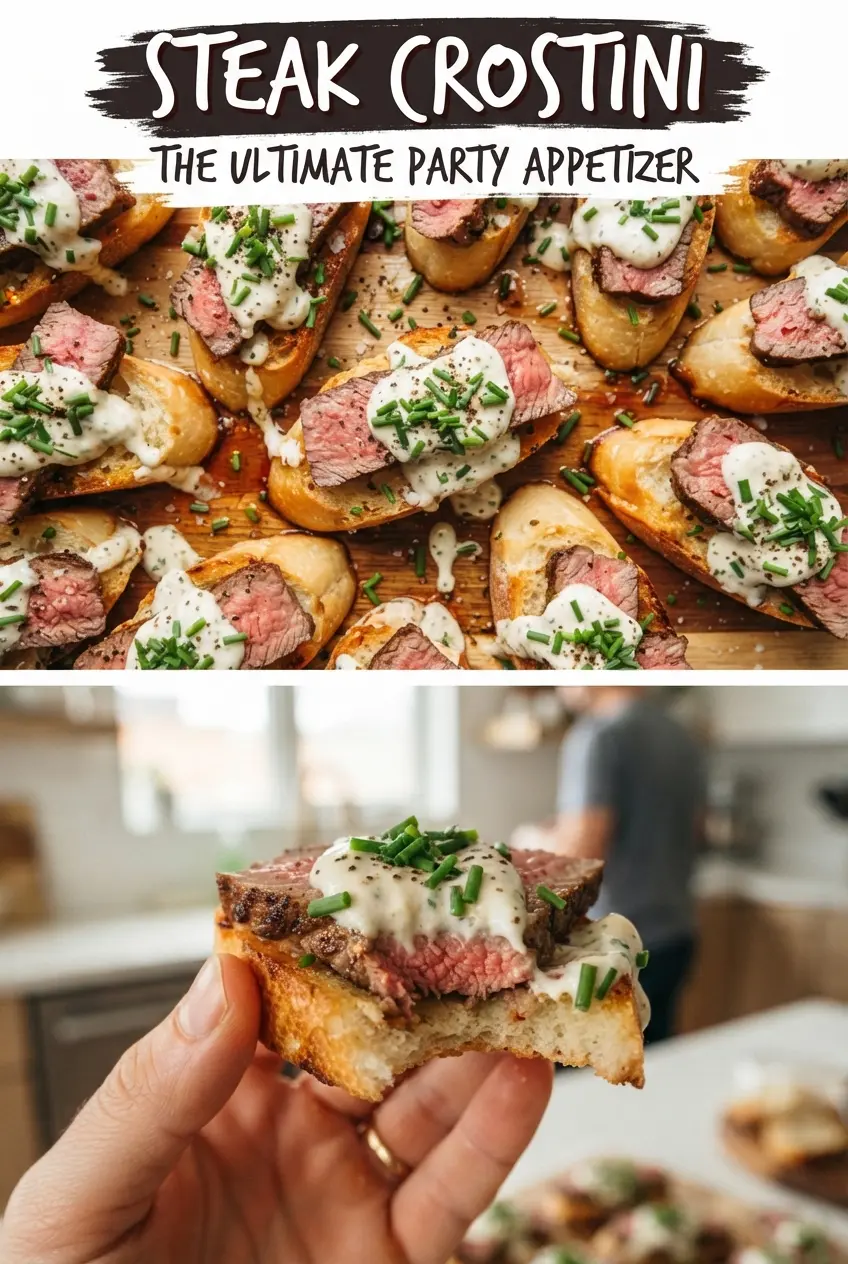
Steak Crostini
Ingredients
Equipment
Method
- Preheat oven to 400F. Brush baguette slices with olive oil and arrange on a sheet pan, then bake 6-8 minutes until golden, flipping once if needed for even browning.
- Season the steak generously with salt and pepper. Sear in a hot oiled cast iron skillet for 4-5 minutes per side until internal temperature reaches 130F for medium-rare.
- Rest the steak 10 minutes, then slice thinly against the grain. This helps the juices redistribute for cleaner, tender slices on the crostini.
- Stir together sour cream, prepared horseradish, and lemon juice until smooth. The mixture should look creamy and evenly speckled with horseradish.
- Spread horseradish cream on each crostini. Use enough to form a thin layer so the steak stays in place.
- Top each crostini with baby arugula and a slice of medium-rare steak. Add steak while it’s still warm so the arugula slightly wilts at the edges.
- Drizzle with balsamic glaze and garnish with chives. Finish with a light, even zigzag for glossy coverage and a final pop of green.