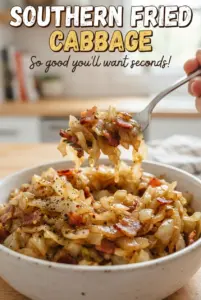
Southern fried cabbage turns soft, savory, and a little sweet in the best way, with tender edges, smoky bacon, and just enough bite left in the cabbage to keep it interesting. The pan does most of the work here. As the cabbage cooks down, it picks up the bacon drippings, butter, onion, and black pepper until everything tastes like it belonged together from the start.
What makes this version worth making is the balance. The cabbage isn’t boiled into submission, and it isn’t crowded so tightly that it steams into mush. It cooks in stages: bacon first for fat and flavor, onion for sweetness, cabbage for body, then a splash of vinegar at the end to wake everything up. That little hit of acid keeps the dish from feeling heavy.
Below, I’ve included the small details that matter most, including the point where the cabbage finally starts to caramelize instead of just soften. If you’ve ever ended up with pale, limp cabbage, the process section will help you fix that fast.
The cabbage got those caramelized edges I always miss when I make it at home, and the vinegar at the end kept it from tasting greasy. My husband kept sneaking forkfuls right from the skillet.
Save this Southern Fried Cabbage for the nights when you want smoky bacon, sweet onion, and tender cabbage in one skillet.
The Reason This Cabbage Gets Tender Without Going Mushy
The biggest mistake with fried cabbage is rushing the pan. If the cabbage goes in before the onion softens and the bacon drippings are hot, it tends to steam instead of fry. You want enough rendered fat in the skillet to coat the cabbage, plus enough surface heat to keep the slices moving from pale and raw to browned at the edges.
Timing matters here, but not in a fussy way. The onion needs a head start so it can turn sweet and soft before the cabbage goes in. Then the cabbage cooks uncovered, which lets moisture escape. That’s what gives you those golden, almost nutty edges instead of a wet skillet of cabbage soup.
What the Bacon, Butter, and Vinegar Are Doing Here
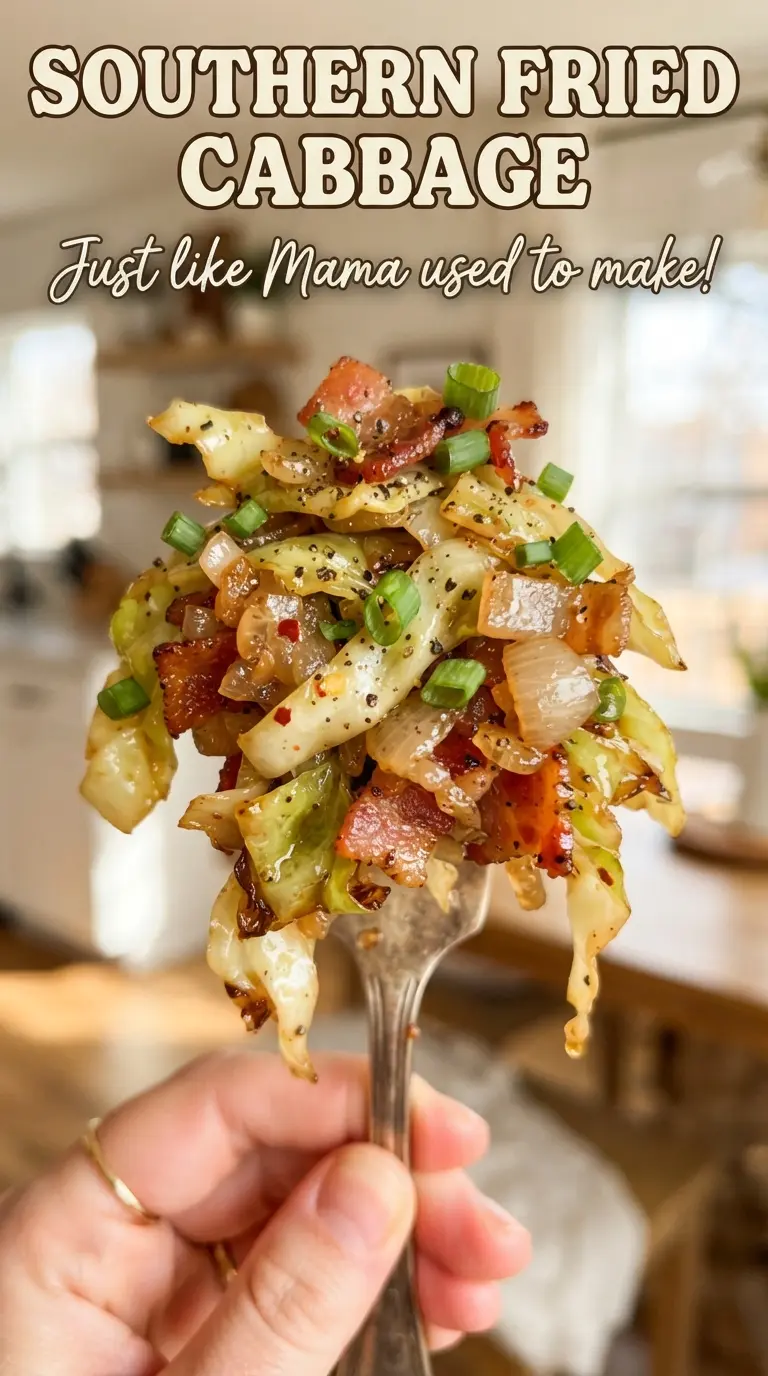
- Bacon — This is the backbone of the dish. It gives you the rendered fat that seasons the cabbage from the start, plus crisp pieces at the end for texture. Turkey bacon won’t give the same drippings, so if you swap it, add a tablespoon of oil or butter to keep the pan from drying out.
- Yellow onion — Onion brings sweetness and rounds out the saltiness of the bacon. Slice it thin so it softens at the same pace as the cabbage. Red onion works in a pinch, but the flavor is sharper and the dish reads less classic.
- Green cabbage — Use a fresh, heavy head with tight leaves. Older cabbage can taste flat and sometimes turns tough instead of tender. Chop it into bite-size pieces so it cooks evenly and doesn’t collapse into strands before the edges have a chance to brown.
- Apple cider vinegar — This is the finishing move. A small splash cuts through the fat and wakes up the whole skillet. Lemon juice can work if that’s what you have, but it tastes brighter and less round than vinegar.
Building the Skillet So the Cabbage Cooks, Not Steam
Rendering the Bacon First
Start the bacon in a large skillet over medium heat and let it cook until crisp enough to hold its shape. You want clear, shimmering drippings left in the pan, not a pool of burnt bits. If the bacon browns too fast, lower the heat; bitter bacon fat will carry through the whole dish.
Softening the Onion and Garlic
Once the bacon comes out, add the onion to the drippings and cook it until it looks glossy and soft at the edges. Stir in the garlic only for the last 30 seconds so it smells fragrant instead of sharp or burnt. Garlic burns fast in hot bacon fat, and once it does, there’s no fixing it.
Cooking the Cabbage Until It Catches at the Edges
Add the cabbage along with the butter, salt, pepper, red pepper flakes, and sugar. Stir occasionally, but not constantly. You want some contact with the hot skillet so the cabbage develops a few browned spots before it fully softens. If the pan seems dry, the cabbage may need a touch more butter, but don’t flood it or you’ll lose that fried texture.
Finishing with Vinegar and Bacon
When the cabbage is tender and has a little caramelization around the edges, stir in the vinegar and the crisp bacon. The vinegar should smell sharp for a second and then settle into the dish, not dominate it. Serve it warm while the bacon still has a little crunch.
Three Small Changes That Still Keep It Southern Fried Cabbage
Make It Meatless Without Losing the Pan Flavor
Skip the bacon and use butter plus a tablespoon of olive oil or neutral oil to cook the onion. You’ll lose the smoky depth, but a pinch of smoked paprika adds back some of that savory note. The texture stays the same, but the flavor lands lighter and less rich.
How to Make It Lower Carb
The sugar only nudges the cabbage toward a little sweetness, so you can leave it out if you want a stricter low-carb version. The onion and bacon still give the dish plenty of depth. You may want to keep the vinegar, since it helps replace some of the balance the sugar would normally provide.
Swap the Vinegar for a Different Finish
Apple cider vinegar gives the dish a mellow tang, but white vinegar works if that’s what’s in the pantry. It tastes a little sharper, so start with less and taste before adding more. Rice vinegar will soften the edge, though it leans sweeter and less Southern in tone.
Storage and Reheating
- Refrigerator: Store leftovers in an airtight container for up to 4 days. The cabbage softens a little more as it sits, but the flavor gets even deeper.
- Freezer: It freezes, but the cabbage turns softer after thawing, so the texture is best if you don’t mind a looser finish. Freeze in a sealed container for up to 2 months.
- Reheating: Reheat in a skillet over medium-low heat until warmed through. The mistake to avoid is blasting it in the microwave, which makes the cabbage watery and dulls the bacon.
Questions I Get Asked About This Recipe
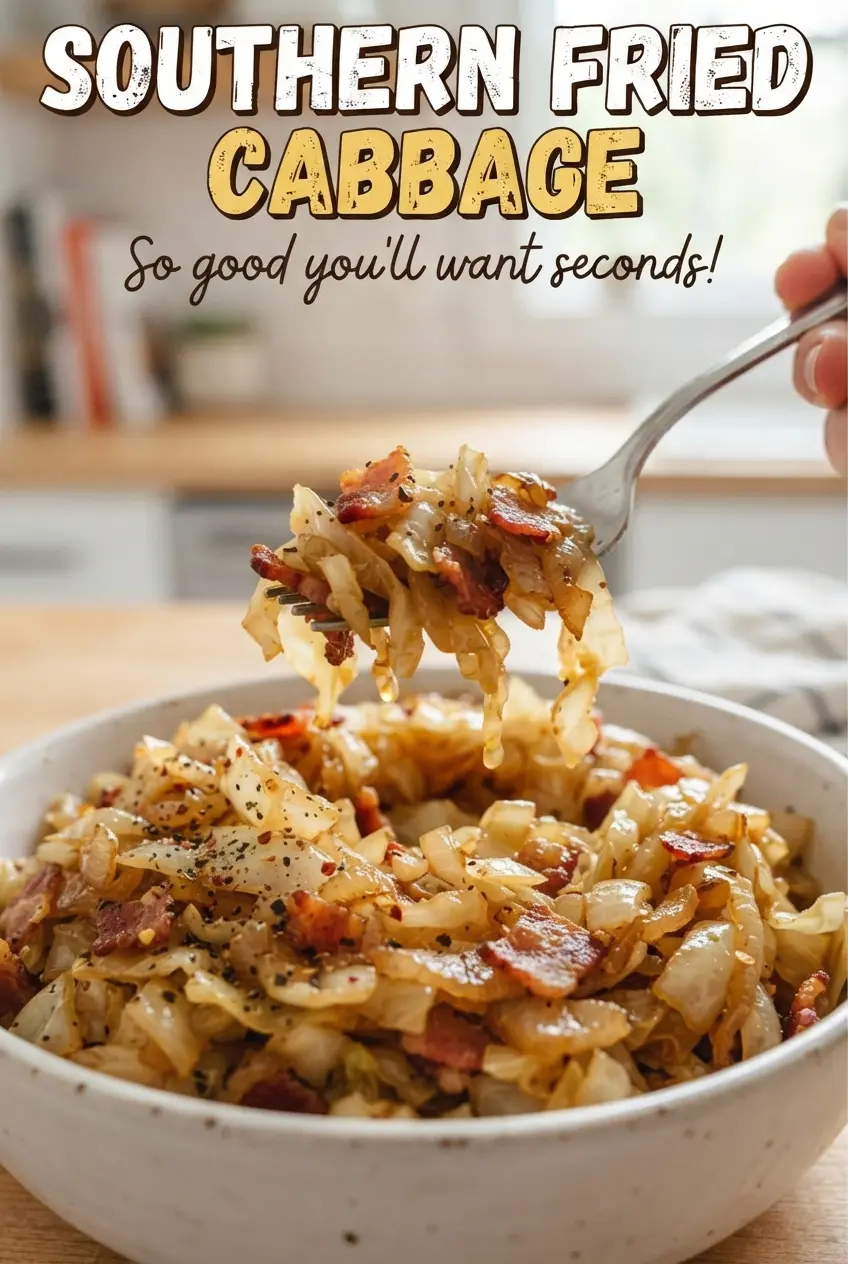
Southern Fried Cabbage
Ingredients
Equipment
Method
- Add chopped bacon to a large cast iron skillet over medium heat and cook for 8 minutes, stirring occasionally, until crisp; remove and leave the drippings in the pan.
- Add the sliced onion to the drippings and cook for 5 minutes, stirring, until softened; stir in the minced garlic for 30 seconds until fragrant.
- Add chopped green cabbage along with butter, salt, black pepper, red pepper flakes, and sugar, stirring to coat the cabbage.
- Cook for 12-15 minutes, stirring occasionally, until the cabbage is tender and caramelized at the edges; keep an eye on browning to avoid burning.
- Stir in apple cider vinegar and then fold in the crispy bacon, heating for 30-60 seconds until warmed through.
- Serve warm directly from the skillet, showing golden caramelized edges and bacon bits on top.