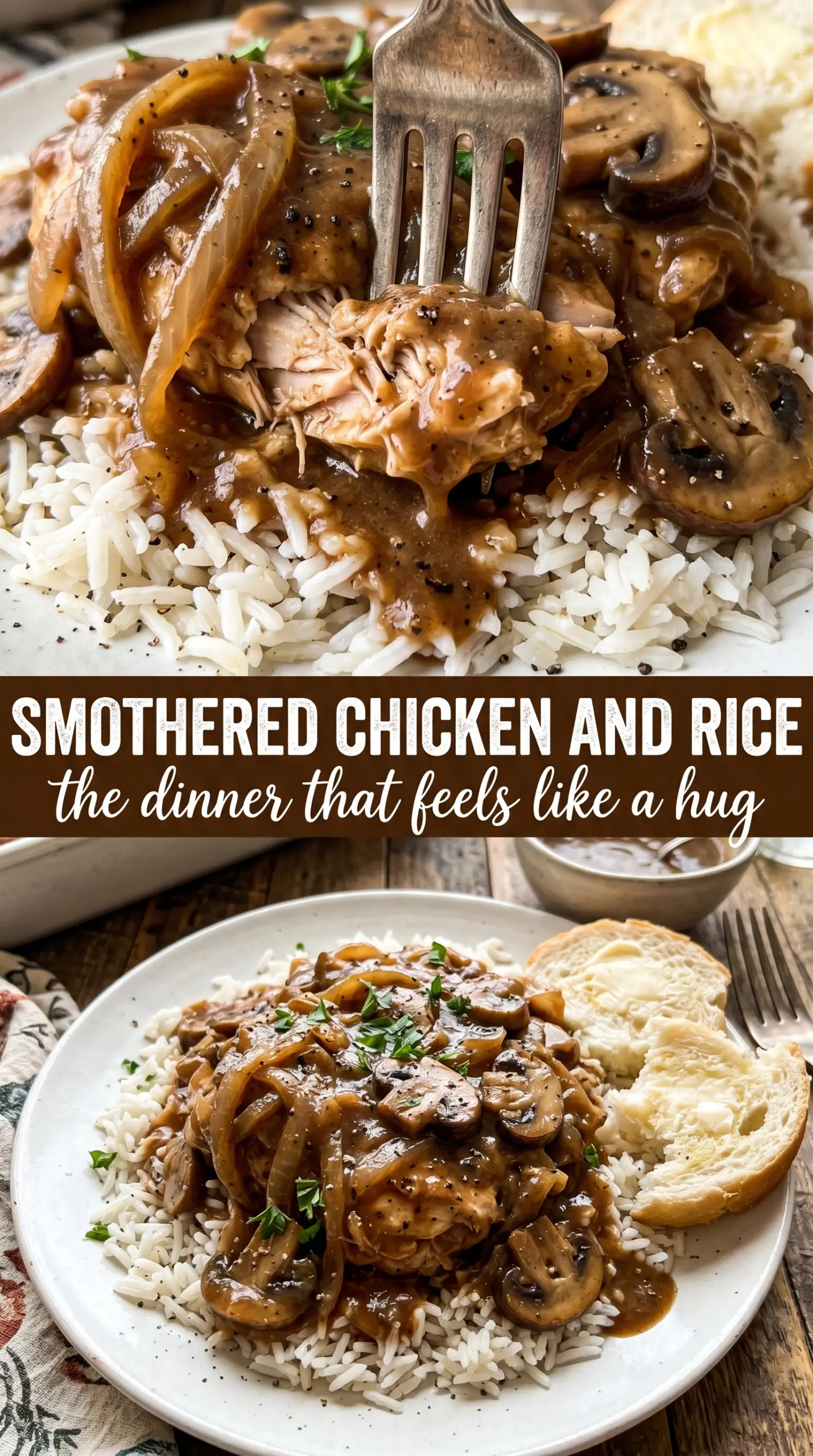
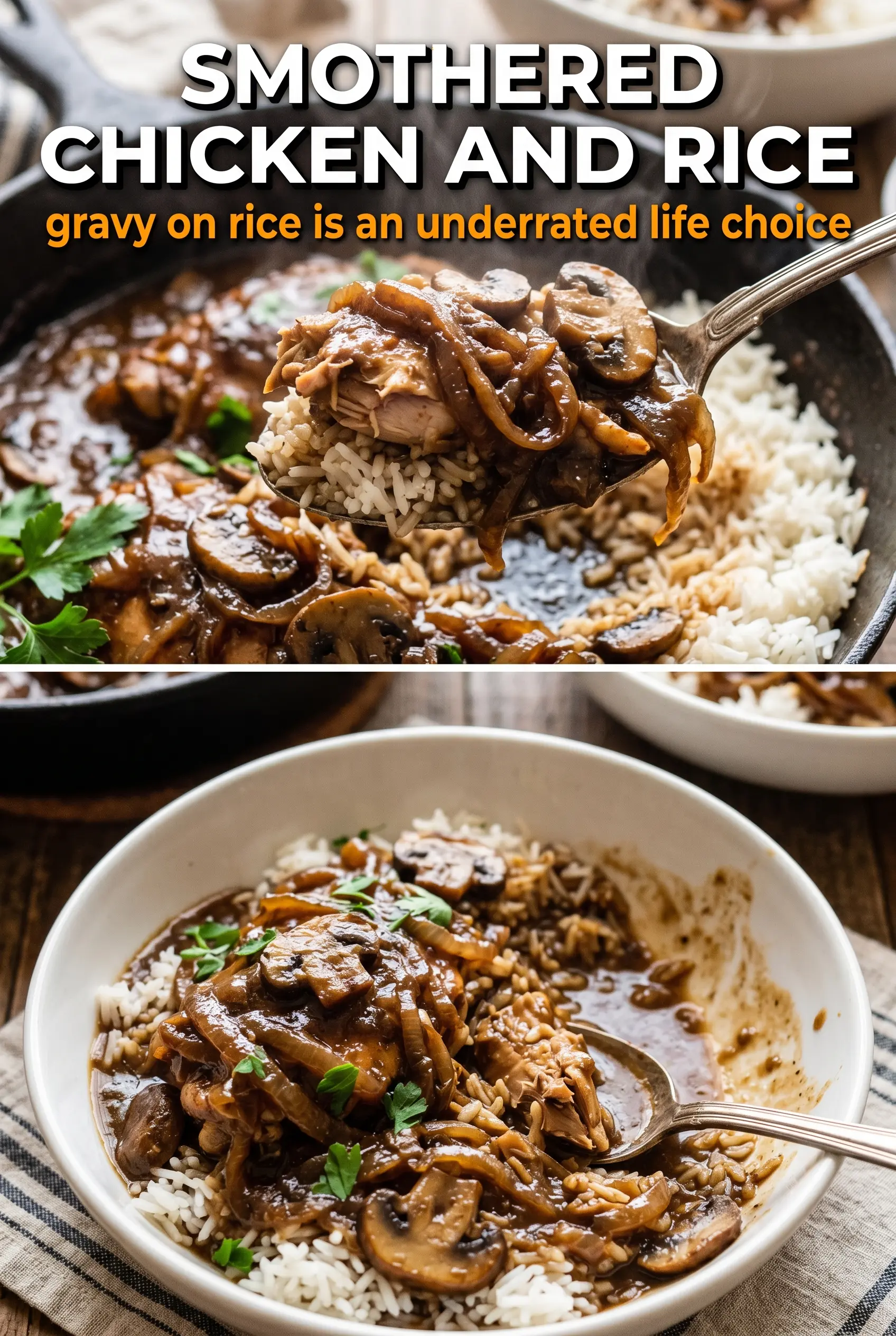
Smothered chicken and rice lands on the table with the kind of comfort that makes people fall quiet for a minute. The chicken turns fork-tender as it simmers, the onions melt into a dark gravy, and the rice drinks up every bit of broth and seasoning from the pot. It’s a one-pan dinner with real depth, not just something creamy poured over plain rice.
What makes this version work is the order of the cooking. Searing the chicken first leaves the browned bits in the pot, and those bits become the backbone of the gravy once the onions soften and the broth goes in. Long-grain white rice cooks right in that liquid, which means it comes out flavorful instead of bland, and the heavy cream adds body without making the sauce heavy or gluey.
Below you’ll find the small details that matter most here: how to get a deep sear without burning the spices, when the onions are ready for flour, and how to keep the rice from turning mushy under the chicken. If you’ve ever had smothered chicken come out thin, greasy, or underseasoned, this version fixes those problems at the source.
The rice came out fluffy, not mushy, and the onion gravy thickened up perfectly around the chicken. My husband kept going back for “just one more spoonful” until the pan was basically clean.
Keep this smothered chicken and rice handy for the nights when you want a skillet dinner with tender chicken, creamy gravy, and rice that cooks right in the sauce.
The Part That Keeps the Rice From Turning Mushy
The biggest mistake in smothered chicken and rice is treating the rice like a side dish instead of part of the sauce. Once the liquid goes in, the rice needs enough room and enough time to absorb it evenly. If the pot runs too hot, the bottom rice scorches before the top layer finishes, and if the lid leaks steam, the rice dries out before the chicken is done.
That’s why the simmer has to be low and the cover has to fit tightly. The chicken thighs sit skin-side up on top of the rice so the rendered fat and drippings drip back into the pot instead of pooling in the meat. Bone-in thighs also stay juicier than boneless pieces during the covered cook, which matters because the rice needs time and the chicken needs heat without drying out.
- Bone-in, skin-on chicken thighs — These bring the most flavor and stay tender through the full covered cook. Boneless thighs work in a pinch, but they give up a little of that rich, smothered texture and cook faster, so you’ll need to shorten the simmer.
- Long-grain white rice — This is the right rice for a pot like this because it stays separate and fluffy instead of turning sticky. Short-grain rice cooks too soft here, and brown rice needs more liquid and a longer simmer than the gravy can handle without breaking down.
- Heavy cream — It rounds out the gravy and gives it a silky finish. Half-and-half can work, but the sauce will be a little looser; don’t use milk unless you’re ready for a thinner gravy.
- Chicken broth — Use a broth you’d actually taste on its own. The rice absorbs every bit of it, so a weak broth makes the whole dish flatter than it should be.
What Each Ingredient Is Actually Doing in This Chicken
- Chicken breasts (the protein) — Let them sit at room temperature 15 minutes before cooking. This helps them cook evenly without drying.
- Oil or butter (the cooking medium) — This prevents the chicken from drying out and carries herb and spice flavors throughout.
- Garlic (the aromatic foundation) — Fresh minced garlic mellows and becomes sweet when cooked. Don’t brown it or it turns bitter.
- Cream or sauce (the moisture keeper) — This prevents the chicken from drying out during cooking. Balance richness with acid.
- Lemon, wine, or acid (the brightness) — This prevents heavy cream sauces from tasting flat. Add at the end to preserve freshness.
- Fresh herbs (basil, thyme, parsley) — Add some during cooking and some after so you get both cooked and fresh flavors.
- Cheese or toppings (optional richness) — These add creaminess and depth. Don’t overdo it or the dish becomes heavy.
- Proper oven temperature (375-400°F) or pan heat — This cooks chicken through without drying the edges. Use a thermometer for 165°F.
Building the Gravy Before the Rice Goes In
Seasoning and Searing the Chicken
Season the thighs all over, then place them skin-side down in hot oil and leave them alone until the skin turns deep golden and releases easily from the pan. If you move them too early, the skin sticks and tears instead of crisping. The goal here isn’t to cook them through; it’s to build color and render some fat, which gives the gravy a better base.
Turning the Onions Into the Sauce
Cook the onions in the same pot after the chicken comes out. They should soften first, then turn golden and a little jammy as they pick up the browned bits from the bottom. If the pot looks dry, add patience before you add liquid; those browned bits are the flavor. Stir in the garlic at the end so it doesn’t burn and turn bitter.
Thickening Without a Lumpy Gravy
Sprinkle the flour over the onions and stir it for about a minute so it loses that raw taste. Then add the broth gradually while scraping the bottom of the pot. This is where the gravy gets its body. If you dump in the liquid all at once, the flour can clump and the bottom can stay stuck.
Letting the Rice Finish in the Pot
Stir in the uncooked rice, then nestle the chicken back on top skin-side up. Bring the pot to a gentle simmer, cover tightly, and lower the heat enough that you see only the faintest bubbling. In about 20 to 22 minutes, the rice should be tender and the chicken should hit 165°F. If the rice is still firm but the liquid is gone, add a splash of hot broth and keep it covered for a few more minutes.
How to Change It Without Losing the Comfort of the Dish
Make it dairy-free
Swap the heavy cream for full-fat coconut milk or an unsweetened dairy-free cream substitute. Coconut milk gives the sauce body, but it adds a faint sweetness, so keep the Worcestershire and seasoning balanced. The gravy won’t taste exactly the same, but it will still coat the rice well.
Use boneless chicken thighs
Boneless thighs cook faster and are easier to eat, but they don’t give you quite as much drippings or the same rich finish. Sear them the same way, then start checking for doneness a few minutes early so they stay juicy. This is the best swap if you want a quicker weeknight version.
Make it gluten-free
Use a gluten-free all-purpose flour blend in place of the flour for the roux. Choose one that thickens in a straightforward 1:1 swap, and stir it into the onions long enough to lose any raw starch taste. Also check that your Worcestershire sauce is labeled gluten-free.
Add vegetables without watering it down
Mushrooms, peas, or diced carrots can fit here, but keep the amount modest so the rice still cooks evenly. Sauté firmer vegetables with the onions, then fold tender vegetables in near the end so they don’t disappear into the gravy. Too many vegetables will stretch the liquid and make the rice less creamy.
Storage and Reheating
- Refrigerator: Store in an airtight container for up to 4 days. The rice will firm up as it chills, but the gravy keeps it from drying out.
- Freezer: It freezes well, though the rice softens a little after thawing. Freeze in portions for up to 2 months and thaw overnight in the fridge.
- Reheating: Reheat gently on the stovetop or in the microwave with a splash of broth or water. High heat dries out the chicken and can make the rice tough before the center is hot.
Answers to the Questions Worth Asking
Smothered Chicken and Rice
Ingredients
Equipment
Method
- Season the chicken thighs with garlic powder, onion powder, smoked paprika, salt, and pepper. Pat lightly so seasoning sticks, then place skin-side down in a large Dutch oven with the vegetable oil.
- Sear for 6-7 minutes over skin-side down until the skin is golden. Flip and sear for 4 minutes to brown the second side, then remove the chicken to a plate.
- Cook the sliced onion in the same Dutch oven over medium heat for 8-10 minutes until caramelized. Add the minced garlic and cook for 1 minute, stirring so it doesn’t burn.
- Sprinkle the flour over the onions and stir for 1 minute to cook off the raw taste. Gradually add the chicken broth, scraping up browned bits from the bottom of the pot.
- Stir in the heavy cream and Worcestershire sauce until the gravy is smooth and cohesive.
- Stir in the uncooked long-grain white rice and mix it into the broth. Nestle the chicken skin-side up into the liquid.
- Bring to a simmer, then cover tightly and cook over low heat for 20-22 minutes. Cook until the rice is tender and the chicken reaches 165°F, with the gravy bubbling around the edges.
- Garnish with fresh parsley and serve immediately so the rice stays fluffy under the dark onion gravy.