Sausage, eggs, and hash browns turn into something far better than the sum of their parts when they bake together under a golden layer of cheddar. The top comes out bronzed and a little crisp, while the middle stays rich and layered, with pockets of creamy cream cheese melting through the sausage and custardy eggs holding everything together. It slices cleanly after a short rest, which is what makes it just as good for serving a crowd as it is for a make-ahead breakfast.
What makes this version work is the balance of moisture and fat. Thawed hash browns give the casserole its sturdy base, while sour cream and cream cheese keep the eggs from baking up dry. The sausage goes in already cooked, so the casserole only has to bake long enough to set the eggs and melt the cheese instead of spending extra time drying out in the oven.
Below, I’m walking through the parts that matter most: how to keep the center from staying loose, why the cream cheese is worth the extra step, and how to adapt it if you need to feed more people or prep it ahead.
The eggs set up beautifully and the cream cheese melted into little rich pockets instead of disappearing. I baked it the full 55 minutes and it still sliced clean after resting.
Love a hearty breakfast casserole? Save this sausage egg and cream cheese hashbrown casserole for the mornings when you want a crisp top, a creamy middle, and zero last-minute scrambling.
The Reason the Center Sets Without Turning Dry
Most breakfast casseroles fail in one of two ways: the eggs overbake and turn rubbery, or the middle stays wet because the potatoes released too much moisture. This one avoids both problems by using thawed hash browns and a full rest after baking. Thawing matters because frozen potatoes dump water into the dish, and that extra liquid keeps the eggs from setting cleanly.
The other key is the dairy mixture. Sour cream and cream cheese bring richness, but they also slow down the egg proteins enough that the casserole bakes up tender instead of spongy. You still need the casserole to reach a fully set center, but it should look just barely firm in the middle when it comes out. The residual heat finishes the job while it rests.
What Each Ingredient Is Doing in the Dish
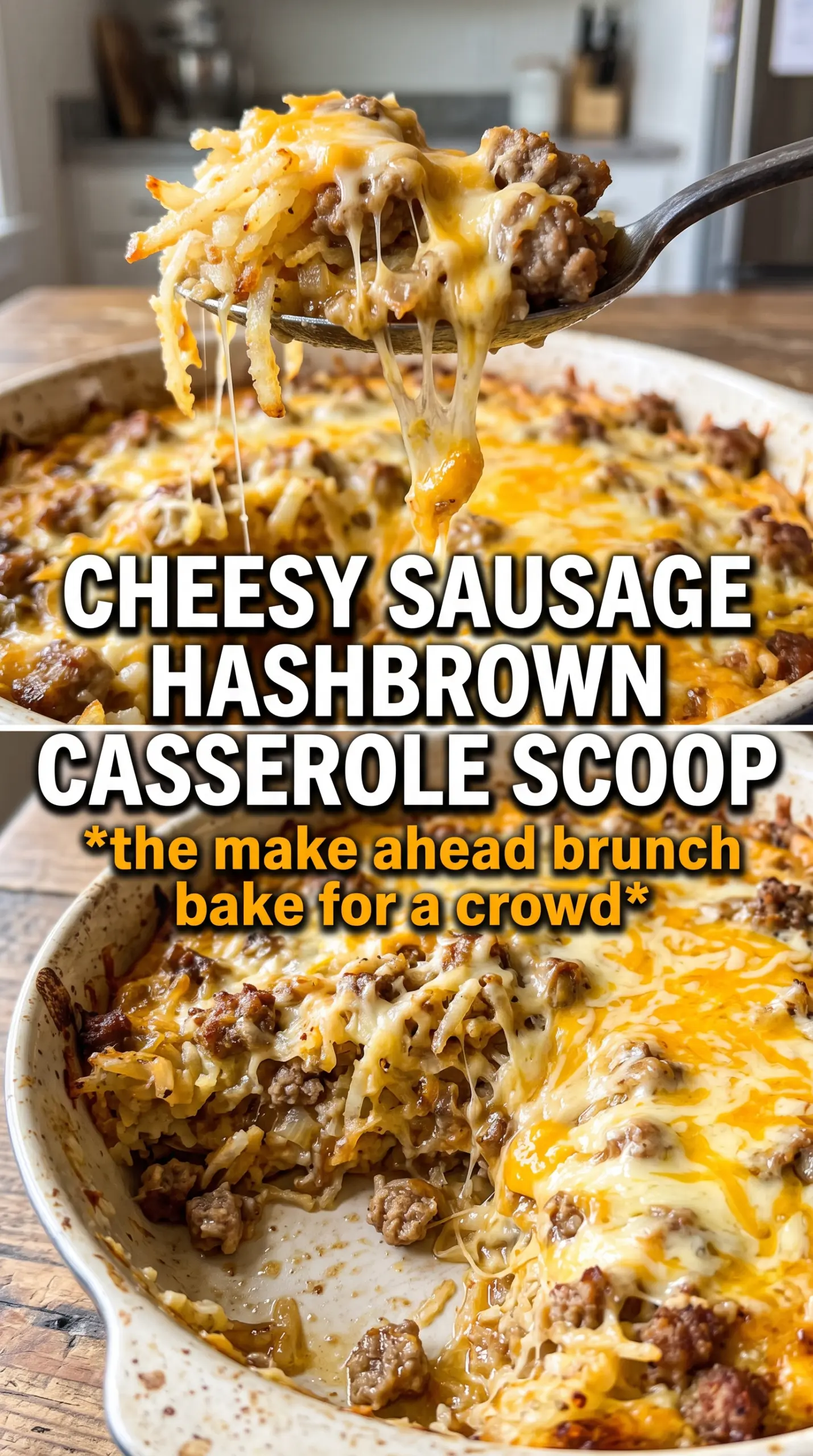
- Breakfast sausage — This gives the casserole its savory backbone. Cook it first and crumble it well so you get evenly distributed bites instead of dense clumps.
- Frozen shredded hash browns — They build the base and keep the casserole from collapsing into an omelet. Thaw them completely; if they’re icy, the casserole steams instead of baking into a firm slice.
- Cream cheese — This is what gives you those rich, melty pockets through the center. Cube it while it’s softened so it disperses without tearing the hash browns apart.
- Eggs, milk, and sour cream — Together they create a custardy binder that sets without getting bouncy. Whole milk gives the best texture here; lower-fat milk works, but the casserole won’t taste as full.
- Sharp cheddar — Sharp cheddar cuts through the richness and forms that browned top everyone wants. Pre-shredded cheese works in a pinch, but freshly shredded melts more evenly.
- Garlic powder, onion powder, and smoked paprika — These season the whole pan from the base up. Smoked paprika adds warmth without making the casserole taste smoky in a heavy way.
Building the Layers So the Bake Stays Even
Start with the potatoes
Spread the hash browns in an even layer across the greased dish and season them before anything else goes on top. That first layer sets the structure, so press it down lightly but don’t compact it into a brick. If the potatoes are clumped, the egg mixture slips through unevenly and you end up with dry corners and a wet center.
Add the sausage and cream cheese next
Scatter the cooked sausage over the potatoes so every scoop gets some meat. Then drop the softened cream cheese across the top in small pieces. Those little pockets melt better than one big slab, and they don’t need to be perfect because they’ll settle as the casserole bakes.
Pour the custard over everything
Whisk the eggs, milk, sour cream, and smoked paprika until smooth, then pour it slowly over the casserole so it can sink into the layers. Tilt the dish a little if needed to help the liquid reach the edges. If you dump it all in one spot, the center can flood while the corners stay dry.
Finish with cheese and bake until just set
Sprinkle the cheddar over the top and bake until the edges are golden and the center no longer sloshes when you move the pan. A knife inserted in the middle should come out mostly clean, with just a little moisture clinging to it. Pull it from the oven before the top gets too dark; the 10-minute rest will finish the set and keep each square neat.
How to Adapt It for the Way You Cook
Make it gluten-free without changing the texture
This casserole is naturally gluten-free as long as your sausage is labeled gluten-free. That’s the only ingredient that can quietly bring in filler, so check the package if you’re cooking for someone with celiac disease or a strong sensitivity.
Swap in turkey sausage for a lighter finish
Turkey sausage works well, but it needs a little help because it brings less fat and less built-in richness. If you use it, don’t skip the sour cream or cream cheese, since those ingredients carry the dish and keep the casserole from tasting dry.
Make it ahead for an easier morning
Assemble the casserole the night before, cover it tightly, and refrigerate it unbaked. In the morning, let it sit on the counter while the oven preheats so the center isn’t ice-cold, then add a few extra minutes if needed. Baking it straight from the fridge can leave the middle underdone while the top colors too fast.
Use ham instead of sausage
Diced ham gives the casserole a saltier, slightly leaner result and works especially well if you’ve already got leftovers. Because ham doesn’t render fat the way sausage does, the finished dish tastes a little less savory, so keep the seasoning bold and don’t skimp on the cheddar.
Storage and Reheating
- Refrigerator: Store covered for up to 4 days. The hash browns soften a little, but the flavor holds well.
- Freezer: Freeze baked portions tightly wrapped for up to 2 months. Thaw in the fridge overnight before reheating so the eggs warm evenly instead of turning watery.
- Reheating: Reheat covered in a 325F oven until hot in the center, or use the microwave in short bursts. Don’t blast it on high heat, or the eggs can turn rubbery before the middle warms through.
Questions I Get Asked About This Recipe
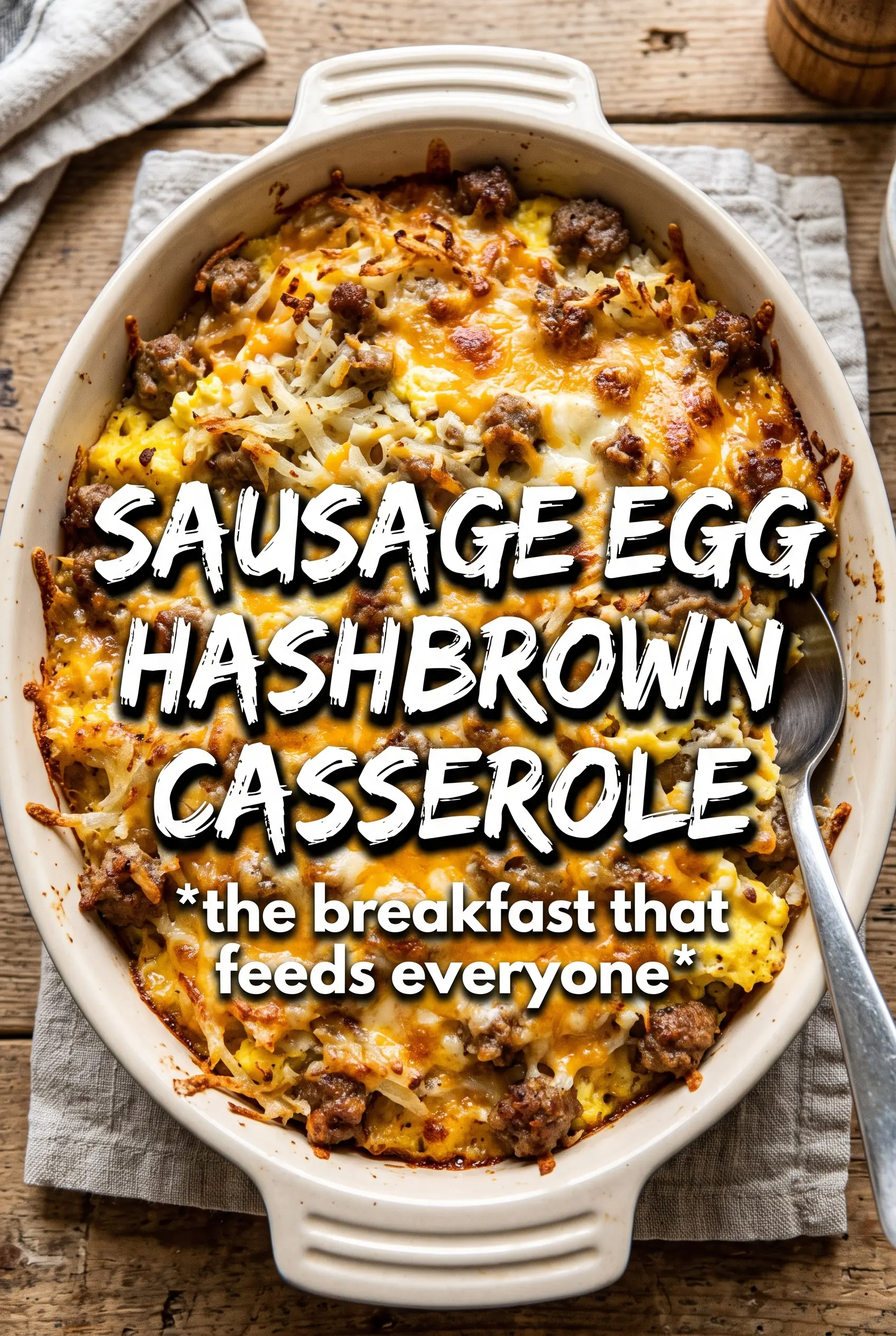
Sausage Egg And Cream Cheese Hashbrown Casserole
Ingredients
Equipment
Method
- Preheat oven to 350F, then grease a 9x13 baking dish.
- Spread the frozen shredded hash browns in an even layer and season with salt, black pepper, garlic powder, and onion powder.
- Scatter the breakfast sausage crumbles over the hash browns.
- Drop cream cheese pieces over the sausage.
- Whisk the eggs, whole milk, sour cream, and smoked paprika, then pour over everything.
- Scatter the sharp cheddar over the top.
- Bake at 350F for 50-55 minutes, until the eggs are set and the top is golden.
- Rest for 10 minutes to help the casserole set.
- Top with green onions for serving before slicing.