Smoked sausage and cabbage make a pan dinner that lands somewhere between hearty and light, with browned edges, tender-crisp cabbage, and a tangy mustard glaze that pulls everything together. The best part is the contrast: the sausage brings smoky richness, while the cabbage soaks up the butter, vinegar, and Dijon until every bite tastes built, not tossed together.
This version works because the sausage gets browned first and set aside, which leaves behind flavorful fond for the onion and cabbage. That little bit of buildup in the pan matters. It gives the cabbage a head start on caramelizing instead of steaming, and the quick Dijon-vinegar glaze keeps the dish from tasting flat or greasy.
Below, I’m walking through the small choices that make this skillet dinner taste like more than the sum of its parts, plus a few smart swaps if you want to adjust the heat, the sweetness, or the size of the batch.
The cabbage got those caramelized edges instead of turning soggy, and the Dijon-vinegar sauce coated everything without making the skillet watery. My husband went back for seconds before I even sat down.
Save this sausage and cabbage stir fry for a fast skillet dinner with caramelized sausage, buttery cabbage, and a sharp Dijon glaze.
The Trick to Keeping the Cabbage Tender Without Turning It Soft
The biggest mistake with cabbage skillet dinners is crowding the pan too early and expecting the vegetables to brown anyway. Cabbage gives off a lot of moisture, so if the heat is too low or the pan is packed, it steams before it can caramelize. That’s how you end up with a pale, damp skillet instead of one with deep flavor and those good browned edges.
In this recipe, the sausage comes out first so the pan stays hot and loaded with flavor, then the onion cooks long enough to turn sweet and golden before the cabbage goes in. Stir only occasionally. If you keep moving it nonstop, the cabbage never gets a chance to sit against the hot skillet and pick up color. The goal is wilted leaves with some browned tips, not cabbage that disappears into itself.
What Each Ingredient Is Actually Doing in the Skillet

- Smoked kielbasa or andouille — This is the backbone of the dish. Kielbasa gives you a round, smoky flavor; andouille brings more spice and a little extra heat. Pre-sliced sausage from the store works fine, but choose one that browns well and isn’t overly soft, because you want clean caramelized edges, not greased-out slices.
- Green cabbage — This is the volume and the texture. Green cabbage holds up better than savoy or red cabbage here because it softens without falling apart. Rough chopping is better than shredding, since smaller pieces can overcook before the sausage finishes browning again at the end.
- Dijon mustard — Dijon gives the sauce its sharpness and helps the butter cling to the cabbage instead of sliding off the pan. Yellow mustard won’t give the same depth. If you need a substitute, whole-grain mustard is the closest swap, though the sauce will look a little speckled and taste slightly milder.
- Apple cider vinegar and brown sugar — These two balance each other. The vinegar cuts through the richness, while the brown sugar rounds out the sharp edge and helps the glaze coat the cabbage. Don’t skip both; without them, the dish tastes heavy instead of complete.
- Butter — Butter carries the onion, garlic, and mustard flavor through the pan. You can use oil in a pinch, but you’ll lose some of the gloss and the rounded finish. If you want a dairy-free version, use olive oil and add an extra teaspoon of Dijon to keep the sauce from tasting thin.
- Caraway seeds — Optional, but worth using if you like that classic cabbage-and-sausage flavor. They add a gentle rye-like note that makes the dish taste old-school in the best way. Crush them lightly between your fingers before adding them so they bloom faster in the hot pan.
Building the Glaze Without Losing the Sear
Brown the Sausage First
Heat a large skillet over medium-high and let the sausage slices sit long enough to pick up dark edges before you turn them. You’re looking for actual color, not just warmed-through rounds. Once they’re browned, move them to a plate so they stop cooking while you build the rest of the dish. If you leave them in the pan the whole time, they can dry out and the skillet gets crowded fast.
Soften the Onion in the Sausage Fat
Melt the butter right in the same skillet and add the onion. Cook it until it turns soft and golden at the edges, about 5 minutes. The leftover sausage drippings and browned bits dissolve into the butter and give the onions a head start. If the pan looks dry, add the butter before the onion so nothing scorches on contact.
Let the Cabbage Sit Against the Heat
Add the garlic and caraway for about a minute, just until fragrant, then pile in the cabbage. It will look like too much at first, but it settles down quickly. Stir occasionally and give it time to rest against the skillet so some pieces caramelize instead of steaming. If the cabbage starts browning too fast in spots, lower the heat a touch and keep moving the top layers down to the pan.
Finish with the Dijon-Vinegar Toss
Whisk the Dijon, vinegar, and brown sugar together before you pour it over the cabbage. That keeps the sugar from clumping and helps the glaze spread evenly. Return the sausage and toss until everything is coated and glossy. Taste at the end and add salt and pepper only after the sauce is on, because the sausage already brings a fair amount of salt to the skillet.
Three Ways to Adjust This Dish Without Breaking It
Make It Dairy-Free
Swap the butter for olive oil or avocado oil. You’ll lose a little of the round, buttery finish, so add an extra teaspoon of Dijon or a small splash more vinegar to keep the sauce lively. The texture still works, and the cabbage will still brown nicely as long as the pan stays hot.
Use Turkey or Chicken Sausage
Turkey or chicken sausage will lighten the dish, but it won’t render as much fat or carry as much smoke. Brown it a little longer to build more color, and don’t skip the butter or oil in the pan. This version tastes cleaner and leaner, though it loses some of the old-fashioned richness from kielbasa.
Skip the Sugar for a Lower-Carb Version
Leave out the brown sugar and let the vinegar do all the balancing. The dish gets sharper and a little less glossy, but the mustard and browned sausage still carry it. If the flavor feels too aggressive without the sugar, add a small pinch of sweetener at the end rather than cooking it into the sauce.
Storage and Reheating
- Refrigerator: Store in an airtight container for up to 4 days. The cabbage softens a bit more as it sits, but the flavor holds well.
- Freezer: It freezes, but the cabbage gets softer after thawing. Freeze in a flat container for up to 2 months if you don’t mind a more tender texture.
- Reheating: Warm it in a skillet over medium heat with a splash of water or a little butter. The common mistake is blasting it in the microwave until the sausage dries out and the cabbage turns limp.
Answers to the Questions Worth Asking
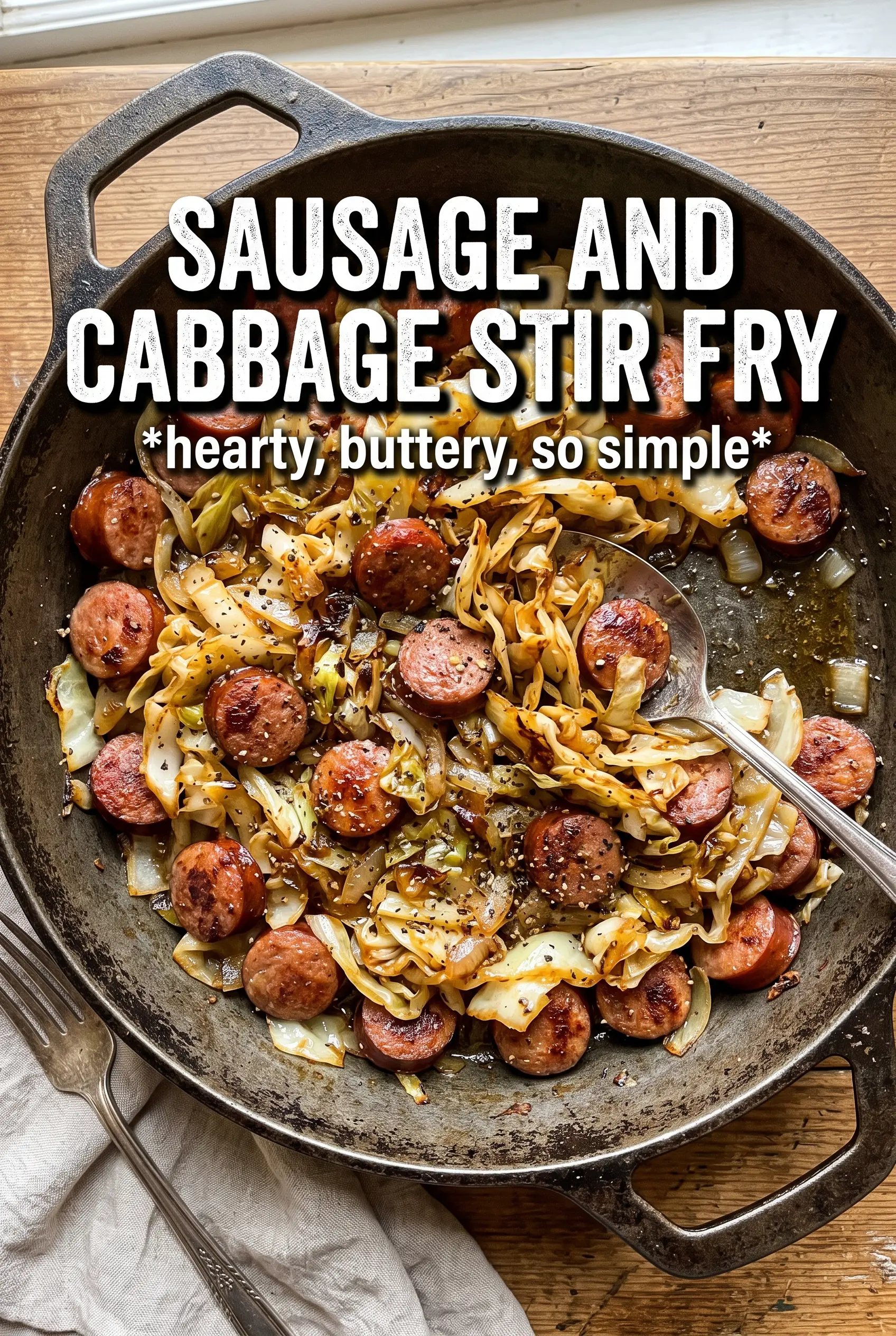
Sausage and Cabbage Stir Fry
Ingredients
Equipment
Method
- Heat a large skillet over medium-high heat and brown the sausage slices until caramelized, then remove and set aside.
- Keep the skillet hot so the browned bits stay in the pan for flavor.
- Melt the butter in the same pan and sauté the onion for 5 minutes until softened and golden.
- Add the garlic and caraway seeds and cook for 1 minute, stirring so they don’t brown too much.
- Add the cabbage and cook for 8-10 minutes, stirring occasionally, until wilted and slightly caramelized at the edges.
- Whisk the Dijon, apple cider vinegar, and brown sugar, then pour the mixture over the cabbage.
- Return the sausage to the pan and toss until everything is coated and glossy.
- Season with salt and pepper to taste and top with fresh parsley before serving.