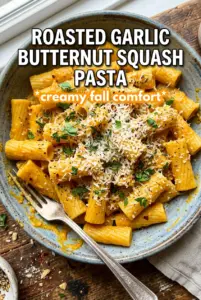
Roasted garlic butternut squash pasta lands on the table with a silky, spoon-coating sauce that clings to every ridge of rigatoni. The squash turns sweet and velvety in the oven, while the roasted garlic gives the sauce a mellow depth that keeps it from tasting flat or one-note. Crispy sage on top finishes the whole bowl with a little crunch and a clean herbal edge.
The key here is roasting both the squash and the garlic until they’re fully soft, not just browned at the edges. That extra time is what makes the sauce blend smooth instead of grainy. A splash of pasta water at the end helps the sauce loosen and hug the pasta without turning heavy, and the parmesan goes in off the heat so it melts into the sauce instead of turning gritty.
Below, I’ve included the ingredient details that matter, the exact cues I watch for while roasting, and a few smart swaps for when you need to adapt the dish without losing what makes it work.
The squash blended into the smoothest sauce and the roasted garlic gave it this rich, mellow taste that didn’t need much extra seasoning. I also loved that the parmesan stayed creamy instead of getting stringy.
Save this roasted garlic butternut squash pasta for the nights when you want a creamy, cozy pasta with a smooth sauce and crispy sage on top.
The Trick to Keeping the Sauce Silky Instead of Gluey
Butternut squash pasta can go wrong when the sauce gets too thick before it reaches the noodles. Squash is naturally dense, and once you add cream and parmesan, it can turn heavy fast if you don’t loosen it with enough liquid. The fix is to blend the sauce until completely smooth, then simmer it just long enough for the flavors to settle before tossing in the pasta. That short simmer matters, but a hard boil doesn’t; too much heat can make the dairy taste dull and the sauce feel tight.
Roasting the squash cut-side up also helps. The flesh softens evenly and develops a sweeter, deeper taste than boiled squash ever will. If the sauce looks too thick in the pan, the pasta water is what saves it. Use it in small splashes so the sauce stays glossy instead of soupy.
- Butternut squash — This is the body of the sauce. Roast it until a spoon slides in with no resistance; undercooked squash blends up grainy.
- Roasted garlic — Raw garlic would taste sharp and aggressive here. Roasted garlic turns soft, sweet, and mellow, which is what gives the sauce depth.
- Heavy cream — This adds richness and helps the sauce emulsify. Half-and-half works in a pinch, but the sauce will be thinner and less plush.
- Parmesan — Freshly grated parmesan melts in cleaner than pre-shredded cheese. Pre-grated can work, but it’s more likely to make the sauce a little dusty or grainy.
- Pasta water — Don’t skip it. The starch helps the sauce cling to the pasta and smooths out the texture without watering down the flavor.
What Each Ingredient Is Actually Doing in This Dish
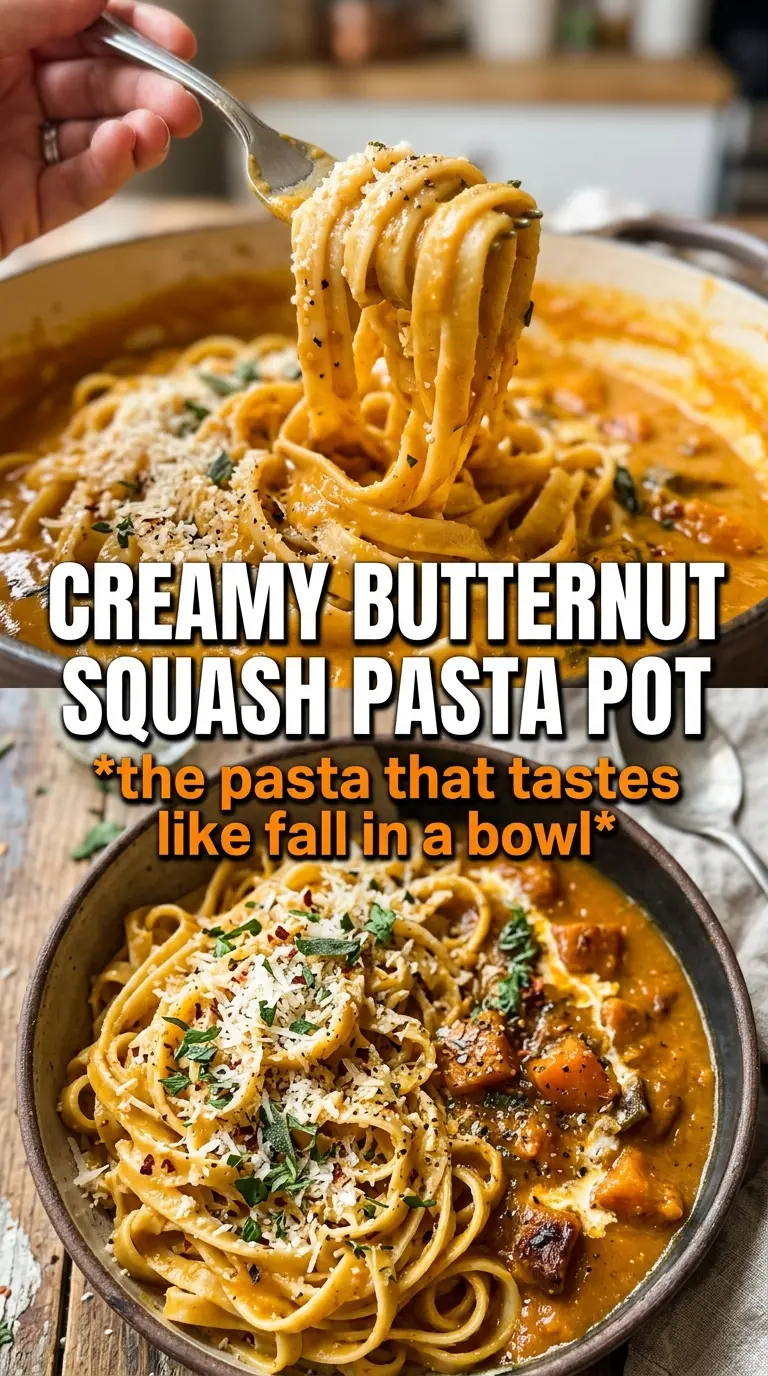
Butternut squash: This gives the sauce its color, sweetness, and thickness. Smaller squash usually has a sweeter, less watery flesh, which is why it works so well here.
Garlic: One whole roasted head might sound like a lot, but it turns mild in the oven. That gentle garlic note keeps the sauce from reading like baby food or plain squash puree.
Vegetable broth and cream: The broth keeps the sauce from becoming cloying, while the cream rounds everything out. If you want a lighter sauce, you can replace half the cream with more broth, but you’ll lose some of the body.
Nutmeg and red pepper flakes: Nutmeg quietly boosts the squash, and the pepper flakes keep the sauce from tasting too soft. Neither one should shout.
Crispy sage: This is the contrast that makes the bowl feel finished. Fry it briefly until it darkens and turns crisp, then get it out of the pan before it burns.
Building the Sauce So It Stays Glossy
Roasting Until the Flesh Collapses
Put the squash cut-side up on the pan and roast it until the edges start to caramelize and the flesh is completely tender all the way through. The garlic head should be wrapped in foil or tucked into the pan so it softens at the same pace. If either one still feels firm in the center, the sauce won’t blend smoothly and you’ll end up chasing lumps later.
Blending to a True Purée
Scoop the squash into a blender with the roasted garlic, cream, broth, nutmeg, and red pepper flakes. Blend until the mixture looks completely smooth and satiny, with no stringy bits or visible fibers. If the blender struggles, add a small splash more broth to get it moving, but don’t thin it out too much or the sauce won’t coat the pasta properly.
Finishing in the Pan
Pour the blended sauce into a skillet and simmer it for about five minutes, just until it thickens slightly and loses any raw squash taste. Stir in the parmesan off the heat or over very low heat so it melts into the sauce without separating. Toss in the cooked pasta with a little pasta water and stir until every piece is coated and glossy.
The Crispy Sage Finish
Fry the sage leaves briefly in olive oil until they darken and crisp up, then move them to a paper towel right away. Sage goes from fragrant to burnt fast, so keep your eye on the color instead of the clock. Crumble it over the finished pasta just before serving so it stays crisp against the creamy sauce.
How to Adapt This for a Lighter Bowl or a Different Pantry
Dairy-Free Version
Swap the heavy cream for full-fat coconut milk or an unsweetened oat cream, and use a dairy-free parmesan style cheese if you want that savory finish. Coconut milk gives the sauce more richness, while oat cream keeps the flavor closer to the original. The sauce will be a little softer, so reduce the broth slightly if it seems loose.
Gluten-Free Pasta Swap
Use your favorite gluten-free rigatoni or penne, but cook it just shy of fully tender so it doesn’t fall apart when tossed in the sauce. Gluten-free pasta usually absorbs more liquid, so keep an extra splash of pasta water nearby to loosen the sauce right before serving.
Make It Heavier on the Vegetables
Wilt in a few handfuls of baby spinach at the end or fold in roasted mushrooms for a deeper, earthier plate. The sauce is rich enough to carry extra vegetables without losing its shape, but add them after the parmesan so the final texture stays smooth.
Storage and Reheating
- Refrigerator: Store leftovers in an airtight container for up to 4 days. The sauce thickens as it sits, so the pasta will absorb some of the cream.
- Freezer: The sauce freezes better than the fully tossed pasta. Freeze the sauce separately for up to 2 months, then cook fresh pasta when you’re ready to serve.
- Reheating: Warm gently on the stove over low heat with a splash of broth, milk, or pasta water. High heat can make the dairy separate and make the sauce feel greasy instead of silky.
Answers to the Questions Worth Asking
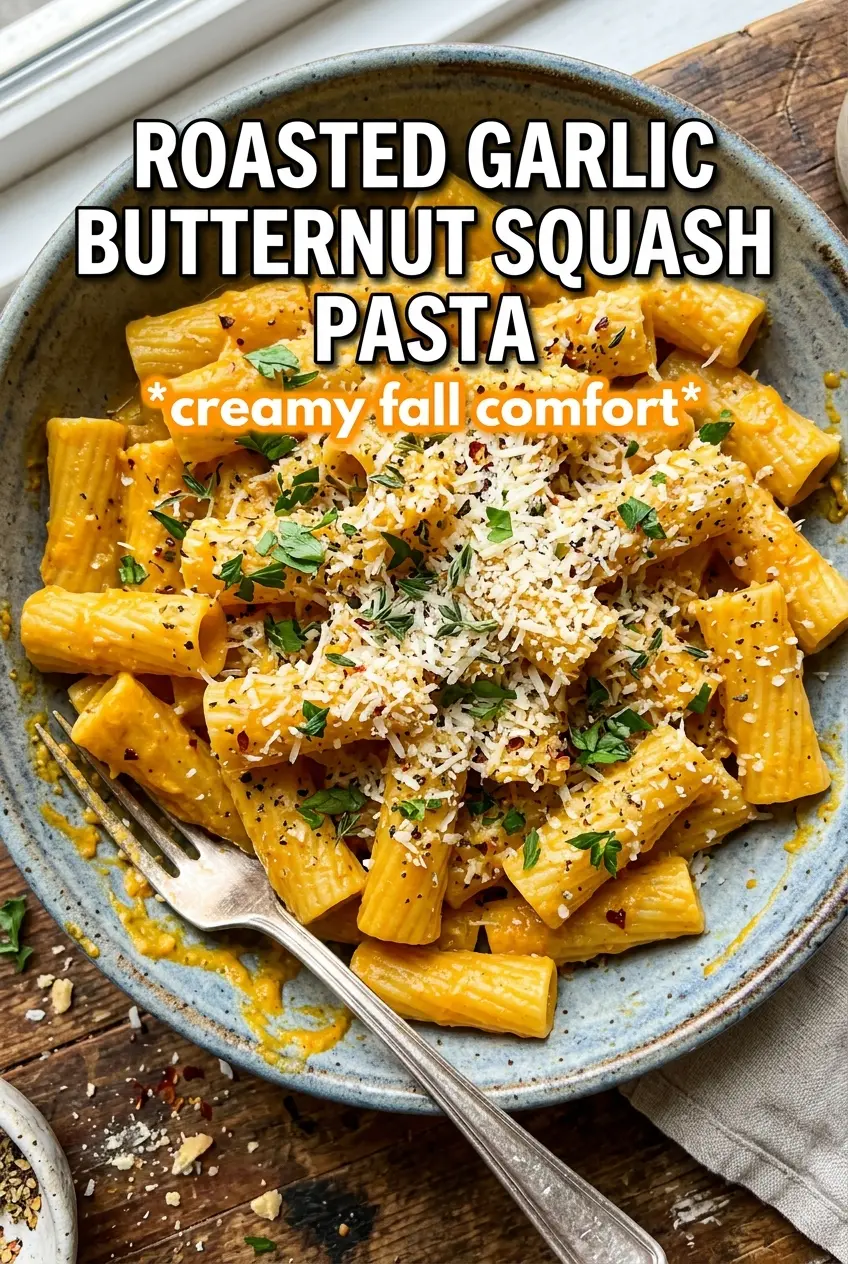
Roasted Garlic Butternut Squash Pasta
Ingredients
Equipment
Method
- Preheat oven to 425F. Brush butternut squash halves and the garlic head with olive oil, then season with salt and pepper.
- Roast the squash for 35-40 minutes, and roast the garlic for 35 minutes, until completely tender. Look for deep browning on the edges of the squash and soft, easily separable garlic cloves.
- Scoop the squash flesh from the skin and squeeze the garlic cloves from their skins into a blender. Leave any roasted juices behind in the skins only if they look burnt, keeping the pale caramelized parts.
- Blend squash, roasted garlic, heavy cream, vegetable broth, nutmeg, and red pepper flakes until very smooth. Stop once it looks completely uniform and glossy, with no visible squash bits.
- Simmer the sauce for 5 minutes, then stir in parmesan until melted and silky. Watch for the sauce to thicken slightly and cling to a spoon.
- Toss the cooked rigatoni or penne with pasta water, then season with salt and pepper. Add a splash at a time until the sauce coats the pasta without pooling.
- Top the pasta with crispy fried sage. Sprinkle over the surface so the sage stays crisp instead of sinking into the sauce.