Rhubarb pudding bars hit that sweet-tart, creamy-soft, crisp-bottomed balance that makes people reach for a second square before they’ve finished the first. The shortbread crust stays sturdy enough to hold the layers, the vanilla pudding brings a cool, silky middle, and the rhubarb topping sets into a glossy layer with just enough tang to keep the whole thing from tasting heavy.
The trick is treating each layer on its own terms. The crust needs to bake until the edges take on color so it can stand up to the pudding, and the pudding has to be spread only after the base is fully cool or it can slide around. The rhubarb topping is cooked just long enough to soften the pieces and thicken the juices, which keeps the bars neat when you cut them instead of turning them soupy.
Below, I’ve included the small details that make these bars slice cleanly, plus a few variations if you want to work around what’s in your kitchen. If you’ve ever had a layered dessert collapse at the cut line, this one is built to avoid that.
The crust baked up buttery and firm, and the rhubarb layer set enough that the bars cut cleanly after chilling. I used extra whipped cream on top and they disappeared fast.
Save these rhubarb pudding bars for the day you want a creamy layered dessert with a crisp shortbread base and a bright pink rhubarb topping.
The Reason These Layers Stay Clean When You Slice Them
The biggest mistake with bars like this is rushing the cooling. A warm crust will soften under the pudding, and a warm rhubarb topping will slide right through the middle instead of sitting on top in a neat layer. Let each component cool enough to hold its shape before you assemble, and give the finished pan a full chill so the cornstarch has time to set the fruit juices.
Another thing that matters here is thickness. The rhubarb layer should look spoonable, not runny, when it comes off the stove. If it looks loose in the pan, it will stay loose on the plate. When the topping mounds slightly on the spoon and slowly settles, it’s ready.
What Each Layer Is Actually Doing Here

- Cold butter — This is what gives the crust its shortbread texture. Cut it in cold so the base bakes up tender and sandy instead of dense. If the butter starts melting while you mix, pop the bowl in the fridge for a few minutes before pressing it into the pan.
- Powdered sugar — It dissolves into the crust more smoothly than granulated sugar and helps the base bake into a fine, melt-in-your-mouth layer. There’s no good substitute that gives the same soft crumb and clean texture.
- Instant vanilla pudding — This gives you a fast, stable cream layer without cooking custard from scratch. Regular cook-and-serve pudding won’t behave the same way here because it stays looser and needs heat to thicken. Use cold milk and let it set for a minute or two before spreading.
- Fresh rhubarb — Fresh rhubarb matters because it cooks down into a bright, tart topping with distinct pieces. Frozen rhubarb will work if it’s thawed and well-drained, but it usually releases more liquid, so expect a softer set and a longer simmer.
- Cornstarch — This is what turns the fruit juices into a glossy topping that stays put. Stir it into a little water first so it disperses evenly; dry cornstarch dumped straight into hot fruit tends to clump.
Building the Bars So the Filling Doesn’t Slip
Baking the Crust
Mix the flour and powdered sugar first, then cut in the cold butter until the mixture looks like damp sand with some pea-size bits left. Press it firmly and evenly into the parchment-lined pan so the base bakes into a tight sheet instead of a crumbly layer that falls apart at the first cut. Bake until the top looks set and the edges are lightly golden, because a pale crust usually means a soft bottom that won’t support the filling.
Spreading the Pudding
Cool the crust all the way down before adding the pudding. If you spread it on while the base is still warm, the heat can loosen the pudding and make the layers blur together. Stir the pudding until it thickens, then spread it in an even layer right to the corners with an offset spatula or the back of a spoon.
Cooking the Rhubarb Topping
Simmer the rhubarb with sugar and water until the pieces start to soften and the mixture looks juicy. Add the cornstarch slurry and keep cooking just until the liquid turns glossy and thick enough to coat a spoon. If you stop too soon, the topping will seep; if you cook it far past that point, the fruit can break down into a jammy paste and lose the fresh rhubarb bite.
Chilling Before Cutting
Let the topping cool slightly before spooning it over the pudding, then refrigerate the pan for at least 2 hours. That chill time is what lets the pudding firm up and the rhubarb layer finish setting. Use a sharp knife wiped clean between cuts for the neatest bars, especially if you want those three layers to stay distinct.
How to Adjust These Bars for Different Kitchens and Diets
Gluten-Free Crust Swap
Use a 1:1 gluten-free flour blend in place of the all-purpose flour. The crust will still bake into a tender base, though it may be a touch more delicate at the edges, so chill the bars fully before lifting them from the pan.
Dairy-Free Version
Use a dairy-free butter substitute in the crust and a plant-based milk that matches the pudding mix instructions. The texture will still be creamy, but the flavor will be a little less rich, so I’d serve it with a generous spoonful of coconut whipped cream if that fits your ingredients.
Frozen Rhubarb Shortcut
Thaw the rhubarb first and drain off the excess liquid before cooking it with the sugar and water. Frozen rhubarb releases more moisture, so the topping may need an extra minute or two on the stove before the cornstarch can do its job.
How to Make the Bars a Little More Tangy
Reduce the sugar in the rhubarb topping by 2 to 3 tablespoons if you like a sharper finish. Rhubarb can take it, but don’t cut the sugar too aggressively or the topping turns harsh instead of bright.
Storage and Reheating
- Refrigerator: Store covered for up to 4 days. The crust softens a little under the filling, but the bars still slice well after chilling.
- Freezer: These freeze fairly well if you cut them first, wrap each bar tightly, and freeze in a single layer. Thaw in the refrigerator overnight; the pudding layer may lose a little of its perfect texture, but the bars stay usable.
- Reheating: Don’t reheat these bars. Serve them cold straight from the fridge so the pudding stays set and the rhubarb layer holds its shape.
Answers to the Questions Worth Asking
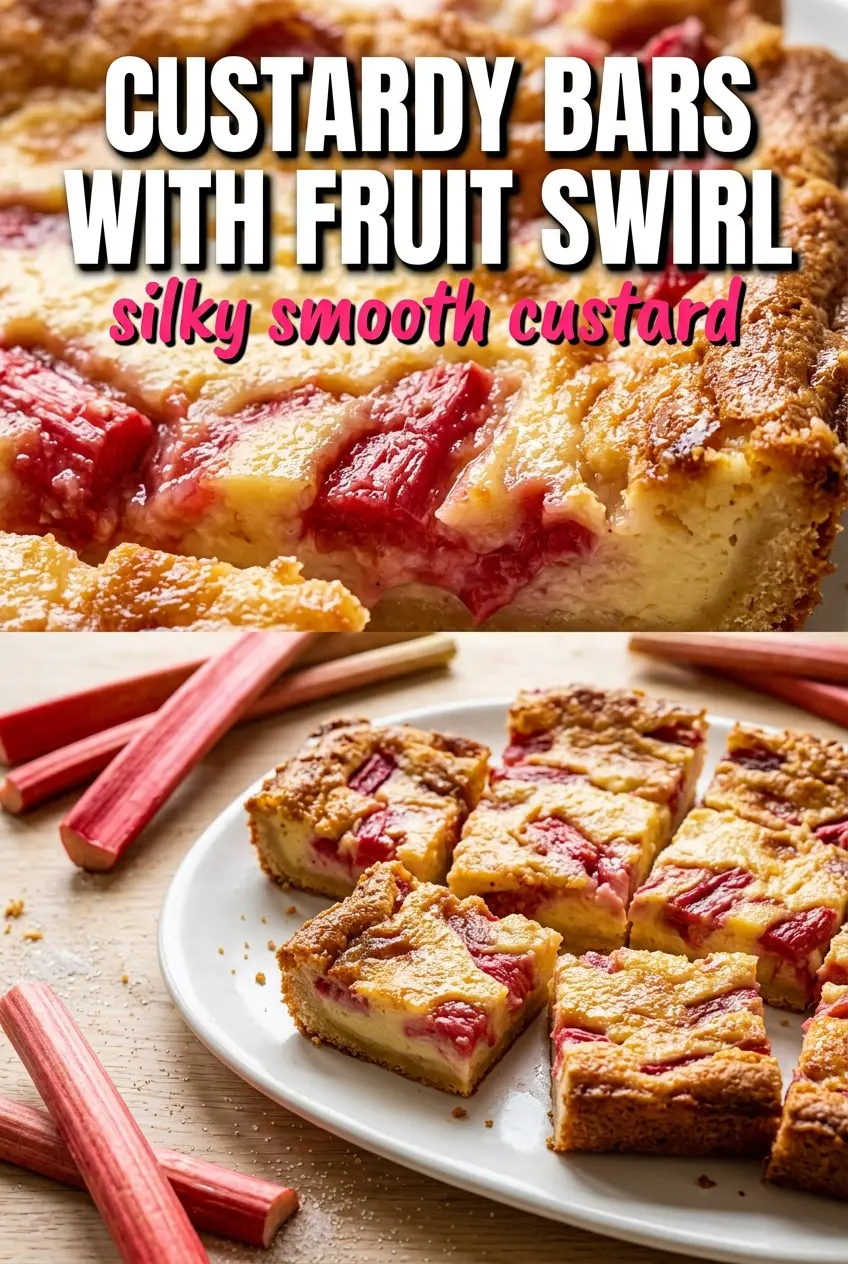
Rhubarb Pudding Bars
Ingredients
Equipment
Method
- Preheat the oven to 350°F and line a 9x13-inch pan with parchment paper.
- Mix the all-purpose flour and powdered sugar, cut in the cold butter, then press the mixture evenly into the lined pan.
- Bake for 18-20 minutes at 350°F, until the crust is golden.
- Cool the crust completely.
- Prepare the instant vanilla pudding according to package directions with the cold milk, then spread it evenly over the cooled crust.
- Simmer the diced fresh rhubarb with sugar and water until the rhubarb is tender.
- Mix the cornstarch with a little water, add it to the rhubarb, and cook until thick.
- Cool the rhubarb mixture slightly, then spread it over the pudding layer.
- Refrigerate for at least 2 hours to set.
- Cut into bars and serve with whipped cream.