Rhubarb Impossible Pie bakes into one of those desserts that looks like a plain custard pie until you cut the first slice and see the golden crust hiding underneath. The filling sets up tender and creamy, the rhubarb softens just enough to turn tart and jammy, and the whole thing lands somewhere between pie, pudding, and cake in the best possible way.
The magic here comes from a thin batter that separates as it bakes. The flour sinks and forms the crust layer, the eggs set the custard, and the butter gives the finished pie richness without making it heavy. Rhubarb works especially well because its sharpness keeps the dessert from tasting flat or overly sweet, which can happen fast in impossible pies if the fruit is too mild.
Below, I’ll walk through the one detail that matters most if you want those clean slices: letting the pie cool all the way before cutting. I’ve also added a few swaps and storage notes, because this is the kind of dessert you’ll want to make again once rhubarb shows up at the market.
I was skeptical that it would form its own crust, but it came out with a real bottom layer and the rhubarb stayed bright and tart. I chilled it overnight and the slices held together beautifully.
Pin this rhubarb impossible pie for a custard dessert with a built-in golden crust and tart pink rhubarb in every slice.
The Reason the Crust Sets Instead of Staying Soupy
The thing that makes impossible pie work is the batter staying thin long enough to separate in the oven. If the mixture is too thick, the flour never settles the way it should and you end up with a dense, cakey center instead of a custard with a real bottom layer. Blending everything until smooth matters here because any flour lumps can interrupt that structure.
The other trap is underbaking. The top should be deeply golden and the center should look set with only a faint wobble in the middle. If it still sloshes when you move the pan, give it more time; the pie firms as it cools, but it can’t rescue an underbaked custard base.
- The flour does the heavy lifting for the crust layer, so all-purpose flour is the right choice here. A gluten-free blend can work, but the texture will be softer and less distinct.
- Eggs set the custard and give the pie its sliceable texture. Use large eggs and blend them completely into the batter so the filling bakes evenly.
- The melted butter helps the crust form and adds richness. Don’t use browned butter here unless you want a stronger, nuttier flavor that pushes the dessert away from its classic rhubarb-pie taste.
- Fresh rhubarb is worth using when you can get it because it keeps its tart edge and gives the pie those bright pink pockets. Frozen rhubarb works in a pinch, but thaw and drain it first so the pie doesn’t turn watery.
What Each Ingredient Is Doing in the Pan
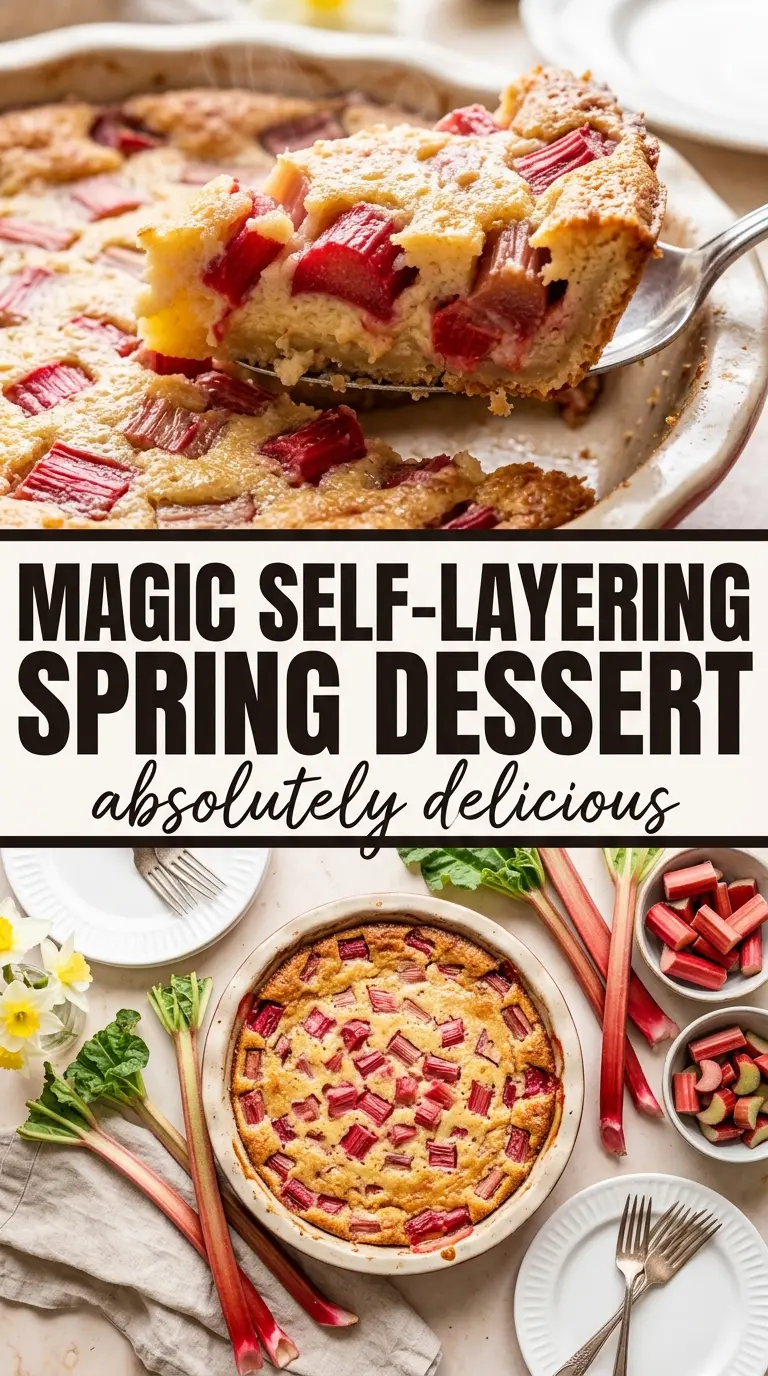
- Rhubarb — This is the sharp, tart backbone of the pie. Dice it small so it softens evenly and doesn’t leave stringy bites in the finished custard.
- Sugar — Rhubarb needs it. The amount looks generous, but it balances the fruit’s bite and helps the custard taste rounded instead of aggressively sour.
- Eggs — They set the filling and help create that soft, creamy middle. If your eggs are cold from the fridge, that’s fine; they’ll blend in without issue.
- Melted butter — It gives the pie richness and helps the bottom layer bake up with more structure. Cool it slightly before blending so it doesn’t scramble the eggs.
- Milk — Whole milk gives the most reliable custard, but 2% works. I wouldn’t use skim milk here because the filling can taste thin.
- Vanilla — It softens the tart edges of the rhubarb and makes the pie taste fuller. Don’t skip it.
How to Build the Custard So the Pie Slices Cleanly
Starting with the Rhubarb Layer
Spread the diced rhubarb evenly in the bottom of a greased deep-dish pie plate. That even layer matters because the fruit settles under the batter as it bakes, and clumps can leave some slices watery while others look bare. If you’re using frozen rhubarb, drain it well first; extra liquid is the fastest way to lose that neat crust-and-custard contrast.
Blending the Batter Until It’s Fully Smooth
Put the sugar, eggs, melted butter, milk, flour, vanilla, and salt in a blender and blend until the batter looks completely smooth and loose. It should pour easily, almost like a thin pancake batter. Any flour streaks left behind can bake into little gummy pockets, and impossible pie depends on that batter being uniform so it can separate as it cooks.
Knowing When It’s Done Baking
Pour the batter over the rhubarb and bake until the top is golden and the center is set, about 40 to 45 minutes. The edges should look firm and lightly browned, while the middle may still have the smallest wobble when you nudge the pan. If the top browns too quickly before the center sets, lay a loose piece of foil over it for the last 10 minutes.
Cooling Before the First Slice
Let the pie cool completely for at least 2 hours before cutting. This is the part people rush, and it’s the reason slices break apart or leak custard across the plate. The filling finishes setting as it cools, so patience here gives you the cleanest slice and the most obvious crust layer on the bottom.
How to Adapt It When You Want a Different Finish
Frozen rhubarb without the extra water
Thaw the rhubarb completely, then drain it well and pat it dry before adding it to the pan. Frozen fruit releases more moisture, which can soften the crust layer and make the center take longer to set.
A dairy-free version that still bakes up
Use an unsweetened dairy-free milk with some body, like oat milk, and swap in a plant-based butter that melts cleanly. The pie will still set, but the custard tastes a little lighter and less rich than the original.
Making it slightly less sweet
Drop the sugar by 1/4 cup if your rhubarb is especially tart, but don’t go much lower than that or the custard can taste flat. The dessert works because the sugar balances the fruit and helps the filling bake into something sliceable.
Storage and Reheating
- Refrigerator: Store covered for up to 4 days. The custard gets a little firmer after chilling, which actually makes the slices neater.
- Freezer: It freezes, but the texture softens after thawing. Wrap slices tightly and freeze for up to 1 month if you don’t mind a slightly looser custard.
- Reheating: Serve chilled or let it sit at room temperature for 20 to 30 minutes. If you warm it, use short bursts in the microwave; long heating can turn the custard rubbery.
The Things That Trip People Up With This Dish
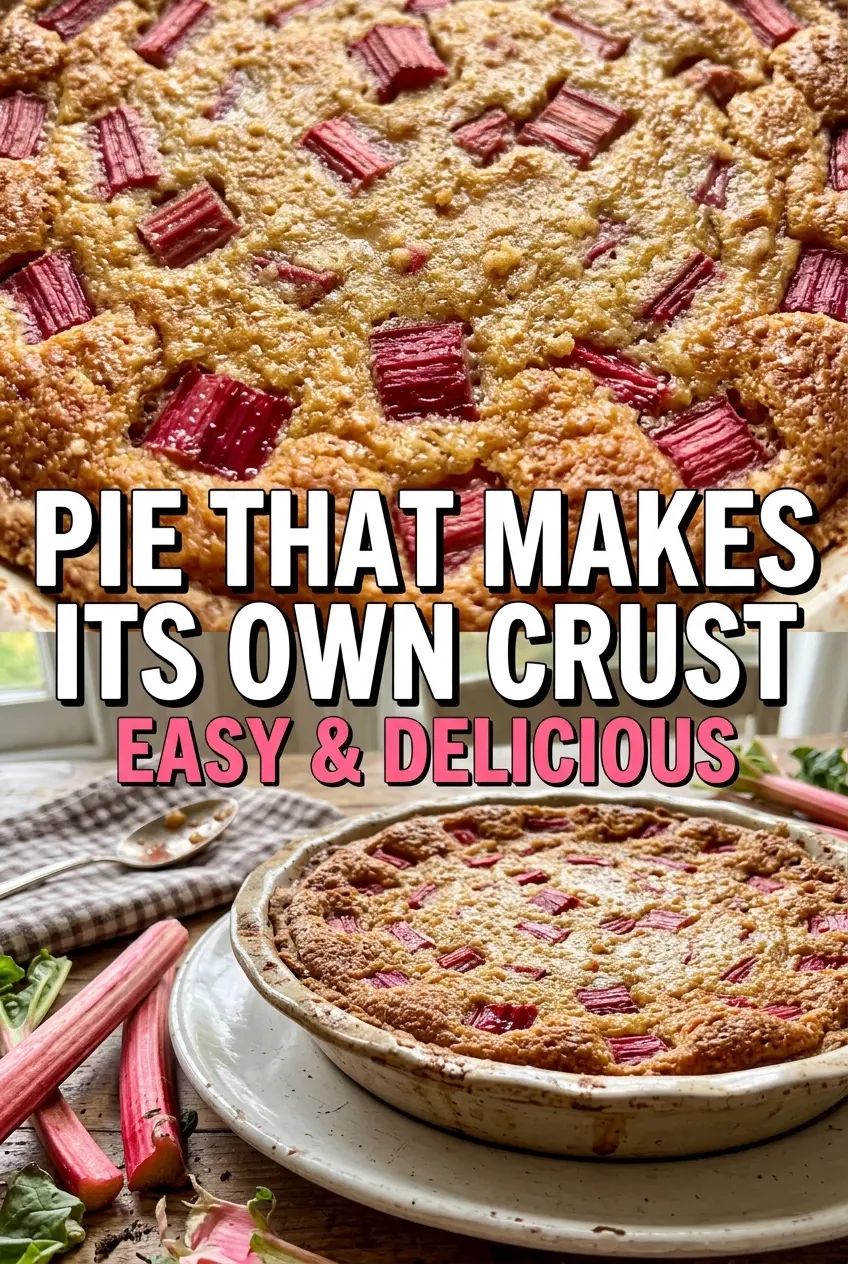
Rhubarb Impossible Pie
Ingredients
Equipment
Method
- Preheat the oven to 350°F and grease a 9-inch deep-dish pie plate. Make sure the plate is evenly coated so the golden crust releases cleanly.
- Spread the diced fresh rhubarb evenly in the bottom of the pie plate. Keep the pieces in a single layer so the pink rhubarb studding is distributed.
- Combine sugar, eggs, melted butter, milk, all-purpose flour, vanilla extract, and salt in a blender and blend until smooth. Blend just until no flour streaks remain, since the batter should be pourable and thin.
- Pour the batter over the rhubarb in the pie plate. The batter will be thin and will rise around and through the fruit as it bakes.
- Bake for 40-45 minutes at 350°F until the top is golden and the center is set. Look for a firm set in the middle (not jiggly) for the proper magic-crust texture.
- Cool completely for at least 2 hours before slicing. Chilling time helps the custard finish setting and makes cleaner slices.
- Serve chilled or at room temperature. Aim for golden bottom crust visible under the custard layer when plated.