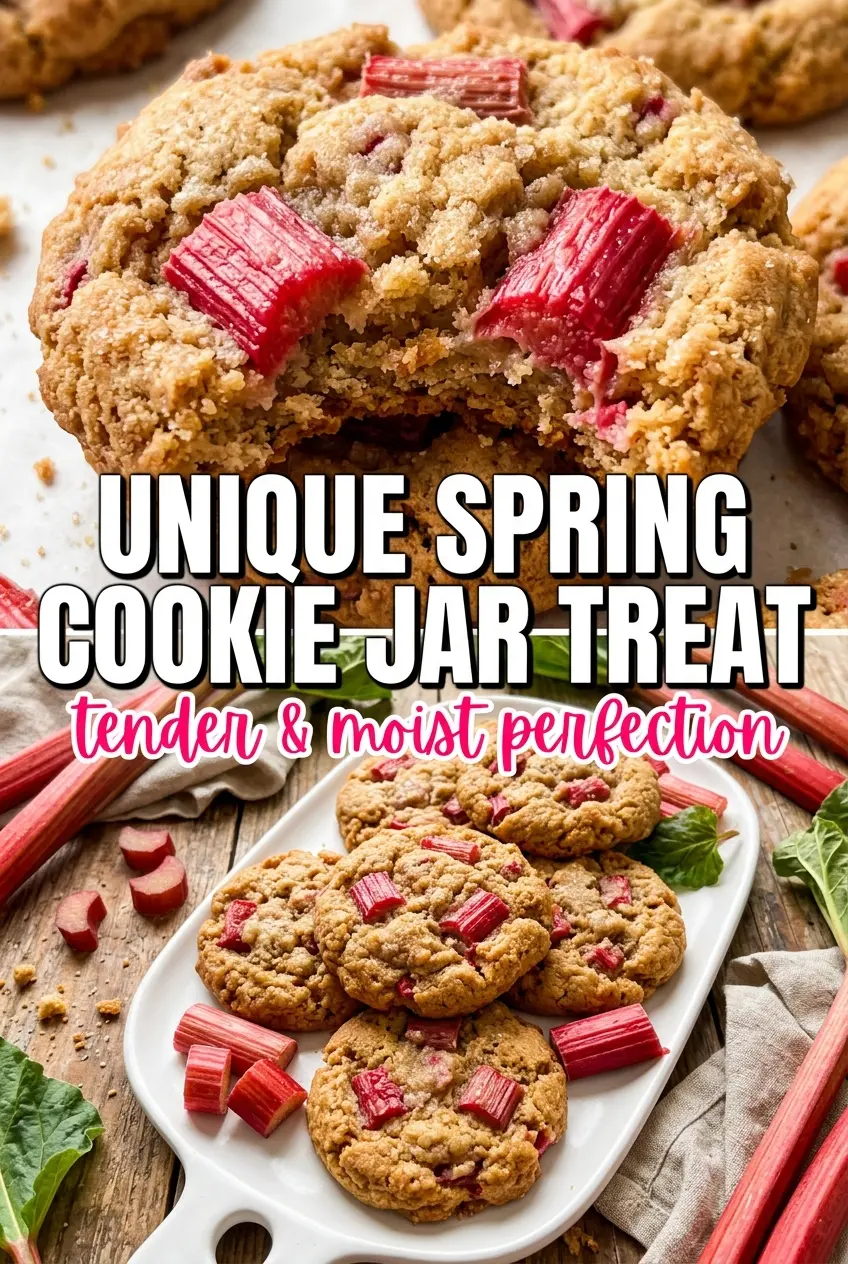
Soft rhubarb cookies bake up with pillowy centers, lightly crisp edges, and little pink pockets of fruit that taste bright against the brown sugar dough. The sugar on top gives them a faint crunch when they’re warm from the oven, which is exactly what keeps people reaching for a second one before the first batch has even cooled.
These cookies work because the rhubarb is diced fine enough to soften in the short bake without turning the dough wet or stringy. Brown sugar keeps the crumb tender and gives the cookies a warm, caramel note that plays well with rhubarb’s tart edge. I also like that this is a drop-cookie dough, so there’s no chilling, rolling, or fussing with shaping.
Below, I’ve included the one thing that matters most when you’re baking with rhubarb: how to keep the fruit from bleeding too much moisture into the dough. I’ve also added a few swaps and storage notes so you know exactly what to expect once the cookies come out of the oven.
The rhubarb stayed in little tender bits instead of disappearing, and the cookies were still soft the next day with that nice sugar crunch on top. I baked mine at exactly 11 minutes and they came out perfect.
Like these soft rhubarb cookies? Save them to Pinterest for the days when you want a tender drop cookie with bright fruit and a sugar sparkle on top.
The Trick to Keeping Rhubarb From Turning the Dough Wet
Rhubarb brings a lot of water with it, and that’s where most cookie batches go sideways. If the pieces are too large, they leak into the dough instead of softening inside it, and you end up with cookies that spread unevenly and bake up gummy in the middle. Fine dice is the fix. It gives you little pockets of tart fruit without flooding the dough.
The other thing that matters here is timing. Once the flour goes in, mix only until the dough comes together, then fold in the rhubarb by hand. Overmixing after the fruit is added bruises the pieces and spreads the moisture around too much, which is how you lose that nice soft cookie texture.
What Each Ingredient Is Doing in These Cookies

- All-purpose flour — Gives the cookies enough structure to hold the rhubarb without collapsing. Don’t swap in cake flour here; it makes the dough too fragile. If you need a gluten-free version, use a 1:1 baking blend with xanthan gum.
- Brown sugar — This is what keeps the crumb soft and gives the cookies their deeper, almost molasses-like sweetness. White sugar won’t give the same tenderness or flavor. Light or dark brown sugar both work, but dark brown sugar makes the cookies taste a little richer.
- Butter — Softened butter creams with the sugar to trap air, which helps the cookies bake up pillowy instead of dense. If the butter is too cold, the dough won’t fluff up properly; if it’s melted, the cookies spread too fast.
- Fresh rhubarb — Fresh is the right choice here because frozen rhubarb softens too much and releases more liquid. Dice it finely and use it straight from the prep bowl. There’s no need to blot it dry unless it looks especially wet after washing.
- Sugar for sprinkling — A little sugar on top gives the cookies that sparkling finish and a light crunch. It’s a small step, but it adds a lot to the texture.
How to Mix and Bake Them So the Centers Stay Soft
Creaning the Butter and Sugar Properly
Start with butter that yields when you press it, but doesn’t look greasy. Beat it with the brown sugar until the mixture looks lighter and a little fluffy, about 2 to 3 minutes by hand mixer. That step matters because it sets the cookie’s texture before any flour goes in. If the mixture stays heavy and grainy, the cookies usually bake up flatter and tighter.
Bringing the Dough Together
Beat in the eggs and vanilla until the mixture looks smooth, then add the dry ingredients and stop mixing the moment no dry streaks remain. A few floury bits are fine because the rhubarb will finish bringing the dough together when you fold it in. If you keep mixing at this point, the cookies get tougher and the fruit starts to break down.
Dropping and Baking for the Right Finish
Scoop rounded tablespoons onto the tray and leave room for spread, because these cookies do relax as they bake. Pull them when the edges are set and the centers still look soft and slightly underdone. That middle softness is what turns into a tender cookie after they cool. If you wait until the centers look dry in the oven, they’ll be overbaked by the time they reach the rack.
How to Adapt These Rhubarb Cookies for Different Kitchens
Gluten-Free Version
Swap the all-purpose flour for a 1:1 gluten-free baking blend that includes xanthan gum. The cookies will still be soft and tender, though they may spread just a touch less and hold a slightly more delicate crumb.
Dairy-Free Version
Use a plant-based butter stick with a similar fat content, not a tub spread. The texture will still be soft, but the flavor loses a little of the classic browned-butter richness that real butter gives the dough.
A Sweeter, Less Tart Cookie
If your rhubarb is especially sharp, toss the diced pieces with 1 to 2 teaspoons of sugar before folding them in. That softens the tart edge without changing the cookie structure, but don’t add much more or the fruit starts leaking syrup into the dough.
Storage and Reheating
- Refrigerator: Store in an airtight container for up to 4 days. The rhubarb stays tender, but the sugar top softens a little after the first day.
- Freezer: These freeze well baked or as unbaked dough scoops. Freeze baked cookies in a single layer, then pack them in a freezer bag for up to 2 months.
- Reheating: Warm baked cookies at 300°F for 4 to 5 minutes. Don’t microwave them too long or the rhubarb turns jammy and the centers get gummy.
Questions I Get Asked About These Cookies
Rhubarb Cookies
Ingredients
Equipment
Method
- Preheat the oven to 350°F and line baking sheets with parchment paper to prevent sticking. Set the sheets aside while you mix the dough.
- Whisk together all-purpose flour, baking soda, and salt in a mixing area until evenly combined. Stop when the mixture looks uniform in color.
- Cream butter and brown sugar until fluffy, then beat in the eggs and vanilla extract. Mix just until the batter becomes smooth and cohesive.
- Mix in the dry ingredients until just combined, then fold in the finely diced rhubarb. Stop mixing once no flour streaks remain to keep the cookies tender.
- Drop rounded tablespoons of dough onto the prepared sheets, spacing them about 2 inches apart. Place the mounds so they have room to spread as they bake.
- Sprinkle the tops with sugar for a sparkle effect. Use enough to lightly coat each cookie surface.
- Bake for 10-12 minutes at 350°F until the edges are set but the centers still look soft. Look for lightly golden edges while the middle remains slightly underdone.
- Cool the cookies on the baking sheet for 5 minutes before transferring to a wire rack. This short rest helps them firm up without overbaking.