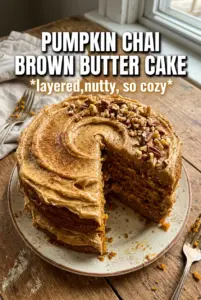
Pumpkin chai cake has a way of tasting like the best parts of a bakery cake and a well-made spice cake at home: tender crumb, warm spice, and just enough pumpkin to keep every bite moist without turning heavy. The brown butter frosting changes the whole cake. It tastes nutty and caramelized instead of just sweet, which gives the spices a deeper edge and keeps the layers from feeling flat.
What makes this version work is balance. Strong chai tea adds actual tea flavor, not just spice, and sour cream keeps the crumb soft while the pumpkin brings body and moisture. Brown sugar helps the cake bake up rich and slightly chewy at the edges, while the brown butter frosting gets its personality from taking the time to cool the butter fully before whipping it with sugar. If the butter is still warm, the frosting turns greasy before it turns fluffy.
Below, I’ve included the little details that matter most here: how to brown the butter without wasting a batch, how to keep the cake layers tender, and what to do if you want to change the spice level without throwing off the structure.
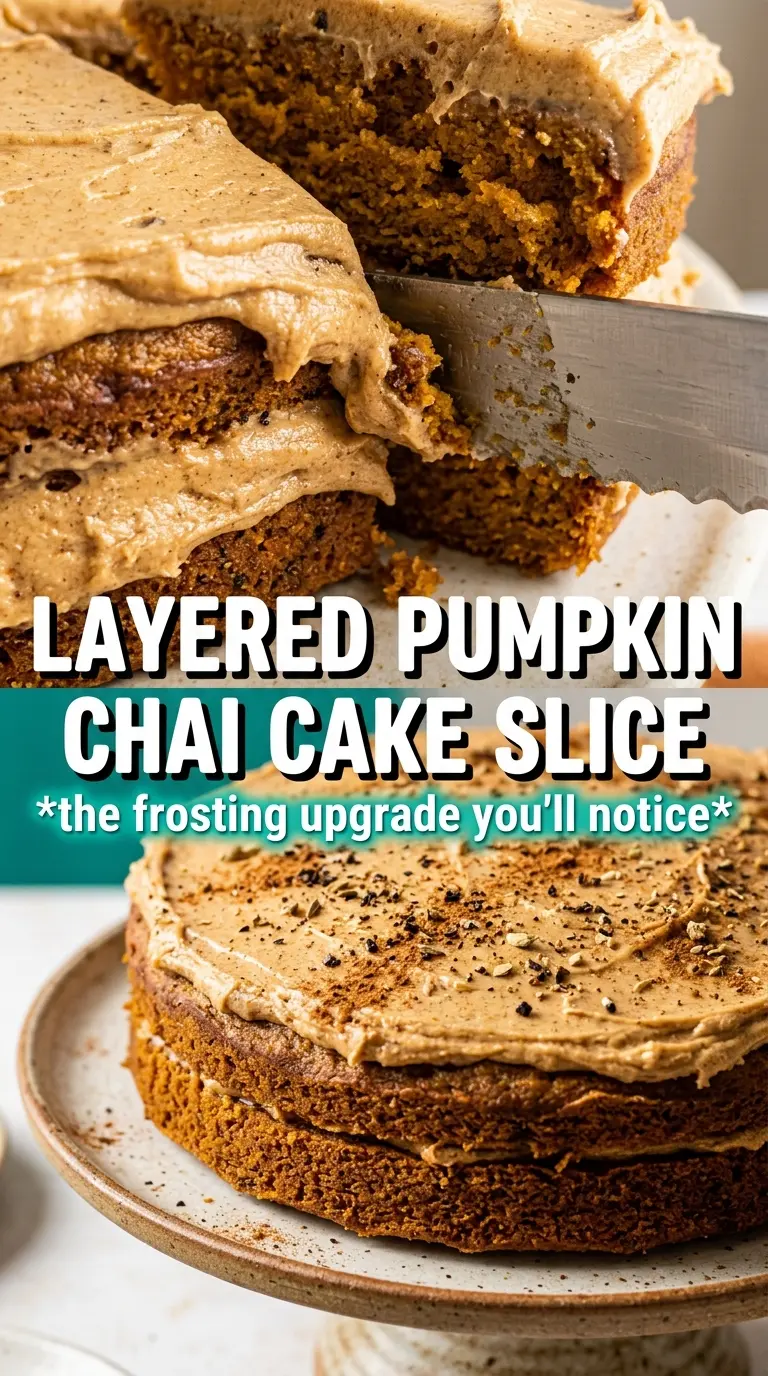
The cake stayed incredibly soft for two days, and the brown butter frosting set up thick enough to slice cleanly without sliding off the layers. The chai tea came through just enough to make it taste different from a regular pumpkin cake.
Save this pumpkin chai cake for the kind of dessert that needs soft spice layers and a nutty brown butter frosting that holds its shape.
The Trick Is Cooling the Brown Butter Until It Behaves
Brown butter gives the frosting its best flavor, but it also creates the biggest failure point. If you beat it while it is still warm or even just soft, the frosting goes loose and greasy before the sugar has a chance to build structure. That’s why the butter gets browned first, then chilled until solid again. You’re not just waiting on temperature; you’re resetting the fat so it can whip into a stable frosting.
The cake itself is forgiving if you don’t overwork the batter. Once the dry ingredients go in, fold just until the flour disappears and stop there. Overmixing builds gluten and turns a cake that should be soft and plush into something tighter and more breadlike. The chai tea matters here because it adds depth without thinning the batter too much, which keeps the crumb from getting dense around the pumpkin.
What Each Ingredient Is Actually Doing in This Cake
- Pumpkin puree — This brings moisture and that deep orange color, but it needs to be plain pumpkin, not pumpkin pie filling. Pie filling is already sweetened and spiced, which throws off both the cake texture and the spice balance.
- Strong chai tea — This is the ingredient that makes the chai flavor taste real instead of generic. Brew it strong and cool it before adding it so it doesn’t thin the batter with heat.
- Sour cream — It keeps the crumb soft and gives the cake a little extra richness. Plain Greek yogurt works too, but it bakes up slightly tighter and a touch tangier.
- Brown butter — This frosting needs browned butter, not regular softened butter, because the nutty flavor is what keeps it from tasting one-note sweet. Cool it completely after browning, then chill until solid before beating it with the sugar.
- Chai spice and pumpkin pie spice — The blend gives the cake warmth without making it taste like one spice only. If you only have pumpkin pie spice, use it for both measures and add a pinch of extra cinnamon and cardamom if you want more chai presence.
Building the Cake So It Stays Tender and Tall
Brown the butter first, then put it away
Start with the frosting butter before you touch the cake batter. Cook it over medium heat until the milk solids turn amber and it smells nutty, then pour it into a bowl and chill it until fully solid. If it stays even a little soft, the frosting will never whip up light; it will just slide around in the bowl.
Mix the wet ingredients until smooth, not airy
Beat the butter and brown sugar until the mixture looks lighter and a little fluffy, then add the eggs one at a time. Once the pumpkin, sour cream, chai tea, and vanilla go in, the batter may look a little loose or slightly curdled. That’s normal. It comes back together when the flour goes in, so don’t chase a perfectly silky batter at this stage.
Fold the dry ingredients just until the flour disappears
Whisk the flour, baking powder, baking soda, chai spice, pumpkin pie spice, and salt together before adding them. Fold them into the wet mixture in a few additions and stop as soon as you stop seeing dry streaks. If you keep mixing after that point, the cake bakes up tougher and loses the delicate crumb that makes it worth making.
Frost only after the layers are completely cool
Warm cake and brown butter frosting do not get along. If the layers are even slightly warm, the frosting softens, the filling starts to squish out, and the outside loses its shape. Wait until the pans are cool enough to handle and the cake layers feel fully room temperature all the way through before assembling.
How to Adjust the Spice, Dairy, or Pan Size Without Ruining the Cake
Dairy-Free Version
Use a plant-based butter that browns well for the frosting, but expect a slightly softer result because not all dairy-free fats solidify the same way. Swap the sour cream for full-fat coconut yogurt or a thick unsweetened dairy-free yogurt. The cake will still bake up moist, though the frosting may need extra powdered sugar to hold its shape.
Gluten-Free Cake
A good 1:1 gluten-free baking flour can work here because the cake already has plenty of moisture from pumpkin and sour cream. Don’t swap in almond flour by itself; it won’t give the cake enough structure for neat layers. Let the batter rest for 10 minutes before baking so the flour hydrates and the crumb settles.
More Chai, Less Pumpkin-Pie Spice
If you want the tea-spice flavor to lead, reduce the pumpkin pie spice a little and add a bit more chai spice instead. The cake will taste warmer and less familiar, with the cardamom and ginger notes standing out more. Keep the total spice amount close to the original so you don’t overwhelm the pumpkin.
Storage and Reheating
- Refrigerator: Store covered for up to 5 days. The frosting firms up in the fridge, but the cake stays moist.
- Freezer: Freeze unfrosted layers tightly wrapped for up to 2 months, or freeze individual frosted slices on a tray before wrapping. This cake freezes better in slices than as a fully frosted whole cake.
- Reheating: Let slices come to room temperature before serving, or warm them very briefly in the microwave for 10 to 15 seconds. Don’t heat long enough to melt the frosting, or the brown butter loses its fluffy texture.
Answers to the Questions Worth Asking
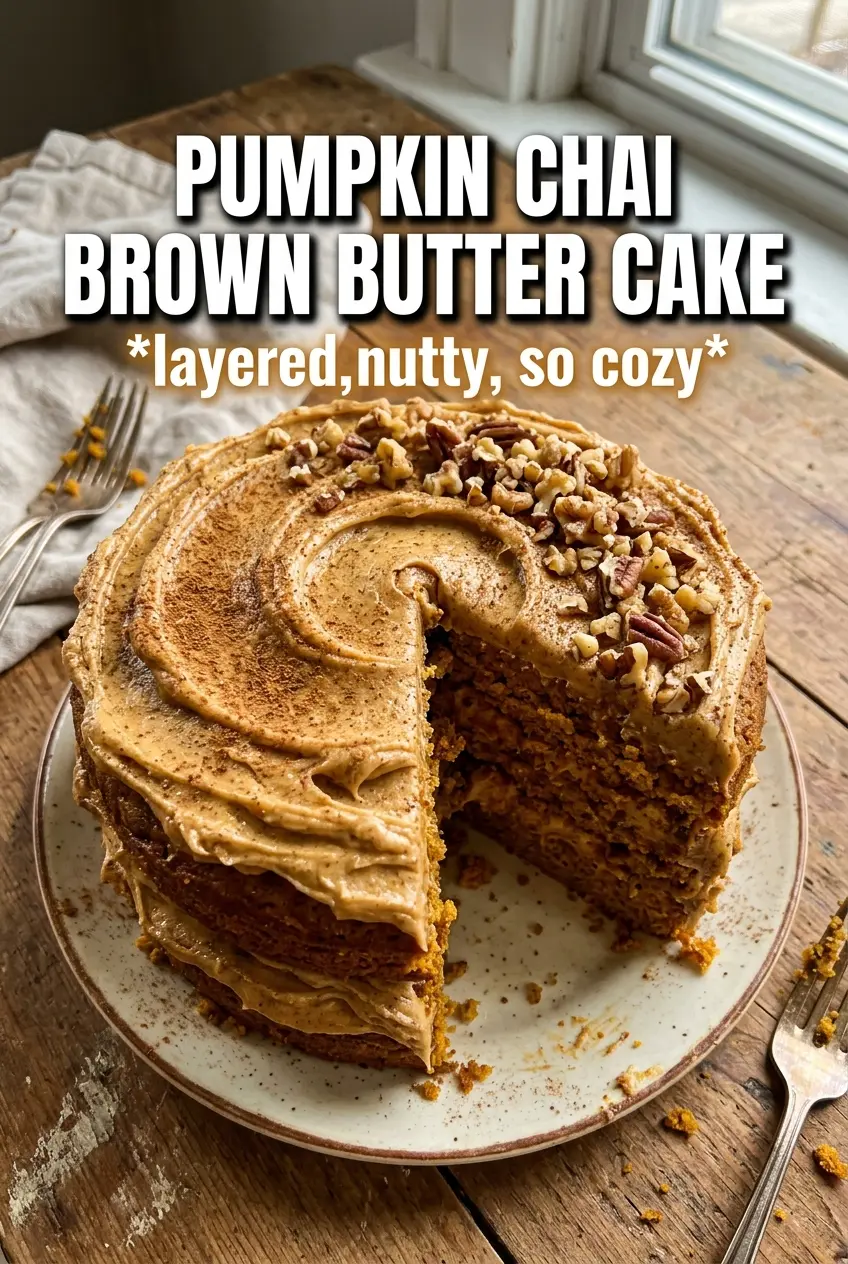
Pumpkin Chai Cake With Brown Butter Frosting
Ingredients
Equipment
Method
- Brown 1 1/2 cups butter in a Dutch oven until golden-brown and fragrant, then set it aside to cool and refrigerate until solid.
- Preheat the oven to 350°F, and grease two 9-inch pans.
- Beat butter and brown sugar until well combined.
- Beat in eggs one at a time, then add pumpkin, sour cream, strong chai tea, and vanilla and mix until smooth.
- Fold in flour, baking powder, baking soda, chai spice, pumpkin pie spice, and salt just until no dry streaks remain.
- Divide the batter between the two greased 9-inch pans.
- Bake at 350°F for 35 to 40 minutes, until the centers spring back and a toothpick comes out mostly clean.
- Let the cakes cool completely before frosting.
- Beat the solidified browned butter with powdered sugar, heavy cream, vanilla, and cinnamon until very fluffy.
- Frost between the layers and then frost all over the cake.