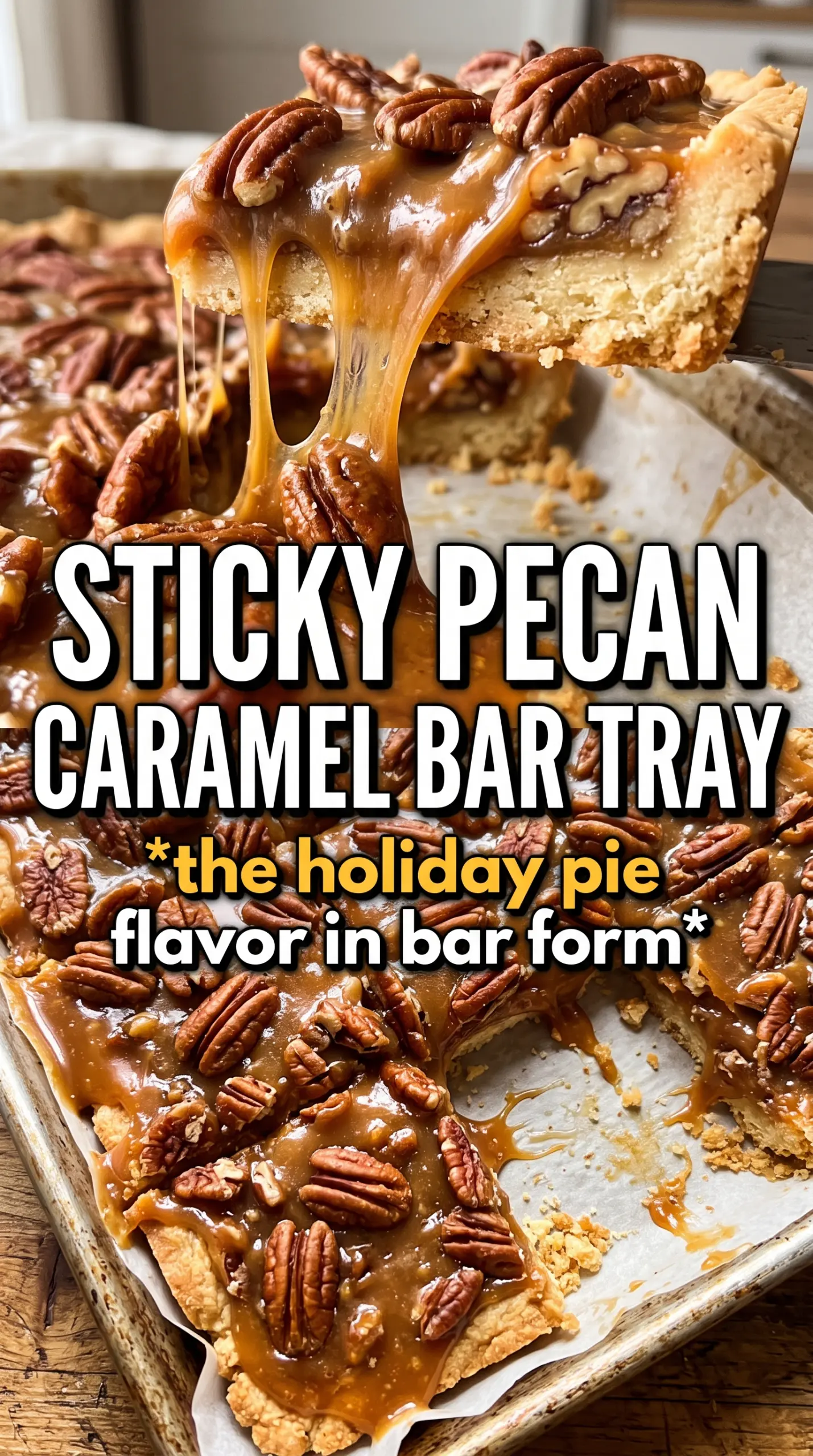
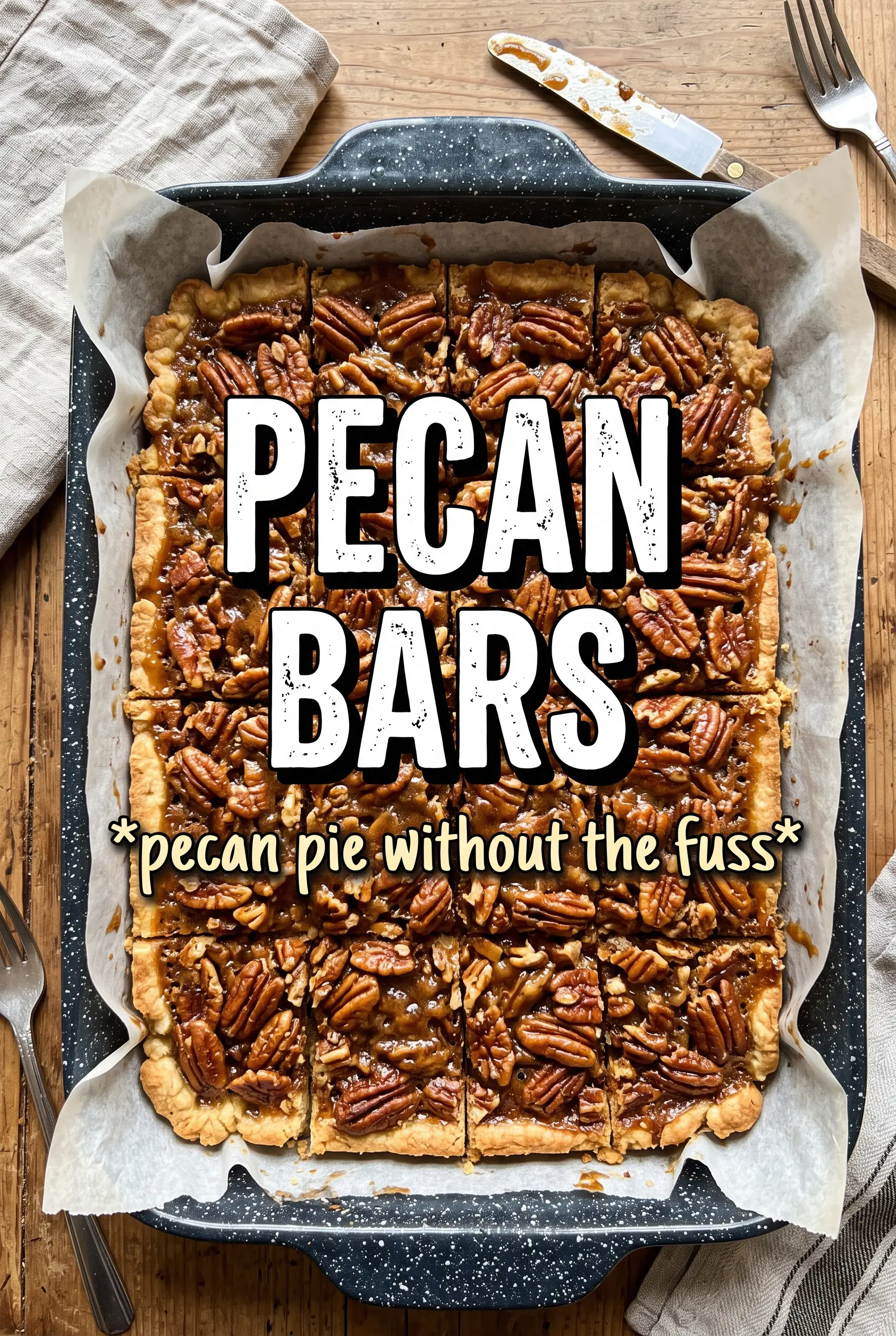
Pecan pie bars give you everything people love about pecan pie without the fuss of rolling dough or hoping a slice holds together on the plate. The shortbread base stays crisp at the edges, tender underneath, and sturdy enough to carry that sticky amber pecan topping cleanly from the pan. When they cool all the way, they cut into neat squares with a buttery crunch first, then that rich caramel-pecan chew.
The key here is baking the crust until it’s just pale gold before the filling goes on. That head start keeps it from turning soggy under the syrupy topping. The filling also needs a short boil; that’s what gives it enough body to set into bars instead of sliding apart when you slice them. A little flaky salt on top pulls the sweetness back and makes the pecans taste deeper and toastier.
Below, I’ll walk through the one place people usually rush these bars, plus a few swaps that actually work if you need to adjust the nuts, dairy, or make them ahead for a crowd.
The filling set up beautifully and the shortbread stayed crisp even under all that sticky pecan topping. I chilled them overnight, and they sliced into perfect bars without crumbling at all.
Save these pecan pie bars for the moment you want a crisp shortbread base and a glossy caramel-pecan topping that slices cleanly.
The Reason Pecan Bars Stay Neat Instead of Gooey-Messy
The difference between bars that hold their shape and bars that puddle on the plate comes down to two things: the crust needs to be partially baked, and the filling needs to reach a real boil before it goes into the oven. If the crust is pale and soft, it absorbs too much syrup. If the filling never boils long enough, it stays loose and never sets into that sliceable, candy-like layer you want.
The shortbread also matters because it gives you structure without becoming dry. Cornstarch keeps the base tender and a little fragile in the best way, while powdered sugar helps it press together smoothly instead of turning sandy. Press it firmly into the pan; any loose spots will bake up unevenly and make the bars crack when you cut them.
What Each Ingredient Is Actually Doing in These Bars
- All-purpose flour — This is the backbone of the shortbread. It gives the crust enough strength to hold the filling without turning cakey.
- Powdered sugar — Powdered sugar melts smoothly into the crust and keeps the texture tender. Granulated sugar works in a pinch, but it makes the base a little grittier.
- Cornstarch — This is what makes the crust delicate and crisp instead of hard. Skip it and the base gets denser.
- Cold unsalted butter — Cold butter is what creates that shortbread texture. If it gets too warm before baking, the crust turns greasy and less sturdy.
- Brown sugar, honey, and cream — These build the filling’s caramel depth and help it set. Honey gives the bars a smoother chew than using sugar alone.
- Whole pecans — Whole pecans give you the best look and the best bite. Pecan halves are fine too, but whole nuts create a thicker, more luxurious topping.
- Flaky sea salt — Use it at the end, not in the filling. It gives you little salty bursts on top instead of making the whole bar taste flat.
Building the Crust, Boiling the Filling, and Getting a Clean Slice
Mixing the Shortbread Without Overworking It
Start by whisking the dry ingredients together so the cornstarch and powdered sugar distribute evenly. Cut in the cold butter until the mixture looks like coarse crumbs, then stop as soon as it clumps when pressed. If you keep mixing until it looks smooth, the crust will bake up tough instead of tender. Press it into the pan in an even layer and get into the corners; thin spots brown too fast and thick spots stay soft.
Giving the Crust a Head Start
Bake the base until the top looks set and just faintly golden at the edges. It won’t look deeply browned, and that’s the point. A pale, partially baked crust is strong enough to support the filling but still has enough room to finish baking without drying out. If the crust bubbles a little, prick it lightly with a fork before it goes back in next time.
Cooking the Pecan Filling Until It Thickens
Melt the butter, brown sugar, honey, and cream together over medium heat, then bring the mixture to a full boil for two minutes. You want steady bubbling across the surface, not just a few lazy bubbles at the edge. That short boil concentrates the syrup and gives the bars their set. Pull it from the heat before stirring in the vanilla and pecans so the flavor stays bright and the nuts don’t get overcooked.
Baking and Cooling for Clean Squares
Pour the filling over the hot crust and spread the pecans into an even layer. The bars are done when the filling looks set around the edges and only a slight jiggle remains in the center. They finish firming as they cool, so don’t chase a deeply rigid center in the oven or the bars will go hard. Let them cool completely before slicing, and for the neatest edges, chill them after cooling for an hour.
How to Adapt These Bars for Different Kitchens and Different Sweetness Levels
Gluten-Free Shortbread Base
Swap the all-purpose flour for a good 1:1 gluten-free baking blend that includes xanthan gum. The texture stays close to the original, though the crust may be a touch more fragile, so press it firmly and let it cool completely before moving the bars.
Dairy-Free Version
Use a plant-based butter that bakes well in both the crust and filling, plus a rich dairy-free cream. The bars will still set, but the flavor is a little less round than with real butter, so the flaky salt on top matters even more.
Using Pecan Halves Instead of Whole Pecans
Pecan halves work fine if that’s what you have. The topping will look a little more uniform and the bars may slice a bit more easily, but you lose some of the chunky, candy-like texture that whole pecans give you.
Storage and Reheating
- Refrigerator: Store covered for up to 5 days. The crust stays crispest in the first 2 days, but the bars still slice and taste great after chilling.
- Freezer: Freeze cut bars in a single layer until firm, then wrap and store for up to 2 months. Separate layers with parchment so the topping doesn’t stick.
- Reheating: These are best served at room temperature. If you want the filling a little softer, warm a bar for 8 to 10 seconds in the microwave, just enough to take the chill off without melting the crust.
Questions I Get Asked About These Bars
Pecan Pie Bars
Ingredients
Equipment
Method
- Preheat oven to 350F and line a 9x13 pan with parchment paper.
- Combine all-purpose flour, powdered sugar, cornstarch, and salt, then cut in cold unsalted butter until the dough just comes together.
- Press the dough firmly and evenly into the prepared pan, then bake 18-20 minutes until pale golden.
- Melt unsalted butter, brown sugar, honey, and heavy cream over medium heat, then bring to a boil and cook 2 minutes.
- Remove from heat and stir in salt, vanilla extract, and whole pecans until evenly coated.
- Pour the filling over the hot shortbread, then bake 20-25 minutes until set.
- Sprinkle flaky sea salt over the hot bars, then cool completely before slicing.