Silky noodles, a glossy garlic cream sauce, and parmesan melted right into the pot make this one of those dinners that disappears fast. The pasta cooks in the sauce instead of in a separate pot of water, so every strand picks up flavor as it softens. What you get at the end is less like pasta with sauce and more like pasta that has absorbed the sauce from the inside out.
The key here is keeping the heat gentle once the cream and pasta go in. A hard boil can push the cream toward splitting and make the sauce reduce too aggressively before the pasta is tender. Freshly grated parmesan matters too, because the pre-shredded kind often has anti-caking starch that can leave the sauce grainy instead of smooth.
Below, I’ll walk through the timing that keeps the garlic from turning bitter, the exact point when the sauce turns glossy, and a few smart swaps if you want to make it vegetarian or change up the pasta shape.
The sauce thickened into a perfect glossy coating, and the garlic stayed mellow instead of sharp. I followed the timing exactly and the pasta was al dente with barely any liquid left in the pot.
Save this one-pot creamy garlic pasta for nights when you want a fast garlic-parmesan dinner with almost no cleanup.
The trick is keeping the pasta just under the sauce line
One-pot pasta can go wrong in two predictable ways: the liquid reduces too fast, or the pasta finishes before the sauce has a chance to turn creamy. This version avoids both by using enough broth and cream to keep the noodles moving while they cook, and by stirring often enough to release starch without letting the bottom scorch. That starch is part of the sauce here. It helps the cream and parmesan cling instead of sliding off in a loose puddle.
The other thing that matters is the pot itself. Use a wide, heavy pot if you have one, because a shallow pan gives the noodles room to cook evenly and lets the liquid reduce at the right pace. If the sauce looks too thin near the end, keep cooking for another minute or two. If it looks tight before the pasta is tender, add a small splash of broth. The goal is a loose sauce that coats the noodles, not a thick paste.
What the garlic, cream, and parmesan each do here
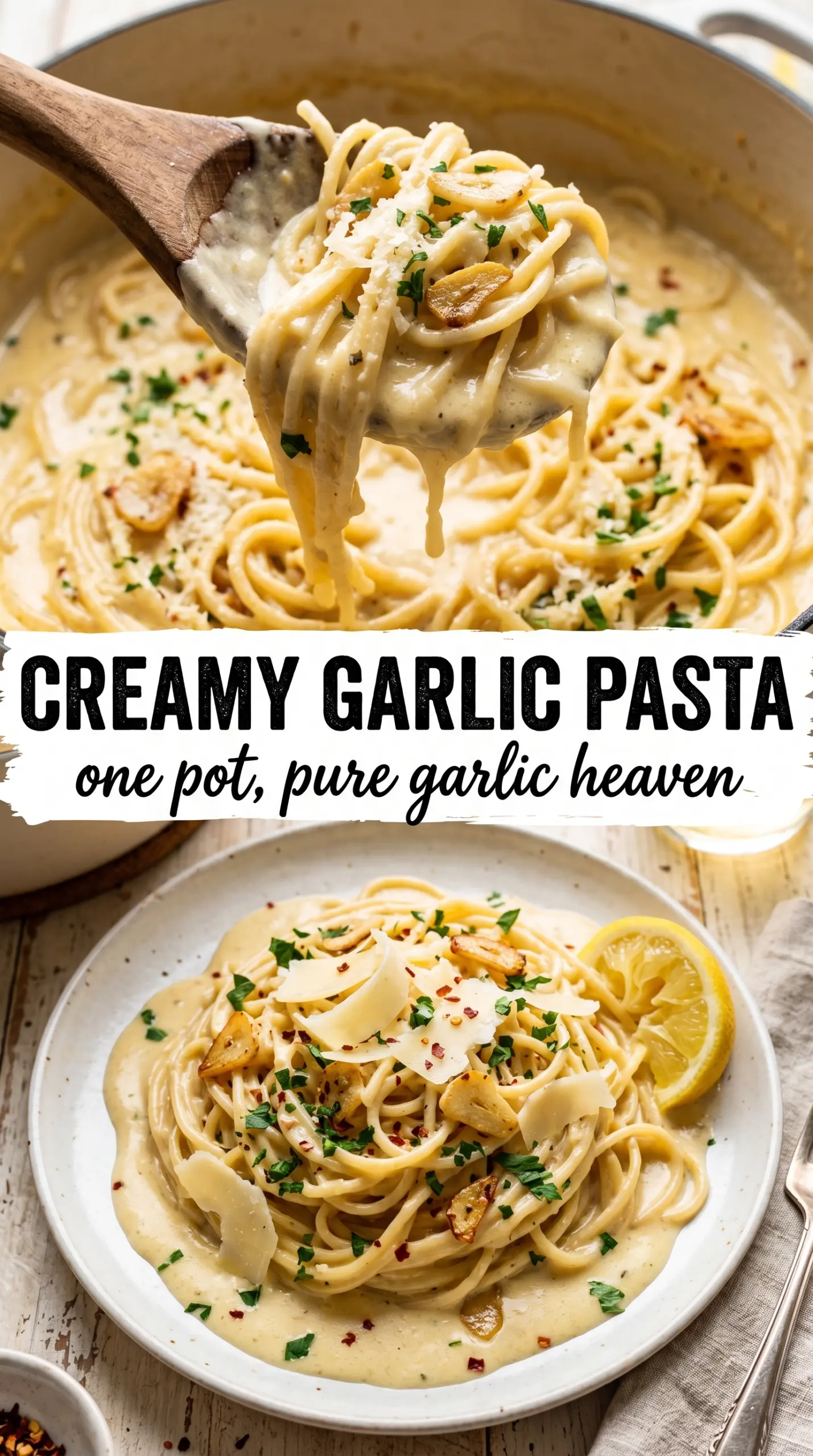
- Linguine or spaghetti — Long pasta works best because it moves through the sauce and gives you that silky coating on every bite. Short pasta will work in a pinch, but it won’t give the same glossy twirl factor. If you swap shapes, pick one with a similar cook time so the liquid reduction stays on track.
- Fresh garlic — This is where the dish gets its backbone. Mince it finely so it perfumes the butter quickly, but don’t let it brown deeply or it will turn bitter. One to two minutes in the butter is enough; once it smells sweet and nutty, move on.
- Heavy cream — This is what gives you the body that lower-fat dairy can’t fully copy. Half-and-half can work, but the sauce will be thinner and more prone to breaking if it boils hard. Keep the heat at a gentle simmer once it’s added.
- Parmesan — Grate it yourself if you can. That’s the difference between a sauce that melts into a satin finish and one that turns sandy. Pre-grated cheese can still work, but add it off the hottest part of the burner and stir until fully melted.
- Broth — This seasons the pasta from the inside while it cooks. Vegetable broth keeps the dish meat-free without losing depth, and chicken broth gives it a slightly rounder finish. Don’t replace it with water unless you’re also adding more salt and expect a flatter sauce.
Getting the sauce glossy without splitting it
Blooming the garlic in butter
Melt the butter over medium heat, then add the garlic and stir constantly for 1 to 2 minutes. You want it fragrant and just beginning to turn pale gold at the edges, not browned. If the garlic goes dark before the liquid goes in, it will taste harsh and carry through the whole pot. This step sets the base of the dish, so don’t rush it.
Starting the pasta in the sauce
Pour in the broth and cream, then bring the pot to a gentle boil before adding the uncooked pasta. Once the noodles go in, reduce the heat enough to keep the liquid at a lively simmer and stir often so they don’t clump or stick to the bottom. The pasta should be moving around in the pot, not sitting still in a thick, bubbling mass. If the liquid disappears too quickly, the heat is too high.
Finishing with parmesan and seasoning
When the pasta is al dente and the sauce has reduced to a creamy coating, stir in the parmesan and Italian seasoning. If the pan is too hot, the cheese can seize and turn grainy, so pull it off the burner for a moment if needed. Season with salt and cracked black pepper after the cheese goes in, because parmesan already brings saltiness. The finished sauce should look glossy and cling to the noodles in a smooth layer.
How to adapt this without losing the creamy texture
Make it vegetarian
Use vegetable broth instead of chicken broth and keep everything else the same. The sauce stays rich because the cream and parmesan are doing the heavy lifting, so you won’t lose body. Just taste at the end and adjust the salt, since vegetable broth varies a lot.
Swap in gluten-free pasta
A good gluten-free linguine can work, but it often needs a little more stirring and sometimes a splash more liquid near the end. Watch the texture closely, because some gluten-free pastas soften fast and can go from firm to mushy in a minute. Pull it as soon as it’s tender and the sauce is coating cleanly.
Use half-and-half instead of heavy cream
This lowers the richness and makes the sauce a little lighter, but it also makes the sauce less forgiving. Keep the heat low and add the parmesan off the hottest burner to avoid curdling or a grainy texture. If the sauce feels thin, let it sit for a minute after the pasta is done; it will thicken slightly as it cools.
Add chicken or mushrooms
For chicken, use cooked pieces and stir them in at the end so the sauce doesn’t overreduce while the meat warms through. For mushrooms, brown them first in the butter before the garlic, which adds a deeper savory note and keeps them from watering down the sauce. Both add substance without changing the core method.
Storage and Reheating
- Refrigerator: Store leftovers in an airtight container for up to 3 days. The sauce thickens as it chills, so the pasta will look less glossy the next day.
- Freezer: I don’t recommend freezing this one-pot pasta. Cream sauces and parmesan can separate after thawing, and the noodles tend to turn soft.
- Reheating: Warm it gently on the stove or in the microwave with a splash of broth or cream. The common mistake is blasting it over high heat, which dries out the pasta and makes the sauce look broken.
Answers to the questions worth asking before you start cooking
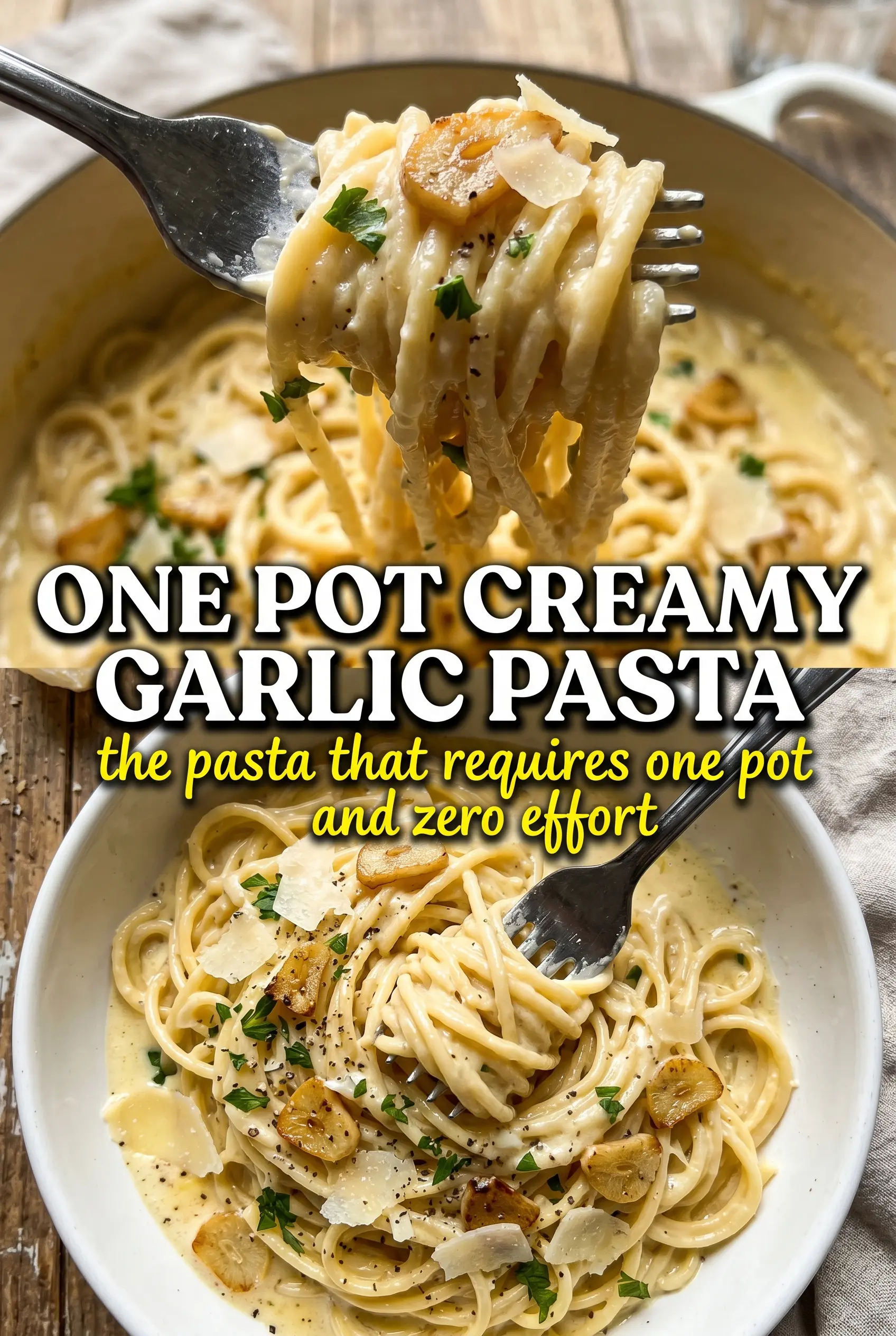
One Pot Creamy Garlic Pasta
Ingredients
Equipment
Method
- Melt the butter in a large pot over medium heat, then add the minced garlic. Sauté for 1–2 minutes until fragrant and just golden, stirring so it doesn’t brown too fast.
- Add the chicken or vegetable broth and heavy cream to the pot and bring to a gentle boil. Keep it at a gentle boil so it stays steady without aggressively splashing.
- Add the uncooked linguine or spaghetti and cook for 10–12 minutes, stirring frequently. Continue until the pasta is al dente and the liquid reduces into a creamy sauce that coats the noodles.
- Stir in the parmesan cheese and Italian seasoning and cook just until the cheese is fully melted. Keep stirring until the sauce turns silky and glossy.
- Season generously with salt and cracked black pepper to taste. Taste and adjust so the flavors pop in the creamy sauce.
- Serve immediately, topped with fresh basil and extra parmesan. Add the basil last so it stays bright and the parmesan sits warm and ready to melt.