Golden, crisp tortillas and a melty feta-mozzarella center make these Mediterranean quesadillas the kind of quick dinner that disappears fast. The fillings stay bright and savory instead of turning heavy, and every wedge gives you salty olives, roasted red pepper, and that stretch of cheese people expect when they bite into a quesadilla.
What makes this version work is the balance. Mozzarella gives you the melt, feta gives you the punch, and the spinach and peppers bring enough moisture and flavor to keep each bite interesting without making the tortilla soggy. The trick is keeping the filling thin and cooking over medium heat so the outside turns deeply golden before the cheese leaks out.
Below, I’m breaking down the small details that matter most, from keeping the filling from sliding around to the best way to serve these if you’re feeding a table of hungry people.
The tortillas got crisp before the cheese oozed out, and the combo of feta, mozzarella, and tzatziki on the side was spot on. I used chickpeas and didn’t miss the chicken at all.
Save these golden Mediterranean quesadillas for a fast dinner with crisp tortillas, feta, and tzatziki on the side.
The Reason These Quesadillas Stay Crisp Instead of Going Greasy
The biggest mistake with stuffed quesadillas is piling in too much filling and expecting the tortilla to hold everything together. Once that happens, the cheese melts out before the outside has a chance to brown, and you end up with a damp skillet and a soft tortilla. This version keeps the filling tight and uses mozzarella as the melt agent, with feta added for salt and character instead of as the main binder.
Medium heat matters here. High heat browns the tortilla too fast and leaves the cheese unmelted; low heat dries out the filling before the crust turns crisp. You want a steady sizzle when the tortilla hits the pan and a clean release when it’s ready to flip.
- Keep the filling in a single layer — A thin layer melts faster and stays tucked inside the tortilla. If you mound everything in the center, the quesadilla won’t seal well and the filling will spill as soon as you cut it.
- Let the spinach stay raw — It wilts inside the quesadilla as it cooks. Pre-cooking it pushes out moisture that later softens the tortilla.
- Use the olives sparingly — They bring briny depth, but too many make each bite taste sharp and heavy. A halved olive here and there gives you the best balance.
What Each Ingredient Is Actually Doing in the Filling
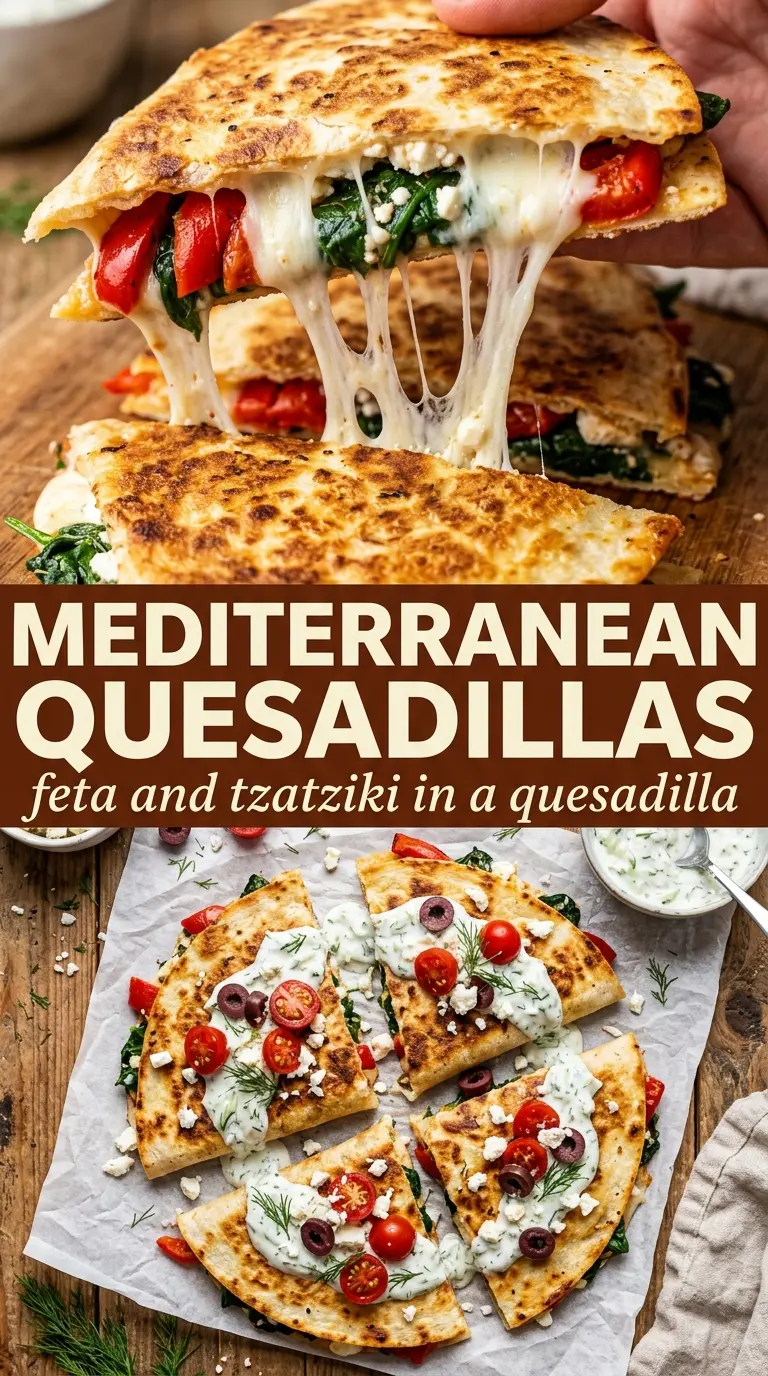
- Flour tortillas — These give you the structure and the best crisp finish. Use large, soft tortillas so they fold without cracking; thin tortillas tear more easily once the filling starts to soften.
- Mozzarella — This is the cheese that melts into the quesadilla and holds everything together. Pre-shredded works fine, though freshly shredded melts a little smoother.
- Feta — Don’t swap this for another mild cheese unless you have to. Feta is what makes the filling taste Mediterranean instead of just cheesy, and its crumbly texture keeps pockets of salty flavor in each bite.
- Roasted red peppers — These add sweetness and moisture without the watery hit you’d get from raw peppers. Pat them dry before using them if they’re packed in brine or oil.
- Chickpeas or chicken — Chicken makes this a heartier main dish, while chickpeas give you a vegetarian filling with enough body to stand up to the cheese. If using chickpeas, rinse and dry them well so they heat through cleanly instead of turning mushy.
- Tzatziki and hummus — These aren’t just extras on the side. Tzatziki cools down the saltiness of the feta and olives, and hummus adds a creamy, earthy dip that makes the plate feel finished.
Building the Quesadilla So the Cheese Melts Before the Tortilla Burns
Warming the Pan First
Set the skillet over medium heat and let it preheat before the tortilla goes in. If the pan is cold, the tortilla dries out before it starts to color; if it’s too hot, the outside spots too fast and the cheese stays stubborn. A light brush of olive oil is enough. You want a thin sheen, not a slick layer that fries the tortilla.
Layering for a Clean Fold
Place the fillings on one half of each tortilla and keep them away from the edge by about half an inch. Start with mozzarella, then chicken or chickpeas, then the spinach, peppers, olives, feta, and oregano. The mozzarella near the tortilla acts like glue, and that order helps the quesadilla hold together instead of sliding apart when you fold it.
Cooking to the Right Color
Cook for 3 to 4 minutes on the first side until the underside is deep golden and the tortilla feels crisp when lifted with a spatula. Flip once, then cook the second side until the cheese is fully melted and the filling feels hot through the center. If cheese starts leaking out early, the heat is too high. Pull the pan down a notch and give it another minute rather than chasing color too fast.
Resting Before Slicing
Let the quesadilla sit for a minute on the board before cutting. That short rest gives the melted cheese a chance to settle, which keeps the wedges from spilling out in a messy pile. Use a sharp knife or pizza cutter and slice from the center outward so the filling stays in place.
How to Adapt These Mediterranean Quesadillas Without Losing the Good Part
Make Them Vegetarian with Chickpeas
Swap the chicken for chickpeas and dry them well after rinsing. They bring a nutty, filling texture that works with the feta and olives, and they hold up better than softer vegetables if you want a meatless main dish.
Make It Dairy-Free
Use a good melting dairy-free shreds blend and skip the feta, then add a pinch more oregano and a few extra olives for punch. The texture won’t be quite as creamy as the original, but you’ll still get a crisp tortilla and a savory, satisfying filling.
Add More Protein for a Bigger Dinner
Increase the chicken to about 1 1/2 cups and keep the rest of the filling the same. The quesadillas stay balanced if you don’t overstuff them, and the extra protein makes them hold up well as a full meal with a simple salad.
Storage and Reheating
- Refrigerator: Store leftovers for up to 3 days. The tortillas soften a bit, but they still reheat well if you keep them wrapped or in an airtight container.
- Freezer: These freeze better before slicing. Cool completely, wrap tightly, and freeze for up to 2 months. The spinach softens a little after thawing, but the flavor holds up.
- Reheating: Reheat in a skillet over medium-low heat so the outside crisps back up before the cheese runs out. Skip the microwave if you can; it makes the tortilla chewy and the filling unevenly hot.
Questions I Get Asked About This Recipe
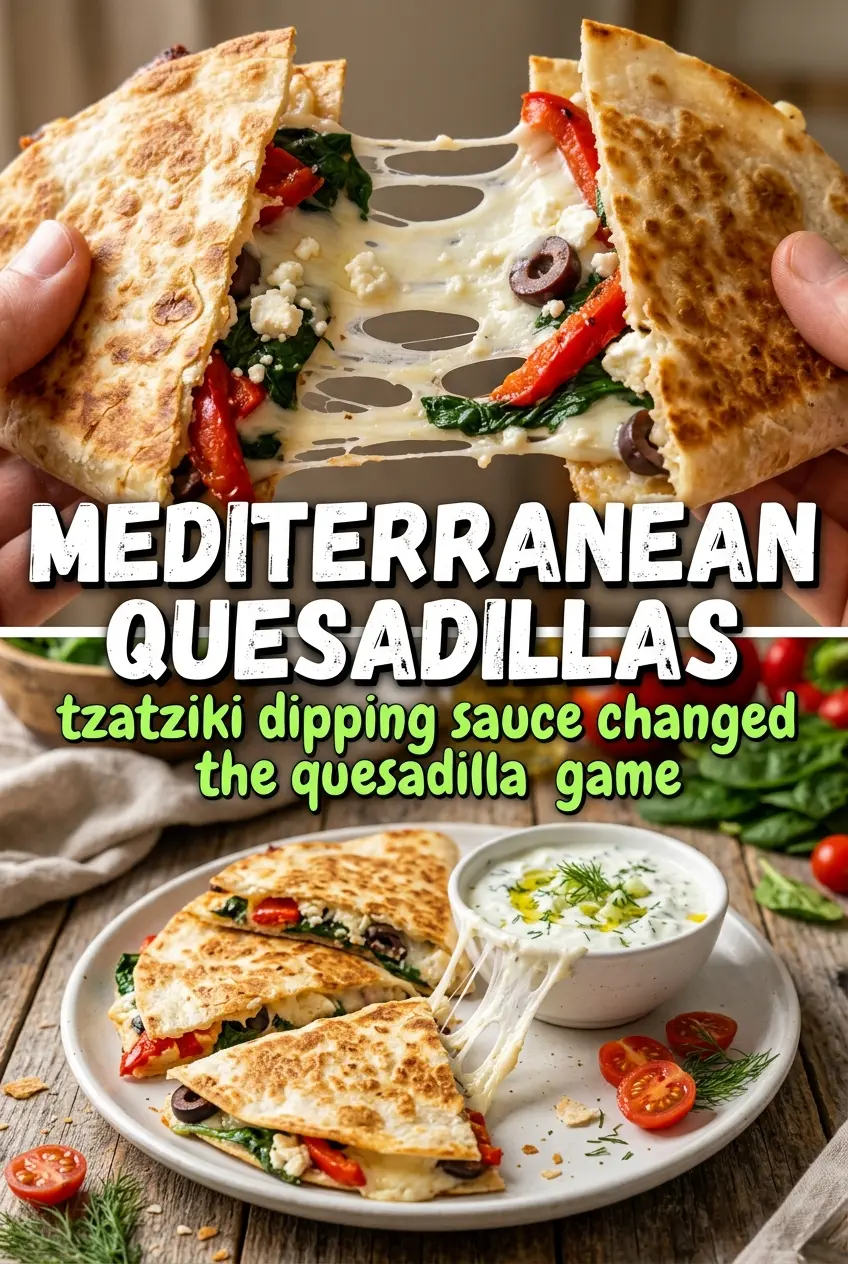
Mediterranean Quesadillas
Ingredients
Equipment
Method
- Heat a large skillet over medium heat and brush lightly with olive oil.
- On one half of each tortilla, layer mozzarella, chicken or chickpeas, baby spinach, roasted red peppers, kalamata olives, feta, and a sprinkle of oregano.
- Fold the empty half of the tortilla over the filled half to form a half-moon.
- Cook each quesadilla for 3–4 minutes per side until golden and crispy and the cheese is fully melted.
- Slice into wedges and serve with tzatziki and hummus for dipping.