These meatballs and gravy land with the kind of comfort that makes people pause at the table before the first bite. The meatballs stay tender instead of dense, the onion gravy turns rich and glossy, and everything tastes better once it settles over a pile of mashed potatoes. It’s the kind of dinner that feels old-school in the best way, with enough substance to stand on its own and enough sauce to make sure nothing dries out.
The trick is keeping the meatball mixture light and not overworking it. Once the beef tightens up, the meatballs lose that soft, almost juicy texture you want. The gravy also deserves patience: the onions need time to soften and pick up color, and the flour needs a full minute in the butter so the sauce tastes round instead of pasty. That little bit of Worcestershire and Dijon doesn’t make the gravy taste like either one; it just deepens the beefy, savory edge.
Below, I’ll walk through the parts that matter most — how to keep the meatballs tender, how to build a gravy that actually tastes like it simmered all afternoon, and the few swaps that still give you a good result.
The meatballs stayed tender and the gravy thickened up beautifully without getting gluey. I served it over mashed potatoes and my husband went back for seconds before I even sat down.
Save these meatballs and gravy for a rich, oniony dinner that turns mashed potatoes into the best part of the plate.
The Mistake That Turns Tender Meatballs Into Dense Ones
The biggest problem with meatballs is overmixing. Once you stir ground beef too hard or too long, the proteins tighten and the texture turns bouncy instead of soft. Here, the breadcrumbs, egg, parmesan, and Worcestershire work as a light binder, so the mixture only needs to come together until you stop seeing dry streaks. Rolling them into 1.5-inch balls keeps them large enough to stay juicy without taking forever to cook through.
Brown them before they go into the gravy. That first crust gives you flavor in the pan, and those browned bits become part of the sauce instead of staying locked in the meat. Don’t chase a deep cook at this stage; the meatballs finish gently in the gravy, which is what keeps them tender.
What Each Ingredient Is Doing in the Pan

- Ground beef — An 80/20 blend gives you the best balance of flavor and tenderness. Leaner beef works, but the meatballs can turn dry unless you keep a close eye on the simmer time.
- Breadcrumbs and egg — These hold the mixture together without turning it heavy. If you use fresh bread crumbs instead of dry, reduce them slightly because fresh crumbs carry more moisture.
- Parmesan — This adds salt, depth, and a little savory nuttiness. Pre-grated is fine here, though freshly grated melts more smoothly into the mix.
- Worcestershire sauce — This deepens the beefy flavor in both the meatballs and the gravy. There isn’t a perfect substitute, but soy sauce works in a pinch if you use a little less and taste as you go.
- Onion — Thin slices cook down into the gravy and give it body as well as sweetness. Let them soften and color; pale onions make a flat sauce.
- Dijon mustard — This won’t make the gravy taste mustardy. It sharpens the sauce and keeps the richness from tasting heavy.
- Mashed potatoes — They’re not just a side dish here. They catch the gravy and turn the whole meal into something satisfying enough to feel complete.
Building the Gravy Without a Floury Taste
Brown the Meatballs First
Use a large skillet and give the meatballs room so they brown instead of steam. You’re looking for a deep golden crust on the outside, not a full cook all the way through. Pull them out once they’re browned on most sides and set them aside; they’ll finish later, and if you leave them in too long now, they’ll dry out by the end.
Cook the Onions Until They Smell Sweet
Melt the butter and add the sliced onion, then let it cook until soft, glossy, and lightly caramelized. This usually takes about 10 minutes, and the pan will smell sweet and savory when it’s ready. If the onions start sticking too fast, lower the heat; burnt edges will make the gravy taste harsh.
Whisk the Flour Into the Fat
Sprinkle in the flour and stir for a full minute so it loses its raw taste. The mixture should look pasty but smooth before the broth goes in. If you rush this part, the gravy can taste chalky, and no amount of simmering fully fixes that.
Let the Sauce Thicken Slowly
Add the beef broth gradually while whisking so the gravy stays smooth. Worcestershire and Dijon go in here, too, and they’ll give the sauce a deeper brown color and a stronger savory edge. Let it simmer until it coats the back of a spoon; if it looks thin at first, keep going instead of adding more flour right away, because it thickens as it heats.
Finish the Meatballs in the Gravy
Slide the meatballs back into the pan and spoon some gravy over the top. Simmer gently for about 15 minutes until the centers are cooked through and the sauce has settled into a silky, spoonable consistency. Keep the heat low enough that the gravy barely bubbles; a hard boil can toughen the meatballs and make the sauce tighten too much.
How to Adapt These Meatballs and Gravy for Different Tables
Make Them Gluten-Free
Use gluten-free breadcrumbs in the meatballs and swap the flour for a 1:1 gluten-free flour blend in the gravy. The sauce may need an extra minute or two to thicken, but the flavor stays right in line with the original.
Use Ground Turkey Instead of Beef
Ground turkey works if you want a lighter version, but it needs the gravy more than beef does. Add a little extra parmesan or a splash more Worcestershire so the meatballs don’t taste flat, and keep the simmer gentle because turkey dries out faster.
Make It Dairy-Free
Replace the butter with a neutral oil or dairy-free butter and skip the parmesan in the meatballs. You’ll lose a little richness, so lean on the onions and Worcestershire for depth, and season the meat mixture carefully so the flavor still lands.
Storage and Reheating
- Refrigerator: Store the meatballs and gravy together for up to 4 days. The sauce may thicken as it chills, which is normal.
- Freezer: This freezes well. Cool completely, pack in airtight containers, and freeze for up to 2 months. Thaw in the refrigerator overnight before reheating.
- Reheating: Warm gently on the stove over low heat with a splash of broth or water. High heat can make the gravy split and the meatballs toughen, so go slow and stir often.
Questions I Get Asked About This Recipe
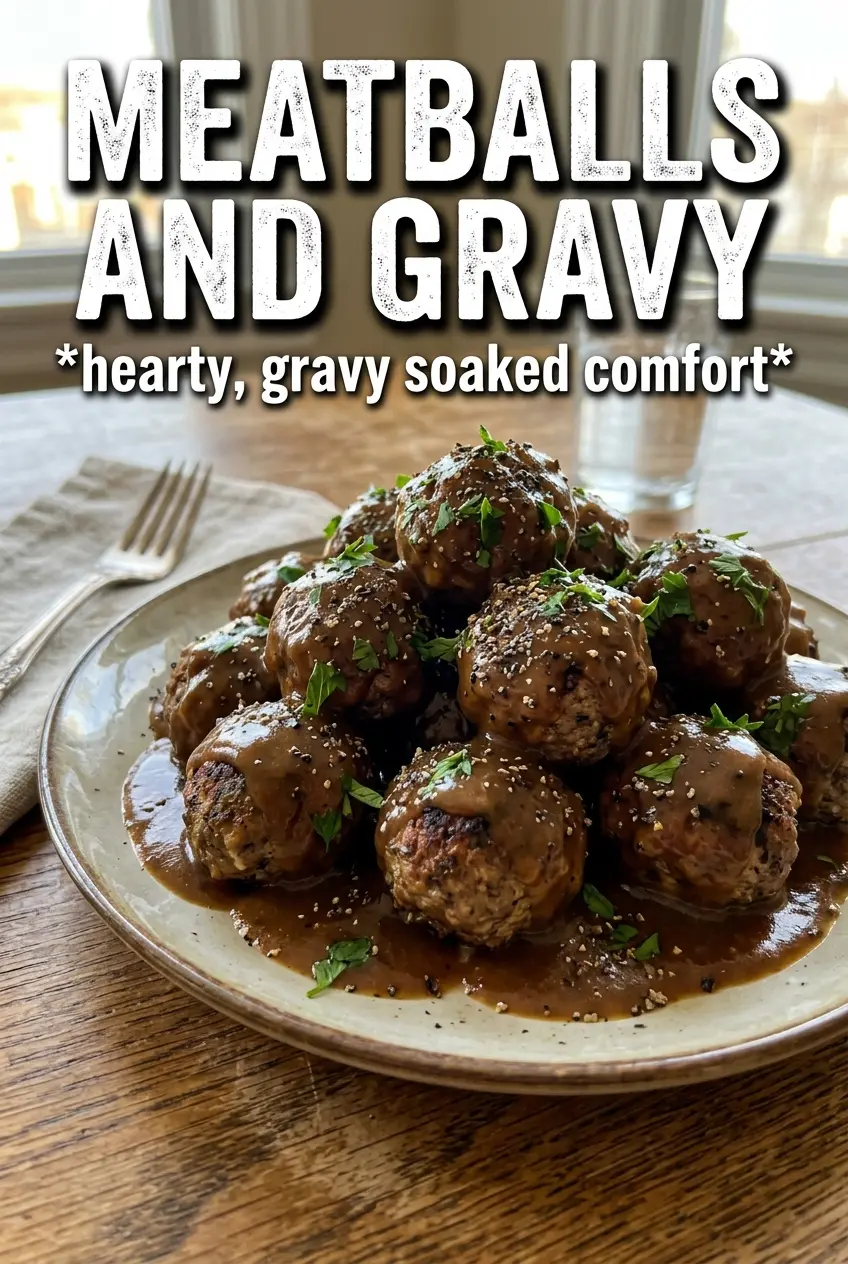
Meatballs and Gravy
Ingredients
Equipment
Method
- In a mixing bowl, combine ground beef, breadcrumbs, parmesan, egg, garlic, onion powder, Worcestershire sauce, salt, and pepper until just combined. Stop mixing as soon as no dry crumbs remain for tender meatballs.
- Roll the mixture into 1.5-inch balls. As you roll, keep the portions even so they brown and cook through at the same pace.
- Heat a large skillet over medium-high heat until hot, then brown the meatballs in batches (do not crowd). Cook until deeply golden on the outside, then remove and set aside.
- Melt butter in the skillet and cook the thinly sliced onion until caramelized for about 10 minutes. You want the onion to turn deep golden-brown and smell sweet.
- Whisk in flour and cook for 1 minute. Keep stirring until the flour smell cooks off and the mixture looks smooth.
- Gradually whisk in beef broth, Worcestershire, and Dijon mustard, scraping up any browned bits from the pan. Bring to a simmer, then cook until thickened and glossy.
- Return the browned meatballs to the gravy and simmer for 15 minutes, until cooked through. The sauce should gently bubble and cling to the meatballs.
- Serve the meatballs and gravy over mashed potatoes and scatter fresh parsley on top. Plate while the gravy is hot and the potatoes are warm.