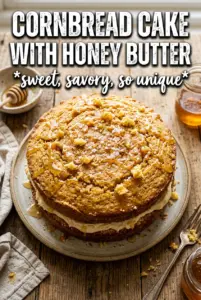
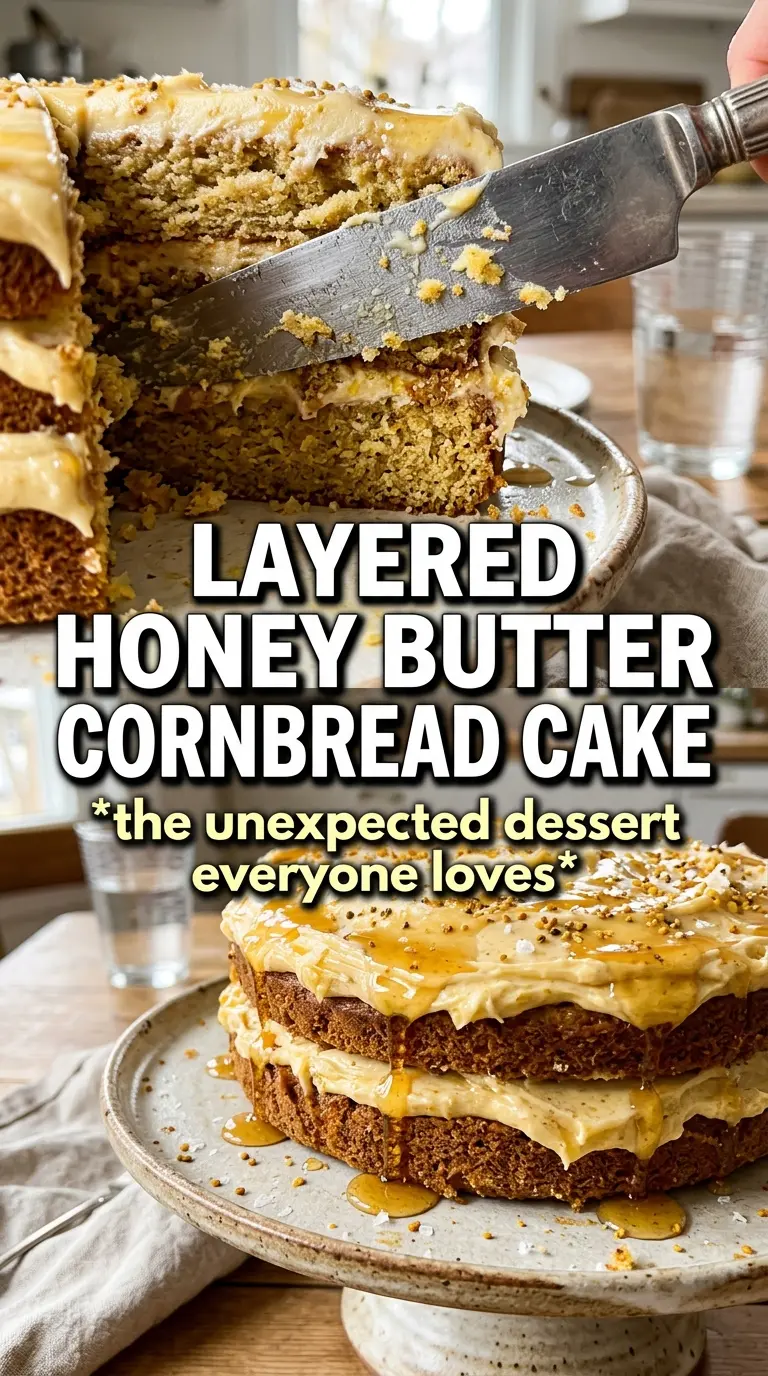
Golden cornbread layers, soft enough to slice cleanly but sturdy enough to stack, turn into something special when they’re filled and frosted with honey butter. The cornmeal brings that familiar warm, slightly sandy crumb, while the honey keeps the cake from eating dry or overly sweet. What you get is a dessert that feels a little nostalgic, a little unexpected, and completely at home on a cake stand.
The balance matters here. Regular cornbread cake can lean dry if it’s baked too long or if the batter is mixed too aggressively, so this version leans on buttermilk, melted butter, and enough sugar to keep the layers tender. The frosting is whipped until pale and airy, which keeps it from turning heavy against the denser cake layers. A drizzle of honey and a pinch of flaky salt on top pulls everything together and keeps each bite from tasting flat.
Below, I’ve included the small details that keep the layers even, the frosting fluffy, and the whole cake neat when you slice it. If you’ve ever had a layer cake slide around or a frosting that felt too sweet, this one gives you a better path.
The layers baked up even and didn’t crumble when I stacked them, and the honey butter frosting stayed fluffy instead of sliding off the sides. The flaky salt on top was the part everybody kept talking about.
Save this layered cornbread cake for the honey butter frosting, fluffy crumb, and salty-sweet finish.
The Trick to Keeping Cornbread Layers Tender Instead of Crumbly
Layer cakes expose every weakness in cornbread batter. If the batter is too dry, the layers split when you level them. If it’s overmixed, the crumb turns tight and sandy instead of soft. The fix is to combine the wet and dry ingredients only until the flour disappears, then get the batter into the pans right away so the baking powder and soda can do their work in the oven instead of in the bowl.
Even bake time matters more than you might think. Pull the layers when the centers spring back and a toothpick comes out clean or with a few moist crumbs, not wet batter. If you wait for a deep brown top, the edges will dry out before the middle sets. Let the layers cool completely before frosting them, because even a little warmth will soften the honey butter frosting and make the stack lean.
What the Cornmeal, Honey, and Buttermilk Are Each Bringing to the Cake
- Yellow cornmeal — This is the ingredient that gives the cake its cornbread identity. A medium grind works best because it keeps the crumb tender while still giving you a little texture. Fine cornmeal will bake more smoothly, but the cake loses some of that rustic bite.
- Buttermilk — This keeps the cake soft and helps the baking soda work properly. If you don’t have it, whole milk with a splash of lemon juice can stand in, but the flavor will be less tangy and the crumb a little less plush.
- Honey — Honey belongs in both the batter and the frosting because it rounds out the corn flavor and keeps the cake from tasting one-note. Use a mild honey if you want the cornbread flavor to stay front and center; darker honey will push the dessert toward a deeper, more floral note.
- Unsalted butter — Melted butter in the batter gives tenderness and richness, while softened butter in the frosting gives structure and that whipped, spreadable texture. Salted butter will work in a pinch, but cut back on the added salt so the finish doesn’t taste sharp.
- Heavy cream — Just a couple tablespoons loosen the frosting enough to spread without tearing the cake. Add it slowly; too much and the frosting turns soft instead of billowy.
Building the Batter and Frosting It Before the Crumbs Get Away From You
Mix the Dry and Wet Bowls Separately
Whisk the flour, cornmeal, sugar, baking powder, baking soda, and salt in one bowl, then whisk the eggs, milk, buttermilk, melted butter, honey, and vanilla in another. This keeps the leaveners evenly distributed and prevents pockets of baking soda, which can leave a soapy taste. When the two bowls come together, stir just until the dry streaks disappear. If you keep mixing after that, the cake gets tough before it even hits the oven.
Bake the Layers Until They Spring Back
Divide the batter evenly between the three greased 8-inch pans so the layers bake at the same pace. The cakes are done when the tops feel set and bounce back lightly under your fingertip, with the edges pulling just slightly from the pan. If the center still looks wet, give it a few more minutes; if the tops are darkening too quickly, the oven is too hot and the layers will dry out before the middle cooks through. Cool them in the pans for a short stretch, then move them to racks so trapped steam doesn’t soften the bottoms.
Whip the Honey Butter Frosting Until It Fluffs Up
Beat the softened butter first until it looks pale and whipped, then add the honey, powdered sugar, cream, vanilla, and salt. The goal is a frosting that feels light enough to spread in clean swoops but stable enough to hold the layers together. If it looks greasy or loose, the butter was too warm; chill it for a few minutes and beat again. If it seems stiff, add a teaspoon more cream instead of dumping it all in at once, because too much liquid turns the frosting slack.
Stack, Frost, and Finish with Honey and Salt
Start with the flattest layer on the bottom so the cake sits steady. Spread a generous layer of frosting all the way to the edge, then repeat with the next cake round and finish the outside with a smooth or rustic coating, depending on the look you want. Drizzle the top with honey right before serving so it stays glossy, then scatter flaky sea salt over the surface. That last step matters because it keeps the sweetness lively and gives each slice a sharper finish.
How to Adjust This Cake for Different Needs Without Losing the Point
Make it gluten-free
Use a 1:1 gluten-free flour blend in place of the all-purpose flour. The cornmeal still gives you texture, but the cake will be a little more delicate, so let the layers cool fully before moving them. If your blend doesn’t contain xanthan gum, add a small amount according to the package directions so the slices hold together.
Use a less sweet finish
Cut the powdered sugar back by about 1/2 cup and leave the honey drizzle on top. The frosting will be a little softer and less towering, but the salted honey finish still gives you the same sweet-savory contrast without overwhelming the cornbread flavor.
Bake it as a sheet cake
Pour the batter into a greased 9×13-inch pan and start checking it a few minutes early. You’ll lose the dramatic layer look, but the flavor stays the same and the frosting spreads much faster. This is the version I’d use for potlucks, where neat slices matter more than a tall presentation.
Storage and Reheating
- Refrigerator: Store covered for up to 4 days. The frosting stays stable, but the cake crumb firms up a bit in the fridge.
- Freezer: Freeze individual slices wrapped well for up to 2 months. Thaw in the refrigerator overnight so the frosting doesn’t sweat and slide.
- Reheating: Let slices sit at room temperature for 20 to 30 minutes before serving. Microwaving too long softens the frosting and can make the cake feel gummy instead of tender.
Answers to the Questions Worth Asking
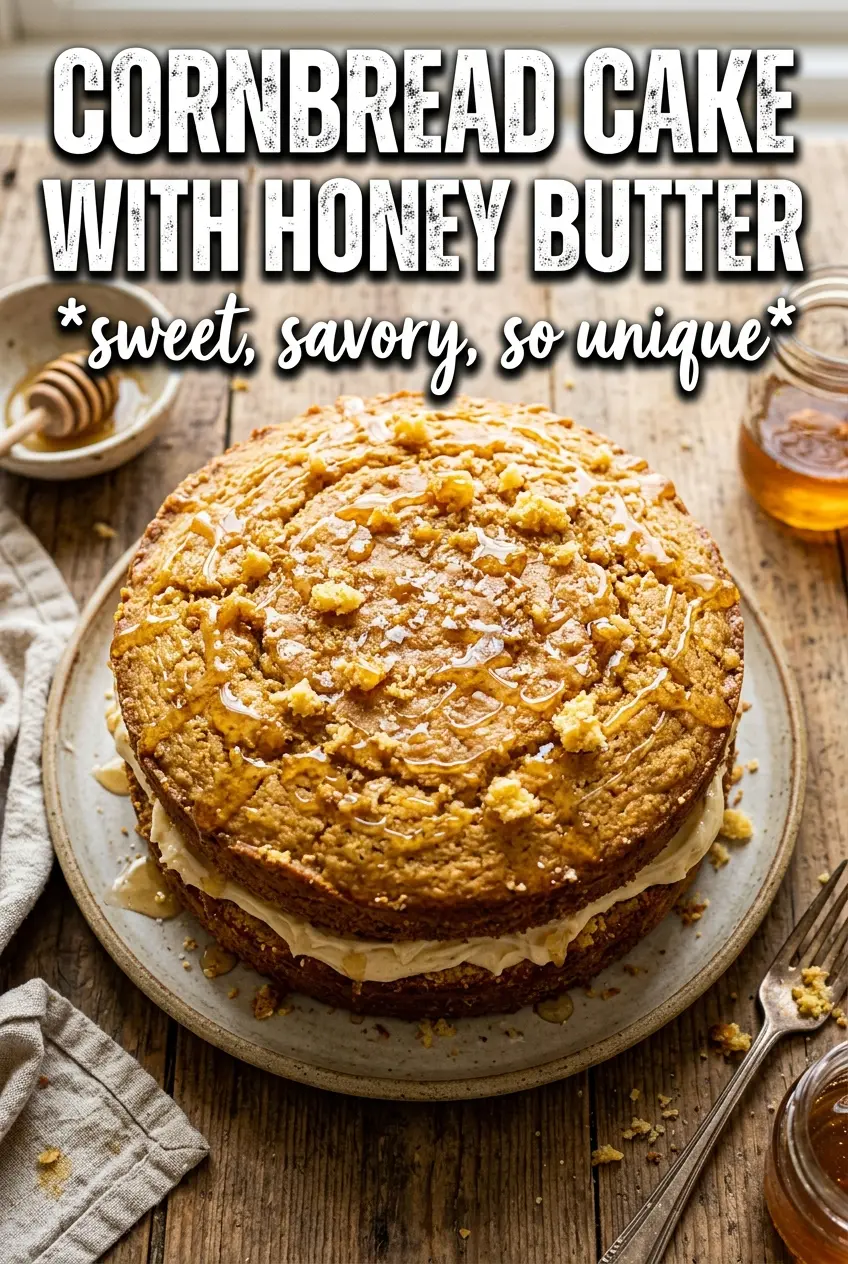
Layered Cornbread Cake With Honey Butter Frosting
Ingredients
Equipment
Method
- Preheat the oven to 350°F, then grease three 8-inch round pans. Wipe or tap away excess grease so the crust browns evenly.
- Whisk the dry ingredients together: all-purpose flour, yellow cornmeal, granulated sugar, baking powder, baking soda, and salt. Whisk until the color looks even with no visible lumps.
- Whisk the wet ingredients separately: eggs, whole milk, buttermilk, melted unsalted butter, honey, and vanilla. Mix until smooth and glossy.
- Fold the wet mixture into the dry mixture just until combined, then divide the batter between the three pans. Stop as soon as no dry flour streaks remain.
- Bake at 350°F for 22–25 minutes, until a toothpick comes out clean. Look for golden edges and a lightly springy center.
- Cool the cakes completely in the pans before frosting. The layers should feel fully cool to the touch so the frosting doesn’t melt.
- Beat the honey butter frosting ingredients until very light and fluffy: softened unsalted butter, honey, powdered sugar, heavy cream, vanilla, and salt. Mix until the frosting turns pale and holds soft peaks.
- Frost generously between all layers, then spread frosting over the outside of the stacked cake. Use an offset spatula to press frosting to the edges for clean layers.
- Drizzle with honey and sprinkle flaky sea salt over the top. Finish so the salt is visible for a sweet-salty crunch.