Fresh cranberry orange sauce turns sharp, juicy, and glossy in the pan, with a texture that lands right between spoonable jam and a loose fruit compote. The cranberries burst just enough to thicken the sauce on their own, while the orange juice keeps the flavor bright instead of flat or overly sweet. Fold in the orange segments at the end and you get little pockets of fresh citrus that make each bite taste lifted and clean.
The key is to start with orange juice and sugar before the cranberries go in. That gives the berries a sweet base to cook in, and it helps the sauce reduce without needing extra pectin or cornstarch. The zest goes in after cooking so it stays fragrant, not bitter, and the orange segments are folded in only once the sauce cools slightly so they keep their shape.
Below, you’ll find the small timing details that keep the sauce from turning watery, plus a few smart swaps if you want it a touch tarter, sweeter, or a little more polished for serving.
The sauce thickened up beautifully, and the orange segments stayed intact instead of turning mushy. I made it the night before, and it tasted even better chilled the next day.
Bright fresh cranberry orange sauce with juicy citrus segments is the side dish that wakes up the whole plate.
The Trick to Keeping Cranberry Sauce Bright Instead of Jammy
Most cranberry sauces go dull because they boil too hard after the berries split. A hard boil pushes the fruit past glossy and into thick paste territory, and the orange flavor gets buried. A steady simmer gives you enough heat to pop the berries and reduce the liquid without cooking off the fresh citrus character.
The other place people miss is the timing on the zest and segments. Zest added too early can taste harsh, and orange pieces tossed in while the sauce is still bubbling will break down and cloud the finish. Pull the pan off the heat once most of the cranberries have burst, then build the citrus layers at the end.
- Fresh cranberries — These bring the natural pectin that thickens the sauce as they burst. Frozen cranberries also work; use them straight from the freezer and add just a minute or two to the simmer.
- Fresh orange juice — Bottled juice tastes flatter here and can make the sauce taste one-note. Fresh juice keeps the sauce lively and gives the cranberries something brighter to reduce in.
- Orange zest — This is where the real orange aroma lives. Zest after cooking so it stays fragrant and doesn’t turn bitter.
- Orange segments — Use peeled, segmented orange pieces for the best texture. They add fresh juice and contrast, but only if they’re folded in gently once the sauce has cooled a bit.
What Each Ingredient Is Doing in the Pan
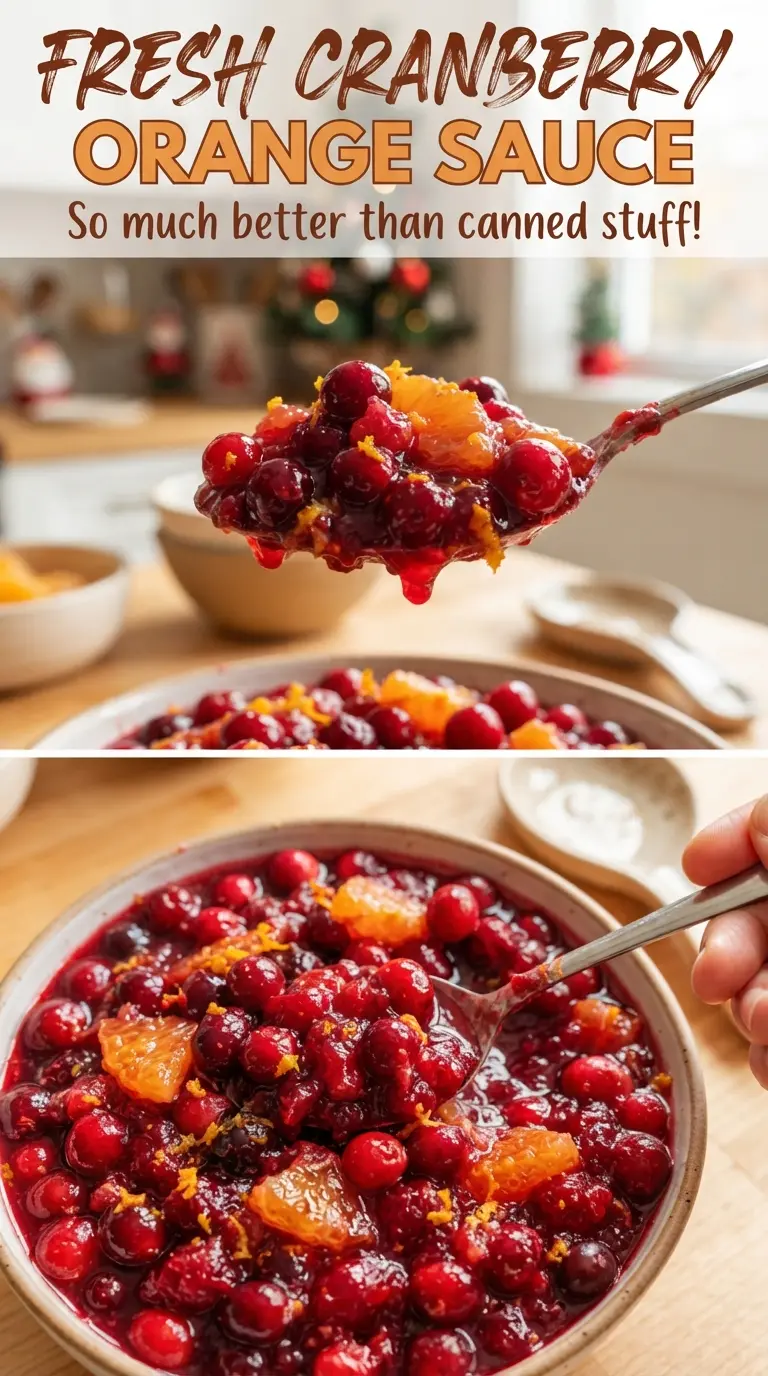
- 12 ounces fresh cranberries — These are the body of the sauce. They burst and release pectin, which is what gives you that natural thickness without extra thickeners.
- 3/4 cup sugar — Enough to balance the cranberry tartness without making the sauce taste candy-sweet. If you like a sharper sauce, drop it by a tablespoon or two, but don’t cut it too far or the berries can taste thin.
- 1 cup fresh orange juice — This is the cooking liquid and the main source of citrus flavor. Fresh-squeezed juice makes the sauce taste clean and vivid; concentrate or carton juice can dull it.
- 1 tablespoon orange zest — Zest adds the aromatic orange note that juice alone can’t give. Use a fine grater and avoid the white pith, which turns bitter fast.
- 1 orange, peeled and segmented — These should go in at the end so they stay intact and juicy. If you don’t want pieces in the finished sauce, skip them and add an extra teaspoon of zest instead.
- Pinch of salt — This doesn’t make the sauce salty; it keeps the fruit tasting fuller and stops the sweetness from reading flat.
Cooking the Berries Without Losing the Fresh Orange Flavor
Getting the Liquid Hot First
Bring the sugar and orange juice to a full boil before adding the cranberries. That jump-starts the cooking and helps the sugar dissolve completely, so you don’t end up with gritty sauce or uneven sweetness. Once the berries go in, lower the heat to a steady simmer and let the pot do the work. If the liquid is just barely warm, the berries tend to split late and the sauce stays too thin.
Letting the Cranberries Burst on Their Own
Simmer the cranberries and salt for about 10 minutes, stirring now and then. You want most of the berries to pop, not every single one to dissolve; a few whole berries give the sauce a better texture. If the pot looks dry before the berries break down, the heat is too high. Add a splash of orange juice or water and lower the burner rather than pushing it harder.
Finishing with Zest and Orange Segments
Take the pan off the heat before you stir in the zest. The residual heat is enough to wake up the orange oils without turning them sharp. Let the sauce cool for a few minutes, then fold in the orange segments gently so they stay juicy and visible. Chill before serving so the sauce thickens to its final spoonable texture.
How to Adapt This for a Sweeter, Brighter, or Dairy-Free Table
Make It Tarter
Cut the sugar back by 2 tablespoons and add a little extra zest. The sauce will taste sharper and less glossy, but it works well if you’re serving it alongside rich dishes and want more bite.
Use Frozen Cranberries
Frozen cranberries swap in cleanly with no thawing needed. The sauce may take 1 to 2 extra minutes to reach the same burst-and-thicken stage, but the texture stays spot on.
Skip the Orange Segments
If you want a smoother sauce for spreading or layering, leave out the orange pieces and keep the zest. You’ll still get the citrus flavor, but the final texture will be more uniform and less chunky.
Make It Ahead
This sauce gets better after a night in the fridge because the citrus and cranberry flavors settle together. The orange segments hold up best if you fold them in after the sauce has cooled, not while it’s still piping hot.
Storage and Reheating
- Refrigerator: Store in a covered container for up to 1 week. The sauce will thicken as it chills.
- Freezer: Freezes well for up to 2 months. Thaw in the refrigerator overnight and stir before serving.
- Reheating: Warm it gently on the stove over low heat or let it come to room temperature. High heat can make the orange segments break down and loosen the texture.
Answers to the Questions Worth Asking
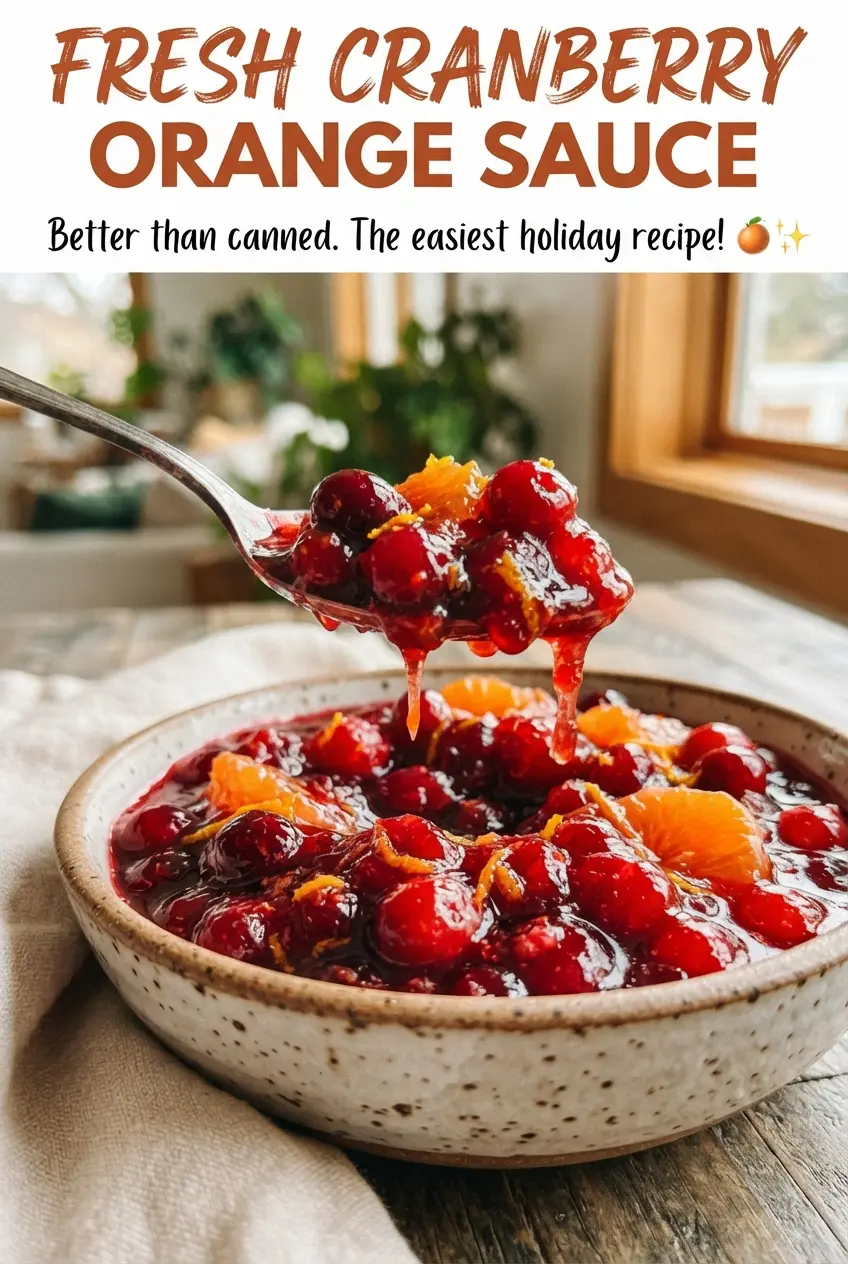
Fresh Cranberry Orange Sauce
Ingredients
Equipment
Method
- Bring the sugar and fresh orange juice to a boil in a saucepan over medium-high heat, then keep it at a steady boil for 1 minute so the sugar dissolves fully and the liquid looks glossy.
- Add the fresh cranberries and the pinch of salt, return to a gentle boil, and simmer for 10 minutes until most berries burst and the mixture thickens slightly with visible red skins.
- Remove the saucepan from heat and stir in the orange zest until it looks evenly speckled throughout the sauce.
- Cool the sauce slightly for 5 minutes, then gently fold in the orange segments so they stay intact and glossy.
- Chill the sauce until serving, covered, until cold and spoonable, about 2 hours in the refrigerator.