Silky pasta, smoky bacon, and charred corn come together in a bowl that eats like a mash-up of two comfort foods that were always meant to meet. The sauce clings instead of puddling, the corn stays sweet and a little blistered, and the tajín and lime keep every bite bright enough to cut through the richness.
What makes this version work is the way the heat is controlled. The pasta water and yolk mixture need enough warmth to turn glossy, but not so much heat that the eggs scramble. Cotija brings the salty, crumbly edge you want from elote, while Parmesan helps the sauce tighten and gives it a more carbonara-like finish. Bacon fat carries the corn flavor and gives the whole dish a smoky base without needing extra seasoning.
Below, I’ll show you the part that matters most: how to combine the eggs and hot pasta so the sauce turns creamy instead of grainy. There are also a few smart swaps if you need to work with frozen corn or want to make the dish without bacon.
The sauce turned glossy and coated every strand, and the charred corn gave it that sweet-salty elote flavor without making it heavy. My husband kept going back for “just one more forkful.”
Save this elote pasta carbonara for the night you want creamy spaghetti, charred corn, and tajín in one skillet.
The Trick Is Keeping the Eggs Glossy, Not Scrambled
Carbonara-style sauces fail for one reason: the pan is too hot when the eggs go in. In this dish, that risk is even higher because the corn and bacon bring their own heat, and the cheese mixture is thick enough to seize if it hits a scorching skillet. Pull the pan off the burner before you add the egg yolks, then toss continuously so the residual heat turns everything silky instead of clumpy.
The other part that matters is the pasta water. It doesn’t just thin the sauce; it helps the cheese and yolks emulsify into a coating that sticks to the noodles. Add it a splash at a time and watch the texture change. It should look creamy and loose at first, then tighten into a glossy sauce as you keep tossing.
- Off-heat tossing keeps the eggs from curdling and gives you that smooth carbonara finish.
- Starchy pasta water is what turns the yolks and cheese into a sauce instead of a coating that breaks.
- Hot pasta does the work here. If the noodles cool too much, the sauce won’t come together.
What Each Ingredient Is Actually Doing in This Dish
- Fresh corn gives you the sweet, juicy bite that makes this read like elote instead of just bacon pasta. Frozen corn works in a pinch, but it needs a harder sear so it doesn’t taste watery.
- Cotija brings the salty crumble and dry texture that keeps the sauce from turning heavy. Feta can stand in if needed, though it’s tangier and a little wetter.
- Parmesan helps the sauce emulsify and deepens the savory side of the dish. Use the finely grated kind, not the sandy shelf-stable version, because it melts much better.
- Tajín and lime are what keep the richness in check. Tajín goes into the egg mixture, while the lime juice at the end wakes everything up without making the sauce taste sharp.
- Bacon adds salt and smoke and gives you the fat that helps char the corn. If you swap it out, you’ll need another fat in the pan, like olive oil or butter, to keep the corn from sticking.
How to Pull This Off Without Breaking the Sauce
Get the Pasta to the Right Point First
Cook the spaghetti until it’s just al dente, with a firm bite in the center. It will spend another minute or two in the pan, and that extra time matters. Before you drain it, scoop out a full cup of pasta water; if the sauce tightens too fast, that starch is what gives you room to fix it. Don’t rinse the pasta or you’ll wash off the surface that helps the sauce cling.
Render the Bacon and Char the Corn
Cook the chopped bacon until it’s crisp and the fat has rendered out. That fat should look clear and shimmering, not burnt and smoky. Add the corn kernels straight to the skillet and let them sit long enough to pick up a little color before stirring; if you keep them moving constantly, they’ll steam instead of char. You want browned spots and a few popped kernels for the best texture.
Build the Sauce Off the Heat
Once the pasta and corn are combined, take the skillet off the burner before adding the egg mixture. Toss fast and keep the pasta moving so the yolks thicken gradually. Add pasta water a little at a time until the sauce looks creamy and coats the noodles in a shiny layer. If it starts looking grainy, stop adding heat immediately and loosen it with another splash of pasta water while stirring.
Finish With Lime and Bacon
Stir the bacon back in at the end so it stays crisp enough to give you contrast against the creamy sauce. Add the lime juice last, then taste for salt and pepper. The dish should land salty, smoky, sweet, and bright all at once. Serve it right away, because egg-based sauces tighten as they sit.
How to Adapt This for the Ingredients You Have
Make it vegetarian without losing the elote character
Skip the bacon and cook the corn in olive oil or butter until it browns in spots. You’ll lose the smoky pork flavor, so add a pinch of smoked paprika or a little extra tajín to bring back some depth. The sauce still works because the eggs and cheese are doing the heavy lifting.
Use frozen corn when fresh isn’t available
Frozen corn is fine, but it needs a little more time in the skillet so the moisture cooks off and the kernels can brown. Don’t thaw it first; add it straight from frozen so it doesn’t go soggy. The flavor won’t be as sweet as fresh, but the char still gives the dish its backbone.
Swap the spaghetti for short pasta
Rigatoni, bucatini, or spaghetti all work, but short pasta like rigatoni or shells catches more of the corn and cheese in every bite. If you switch, keep the pasta just barely al dente because the ridges and hollows hold the sauce quickly. The final dish will feel a little more hearty and less twirled, but the flavor stays the same.
Make it gluten-free with a sturdy pasta
Use a gluten-free spaghetti that holds its shape well and cook it just to the edge of done, since gluten-free pasta can soften quickly once it hits the sauce. Save extra pasta water if the brand tends to absorb more liquid. The sauce logic stays the same, but you’ll want to toss gently so the noodles don’t break.
Storage and Reheating
- Refrigerator: Store leftovers for up to 3 days. The sauce will thicken and the pasta will absorb some of it.
- Freezer: I don’t recommend freezing this dish. Egg-and-cheese sauces turn grainy after thawing, and the corn loses its bite.
- Reheating: Warm it slowly in a skillet over low heat with a splash of water or milk, stirring often. High heat is the fastest way to make the eggs separate and the cheese clump.
Questions I Get Asked About This Recipe
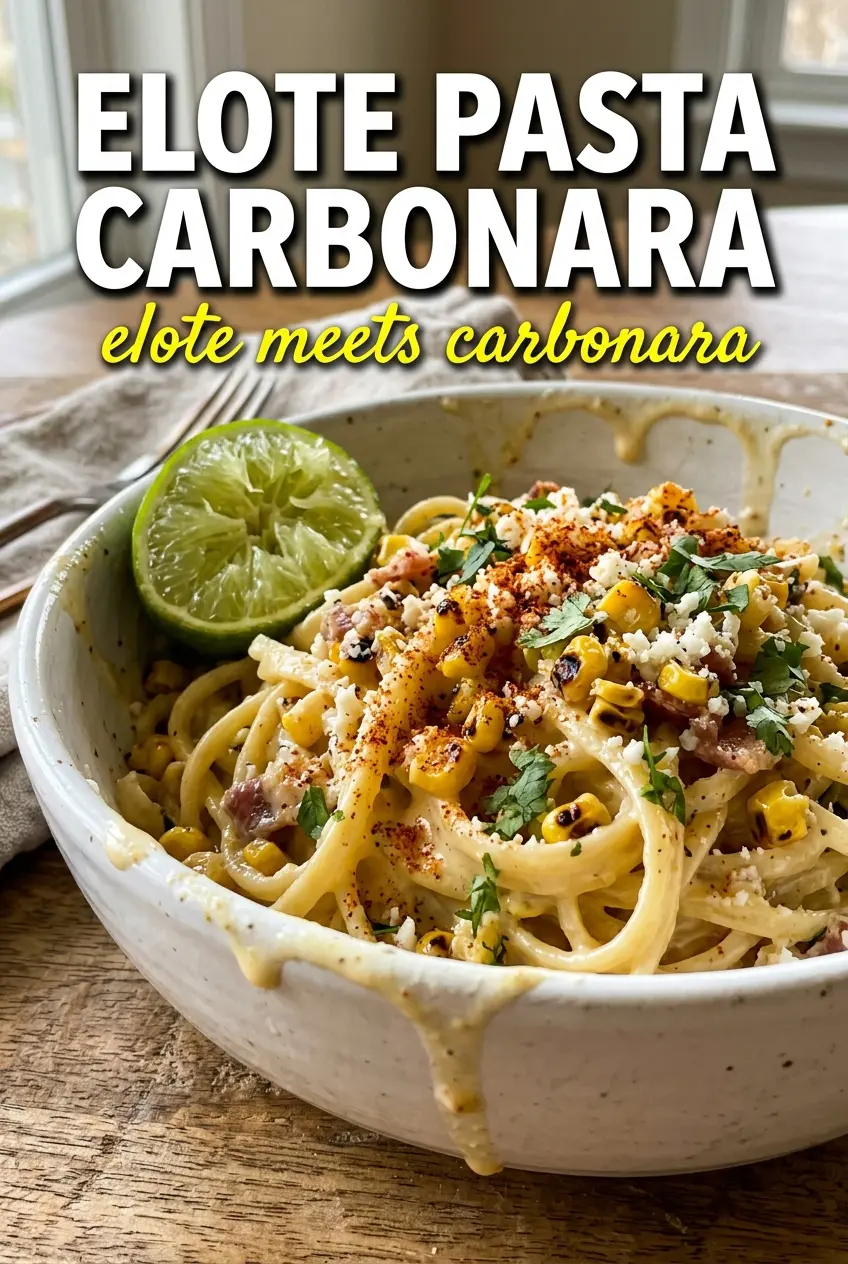
Elote Pasta Carbonara
Ingredients
Equipment
Method
- Bring a large pot of salted water to a boil, then cook spaghetti until al dente, about 8–10 minutes. Look for tender pasta with a firm center.
- Before draining, reserve 1 cup pasta water, then drain the spaghetti. Keep the reserved water warm for later emulsifying.
- Whisk together egg yolks, Cotija, Parmesan, tajín, and chopped cilantro in a bowl. Whisk until thick and evenly speckled with cheese and seasoning.
- Cook chopped bacon in a large skillet over medium heat until crispy, about 8–10 minutes. You should see browned, curled bacon and a rendered fat pool.
- Remove the bacon and set aside, then add corn kernels to the bacon fat. Cook for 3–4 minutes until charred, stirring occasionally, with visible dark toasted spots.
- Combine hot pasta with the corn mixture off heat in the skillet. The pasta should be steaming but not cooking in direct heat.
- Quickly stir in the egg mixture, adding reserved pasta water a little at a time until creamy, about 1–2 minutes. Watch for the sauce to turn glossy and cling to the noodles without scrambling.
- Toss in the crispy bacon, then season with lime juice, salt, and pepper. Serve immediately with tajín on top if desired.