Slow-cooked beef short ribs turn into something almost unfair when they’ve had enough time to relax in a dark, savory braising liquid. The meat goes from firm and meaty to spoon-tender, the bones release cleanly, and the sauce picks up a deep red-wine richness that clings to every bite instead of sliding off the plate.
This version works because the ribs are browned first, then settled into the Crockpot with a bed of onion, carrot, and celery that keeps them out of direct heat and builds flavor into the sauce as they cook. Tomato paste adds backbone, Worcestershire brings depth, and the wine cooks down into something round and glossy instead of sharp. The final cornstarch slurry is there for one job: turning the liquid into a sauce that coats mashed potatoes instead of pooling around them.
Below, I’ve included the searing detail that keeps the ribs from tasting flat, plus a few smart swaps and storage notes for the leftovers. The sauce is half the reason to make this dish, and it’s worth getting right.
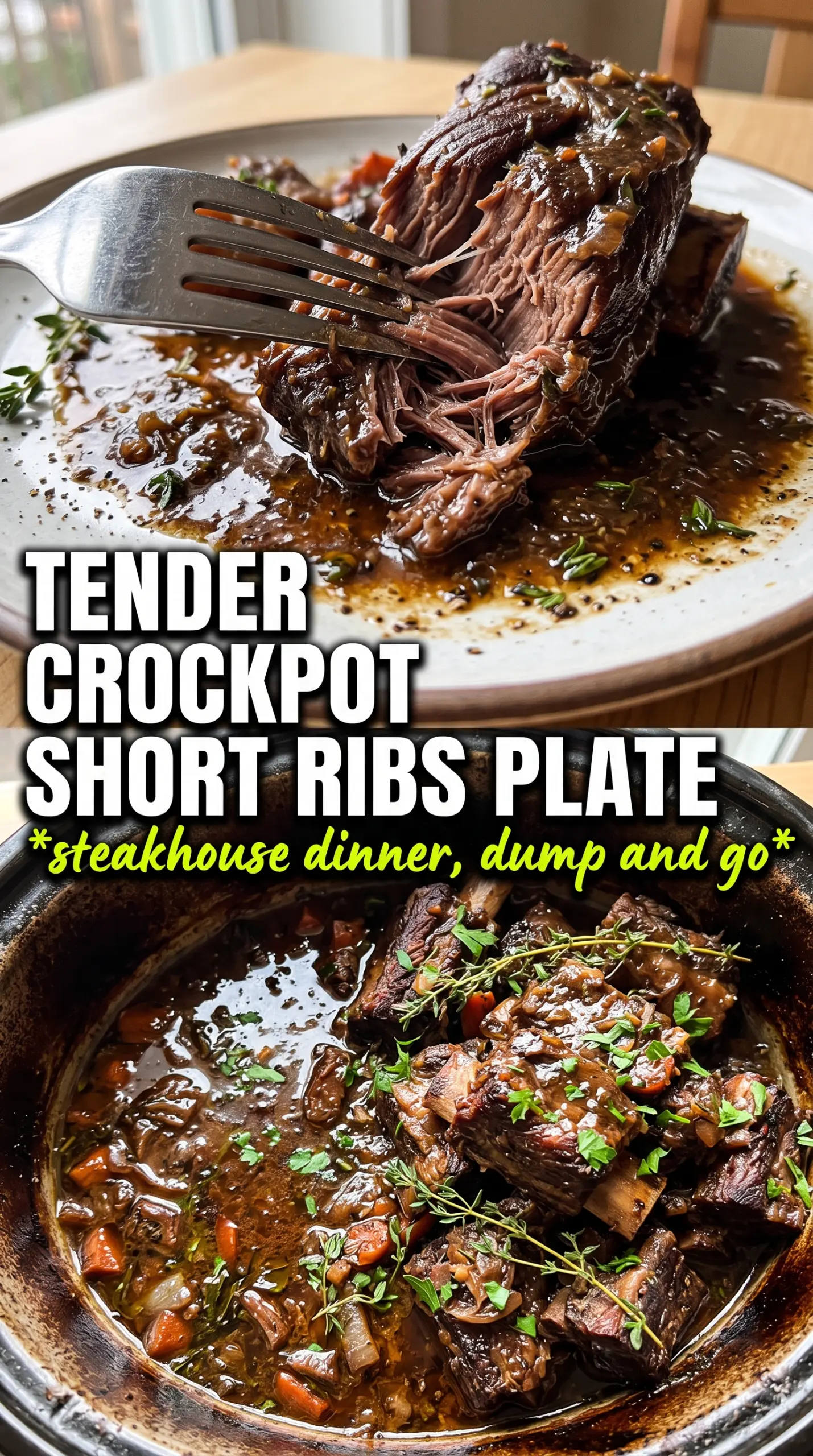
The ribs were fall-apart tender after 8 hours on low, and the sauce thickened up beautifully with mashed potatoes. My husband kept going back for more of that red wine gravy.
Save these Crockpot beef short ribs for a slow-simmered dinner with deep red wine sauce and fall-off-the-bone meat.
The Trick to Tender Short Ribs Is What Happens Before They Hit the Crockpot
Short ribs don’t need much help to become tender, but they do need the right kind of help. The browning step is what separates a rich, braised sauce from one that tastes boiled. Those dark bits you build in the pan become the base of the broth, and the Crockpot keeps everything humid enough to slowly dissolve the connective tissue without drying the meat out.
The other part that matters is restraint. If the Crockpot is packed too tightly, the ribs steam instead of braise, and the sauce stays thin and one-note. Nestling the meat on top of the vegetables gives it lift and lets the aromatics do their job underneath.
- Bone-in beef short ribs — These bring the best texture and the deepest flavor. Boneless ribs can work in a pinch, but they cook a little faster and lose some of the richness that makes this dish worth making.
- Red wine — Use a dry wine you’d actually drink. It doesn’t need to be expensive, but a harsh or overly sweet bottle will show up in the finished sauce. If you don’t want to cook with wine, replace it with more beef broth and a teaspoon of red wine vinegar for brightness.
- Tomato paste — This gives the sauce body and a slow-cooked depth that plain broth can’t match. Stir it into the liquid well so it doesn’t stay in little clumps.
- Vegetables — Onion, carrot, celery, and garlic don’t just add flavor; they also keep the ribs from sitting flat on the bottom of the slow cooker. Dice them small enough that they collapse into the sauce by the end of cooking.
What Each Ingredient Is Actually Doing in This Recipe
- Primary ingredient (the star) — Quality matters most. Choose the best you can find.
- Cooking medium (oil, butter, or broth) — This carries flavors and prevents dryness.
- Seasonings (salt, pepper, spices, herbs) — Layer flavors so nothing overpowers. Build depth gradually.
- Aromatics (garlic, onion, herbs) — Cook with fat to bloom flavors. Become the foundation.
- Supporting ingredients — Complement the main ingredient without overpowering it.
- Sauce or liquid (if applicable) — Brings flavors together. Balance richness with acid.
- Acid (lemon, vinegar, wine, or other) — Brightens and prevents flat-tasting results.
- Final finish (garnish, glaze, or sauce) — Prevents one-dimensional taste and adds visual appeal.
How to Build the Sauce So It Stays Rich Instead of Watery
Searing the Ribs
Season the ribs generously with salt and pepper, then brown them in a hot skillet with olive oil until you get a deep crust on all sides. Don’t crowd the pan or the meat will steam and refuse to color. That crust is where a lot of the flavor lives, and it also helps the finished sauce taste like it simmered for hours instead of just sitting in liquid.
Layering the Slow Cooker
Spread the onion, garlic, carrots, and celery in the bottom of the Crockpot, then set the ribs on top. The vegetables act like a rack and keep the meat from scorching on the base while also flavoring the braising liquid from underneath. If the ribs overlap a little, that’s fine, but don’t bury them in the vegetables or they’ll cook unevenly.
Finishing the Braise
Whisk the broth, wine, tomato paste, and Worcestershire sauce together before pouring it in so the tomato paste dissolves instead of streaking the liquid. Add the thyme, rosemary, and bay leaves, then cook on Low until the meat gives easily when nudged with a spoon. If you rush this on High, the exterior can overcook before the connective tissue fully softens.
Thickening the Sauce
Lift the ribs and bay leaves out first, then skim as much fat as you can from the top of the braising liquid. Stir in the cornstarch slurry on High and give it about 15 minutes to turn glossy and lightly coated. If the sauce looks thin at first, don’t keep dumping in more cornstarch; it thickens as it heats and can turn gummy if you overdo it.
Make It Without Wine
Replace the red wine with an equal amount of beef broth and add 1 teaspoon of red wine vinegar or balsamic at the end. You’ll lose a little of the wine’s roundness, but the sauce will still have enough acidity and depth to taste balanced instead of flat.
Gluten-Free Version
This recipe is naturally gluten-free as written if your beef broth and Worcestershire sauce are certified gluten-free. Cornstarch is the right thickener here because it gives the sauce a smooth finish without needing flour.
For a Deeper, More Savory Sauce
Add a tablespoon of tomato paste to the skillet while the ribs are searing and let it darken for 30 seconds before the broth goes in. That tiny extra step gives the sauce a darker color and a more concentrated braised flavor.
Storage and Reheating
- Refrigerator: Store the ribs and sauce in an airtight container for up to 4 days. The sauce will thicken as it chills, which is exactly what you want.
- Freezer: Freeze the meat and sauce together for up to 3 months. Thaw it overnight in the refrigerator so the sauce reheats evenly.
- Reheating: Warm gently on the stove or in a covered dish in the oven with a splash of broth if needed. Reheat low and slow so the meat stays tender and the sauce doesn’t break from hard boiling.
Answers to the Questions Worth Asking
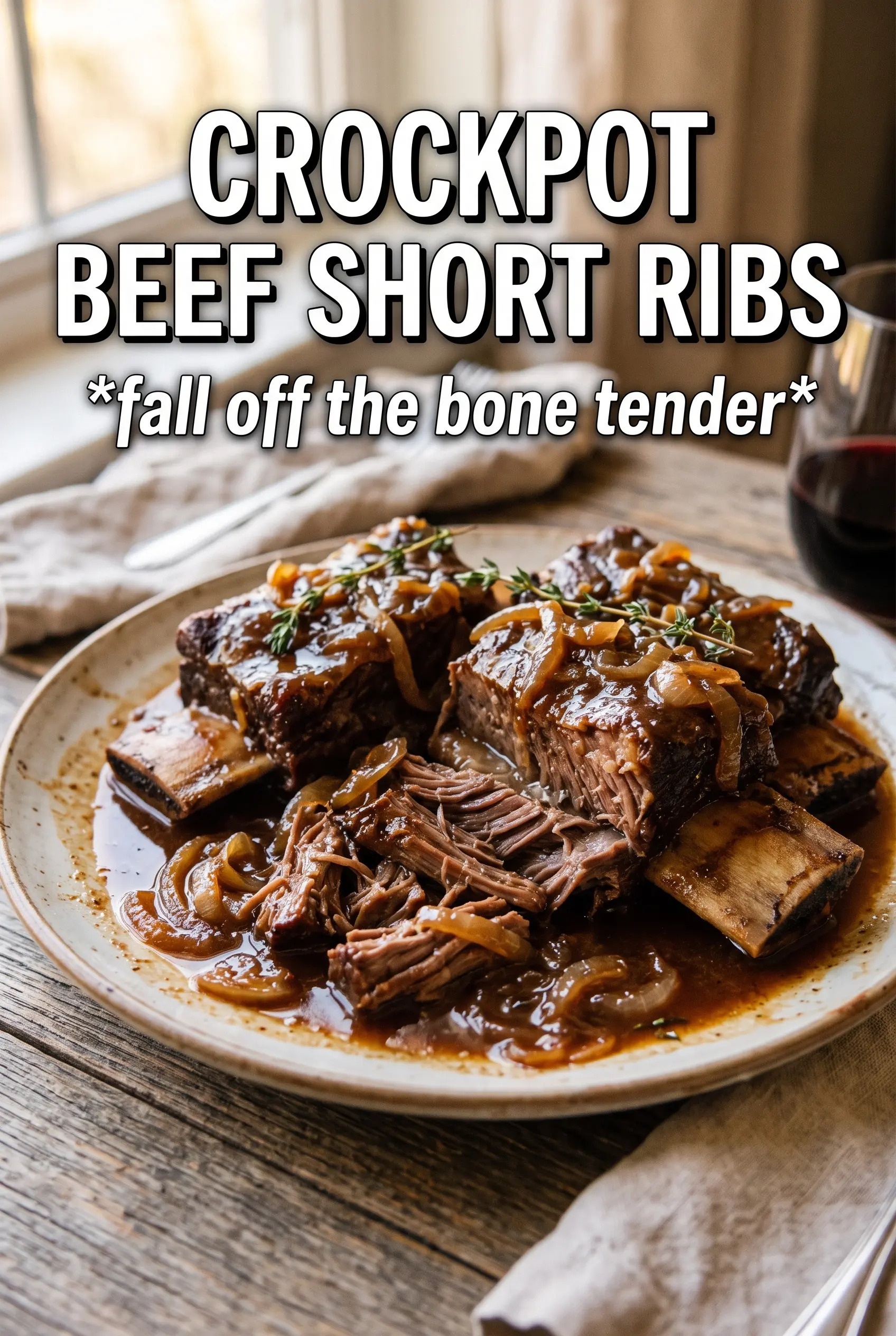
Crockpot Beef Short Ribs
Ingredients
Equipment
Method
- Season short ribs generously with salt and pepper, then sear in olive oil in a hot skillet until deeply browned on all sides, 4 to 6 minutes total per side. Look for a dark, caramelized crust before transferring to the crockpot.
- Place onion, garlic, carrots, and celery in the crockpot, then nestle the seared ribs on top. Spread the vegetables so they sit around the meat for even braising.
- Whisk beef broth, red wine, tomato paste, and Worcestershire, then pour over the ribs. Add enough liquid to partially cover the meat and keep the browned surface facing up.
- Add thyme, rosemary, and bay leaves to the crockpot and cover. Cook on Low for 7 to 8 hours until the meat is falling off the bone, with the sauce looking dark and fragrant.
- Remove the ribs and bay leaves, then skim fat from the braising liquid. Watch for a clearer surface as the excess fat collects.
- Thicken the braising liquid with a cornstarch slurry on High for 15 minutes, stirring occasionally. The sauce should turn glossy and coat a spoon.
- Serve ribs over mashed potatoes with the rich braising sauce. Spoon sauce over the top so the potatoes soak up the flavor.