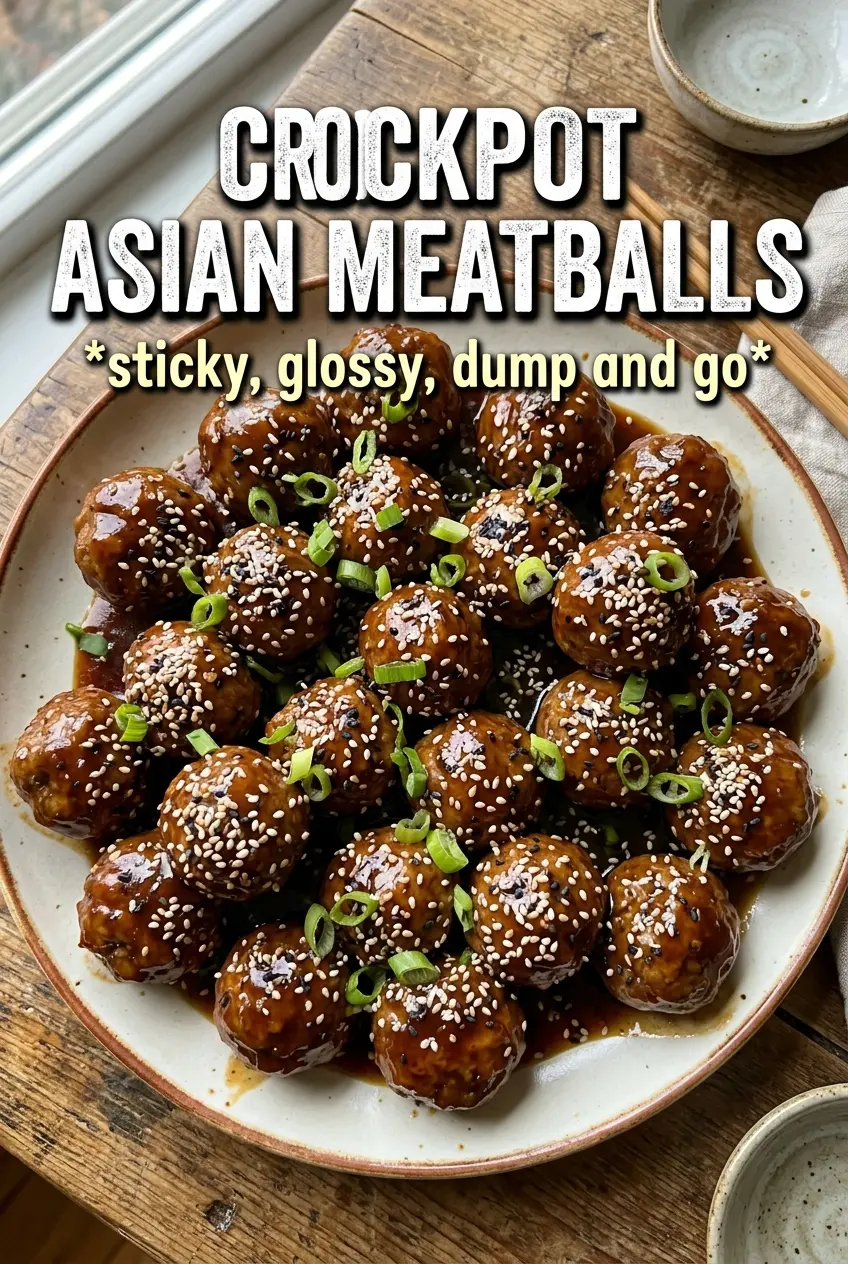
These Crockpot Asian meatballs turn out tender in the middle, lightly browned on the outside, and coated in a sticky ginger-soy glaze that clings to every bite. The sauce finishes glossy instead of watery, and that makes all the difference when you spoon them over rice. They taste like the kind of takeout-style dinner people ask for again, except the slow cooker does most of the work.
The key here is building flavor in layers. The meatballs themselves are seasoned with soy sauce, garlic, ginger, sesame oil, and green onions, so they don’t rely on the glaze alone. Browning them first gives you better texture and keeps the finished dish from tasting flat, while the cornstarch slurry thickens the sauce at the end without making it gluey. That last step matters. If you add the slurry too early, the sauce can tighten up too much during the long cook and lose that shiny, spoonable finish.
Below, you’ll find the small details that make these meatballs hold together, how to keep the glaze balanced, and a few smart swaps if you’re working with what you already have in the kitchen.
The glaze thickened up perfectly in the last 20 minutes, and the meatballs stayed tender instead of falling apart. My husband kept going back for more rice just to soak up the sauce.
Sticky ginger-soy hoisin meatballs that stay tender in the Crockpot and finish with a glossy sesame glaze.
The Trick to Meatballs That Stay Tender in the Slow Cooker
The mistake that ruins a lot of slow cooker meatballs is treating the crockpot like it can fix everything. It can’t. If the meat mixture is overworked or too lean, the meatballs turn dense before the sauce even has a chance to do its job. A mix of beef or pork with breadcrumbs and egg gives you enough structure to hold together, but enough fat and moisture to stay soft after hours of heat.
Browning them first matters for more than color. It sets the outside so the meatballs keep their shape, and it creates a little bit of fond in the pan that tells you the meat has flavor, not just seasoning. If you skip that step, they still cook through, but the texture is softer and the glaze won’t have the same depth once it reduces.
- Ground beef or pork — Pork gives the richest, juiciest result. Beef is a little firmer and works just fine if that’s what you have. I wouldn’t use extra-lean meat here unless you’re okay with a drier meatball.
- Breadcrumbs and egg — These are the binder that keep the meatballs tender instead of crumbly. Fine breadcrumbs work best because they distribute evenly without making the mixture pasty.
- Soy sauce, ginger, garlic, sesame oil, and green onions — This is the backbone of the meatball flavor, so don’t leave it all up to the glaze. Fresh ginger and garlic taste sharper and brighter than dried substitutes in this recipe.
- Hoisin sauce — This adds sweetness, body, and that dark, savory edge that makes the glaze taste complete. There isn’t a perfect substitute, but a mix of barbecue sauce and a little extra soy sauce can get you close in a pinch.
What Each Ingredient Is Actually Doing in This Recipe

- Primary ingredient (the star) — Quality matters most. Choose the best you can find.
- Cooking medium (oil, butter, or broth) — This carries flavors and prevents dryness.
- Seasonings (salt, pepper, spices, herbs) — Layer flavors so nothing overpowers. Build depth gradually.
- Aromatics (garlic, onion, herbs) — Cook with fat to bloom flavors. Become the foundation.
- Supporting ingredients — Complement the main ingredient without overpowering it.
- Sauce or liquid (if applicable) — Brings flavors together. Balance richness with acid.
- Acid (lemon, vinegar, wine, or other) — Brightens and prevents flat-tasting results.
- Final finish (garnish, glaze, or sauce) — Prevents one-dimensional taste and adds visual appeal.
How to Build the Glaze So It Stays Glossy, Not Thin
Mixing the Meatballs
Combine the meatball ingredients just until the mixture looks even. If you keep mixing after that, the texture tightens up and the finished meatballs feel compact instead of tender. Roll them into even 1.5-inch balls so they cook at the same pace; if some are much larger, they’ll need longer and the smaller ones can dry out.
Browning for Better Texture
Use a skillet over medium-high heat and brown the meatballs in batches. You’re not trying to cook them all the way through, just get color on the outside so they hold together in the slow cooker. If the pan looks crowded, the meatballs steam and go gray instead of forming that thin crust that gives the final dish a better bite.
Slow Cooking in the Sauce
Whisk the glaze ingredients until the honey is fully dissolved, then pour it over the meatballs in the Crockpot. Cook on Low for 3 to 4 hours or High for about 2 hours, just until the meatballs are cooked through and tender. If you cook much past that, especially on High, the meat can start to tighten and the sauce loses some of its clean shine.
Thickening at the End
Stir the cornstarch slurry into the hot sauce during the last 20 minutes and leave the lid on so the heat can finish the job. The sauce should go from thin and glossy to thick enough to coat a spoon. If it still looks loose, give it another 10 minutes; if you add too much cornstarch too fast, the glaze can turn pasty instead of sticky.
What to Change When You Need a Different Version of These Meatballs
Gluten-Free Version
Swap in gluten-free breadcrumbs and use tamari instead of soy sauce. The flavor stays close to the original, but the texture can be a touch more delicate, so handle the meatballs gently when you brown them.
Dairy-Free and Egg-Free Adjustment
This recipe is already dairy-free. If you need to skip the egg, use a flax egg or an extra spoonful of breadcrumbs mixed with a splash of water. The meatballs won’t be quite as springy, but they’ll still hold together if you don’t overmix them.
Make It Spicier
Increase the sriracha or add a pinch of red pepper flakes to the glaze. That gives you more heat without changing the texture, but I wouldn’t push the spice so far that it overpowers the hoisin, which is doing important work here.
Storage and Reheating
- Refrigerator: Store leftovers in an airtight container for up to 4 days. The sauce thickens as it chills, which is normal.
- Freezer: Freeze the cooked meatballs and sauce together for up to 2 months. Thaw overnight in the refrigerator before reheating so the glaze doesn’t separate.
- Reheating: Warm gently on the stove or in the microwave with a splash of water if needed. High heat can make the meatballs firm and can turn the sauce sticky in a bad way before it loosens again.