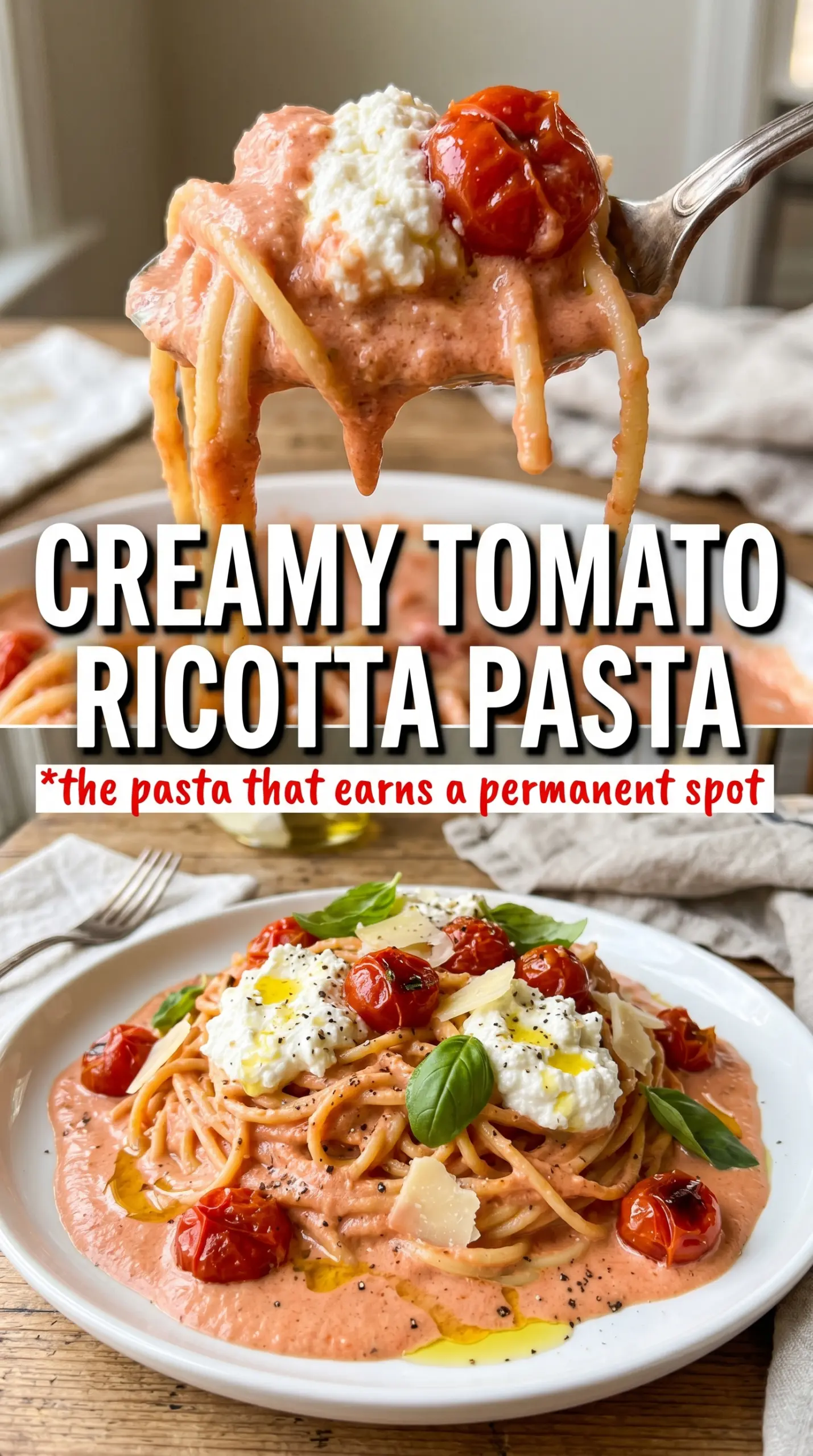
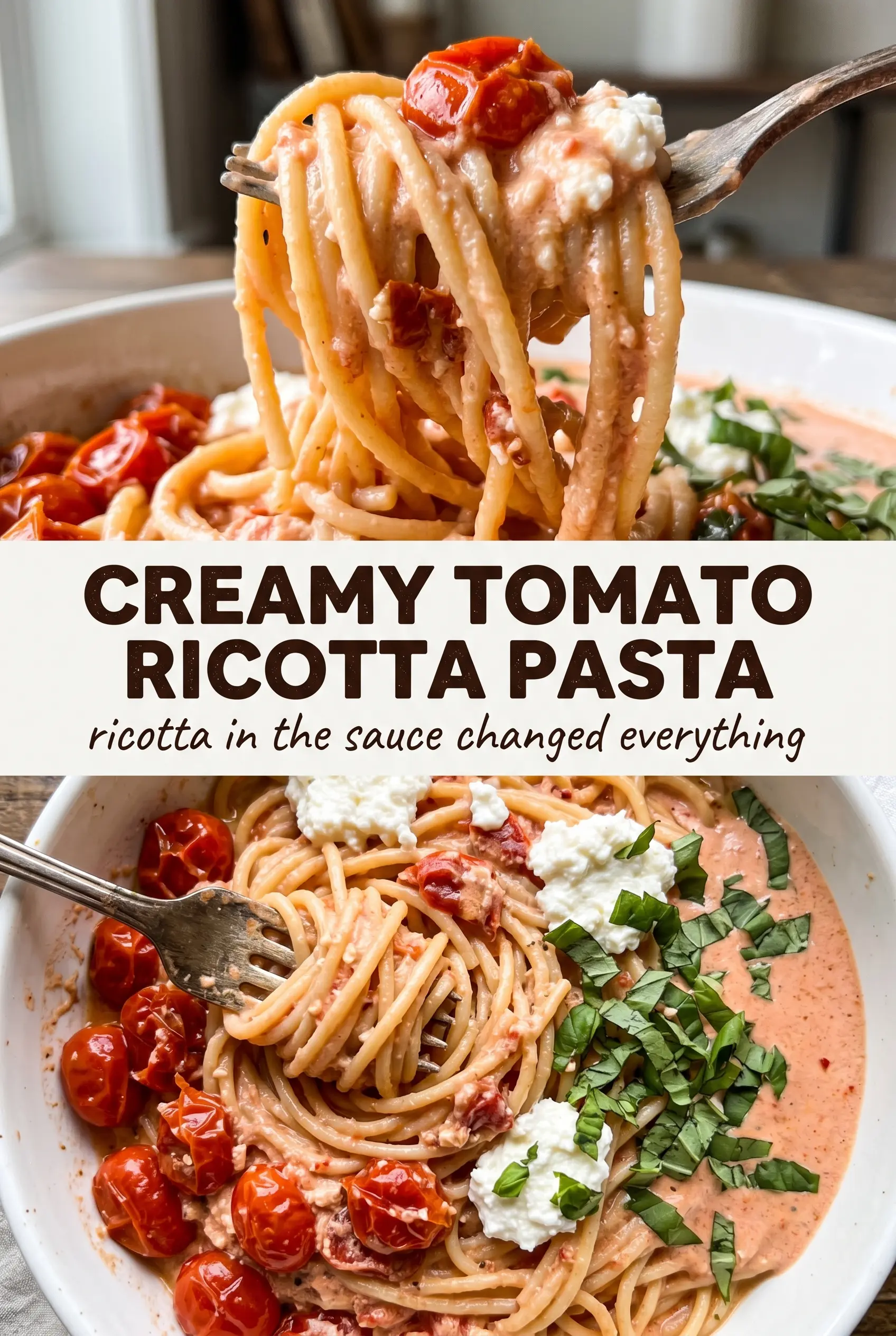
Silky tomato sauce clinging to rigatoni is the kind of dinner that makes a plain weeknight feel pulled together without turning the stove into a project. This tomato ricotta pasta lands in that sweet spot between bright and rich: the tomatoes keep it lively, the ricotta softens the edges, and the parmesan gives the sauce enough backbone to coat every tube of pasta instead of sliding off into the bowl.
The trick is treating the ricotta like part of the sauce, not a garnish. It gets whisked into the simmered tomatoes with the cream and parmesan so it melts into a blush-pink base instead of leaving little grainy bits behind. A splash of pasta water at the end gives the sauce the loose, glossy texture that grabs onto rigatoni and stays there. If you’ve ever had a tomato cream sauce turn tight or split, this version shows up better when it matters.
Below you’ll find the small details that keep the sauce smooth, plus the swaps that work if you need to stretch the ingredients or make it a little lighter.
The sauce turned out smooth and glossy, and the rigatoni held onto it perfectly. I tossed in a little pasta water at the end like you suggested, and it made all the difference.
Save this creamy tomato ricotta pasta for the nights when you want a blush-pink sauce that coats every piece of rigatoni without feeling heavy.
The reason the sauce stays silky instead of grainy
Ricotta can go from smooth to slightly curdled-looking if it gets hit with high heat too fast. That’s the mistake that makes a tomato cream sauce look broken, even when the flavor is there. Here, the tomatoes simmer first, then the heat gets lowered before the ricotta, cream, and parmesan go in, so the dairy melts into the sauce instead of fighting it.
Rigatoni matters here more than it would in a thinner sauce. Those ridges and the hollow center catch the sauce from the inside and outside at the same time, which is why this pasta eats better than a strand shape in this recipe. If the sauce feels too thick once the pasta goes in, pasta water is the fix, not more cream. The starch helps the sauce loosen and cling at the same time.
What each ingredient is actually doing here
- Crushed tomatoes — These give you body without needing a long reduction. A good canned brand matters because this sauce leans hard on the tomato flavor instead of masking it with a pile of extras.
- Whole milk ricotta — This is what gives the sauce its soft, creamy body. Low-fat ricotta can work, but it tends to taste thinner and a little drier, so whole milk gives you the smoothest finish.
- Heavy cream — The cream rounds out the sharpness of the tomatoes and helps the sauce stay glossy. If you skip it, the sauce still works, but it tastes leaner and needs a little more pasta water to move properly.
- Parmesan — Parmesan brings salt and depth, and it helps the sauce tighten just enough to cling to the pasta. Grate it fresh if you can; pre-shredded cheese doesn’t melt as cleanly and can make the sauce a little sandy.
- Garlic and red pepper flakes — Garlic builds the base, and the pepper flakes keep the sauce from tasting flat. Cook them just until fragrant. If the garlic browns, the sauce takes on a bitter edge that doesn’t disappear later.
Building the blush-pink sauce without breaking it
Start with the garlic and spice in warm oil
Warm the olive oil over medium heat, then add the garlic and red pepper flakes. You want the garlic to smell sweet and sharp, not toasted. One minute is usually enough, and if it starts to brown, pull the pan off the heat for a few seconds before moving on. Burnt garlic will overpower the whole pan.
Let the tomatoes cook down before the dairy goes in
Add the crushed tomatoes, Italian seasoning, salt, and pepper, then let the sauce simmer until it looks a little thicker and the raw tomato smell has cooked off. That 10-minute simmer matters because it concentrates the sauce before the ricotta softens it. If you rush this part, the final sauce tastes flat and watery.
Stir in the ricotta over low heat
Lower the heat before adding the ricotta, cream, and parmesan. Stir slowly until the sauce turns smooth and pale pink. If the heat is too high, the ricotta can look grainy or separate a bit at the edges. Low heat and steady stirring keep everything unified.
Toss the pasta until the sauce hugs every ridge
Add the drained rigatoni straight into the skillet and toss until each piece is coated. Add a splash of pasta water only as needed, a little at a time, until the sauce looks glossy and moves easily around the pan. If you dump in too much at once, the sauce can turn loose instead of silky. Stop when the pasta looks saucy but not soupy.
Make it vegetarian without losing richness
This recipe is already vegetarian, so the main job is keeping the sauce full-bodied. Don’t reduce the cheese unless you have to; the parmesan gives the sauce its savory edge, and that matters in a tomato-heavy dish.
Dairy-light version with a softer finish
You can swap the heavy cream for whole milk, but the sauce will be a little looser and less plush. If you do that, let the tomato base simmer a minute or two longer before adding the ricotta so the final texture still lands creamy.
Gluten-free pasta that still holds the sauce
Use a sturdy gluten-free rigatoni or penne, not a delicate shape that can fall apart when tossed. Reserve the pasta water as usual, because it helps the sauce cling to gluten-free noodles just as much as regular pasta.
Storage and Reheating
- Refrigerator: Store leftovers for up to 4 days. The sauce thickens as it chills, so expect the pasta to drink up a little more of the tomato cream base.
- Freezer: The sauce freezes well on its own for up to 2 months, though the pasta turns softer after thawing. For the best texture, freeze the sauce separately and cook fresh pasta later.
- Reheating: Warm gently on the stove over low heat with a splash of water or milk. High heat is what makes dairy sauces break, so keep the heat low and stir until the sauce loosens back up.
Answers to the questions worth asking
Creamy Tomato Ricotta Pasta
Ingredients
Equipment
Method
- Boil rigatoni in salted water until al dente, about 8–10 minutes, then reserve 1/2 cup pasta water and drain. Set pasta aside off heat.
- Heat olive oil in a large skillet over medium heat until shimmering, then add minced garlic and red pepper flakes and cook for 1 minute. Stir constantly so the garlic turns fragrant but doesn’t brown.
- Add crushed tomatoes, Italian seasoning, salt, and black pepper, then bring to a gentle simmer for 10 minutes. Cook until slightly thickened and fragrant with visible bubbles.
- Reduce to low and stir in ricotta, heavy cream, and grated parmesan until smooth and creamy, then simmer for 3 more minutes. Keep stirring so the sauce looks glossy and thick, not grainy.
- Add the drained rigatoni to the skillet and toss well, adding reserved pasta water as needed to reach a silky consistency. Toss until each rigatoni tube looks evenly coated.
- Serve immediately topped with fresh basil and extra parmesan. The sauce should cling thickly, with a fresh green and white finish.