Cream Cheese Apple Coffee Cake bakes into one of those pans that disappears fast because every layer pulls its weight. The cake stays tender from the sour cream, the cream cheese bakes into a tangy ribbon through the middle, and the apples soften just enough to taste jammy without turning mushy. Then the streusel on top turns crisp at the edges and gives every slice that bakery-style finish people always go back for.
What makes this version work is the order of the layers and the way each one is kept distinct. Cold butter in the streusel gives you real crumbs instead of a sandy topping, and the cream cheese layer needs to be beaten smooth before it goes on so it spreads without tearing the batter underneath. The apples are tossed with a little sugar and cinnamon first, which helps them season evenly and keeps the fruit from tasting flat after baking.
Below, I’m walking through the places where this cake can go sideways and the small details that keep it from happening. If you’ve ever ended up with a dry crumb, a lumpy cream cheese layer, or streusel that melts into the cake, you’ll know exactly what to watch for here.
The cream cheese layer stayed creamy and didn’t sink, and the apples kept the cake moist without making it heavy. I used Honeycrisp and the streusel came out crisp all the way to the edges.
Save this Cream Cheese Apple Coffee Cake for the mornings when you want a soft crumb, tangy cream cheese filling, and a crisp cinnamon streusel in one pan.
The Trick to Keeping the Cream Cheese Layer from Sinking
The cream cheese filling is the part that usually causes trouble. If it’s too loose, it disappears into the batter. If the batter underneath is too thin, the layers blend before they ever hit the oven. Here, the cake batter is thick enough to support the filling, and the cream cheese mixture is built with just enough structure from the egg and sugar to spread without running.
Room-temperature cream cheese matters here. Cold cream cheese stays in little bits no matter how long you beat it, and those bits bake into lumps instead of a smooth layer. The batter should be thick enough to dollop and spread with an offset spatula, not pour like a quick bread. That thickness is what keeps the filling sitting where it belongs while the cake rises around it.
- Start with softened cream cheese — It should beat smooth in under a minute. If it still looks grainy, give it more time before adding the egg.
- Keep the cake batter thick — The sour cream gives moisture without making the batter runny, which helps the cream cheese stay suspended in the center.
- Spread gently — The cream cheese layer doesn’t need to be perfect. A light hand keeps you from dragging the cake batter up through it.
What Each Layer Is Doing in This Cake
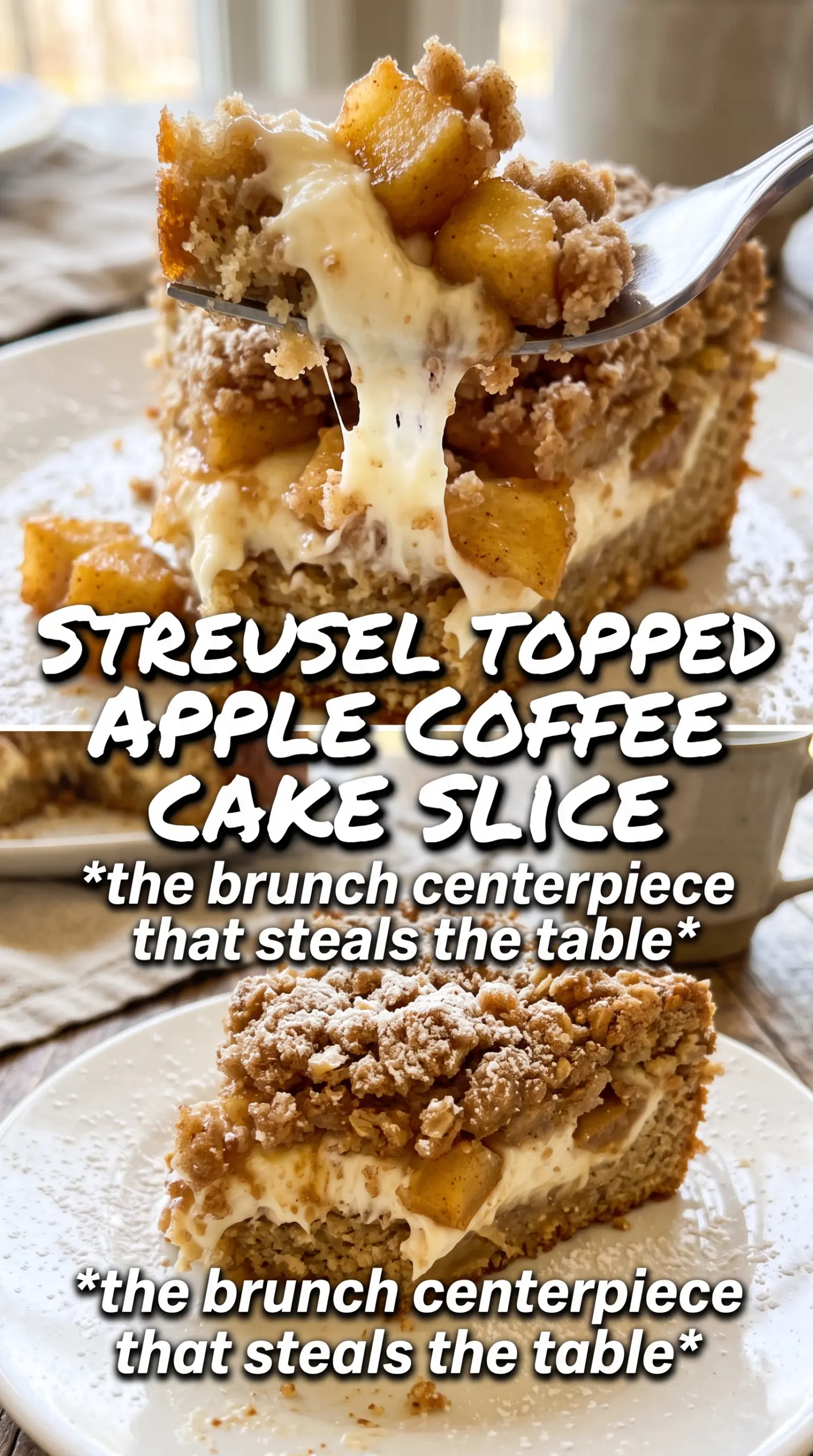
- All-purpose flour — This gives the cake its structure and keeps the crumb sturdy enough to hold the filling layers. Cake flour would make it softer, but not as reliable for a layered coffee cake.
- Sour cream — This is the reason the cake stays tender for days. If you need a substitution, plain full-fat Greek yogurt works best and gives a similar tang and moisture.
- Cream cheese — Use full-fat cream cheese for the filling. Low-fat versions can turn watery and bake up less creamy.
- Apples — A firm apple like Honeycrisp, Granny Smith, or Fuji holds its shape better than a mealy baking apple. Dice them small so they soften evenly and don’t drag the top layer down.
- Cold butter for the streusel — Cold butter is what makes the topping crumbly. If it warms up, the topping turns paste-like and bakes into a flat crust instead of crisp crumbs.
- Brown sugar — This deepens the streusel and helps it caramelize along the edges. White sugar works in a pinch, but the topping will taste lighter and less rich.
Building the Layers Without Losing the Streusel
Mix the Crumbs First
Start with the streusel so the butter stays cold while you build the rest of the cake. Cut it in until you have sandy clumps with a few bigger crumbs, then leave it alone. If it looks greasy or mashed, the butter warmed too much and the topping will bake dense instead of crisp.
Whip the Cream Cheese Until It’s Smooth
Beat the cream cheese, sugar, egg, and vanilla until the mixture looks glossy and completely lump-free. Scrape the bowl well, because hidden bits of cream cheese stay stubborn and show up after baking. This layer should be thick but spreadable; if it’s loose, the egg was probably mixed in too long or the cream cheese was overly warm.
Build the Batter in the Pan
Cream the butter and sugar until pale and fluffy, then add the eggs and vanilla before alternating the dry ingredients with the sour cream. Stop mixing as soon as the flour disappears. Overmixing makes the cake tough and can create a batter that bakes up dry around the edges before the center is done.
Layer It in the Right Order
Spread the batter into the pan first, then dollop the cream cheese mixture over it and smooth it lightly. Add the apples next so their juices settle into the filling instead of soaking the top. Finish with the streusel and cover the whole surface, especially the corners, where bare spots tend to dry out first.
Bake Until the Center Is Set
The top should be deep golden and the streusel should look crisp at the edges before you test the center. A toothpick inserted into the cake portion should come out clean or with a few moist crumbs, not wet batter. If the middle still jiggles like raw custard, give it more time; pulling it too early is the fastest way to get a gummy center under a browned top.
Three Ways to Adjust This Coffee Cake for Real Life
Make It Gluten-Free
Use a good 1:1 gluten-free baking blend in place of the flour in both the cake and streusel. The texture will be a little more delicate, but the layers still hold if you let the cake cool fully before slicing.
Swap the Fruit with Pears
Firm pears work in place of apples if you want a softer, more floral filling. Use the same amount and keep the dice small so they bake through before the streusel over-browns.
Lighten the Dairy Load
Plain Greek yogurt can replace the sour cream, and the filling still stays tangy and moist. Don’t swap in low-fat cream cheese here, though; that’s the version most likely to turn loose and watery in the middle.
Storage and Reheating
- Refrigerator: Store covered for up to 5 days. The streusel softens a little, but the cake stays moist.
- Freezer: Freeze individual slices wrapped tightly and stored in a freezer bag for up to 2 months. Thaw overnight in the refrigerator for the cleanest texture.
- Reheating: Warm slices in a 300°F oven or toaster oven until just heated through. The microwave works, but it softens the streusel and can make the cream cheese layer feel a little too loose.
Questions I Get Asked About This Recipe
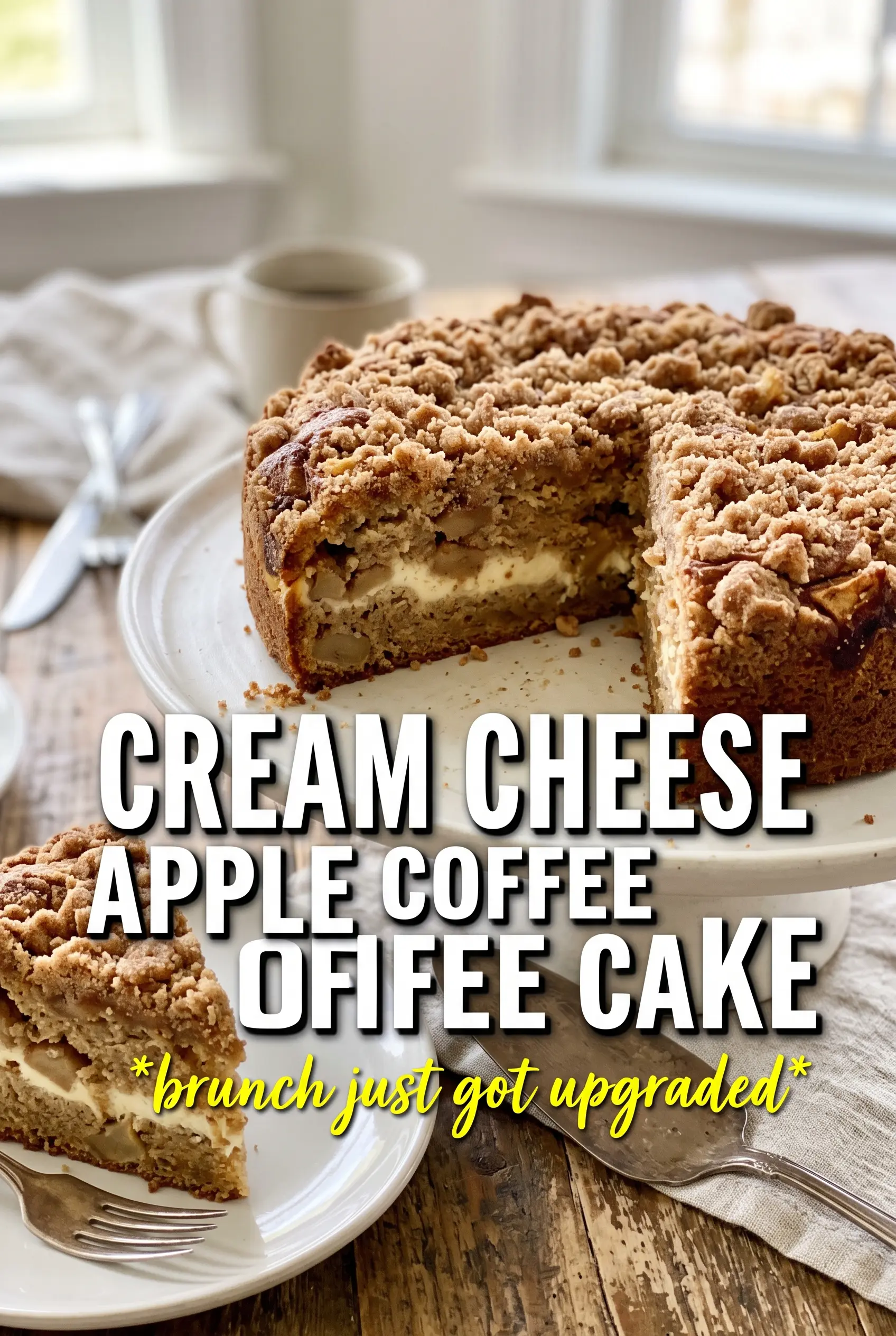
Cream Cheese Apple Coffee Cake
Ingredients
Equipment
Method
- Preheat oven to 350°F, then grease a 9x13 dish so the cake releases easily.
- Combine flour, brown sugar, and cinnamon, then cut in cold butter until the mixture looks crumbly and holds together when pressed.
- Beat cream cheese with sugar, egg, and vanilla until smooth, thick, and spreadable.
- Toss apples with sugar and cinnamon until the pieces are evenly coated.
- Beat butter and granulated sugar until fluffy, then add eggs and vanilla and mix until combined.
- Alternate mixing in the flour mixture and sour cream until the batter is smooth and cohesive.
- Spread the batter in the prepared pan, then dollop the cream cheese mixture over the top and spread it gently.
- Scatter the cinnamon apples over the surface, then cover everything with the streusel.
- Bake at 350°F for 45-50 minutes, until a toothpick comes out clean and the top looks golden with caramelized edges.