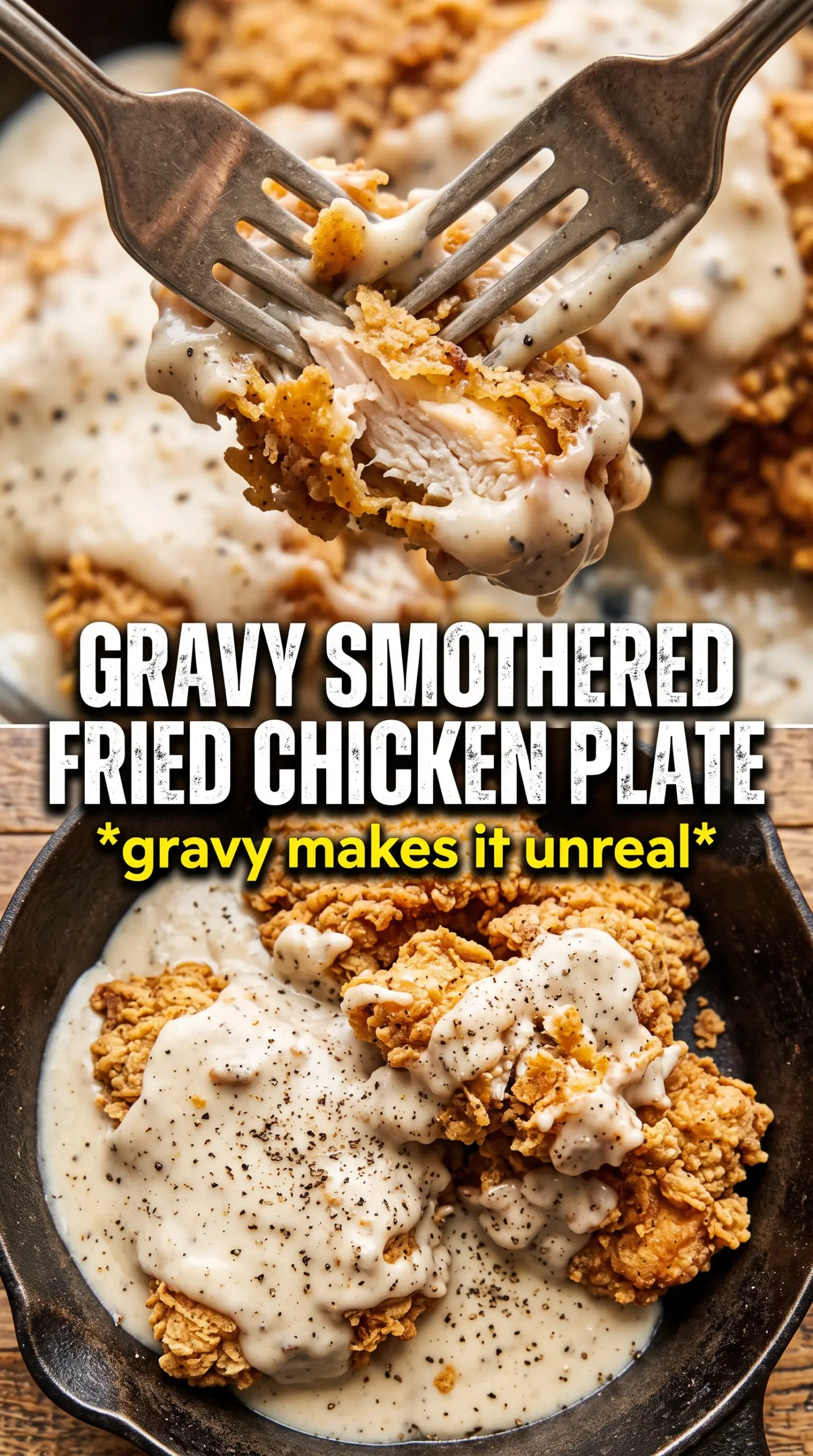
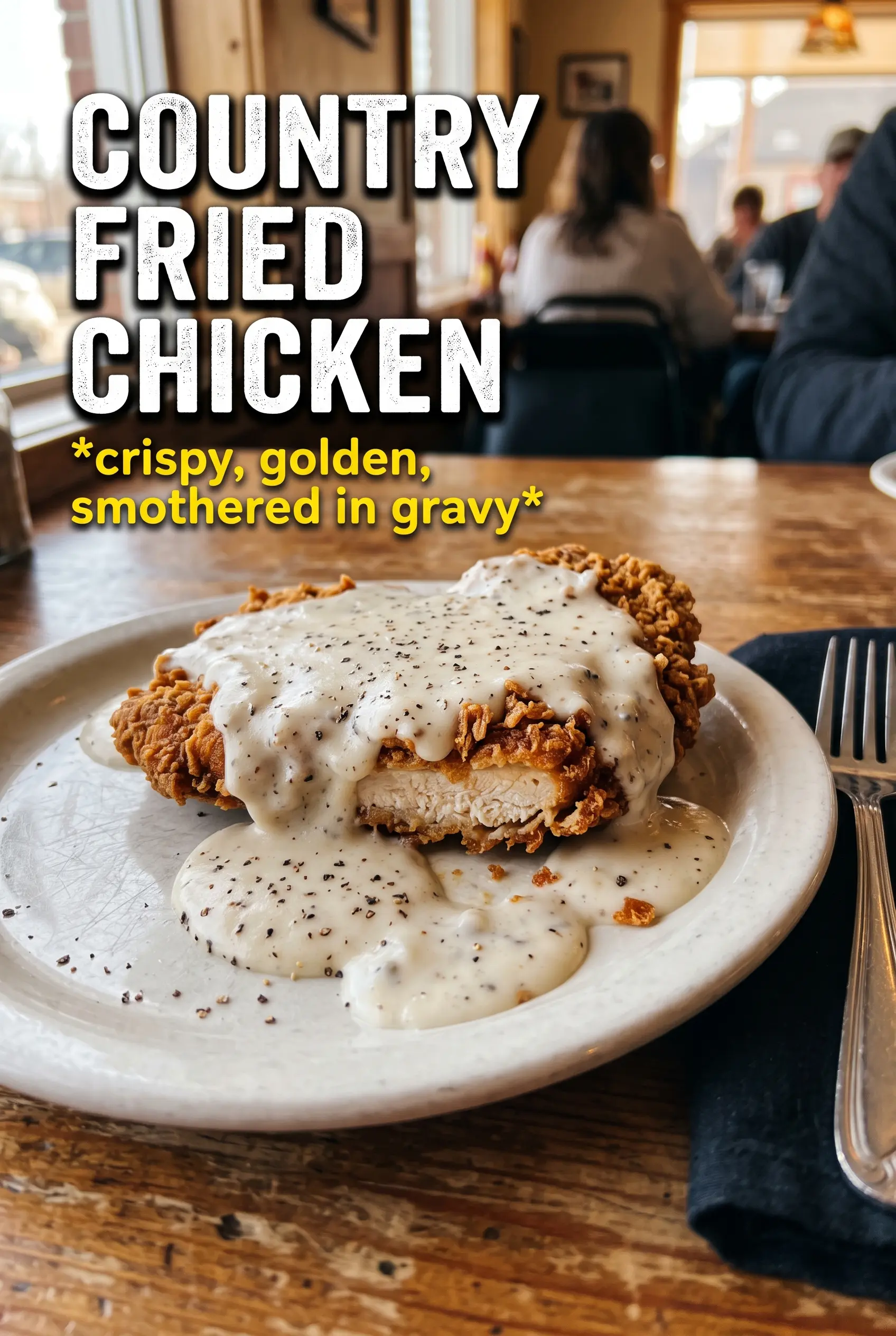
Country fried chicken lands with the kind of crunch that makes you pause before the first bite. The crust stays deeply golden and craggy, the chicken underneath stays juicy, and the black-pepper country gravy brings everything together without softening the coating into mush. It’s the kind of plate that feels straightforward but rewards attention in all the right places.
The buttermilk marinade does more than tenderize. It seasons the meat all the way to the bone and gives the flour something to cling to, which means the crust fries up with those rough, crispy edges that hold gravy well. Cornstarch in the dredge lightens the coating just enough to keep it brittle instead of bready, and the cast-iron skillet helps the oil stay steady so the chicken cooks evenly instead of scorching before the center is done.
Below, I’m walking through the two spots where this recipe usually succeeds or fails: the dredge that actually sticks, and the gravy that stays smooth while you finish the chicken. Those details matter more than any fancy trick.
The crust stayed crunchy even after I spooned gravy over it, and the chicken was cooked through without drying out. The buttermilk made such a difference, and the peppery gravy tasted like the kind you’d get at a real diner.
Save this country fried chicken for the nights when you want a shatteringly crisp crust, peppery gravy, and real Southern comfort on one plate.
The Dredge Has to Stick Before the Oil Ever Matters
Most fried chicken disappointments start before the skillet is hot. If the chicken goes into the flour too wet, the coating turns pasty and slips off in the oil. If it goes in too dry, you get patchy breading that fries into bald spots. The buttermilk marinade gives you the middle ground: enough moisture for the flour to cling, but enough body in the coating to fry into a ridged crust.
The other piece that matters is pressure. Press the flour mixture onto the chicken instead of tossing and hoping. Those little floury clumps are what turn into the rugged, craggy shell you want. And once the chicken is dredged, it needs a brief rest before frying so the coating hydrates and sets. Skip that, and the crust can flake off when it hits the oil.
- Buttermilk — The acid gently tenderizes the meat and gives the dredge a tacky surface. Whole milk won’t do the same job.
- Cornstarch — This keeps the crust lighter and crisper. You can swap in more flour, but the coating gets heavier and less brittle.
- Hot sauce — It doesn’t make the chicken spicy at this amount. It adds background tang and helps the marinade taste seasoned, not flat.
- Bone-in chicken — Bone-in pieces stay juicier during frying and give you more forgiving cook time than boneless cuts.
What Each Part Is Doing in the Skillet
- All-purpose flour — This forms the backbone of the crust and the gravy. A high-gluten flour isn’t necessary here; plain all-purpose gives you structure without toughness.
- Smoked paprika, garlic powder, onion powder, cayenne — These season the flour itself so the crust tastes good all the way through. If you only season after frying, the coating tastes dusty and one-note.
- Vegetable oil — Use a neutral oil with a high smoke point so the chicken browns without tasting burnt. Shallow frying in a heavy skillet gives better control than a thin pan.
- Butter, milk, and broth — The gravy needs all three: butter for richness, milk for body, broth for savory depth. Broth alone tastes thin; milk alone tastes heavy.
Getting the Crust Golden Before the Gravy Goes On
Marinate Until the Chicken Feels Seasoned, Not Just Wet
Let the chicken sit in the buttermilk mixture for at least an hour. That’s enough time for the surface to soften and pick up the salt, and overnight works if you want the meat even more seasoned. If you leave it much longer than that, the texture can turn a little too soft on the outside, which makes the crust less crisp.
Press the Flour On, Then Let It Set
Lift each piece out of the marinade and let the excess drip off before it goes into the dredge. Press the flour mixture in firmly with your hand so it forms rough little layers instead of a smooth dusting. Set the coated chicken on a rack or plate for a few minutes while the oil heats; that short pause helps the coating hydrate and cling instead of falling away in the skillet.
Fry at 325°F, Not Hotter
The oil should stay around 325°F. At that temperature, the crust browns steadily while the meat cooks through. If the oil runs too hot, the breading darkens before the chicken reaches 165°F inside; too cool, and the crust absorbs oil and turns greasy. Fry in batches so the temperature doesn’t drop too far when the chicken goes in.
Build the Gravy in the Pan Drippings
After frying, the skillet has the flavor you want for gravy. Whisk the butter and flour together until it smells nutty, then add the milk and broth gradually so the mixture stays smooth. If it looks lumpy, keep whisking over medium-low heat; most of the time the problem is adding liquid too fast, not a bad roux.
Buttermilk-Free Version
Stir 2 cups milk with 2 tablespoons lemon juice or vinegar and let it sit 10 minutes. It won’t taste exactly like buttermilk, but it still gives the chicken enough tang and helps the flour coating cling.
Gluten-Free Country Fried Chicken
Use a good 1:1 gluten-free flour blend in both the dredge and the gravy. The crust will be a little more delicate, but the cornstarch still helps keep it crisp.
Spicier Gravy and Crust
Increase the cayenne in the dredge and add an extra pinch of black pepper to the gravy. That keeps the heat layered instead of one sharp burst at the end.
Storage and Reheating
- Refrigerator: Store chicken and gravy separately for up to 3 days. The crust will soften in the fridge, but it still crisps back up well.
- Freezer: Freeze the fried chicken without gravy for up to 2 months. The gravy can freeze, but it may need a hard whisk or fresh splash of milk after thawing.
- Reheating: Reheat chicken on a wire rack in a 375°F oven until hot and crisp again. Microwaving makes the coating soggy, which is the main mistake to avoid. Warm the gravy gently on low heat with a splash of milk.
Answers to the Questions Worth Asking
Country Fried Chicken
Ingredients
Equipment
Method
- Whisk buttermilk with hot sauce, salt, and black pepper until combined. Add bone-in chicken pieces and cover, then marinate 1 hour (up to overnight) in the refrigerator.
- Whisk all-purpose flour, cornstarch, garlic powder, onion powder, smoked paprika, cayenne, salt, and black pepper in a shallow bowl. Set aside for dredging.
- Remove chicken from the buttermilk marinade and let excess drip off. Dredge each piece in the flour mixture, pressing to adhere so a thick coating forms.
- Heat vegetable oil to 325°F in a large cast-iron skillet. Fry chicken 12–15 minutes per side until deeply golden and cooked through to 165°F internal.
- Melt butter in the same skillet (or a saucepan) and whisk in flour. Cook 1–2 minutes, then gradually add whole milk and chicken broth while whisking to smooth out any lumps.
- Cook the gravy until thickened, stirring frequently. Season with plenty of salt and black pepper.
- Serve the fried chicken smothered in country gravy. Finish with cracked black pepper if desired.