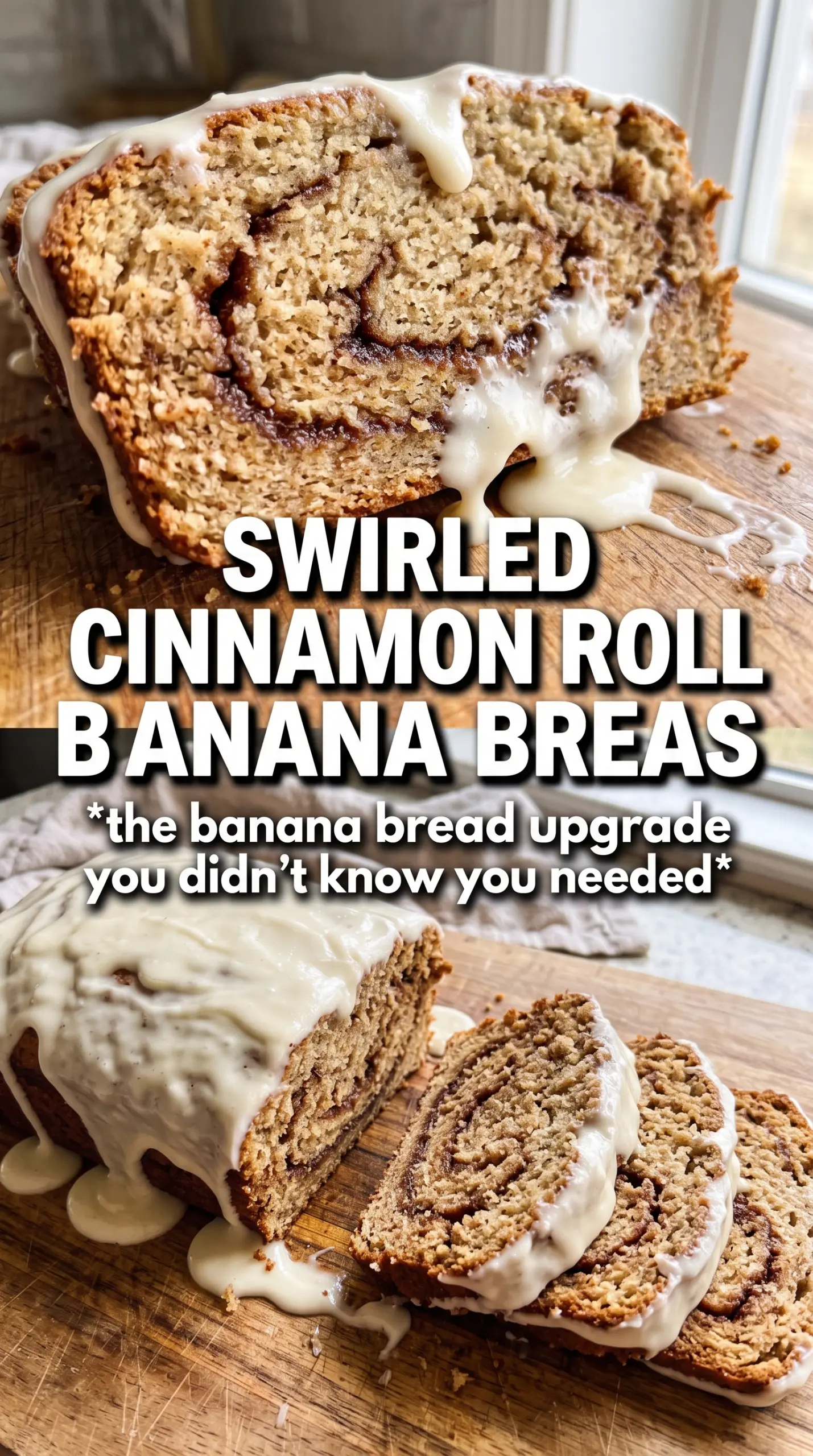
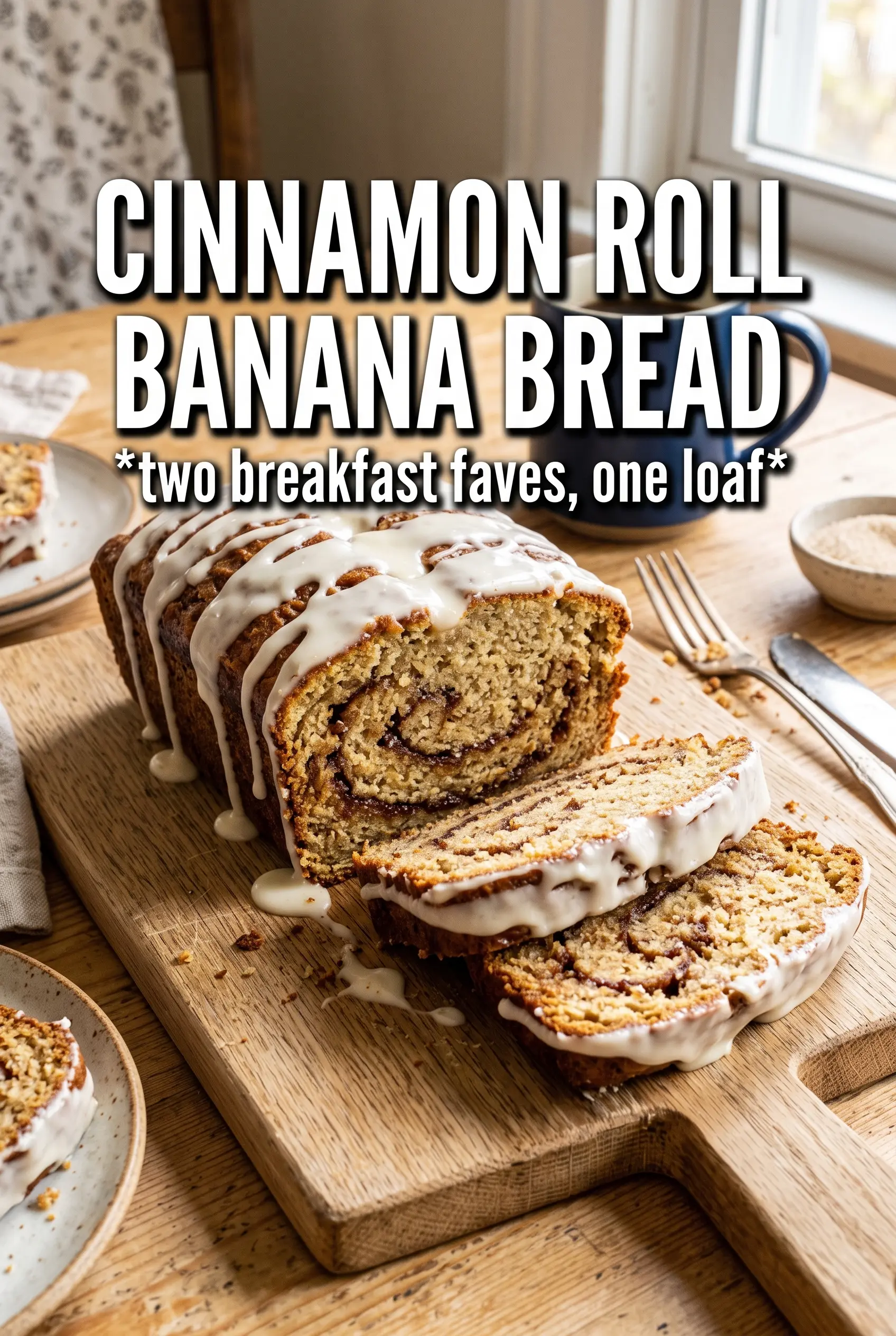
Cinnamon Roll Banana Bread bakes up with a tender, moist crumb and a ribbon of brown sugar cinnamon running straight through the middle, which means every slice tastes like the best part of a cinnamon roll without the extra fuss. The cream cheese glaze melts into the warm loaf and settles into the swirl, so each bite lands somewhere between breakfast bread and coffee-shop treat.
What makes this version work is the balance. Very ripe bananas bring sweetness and softness, while sour cream keeps the loaf plush instead of dense. The cinnamon swirl stays distinct because it’s mixed into a thick paste, not a runny filling, so it bakes into a clean, dramatic layer instead of disappearing into the batter.
Below, I’ve included the small details that matter most: how to keep the swirl from sinking, when to stop mixing the batter, and how to get the glaze on at just the right moment so it clings without sliding off.
The cinnamon swirl stayed right in the middle and the loaf came out so moist. I glazed it while it was still warm, and the top had that bakery-style finish I was hoping for.
Save this Cinnamon Roll Banana Bread for the days when you want a soft banana loaf with a thick cinnamon ribbon and cream cheese glaze.
The Reason the Swirl Stays Distinct Instead of Melting Away
The biggest mistake in swirl breads is a filling that’s too loose. If the brown sugar mixture is thin, it sinks, leaks, or disappears into the batter and you lose the whole cinnamon roll effect. Here, the butter, brown sugar, and cinnamon are mashed into a paste, which gives the swirl enough body to sit between the batter layers and bake into a visible ribbon.
The other thing that matters is the batter thickness. Banana bread batter should be thick enough to hold a layer of filling without letting it slide to the bottom. If your bananas are extra large or especially juicy, the batter can get slack, so mash them well and measure if needed. That keeps the loaf tender without turning it gummy.
- Ripe bananas — The darker and spottier, the better. They bring natural sweetness and the soft texture that makes this loaf stay moist for days.
- Sour cream — This is what keeps the crumb plush. Plain Greek yogurt works if that’s what you have, but sour cream gives the richest, softest result.
- Brown sugar swirl — Light or dark brown sugar both work. Dark brown sugar gives a deeper molasses note and a slightly darker swirl.
- Cream cheese — Use block-style cream cheese for the glaze if you can. Tub cream cheese can be too soft and makes the glaze thinner than you want.
What Each Ingredient Is Actually Doing in This Recipe
- Primary ingredient (the star) — Quality matters most. Choose the best you can find.
- Cooking medium (oil, butter, or broth) — This carries flavors and prevents dryness.
- Seasonings (salt, pepper, spices, herbs) — Layer flavors so nothing overpowers. Build depth gradually.
- Aromatics (garlic, onion, herbs) — Cook with fat to bloom flavors. Become the foundation.
- Supporting ingredients — Complement the main ingredient without overpowering it.
- Sauce or liquid (if applicable) — Brings flavors together. Balance richness with acid.
- Acid (lemon, vinegar, wine, or other) — Brightens and prevents flat-tasting results.
- Final finish (garnish, glaze, or sauce) — Prevents one-dimensional taste and adds visual appeal.
What to Do So the Loaf Bakes Up with a Clean Swirl and a Soft Crumb
Building the Cinnamon Paste
Mix the softened butter, brown sugar, and cinnamon until it looks like a thick, spreadable paste with no dry sugar pockets left behind. If it’s runny, it will sink into the loaf instead of staying in a ribbon. The filling should hold its shape on a spoon and spread like frosting, not pour like syrup.
Making the Banana Batter
Beat the butter and sugar until it looks lighter and a little fluffy, then add the eggs, bananas, sour cream, and vanilla. Once the flour goes in, switch to a gentle hand and stop as soon as the dry streaks disappear. Overmixing here makes banana bread tight and chewy instead of soft and sliceable.
Layering for the Best Swirl
Spread half the batter into the loaf pan, then add the cinnamon paste in an even layer before covering it with the remaining batter. Use a knife for just a few gentle figure-eight motions. If you over-swirl, the filling gets muddled into the batter and the loaf loses that distinct cinnamon roll look.
Baking and Glazing at the Right Moment
Bake until the top is deeply golden and a toothpick inserted in the center comes out clean or with a few moist crumbs. If the top browns before the center is done, lay a loose piece of foil over the pan for the last stretch. Let the loaf cool for a bit before glazing so the icing melts over the surface instead of running straight off the sides.
Make It with Greek Yogurt Instead of Sour Cream
Plain Greek yogurt works well here and keeps the loaf moist, though the crumb will be slightly tangier and a touch less rich. Use the same amount, and choose full-fat yogurt if you want the closest match to sour cream.
Dairy-Free Version
Use a plant-based butter and a thick dairy-free yogurt or sour cream alternative in the batter. For the glaze, a dairy-free cream cheese alternative works, but keep an eye on the texture because some brands are thinner and may need an extra spoonful of powdered sugar.
Extra Cinnamon Roll Finish
If you want the loaf to lean even more toward cinnamon roll territory, add a little extra cinnamon to the glaze or spoon a thin layer over the cooled loaf after the first drizzle sets. That gives you a stronger bakery-style finish without changing the structure of the bread itself.
Storage and Reheating
- Refrigerator: Store covered for up to 4 days. The glaze will soften a little, and the loaf may taste even more cinnamon-forward on day two.
- Freezer: Freeze slices tightly wrapped for up to 2 months. Skip the glaze before freezing if you want the cleanest thaw and add it after reheating.
- Reheating: Warm individual slices in the microwave for 10 to 15 seconds or in a low oven until just heated through. Too much heat dries out the edges and makes the glaze separate.
Questions I Get Asked About This Recipe
Cinnamon Roll Banana Bread
Ingredients
Equipment
Method
- Preheat oven to 350F and grease a 9x5 loaf pan, so the bread releases cleanly after baking. A light, even coating on all sides is the goal.
- Mix the cinnamon roll swirl ingredients into a smooth paste, ensuring no dry brown sugar pockets remain. The paste should look thick and spreadable.
- Beat the softened butter and granulated sugar until fluffy, about 2-3 minutes, to aerate the batter. Stop when the mixture looks lighter in color and holds soft peaks.
- Add the eggs, mashed bananas, sour cream, and vanilla, then beat until the mixture is smooth and uniform. The batter should look cohesive with no streaks of egg.
- Fold in the all-purpose flour, baking soda, salt, and cinnamon until just combined. Mix only until no dry flour remains, so the loaf stays tender.
- Pour half the batter into the loaf pan and spread it into an even layer. Fill the base so the swirl has a stable bottom.
- Spread the cinnamon swirl paste over the batter layer in an even stripe. Keep it centered so it bakes into a dramatic center swirl.
- Top with the remaining batter and smooth the surface gently. The swirl should be partially hidden under the top layer.
- Swirl with a knife through the top layer to create ribbon-like cinnamon streaks. Make a few gentle passes for a marbled look rather than cutting all the way down.
- Bake at 350F for 60-65 minutes until a toothpick comes out clean. The loaf should be golden and spring back slightly when pressed.
- Drizzle cream cheese glaze over the warm loaf so it melts lightly and sinks into the surface. The glaze should look glossy rather than completely set.