Golden chicken over buttery egg noodles is the kind of dinner that disappears fast because every bite has something going for it: tender sliced chicken, glossy noodles, garlic, herbs, and enough Parmesan to pull the whole bowl together. It feels like comfort food without asking for much effort, which is exactly why it earns a permanent place in the weeknight rotation.
What makes this version work is the order. The chicken gets a proper sear first, then the same pan picks up the butter, garlic, and red pepper flakes so none of that flavor gets left behind. The noodles only need a short toss in the sauce, and a splash of pasta water helps the butter cling instead of pooling at the bottom of the bowl.
Below, I’ve added the details that matter most: how to keep the chicken juicy, when the noodles need pasta water, and what to change if you want to stretch this into a bigger meal or work around what’s in the kitchen.
The noodles picked up every bit of the garlic butter, and the chicken stayed juicy even after slicing. I added a little extra pasta water like you suggested and the sauce coated the noodles instead of going greasy.
Save these chicken with buttered noodles for a fast skillet dinner with garlic butter sauce, tender chicken, and Parmesan-topped noodles.
The Pan Trick That Keeps the Butter Sauce Glossy
The biggest mistake with buttered noodles is treating them like a sauce that can take a long simmer. Butter wants low heat and a fast finish. If the pan is too hot when the garlic goes in, the butter separates and the garlic turns bitter before the noodles even hit the skillet.
That’s why this recipe works best when the chicken is seared, removed, and the butter goes into the same pan over medium heat, not high. You’re using the browned bits from the chicken to flavor the noodles, but you’re not boiling the butter into grease. The pasta water matters here too because its starch helps the butter cling to the noodles instead of slipping off.
What the Chicken, Butter, and Parmesan Each Bring to the Bowl
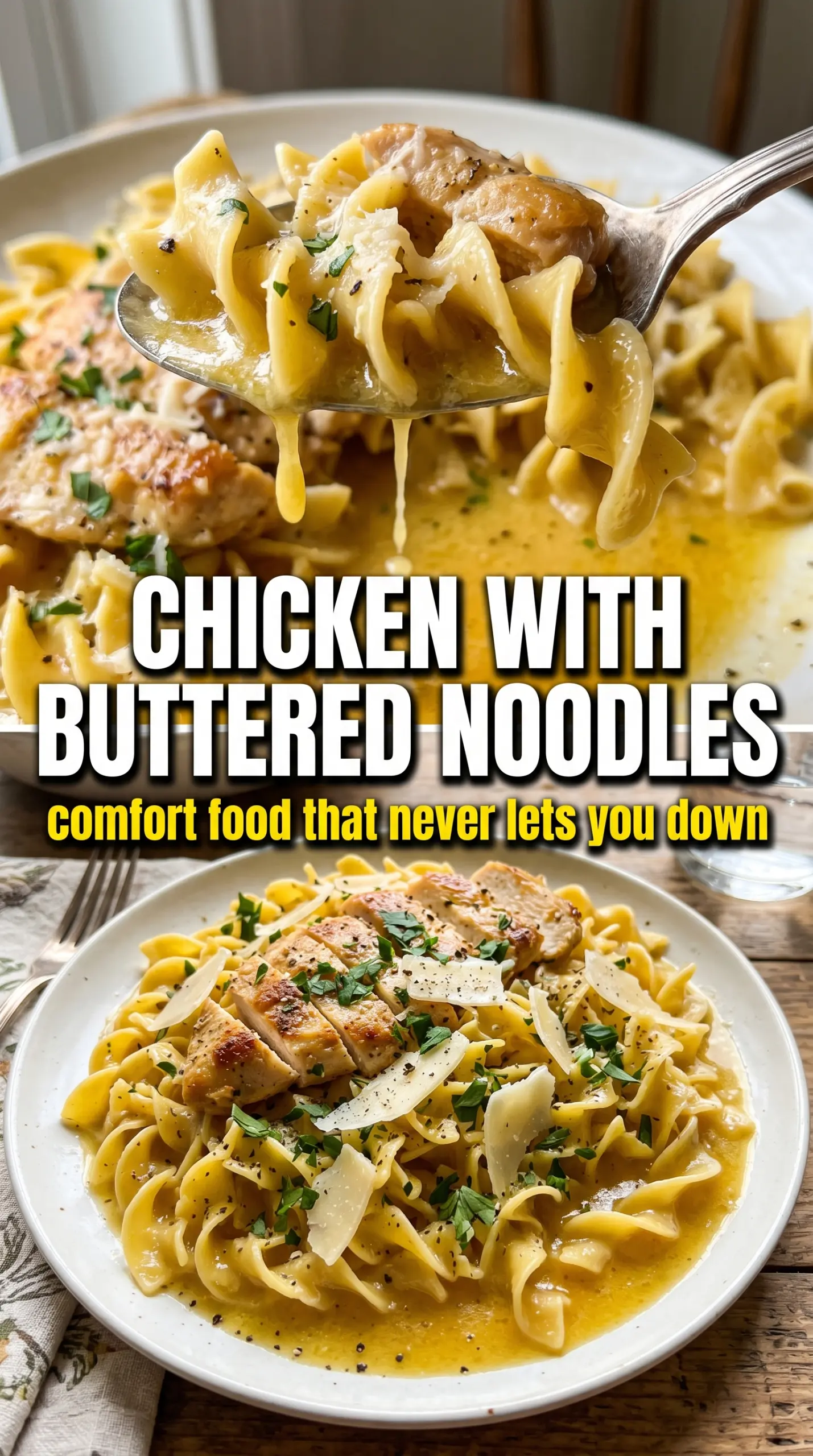
- Chicken breasts — Boneless, skinless breasts cook fast and slice cleanly over the noodles. If you pound them lightly to an even thickness, they brown more evenly and stay juicy instead of drying out at the edges while the center catches up.
- Egg noodles — These are worth using here because their soft, slightly springy texture holds butter better than thinner pasta. If you swap in another noodle, choose one with ridges or enough body to carry the sauce; delicate pasta can get lost under the chicken.
- Butter — This is the sauce. Salted or unsalted both work, but if you use salted butter, taste carefully before adding more salt at the end. The best move is to let it melt gently so it stays silky instead of oily.
- Parmesan — Freshly grated Parmesan melts into the noodles and adds the savory finish that makes the bowl taste complete. Pre-shredded cheese can work in a pinch, but it often clumps instead of disappearing into the sauce.
- Pasta water — That reserved water is what turns butter and noodles into an actual coating. Add it a tablespoon at a time until the noodles look glossy and lightly sauced, not wet.
Building the Sear Before the Noodles Go In
Seasoning the Chicken Well
Coat the chicken with salt, pepper, garlic powder, and Italian seasoning before it hits the pan. The surface should look evenly dusted, not caked, so the chicken browns instead of steaming. If you season too late, the flavor stays on the outside and never gets into the meat.
Getting a Deep Golden Crust
Heat the olive oil over medium-high and lay the chicken down without crowding the pan. It should sizzle immediately. Leave it alone until the first side releases easily and turns deeply golden, then flip and cook the second side until the internal temperature reaches 165°F. If the pan is overcrowded, the chicken steams and you lose that browned flavor that carries the whole dish.
Turning the Same Pan Into Sauce
After the chicken rests, drop the butter into the same skillet and let it melt over medium heat. Stir in the garlic and red pepper flakes just until fragrant, about a minute or two, because garlic goes from sweet to burnt fast. Add the noodles next and toss them through the butter so every strand gets coated before the parsley and Parmesan go on top.
How to Adapt This for a Lighter Bowl, More Heat, or a Dairy-Free Dinner
Make it dairy-free without losing the savory finish
Use a good plant-based butter and swap the Parmesan for a dairy-free Parmesan-style topper or a spoonful of nutritional yeast. The sauce won’t taste identical, but you’ll still get that glossy, garlicky coating and enough savory depth to keep the bowl satisfying.
Make it a little richer with chicken thighs
Boneless chicken thighs bring more flavor and stay juicy even if they cook a minute longer. They do add a slightly richer bite, which works especially well if you want the dish to feel closer to true comfort food.
Add vegetables without watering down the sauce
Toss in steamed peas, sautéed mushrooms, or wilted spinach at the very end. Add them after the noodles are coated so they don’t dump extra liquid into the butter and thin out the sauce.
Use a gluten-free pasta that can handle tossing
A sturdy gluten-free egg-style noodle or short pasta works best here. Cook it just to tender, not soft, because it needs enough structure to survive the final toss in butter without breaking apart.
Storage and Reheating
- Refrigerator: Store leftovers in an airtight container for up to 3 days. The noodles will absorb some of the butter as they sit.
- Freezer: The chicken freezes well, but the noodles lose some of their texture after thawing. If you want to freeze it, do so in portions and expect a softer pasta once reheated.
- Reheating: Warm gently in a skillet over low heat with a splash of water or broth to loosen the noodles. The common mistake is blasting it in the microwave, which dries out the chicken and turns the butter sauce greasy.
Questions I Get Asked About This Recipe
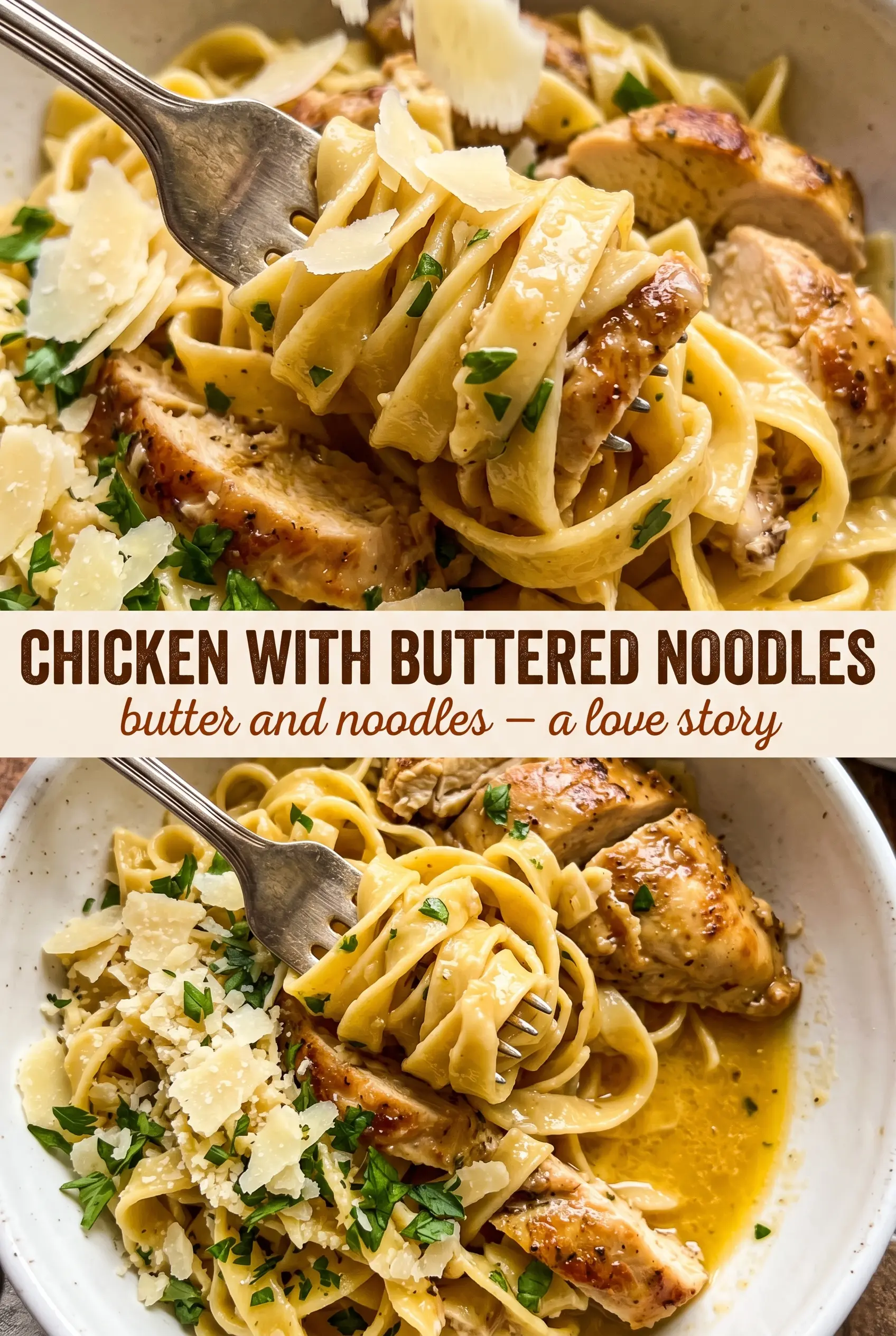
Chicken with Buttered Noodles
Ingredients
Equipment
Method
- Season the chicken breasts with salt, pepper, garlic powder, and Italian seasoning. Heat olive oil in a skillet over medium-high heat and sear chicken until golden, 5-6 minutes per side, until internal temperature reaches 165°F.
- Transfer chicken to a plate, rest, and slice it thin so it stays juicy for topping.
- Melt butter in the same skillet over medium heat. Add minced garlic and red pepper flakes and cook 1-2 minutes until fragrant, stirring to prevent browning.
- Add the cooked egg noodles to the garlic butter and toss to coat, loosening with reserved pasta water as needed.
- Season with salt and pepper, then stir in chopped fresh parsley until evenly distributed.
- Divide the buttered noodles among plates and top each with sliced chicken.
- Scatter Parmesan generously over the top and serve immediately while the butter is glistening.