Chicken pot pie casserole gives you everything worth craving in the classic version: a creamy filling, tender chicken, sweet vegetables, and a golden top that soaks up just enough sauce without turning soggy. The best part is that it bakes in a single dish, so you get those familiar pot pie flavors with far less fuss and no bottom crust to worry about.
This version leans on a quick stovetop sauce made with butter, flour, broth, and cream. That base has to thicken before it goes into the oven, or the biscuits or puff pastry will steam instead of bake properly. I also like using cooked chicken here because it keeps the filling from going dry while the topping finishes. The peas and corn go in at the end so they stay bright and don’t lose their texture.
Below, I’ll walk through the one part that matters most for a casserole like this: getting the filling thick enough before it bakes. I’ve also included a few smart swaps if you want to use puff pastry, biscuits, or different vegetables.
The filling thickened up beautifully and the biscuits browned on top without sinking. I made it on a Tuesday and my family ate the whole pan by Thursday.
Love that creamy chicken filling and golden biscuit topping? Save this Chicken Pot Pie Casserole for the nights when you want comfort food without the pie crust work.
The Reason the Filling Has to Thicken Before It Goes in the Oven
If the filling is thin on the stovetop, it will stay thin in the oven. That’s the mistake that turns pot pie casserole into soup under a baked lid. The flour needs enough time to cook into the butter, then the broth and cream need to simmer until the sauce coats a spoon and looks glossy, not watery.
This matters even more with biscuits or puff pastry on top. Both need direct heat to brown, and both will struggle if they’re sitting over a loose filling that keeps releasing steam. When the base is already thick, the topping bakes high and crisp instead of turning damp underneath.
What the Butter, Flour, and Cream Are Doing in This Dish

- Butter — This is where the flavor starts. It softens the vegetables and gives the sauce a richer base than oil would. Don’t rush the vegetables in cold butter; let them lose their raw edge before adding flour.
- Flour — This is the thickener, and it needs a full minute in the pan so the casserole doesn’t taste pasty. If you undercook it, the sauce can taste raw even after baking.
- Chicken broth — Use a broth you’d actually drink. Since the filling only cooks briefly after it thickens, the broth flavor stays front and center.
- Heavy cream — Cream gives the filling that classic pot pie richness and helps it stay silky in the oven. Half-and-half will work in a pinch, but the sauce will be a little looser.
- Refrigerated biscuits or puff pastry — Biscuits give you a softer, more rustic top. Puff pastry bakes lighter and flakier, but it needs a thick filling underneath or it can go gummy where it meets the sauce.
Building the Filling So the Top Bakes Right
Softening the vegetables first
Start with the onion, carrots, and celery in melted butter and cook until the onion looks translucent and the celery has lost its raw crunch. This first cook gives the casserole a deeper, sweeter base and keeps the vegetables from tasting underdone after the bake. If the pan looks dry, the butter is too low or the heat is too high; you want the vegetables to sizzle gently, not brown hard.
Cooking out the flour
Once the flour goes in, stir until every bit of vegetable looks coated and the mixture turns sandy. Give it about a minute so the flour loses that raw taste. If you dump in the broth too fast, you’ll get little flour lumps that are harder to smooth out later.
Thickening the sauce
Add the broth gradually while whisking, then stir in the cream and let the mixture simmer until it visibly thickens and clings to the spoon. You’re looking for a sauce that moves slowly when you drag a spatula through it. If it still pours like soup, keep simmering; the oven won’t rescue a thin filling.
Finishing with chicken and vegetables
Stir in the chicken, peas, corn, thyme, and garlic powder at the end so they stay defined and don’t overcook before the casserole goes into the oven. Taste and season now, because the biscuit topping will mute some of the salt once it bakes. Spread the filling into the dish while it’s still hot so the top starts cooking right away.
How to Change This Casserole Without Losing the Comfort
Use puff pastry for a flakier top
Puff pastry gives you a lighter, shatterier finish than biscuits. Cut it to fit the dish, lay it over the hot filling, and vent it so steam can escape. The result is a more elegant casserole, but it won’t be as sturdy for leftovers as biscuit topping.
Make it dairy-free
Swap the butter for a plant-based butter and use unsweetened coconut cream or a rich dairy-free creamer in place of the heavy cream. The filling will still thicken, but it won’t taste quite as buttery, so the broth matters even more here.
Turn it into a turkey casserole
Leftover turkey works the same way as chicken and is a smart swap after the holidays. Use the same amount and keep an eye on seasoning, since turkey can taste a little leaner and may need an extra pinch of salt or thyme.
Storage and Reheating
- Refrigerator: Store covered for up to 4 days. The topping will soften, but the filling stays creamy.
- Freezer: Freeze the baked casserole in portions for up to 2 months. Biscuit topping softens after freezing, while puff pastry loses more crispness, so expect a different texture after thawing.
- Reheating: Reheat covered in a 350F oven until the center is hot, then uncover for the last few minutes to bring back some browning. The biggest mistake is microwaving it too long, which makes the topping rubbery and the filling separate at the edges.
The Things That Trip People Up With This Dish
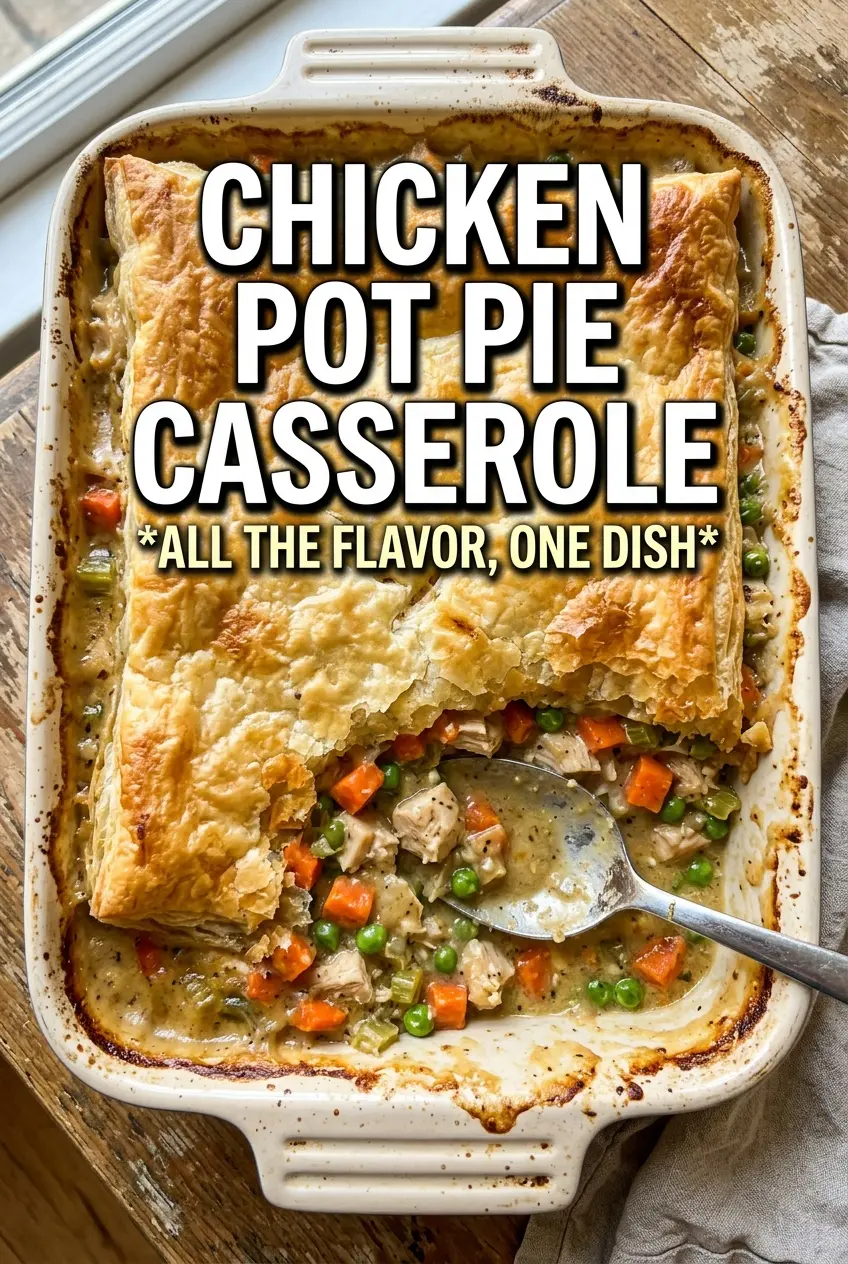
Chicken Pot Pie Casserole
Ingredients
Equipment
Method
- Preheat the oven to 400F. In a skillet, sauté onion, carrots, and celery in butter for 5 minutes until softened.
- Whisk in the flour and cook for 1 minute to remove the raw flour taste. The mixture should look slightly bubbly and thick.
- Gradually add the chicken broth and heavy cream, whisking as you pour. Simmer until thick, with a smooth consistency that coats the back of a spoon.
- Stir in the chicken, peas, corn, thyme, and garlic powder, then season with salt and pepper to taste. Cook briefly until everything is heated through and evenly combined.
- Pour the filling into a 9x13 dish. Spread it into an even layer so the top bakes uniformly.
- Top with refrigerated biscuits or puff pastry. For a biscuit top, place biscuits directly over the filling; for puff pastry, lay it over the surface.
- Bake for 25-30 minutes at 400F until the top is golden and the filling is bubbling. Look for active bubbling at the edges as the visual cue that it’s fully set.