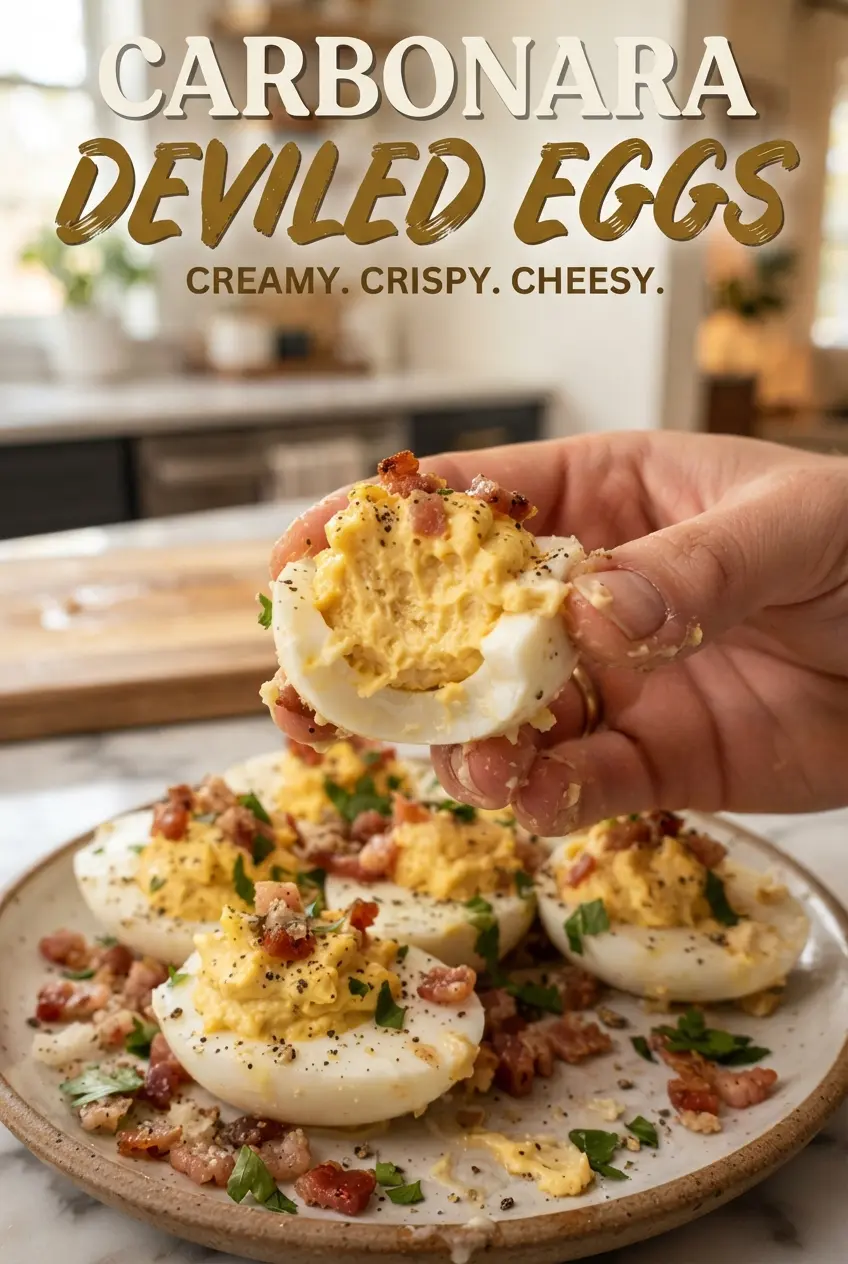
Carbonara deviled eggs bring the best parts of carbonara into one tidy bite: rich yolk filling, salty pancetta, sharp Pecorino, and that peppery finish that hits right at the end. They’re creamy without being heavy, and the contrast between the smooth filling and the crisp topping keeps every bite interesting.
The trick is treating the yolks like a sauce base instead of just a mash. A spoonful of the pancetta fat gives the filling the same savory depth you’d get from guanciale in pasta, while Pecorino Romano adds the sharp, salty edge that keeps the eggs from tasting flat. A little grated garlic and Dijon round everything out without pushing the filling away from its carbonara roots.
Below, I’ve included the method I use to keep the filling silky, plus the one substitution that still gives you the right flavor if you can’t find guanciale. The texture matters here, and a few small details make the difference between good deviled eggs and the kind people keep circling back to at the party table.
The filling was silky and set up perfectly in the whites, and the crispy pancetta on top made them disappear fast. I loved the black pepper finish — it tasted just like carbonara in appetizer form.
Save these carbonara deviled eggs for the appetizer tray when you want creamy yolks, crispy pancetta, and a sharp Pecorino finish.
The Secret to Carbonara Flavor Without a Runny Filling
Classic deviled eggs can go chalky fast if the yolks get overloaded with mayonnaise or if the mix leans too far toward bland richness. This version stays balanced because the salty Pecorino, pepper, and reserved pancetta fat work together like a proper carbonara base. The filling tastes layered instead of heavy, and it still pipes cleanly.
The biggest mistake is adding too much warm fat or not enough acid-and-salt balance from the cheese and mustard. You want the mixture smooth and cohesive, not greasy. If it looks shiny and loose, the eggs will slump when you fill them. If it feels stiff or grainy, another teaspoon of mayonnaise usually brings it back without dulling the flavor.
What Each Ingredient Is Actually Doing in These Eggs

- Eggs — Older eggs peel a little more cleanly than the freshest ones, so use what you have, but don’t skip the ice bath. That quick chill pulls the whites away from the shell and keeps the halves neat.
- Pancetta or guanciale — This is the flavor anchor. Guanciale tastes closest to traditional carbonara, but pancetta is easier to find and still gives you the salty pork note and rendered fat you need for the filling.
- Pecorino Romano — Freshly grated is worth it here because pre-shredded cheese won’t melt into the yolk mixture as smoothly. The sharp, sheep’s-milk bite keeps the filling from tasting flat.
- Mayonnaise — This is what makes the yolks pipeable and creamy. Use full-fat mayo for the best texture; light mayo can make the filling taste thin and a little sharp.
- Dijon and garlic — These don’t make the eggs taste like mustard or garlic bread. They just wake up the filling and keep the richness from settling into one note.
- Black pepper — Coarsely cracked pepper matters more than fine ground pepper here. You want those little pops of heat, just like you’d get in carbonara.
Building the Filling So It Pipes Cleanly
Cooking the Pork Until It’s Crisp, Not Burnt
Cook the pancetta over medium heat until the pieces are deeply golden and crisp at the edges, and you can smell the fat turning nutty. Pull it before it goes too dark; once it crosses into burnt territory, the flavor turns bitter and overshadows the eggs. Drain it well, but keep a teaspoon of the rendered fat for the filling. That little bit gives the yolks the same savory backbone carbonara gets from the pan.
Making the Yolks Smooth
Mash the yolks with the mayonnaise, Pecorino, Dijon, garlic, pepper, and reserved fat until the mixture looks glossy and spreadable. A fork works if you’re patient, but a small spatula or hand mixer gives a finer texture if you want very clean piping. If the mixture feels dry, add another teaspoon of mayonnaise before you add more cheese. The goal is a filling that holds its shape without cracking when you pipe it.
Filling and Finishing the Eggs
Pipe or spoon the filling into the egg whites once they’re completely cool. Warm whites sweat under the filling, and that’s how you end up with a slippery plate and dull texture. Finish with the crispy pancetta, a little shaved Pecorino, more cracked pepper, and parsley. The toppings should look generous, because those last few bits are what make each egg taste finished instead of merely filled.
Three Ways to Adjust These Without Losing the Carbonara Idea
Use pancetta instead of guanciale
Pancetta gives you the same salty pork flavor with a slightly cleaner finish and is much easier to find. Guanciale is a little richer and silkier, but either one works as long as you render it until crisp and save a bit of the fat for the yolk filling.
Dairy-free version
Swap the Pecorino for a dairy-free Parmesan-style alternative and use a good vegan mayo. You’ll lose a little of the sharp sheep’s-milk edge, so add an extra pinch of salt and a touch more pepper to keep the filling lively.
Make them a little lighter
Use just enough mayonnaise to bind the yolks, then stop. You’ll get a firmer, more yolk-forward filling with less richness, which works well if these are going onto a larger appetizer spread with other heavy foods.
Storage and Reheating
- Refrigerator: Keep assembled deviled eggs covered for up to 2 days. The filling stays good, but the tops lose a little of their crisp, fresh look after the first day.
- Freezer: These don’t freeze well. The whites turn watery and rubbery after thawing, and the filling separates.
- Reheating: Don’t reheat the finished eggs. If you want to work ahead, cook the eggs and pancetta in advance, then fill and garnish just before serving so the whites stay firm and the topping stays crisp.