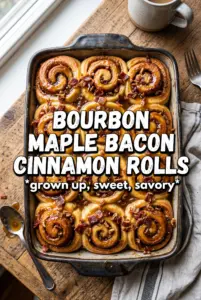
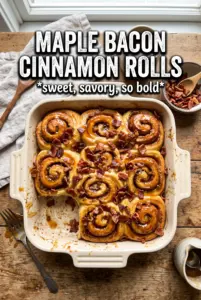
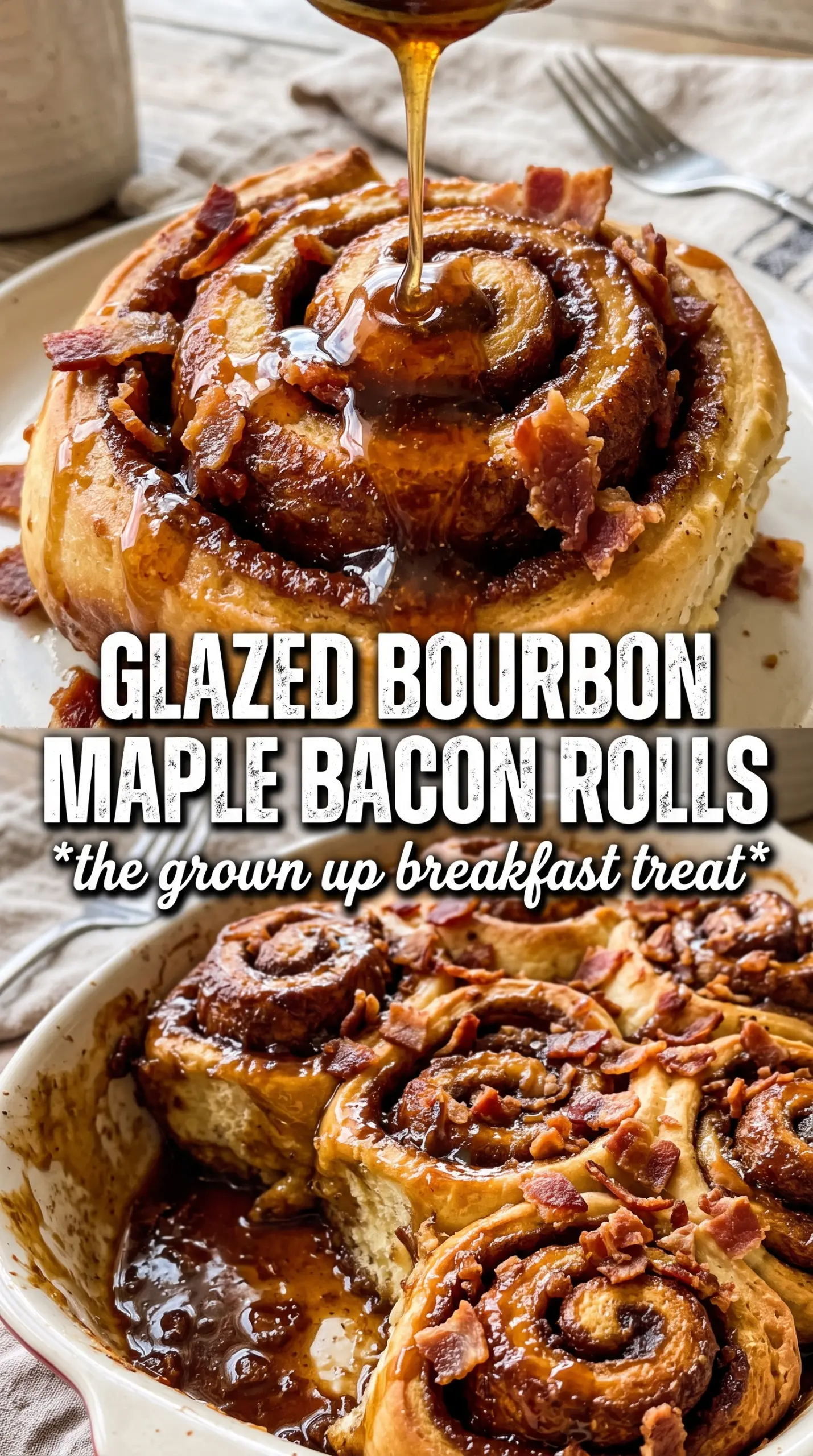
Soft, buttery cinnamon rolls turn into something special when smoky bacon and bourbon maple glaze get involved. The dough bakes up tender and pillowy, the filling melts into brown sugar-cinnamon swirls, and the bacon brings just enough salt and crunch to keep every bite interesting. Warm from the oven, these rolls land somewhere between breakfast and dessert, which is exactly why they disappear fast.
What makes this version work is balance. The dough is enriched with milk, butter, and eggs, so it stays soft without turning dense, while the filling uses softened butter instead of melted butter so it clings to the dough instead of leaking out. The bourbon maple glaze gets whisked until smooth and poured over the rolls while they’re still warm, so it settles into the spirals instead of sitting on top like frosting. A pinch of flaky salt at the end keeps the sweetness from getting heavy.
You’ll find a few practical notes below on keeping the rolls tender, how to handle the bacon so it stays crisp, and the easiest swaps if you want to skip the bourbon or make these ahead.
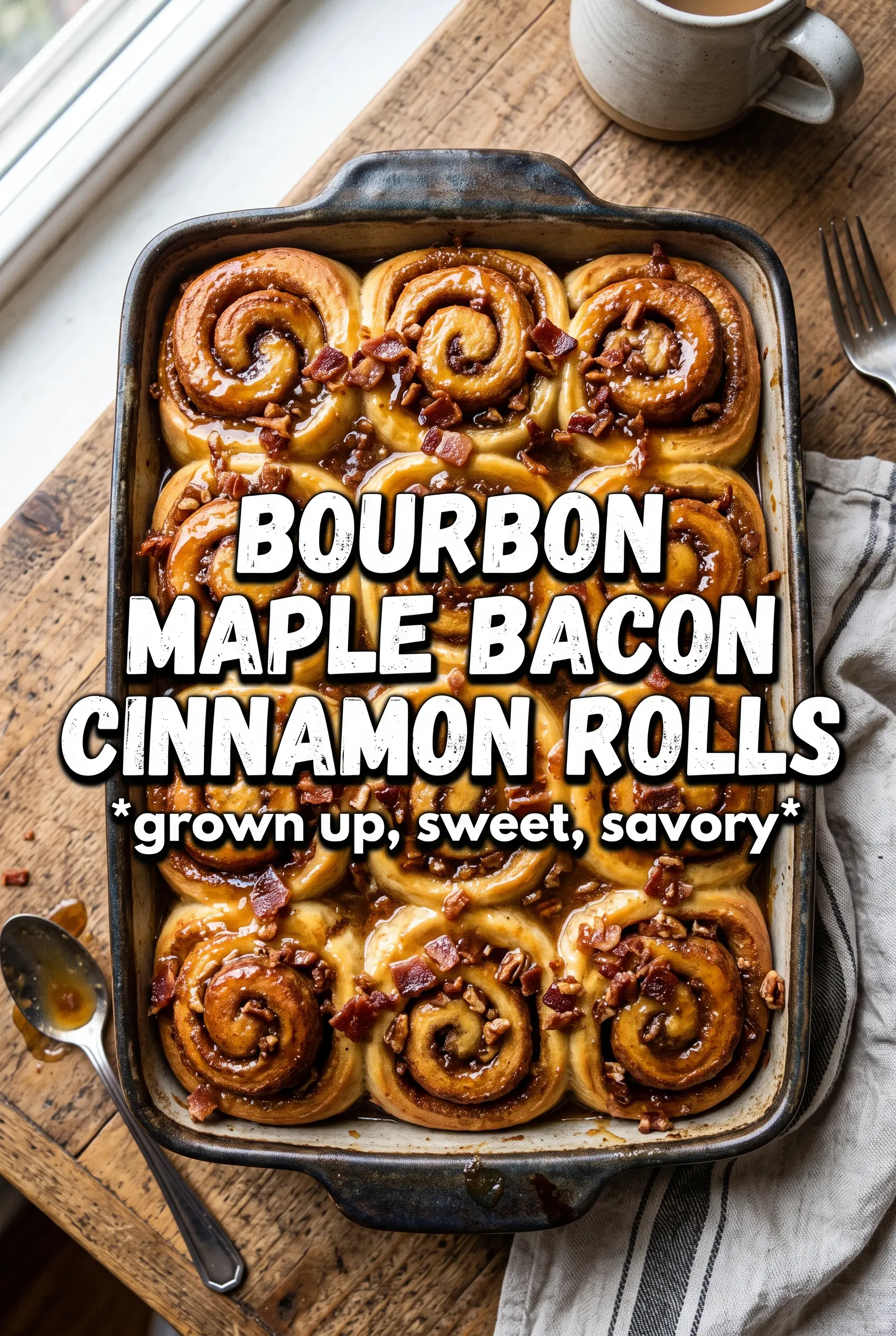
The dough baked up super fluffy and the glaze soaked into every swirl without making the rolls soggy. I also loved that the bacon stayed crisp enough to give each bite a little crunch.
Bourbon maple bacon cinnamon rolls with sticky glaze, crisp bacon, and flaky salt are worth the extra rise time.
The Reason These Rolls Stay Soft Instead of Dense
Most cinnamon rolls turn heavy because the dough gets too much flour during kneading or the first rise gets rushed. This dough should feel soft and a little tacky before the first rise. If it feels dry in the bowl, the finished rolls will bake up tight instead of fluffy.
The other thing that matters here is structure from the eggs and butter. That enrichment gives the rolls tenderness, but it also means the dough needs enough kneading to become smooth and elastic. Stop when it stretches without tearing easily and pulls cleanly from the sides of the bowl, not when it feels stiff.
- Warm milk wakes up the yeast and gives the dough the right starting temperature. If it’s hot enough to sting your finger, it’s too hot for the yeast.
- Softened butter for the filling is the difference between a swirl that stays put and one that leaks into the pan.
- Crumbling the bacon small helps it distribute evenly, so you get salty bites all the way through instead of clumps in one section.
- Flaky salt at the end gives the glaze contrast and keeps the rolls from reading as one-note sweet.
What Each Ingredient Is Actually Doing Here
- Bread flour is not necessary here. All-purpose flour gives these rolls enough structure while keeping the crumb tender, which is what you want in a breakfast roll.
- Pure maple syrup matters in the glaze. Pancake syrup will taste flatter and more artificial, and it won’t give you the same deep maple note under the bourbon.
- Bourbon adds warmth, not booziness when used in this small amount. If you want to skip it, replace it with an equal amount of cream; the glaze will still be smooth, just a little less complex.
- Cooked bacon should be crisp before it goes into the filling because it softens some in the oven. If it starts out limp, it will disappear into the filling and lose its texture.
- Cinnamon and nutmeg build the classic roll filling, but the nutmeg is the quiet detail that makes the maple glaze taste more rounded.
Building the Swirl So the Filling Stays Put
Mixing the dough until it turns supple
Combine the warm milk, yeast, and sugar first so the yeast has a chance to wake up. Once the dough comes together, knead it for about 8 minutes until it looks smooth and elastic instead of shaggy. If you add too much flour during kneading, the dough will stop sticking to the bowl but turn dry and tough in the oven, so resist the urge to dust the counter heavily.
Spreading the filling without tearing the dough
Roll the dough into a 12×18 rectangle and spread the softened butter all the way to the edges in a thin layer. Sprinkle the brown sugar, cinnamon, nutmeg, and bacon over the butter, then press everything lightly so it adheres. If the butter is too cold, it will tear the dough; if it’s melted, the filling will slide around and leak out when you roll it.
Cutting, rising, and baking evenly
Roll the dough up from the long side, then cut 12 even rolls with a sharp knife or unflavored dental floss. Arrange them in a greased 9×13 pan with a little space between each one, then let them rise until puffy and touching lightly. Bake at 375°F until the tops are golden and the centers are cooked through, about 22 to 25 minutes. If the top browns too fast, lay a sheet of foil over the pan for the last few minutes.
Finishing with glaze while the rolls are warm
Whisk the powdered sugar, maple syrup, bourbon, melted butter, and cream until smooth and pourable. Drizzle it over the rolls while they’re still warm so it sinks into the spirals instead of forming a thick shell on top. Finish with flaky salt right away; once the glaze sets, the salt won’t cling as well.
How to Adapt These Rolls Without Losing What Makes Them Good
Skip the bourbon, keep the maple
Replace the bourbon with an equal amount of cream or milk. The glaze will stay silky and sweet, but it loses the deeper caramel edge that bourbon brings. This is the easiest swap if you want a family-friendly version or don’t keep bourbon on hand.
Make them ahead for a slower morning
Shape the rolls, place them in the pan, cover tightly, and refrigerate overnight after the second rise starts. In the morning, let them sit at room temperature until they look puffy again, then bake as directed. This keeps the texture fresh without forcing you to do all the work before breakfast.
Gluten-free version
Use a cup-for-cup gluten-free baking flour that includes xanthan gum and expect a softer, less stretchy dough. The rolls won’t have quite the same chew, but they’ll still bake up tender if you don’t overload them with extra flour during rolling.
Storage and Reheating
- Refrigerator: Store covered for up to 4 days. The rolls soften as they sit, but the flavor stays good.
- Freezer: Freeze baked rolls without glaze, wrapped well, for up to 2 months. Thaw overnight in the refrigerator before reheating.
- Reheating: Warm individual rolls in the microwave for 15 to 20 seconds or cover the pan with foil and heat in a 300°F oven. Don’t blast them at high heat or the dough turns dry before the center is warm.
Answers to the Questions Worth Asking
Bourbon Maple Bacon Cinnamon Rolls
Ingredients
Equipment
Method
- Warm the milk until comfortable to the touch, then whisk it with yeast, and let sit for 5 minutes until foamy. Add sugar, melted butter, and eggs, whisking to combine.
- Mix in flour and salt until a shaggy dough forms, then knead until smooth and elastic for 8 minutes with a single cohesive texture. Cover and rise for 1 hour, until doubled in size.
- Roll the dough into a 12x18-inch rectangle, keeping an even thickness. Spread softened butter over the dough, then sprinkle brown sugar, cinnamon, and nutmeg evenly.
- Scatter the crumbled cooked bacon over the filling. Starting from a long edge, roll tightly into a log and seal the seam.
- Cut the log into 12 rolls and arrange them in a greased 9x13-inch baking dish. Cover and rise for 45 minutes, until puffy and touching.
- Bake at 375°F for 22-25 minutes, until the rolls are golden and the center springs back lightly. Let the rolls cool for 5 minutes so the glaze stays glossy.
- Whisk powdered sugar, maple syrup, bourbon, melted butter, and cream until smooth. Drizzle the bourbon maple glaze over warm rolls.
- Finish by sprinkling with flaky sea salt while the glaze is still tacky for better adherence.