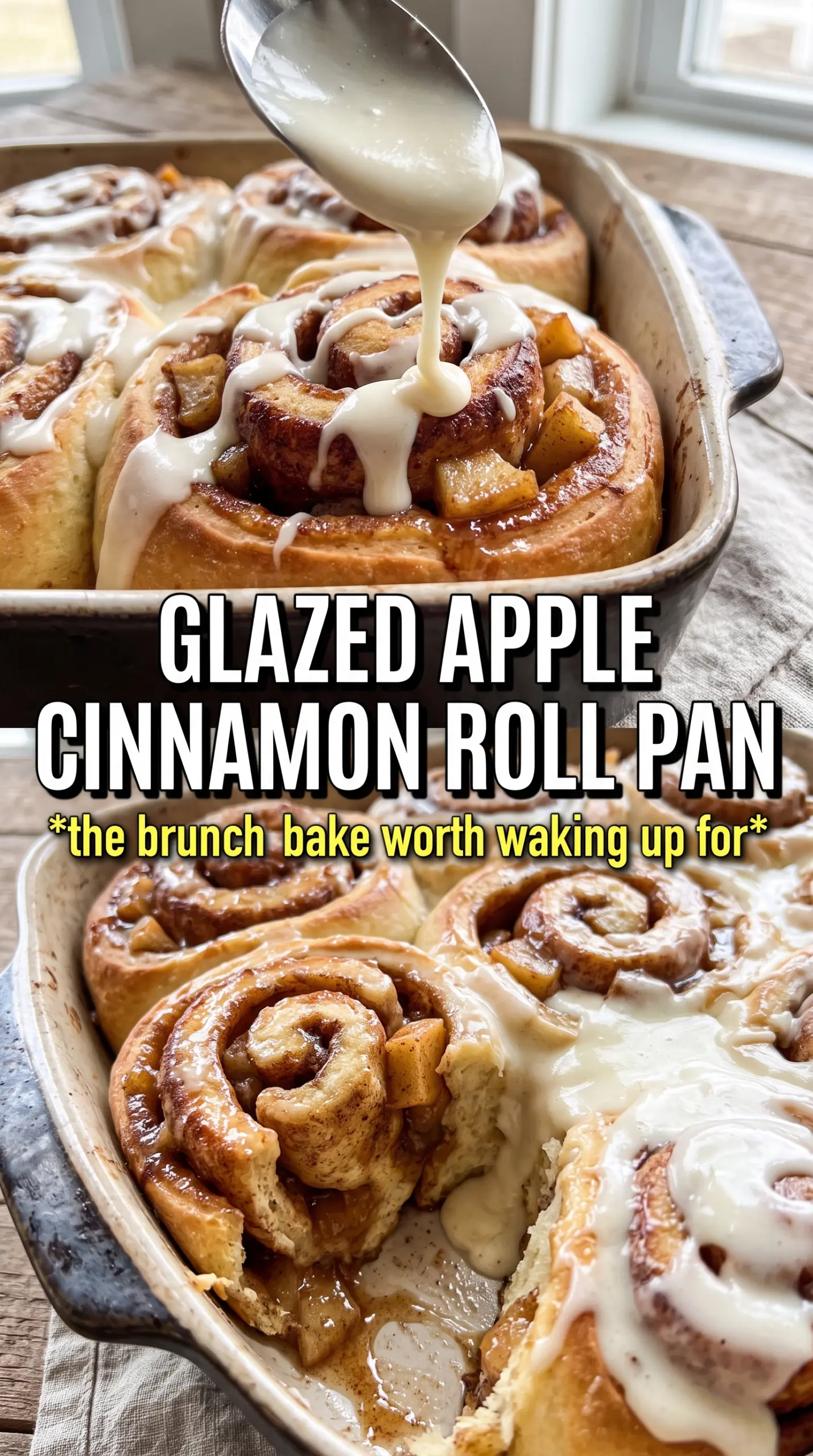
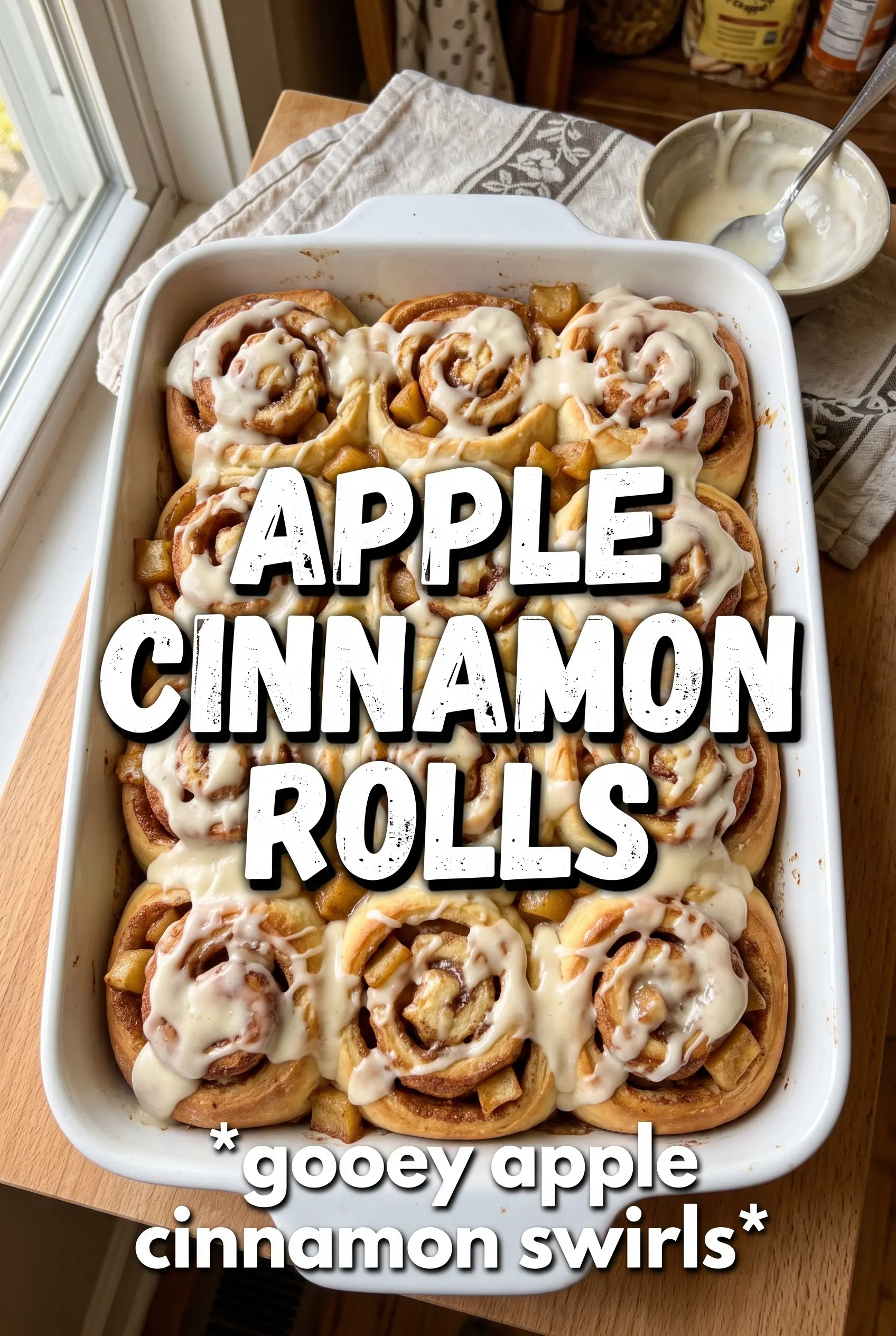
Apple cinnamon rolls bake up soft and plush with a sticky, caramelized filling that tastes like the best part of apple pie tucked into a pillowy breakfast roll. The apples soften just enough to melt into the cinnamon sugar, but they still keep enough shape to give each bite a little texture instead of turning the filling into mush. Warm from the oven and finished with cream cheese glaze, they come out rich, fragrant, and impossible to ignore.
What makes this version work is cooking the apples before they go into the dough. That extra few minutes drives off some moisture, concentrates the flavor, and keeps the rolls from getting soggy in the center. The dough itself is enriched with milk, butter, and eggs, which gives it a tender crumb that stays soft even after baking, as long as you don’t overdo the flour. The goal is a dough that’s smooth and slightly tacky, not dry and stiff.
Below, I’ll walk through the spots that matter most: how to keep the filling from leaking out, how to judge the dough texture, and how to get that glossy glaze to land on warm rolls without disappearing into them.
The apples cooked down just enough that the filling stayed put, and the rolls baked up fluffy instead of wet in the middle. The glaze on warm rolls was the perfect finish.
Save these apple cinnamon rolls for the morning you want soft dough, caramelized apple filling, and cream cheese glaze in one pan.
The Trick That Keeps the Filling Inside the Swirl
The filling is where most apple rolls go wrong. Raw diced apples release a lot of moisture in the oven, and if that liquid hasn’t been cooked down first, it seeps into the dough and leaves you with a gummy center and a loose spiral. Cooking the apples with brown sugar, butter, cinnamon, and nutmeg before rolling them up gives you a thicker filling that stays where you spread it.
There’s another detail that matters: the apples should be finely diced, not chopped into big chunks. Small pieces soften evenly and tuck into the layers without tearing the dough. If the filling looks glossy and syrupy in the pan, you’re on the right track. If it still looks watery, keep it on the heat a minute or two longer until the spoon leaves a trail through the apples.
What Each Ingredient Is Actually Doing in These Rolls
- Warm milk — This wakes up the yeast and helps the dough come together with a softer crumb than water would give you. The milk should feel warm, not hot; anything over about 115°F can slow or kill the yeast.
- Active dry yeast — This gives the rolls their lift and airy texture. If it doesn’t foam after five minutes in the warm milk and sugar, start over; that usually means the yeast is no longer active.
- Butter and eggs — These enrich the dough and keep it tender. Melted butter is fine here because the dough gets kneaded until smooth, and the eggs add structure so the rolls rise high without feeling heavy.
- Apples — Use a firm baking apple if you can. Softer apples can work, but they’ll break down faster and give you more of a jammy filling than defined apple pieces.
- Cream cheese — This makes the glaze tangy enough to balance the sweet filling. It needs to be softened so it blends smoothly; cold cream cheese leaves little lumps that won’t whisk out easily.
Building Soft Rolls Without a Dense Center
Waking Up the Yeast
Stir the warm milk, yeast, and a spoonful of sugar together and leave it alone until the surface looks foamy. That foam tells you the yeast is active and ready to do its job. If the mixture stays flat, the dough won’t rise properly and the rolls will bake up dense. Don’t rush past this step just because the liquid looks mixed; those five minutes save the whole batch.
Mixing and Kneading the Dough
Add the remaining dough ingredients and mix until a shaggy dough forms, then knead until it turns smooth and elastic. The dough should feel soft and a little tacky, but it shouldn’t stick in thick smears to your hands or the counter. If you keep adding flour until it feels dry, the rolls will bake up tough. Stop when the dough springs back slowly when you press it with a finger.
Cooking the Apples
Cook the diced apples with butter, brown sugar, cinnamon, and nutmeg until they look glossy and lightly caramelized. You’re not trying to make applesauce; you want the pieces softened and coated, with most of the liquid reduced. Spread them out on a plate to cool before filling the dough, because hot filling melts the butter in the dough and makes rolling messy.
Rolling, Cutting, and Proofing
Roll the dough into a neat rectangle and spread the cooled filling evenly edge to edge, leaving only a narrow strip bare along one long side so the seam can seal. Roll it up tightly from the opposite edge; loose spirals spread apart in the pan and leak filling. Cut clean slices with a sharp knife or unflavored dental floss, then let the rolls rise until puffy and touching. If they go into the oven underproofed, the centers stay tight and bready.
Baking and Glazing
Bake until the tops are deeply golden and the rolls in the center no longer look wet or doughy. The middle roll should spring back gently when touched. Beat the glaze until smooth, then drizzle it over the rolls while they’re still warm so it melts into the crevices instead of sitting on top in a thick layer. If you pour it on while the rolls are too hot, it’ll disappear completely; a warm pan is the sweet spot.
How to Adapt These Apple Cinnamon Rolls Without Losing the Good Part
Dairy-Free Version
Swap the milk for an unsweetened non-dairy milk and use a plant-based butter that bakes well. The rolls will still be soft, but the glaze loses a little of the tang and richness, so add an extra splash of vanilla to keep it balanced.
Make-Ahead Overnight Rolls
Assemble the rolls, cover the pan tightly, and refrigerate overnight after shaping. In the morning, let them sit at room temperature until noticeably puffy before baking. Cold dough needs extra time in the oven and can brown too fast on the outside before the center is cooked through.
Using Pears Instead of Apples
Firm pears work in place of apples, but they soften faster and taste a little lighter. Cook them down just until the juices thicken, or they’ll turn to paste in the oven. The result is sweeter and softer, with less of that classic apple-pie bite.
Freezer-Friendly Batch Baking
Bake the rolls fully, cool them completely, and freeze them without glaze. Wrap them well so the dough doesn’t dry out. Thaw overnight in the fridge, warm gently, and glaze after reheating so the topping stays smooth instead of grainy.
Storage and Reheating
- Refrigerator: Store covered for up to 4 days. The rolls stay soft, though the filling gets a little more set as they chill.
- Freezer: Freeze baked rolls without glaze for up to 2 months. Wrap tightly and thaw before warming for the best texture.
- Reheating: Warm individual rolls in the microwave in short bursts or cover the pan and heat in a low oven. High heat dries out the dough fast, so go gently and glaze after reheating if possible.
Answers to the Questions Worth Asking
Apple Cinnamon Rolls
Ingredients
Equipment
Method
- Combine warm milk, active dry yeast, and 1 tablespoon granulated sugar, then rest 5 minutes until foamy and expanded.
- In a mixing bowl, add the remaining granulated sugar, melted unsalted butter, eggs, and vanilla extract, then mix to combine.
- Add all-purpose flour and salt and mix until a soft dough forms.
- Knead the dough for 8 minutes until smooth and elastic.
- Place the dough in a greased bowl, cover, and rise 1 hour until doubled in size.
- Cook the finely diced apples with unsalted butter, packed brown sugar, cinnamon, and nutmeg for 5–7 minutes until caramelized.
- Cool the caramelized apple filling until no longer hot.
- Roll the dough into a 12x18 inch rectangle and spread the apple filling evenly over the surface.
- Roll the dough tightly into a log, then cut into 12 even rolls.
- Arrange the rolls in a greased 9x13 dish, cover, and rise 45 minutes until puffy.
- Bake at 375°F for 22–25 minutes until golden on top and baked through.
- Beat cream cheese, powdered sugar, milk, and vanilla extract until smooth, then drizzle over the warm rolls to set slightly.