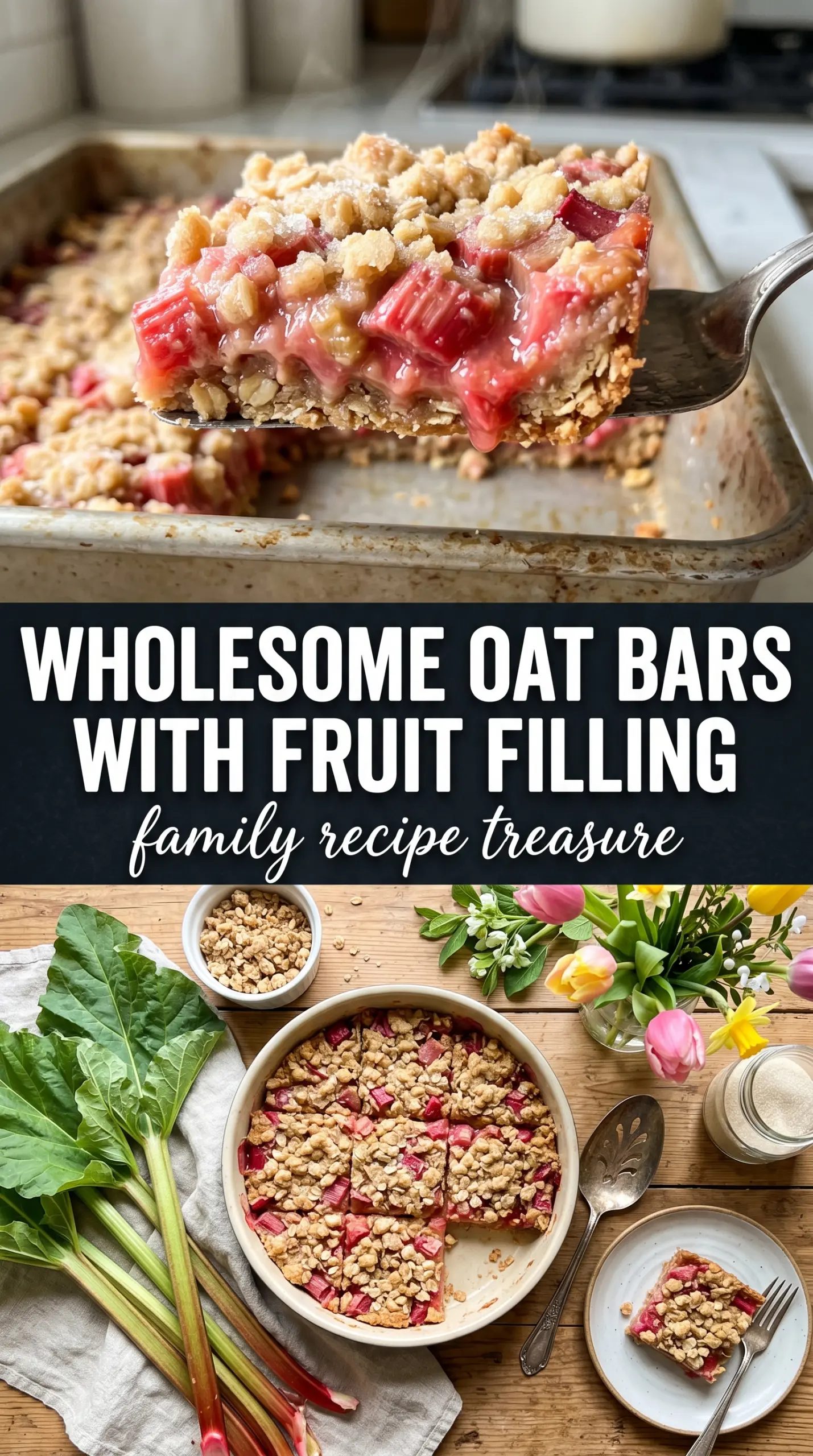
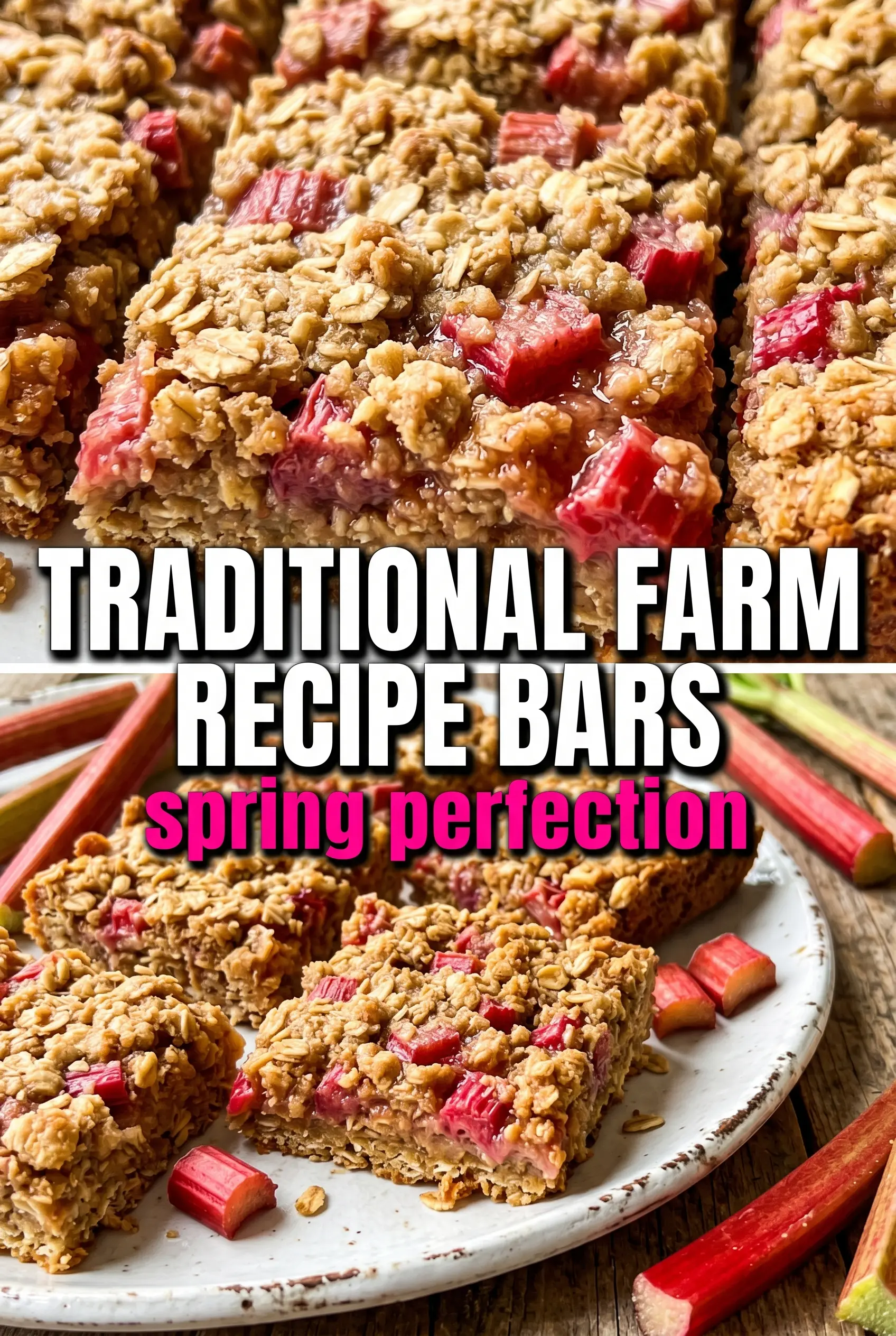
Thick rhubarb filling tucked between buttery oat layers is the kind of dessert that disappears fast and earns a permanent spot in the rotation. These Amish oatmeal rhubarb bars bake up with a crisp, crumbly top, a sturdy base, and a bright tart center that holds its shape once cooled. They slice cleanly, travel well, and taste even better the next day when the filling has fully set.
What makes this version work is the balance. The oat mixture does double duty as both crust and crumble, so you get that old-fashioned, rustic texture without making two separate components. The rhubarb filling gets cooked before it goes into the pan, which matters; raw rhubarb can leak too much juice and turn the bars soggy. Cornstarch handles the thickening, while a little vanilla rounds out the tart edge without covering it up.
Below, I’ve included the little details that keep the bars neat and sliceable, plus a few smart swaps if your rhubarb is especially tart or you want to make them a touch more pantry-friendly.
The rhubarb layer thickened up beautifully and didn’t run all over the pan. I cooled mine the full hour, and the bars cut into clean squares with that perfect chewy oat top.
Save these Amish oatmeal rhubarb bars for the thick, tangy filling and buttery crumble topping that slice cleanly every time.
The Reason These Bars Hold Their Shape Instead of Slumping
The filling is cooked before it ever meets the crust, and that’s the difference between neat bars and a pan of loose fruit. Rhubarb gives off a lot of juice as it bakes, so if you skip that stovetop thickening step, the bottom layer turns damp before it has a chance to set.
The other thing that matters is cooling time. These bars slice best after they’ve cooled completely, because the cornstarch needs time to finish tightening up. Cut them warm and the filling will slide; wait, and you get clean squares with a distinct oat layer on top and bottom.
What the Oats, Butter, and Cornstarch Are Each Doing Here
- Old-fashioned oats — These give the bars their chewy, rustic texture. Quick oats turn softer and more compact, so the crumble loses some of that hearty bite.
- Brown sugar — This adds molasses depth and helps the topping bake into a richer, more caramelized crust. You can use light brown sugar without changing the method.
- Butter, melted — Melted butter binds the oat mixture into a pressable crumble. If you use softened butter, the mixture won’t hold together the same way and you’ll get a patchier crust.
- Cornstarch — This is what gives the rhubarb layer its body. Arrowroot can work in a pinch, but cornstarch holds up best here and gives the cleanest slice.
- Fresh rhubarb — Fresh stalks soften into a bright, tart filling with some texture left in the pieces. Frozen rhubarb can be used, but thaw and drain it first or the filling will take longer to thicken.
Building the Crumble So the Filling Stays Put
Mixing the Oat Base
Stir the flour, oats, brown sugar, baking soda, and salt together first so the leavening and seasoning are evenly distributed. When the melted butter goes in, the mixture should look sandy and clumpy, not wet or paste-like. If it seems greasy, let it sit for a minute; the oats will absorb some of the butter as it rests.
Cooking the Rhubarb Filling
Combine the rhubarb, sugar, cornstarch, water, and vanilla in a saucepan and cook over medium heat until the mixture turns glossy and noticeably thicker, about 10 minutes. It should look like loose jam, not a thin syrup. If you stop too early, the filling will leak into the crust and soften the bars from the middle out.
Layering and Baking
Press half the oat mixture firmly into the pan so the bottom layer is compact enough to support the filling. Spread the rhubarb evenly over the crust, all the way to the corners, then scatter the remaining crumble on top without packing it down. Bake until the top is golden brown and the edges look set; an underbaked center will still look pale and soft under the crumb topping.
Cooling Before Slicing
Let the pan cool completely before you cut it. That rest time is part of the recipe, not an afterthought, because the filling firms up as it loses heat. If you want extra-clean edges, chill the bars for 20 to 30 minutes after cooling, then slice with a sharp knife wiped clean between cuts.
How to Tweak These Bars for Different Kitchens and Different Rhubarb
Use frozen rhubarb without watering down the bars
Thaw the rhubarb first and drain off any liquid before cooking the filling. Frozen fruit releases extra water, and if you skip that drain, the filling takes longer to thicken and the crust can turn soft underneath.
Make them a little sweeter
If your rhubarb is sharply tart, add another 1/4 cup sugar to the filling. That keeps the bars balanced without changing the texture, and it’s better than adding more butter or oats, which won’t fix a filling that tastes too sour.
Gluten-free version
Swap the all-purpose flour for a 1:1 gluten-free baking blend that includes xanthan gum. The bars will still hold together, though the crust may be a little more delicate when warm, so cooling fully matters even more.
Add a warmer spice note
A pinch of cinnamon or ginger in the oat mixture works well if you want a little warmth behind the rhubarb. Keep it restrained; the goal is to support the filling, not turn these into a spiced fruit bar.
Storage and Reheating
- Refrigerator: Store covered for up to 5 days. The oat topping softens slightly, but the bars still slice well.
- Freezer: These freeze well. Wrap individual bars tightly and freeze for up to 2 months, then thaw in the refrigerator so condensation doesn’t make the topping soggy.
- Reheating: These are best served at room temperature, but if you want them warm, use a low oven for a few minutes. The microwave makes the filling loose and the crust damp, which works against the texture you worked to build.
Answers to the Questions Worth Asking
Amish Oatmeal Rhubarb Bars
Ingredients
Equipment
Method
- Preheat the oven to 350°F and grease a 9x13-inch baking pan, so the bars release cleanly later.
- Combine all-purpose flour, old-fashioned oats, brown sugar, baking soda, and salt, then stir until evenly mixed.
- Pour in the melted butter and stir until the mixture turns into an even, crumbly texture with no dry pockets.
- Press half of the oat mixture into the bottom of the prepared pan to form a firm crust layer.
- In a saucepan, combine fresh rhubarb, sugar, cornstarch, water, and vanilla extract.
- Cook over medium heat for about 10 minutes, stirring until the mixture thickens and looks glossy.
- Spread the thickened rhubarb filling over the crust in an even layer.
- Sprinkle the remaining oat mixture on top to fully cover the filling for a crumble finish.
- Bake at 350°F for 35-40 minutes, until the top is golden brown and the center looks set.
- Cool completely before cutting into bars, so the filling firms up and the layers hold their shape.