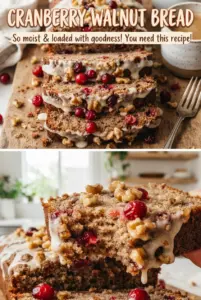
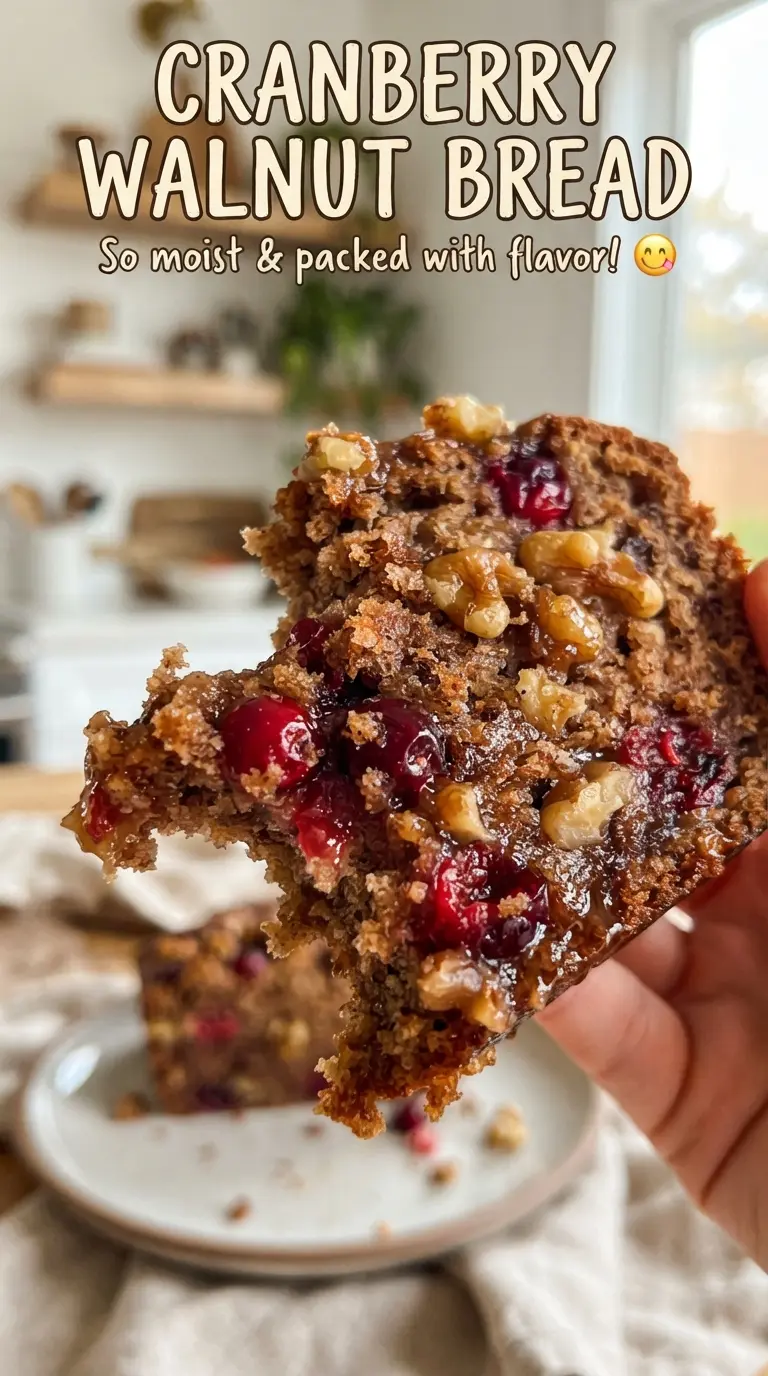
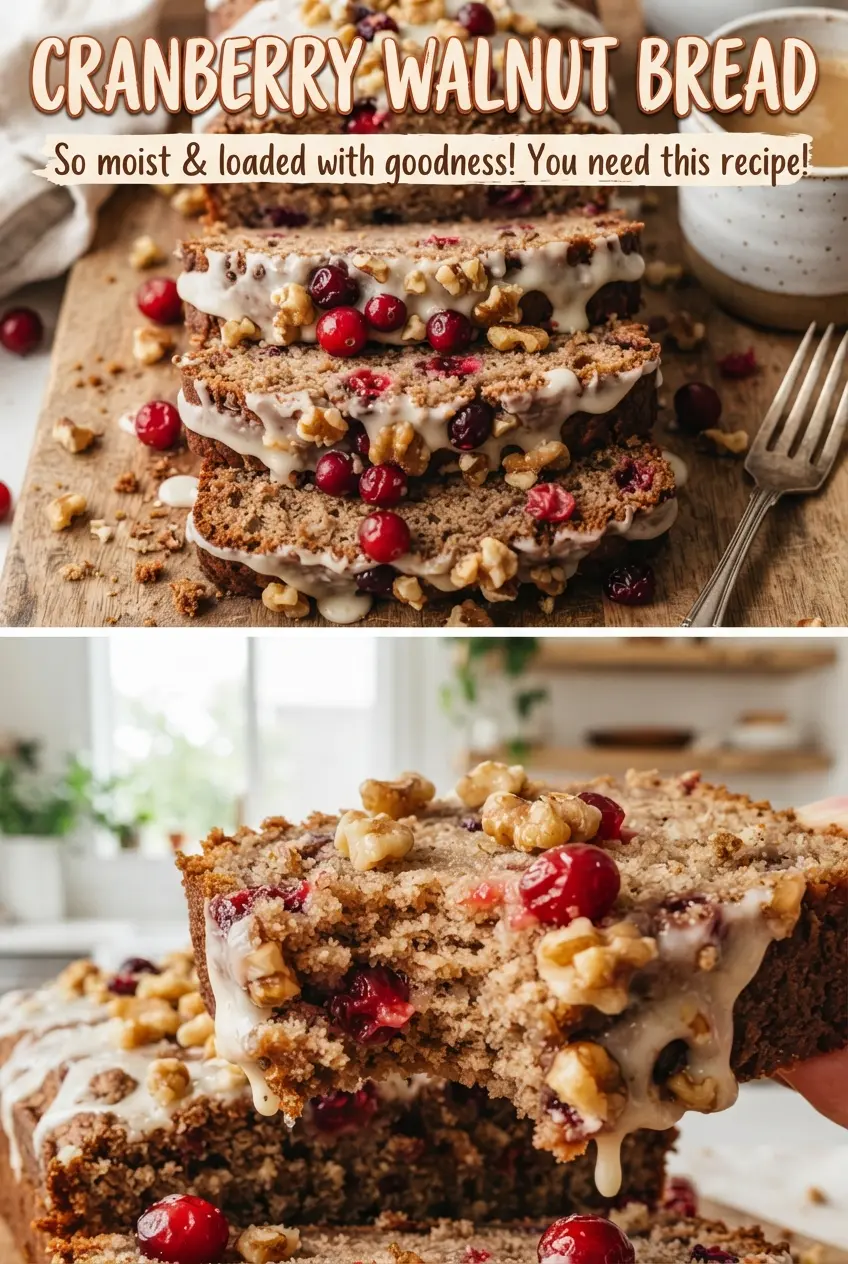
Cranberry walnut bread bakes into a tall, fragrant loaf with a tender crumb, bright pops of tart fruit, and the kind of toasted nutty crunch that makes a plain slice feel special. The orange zest lifts the whole loaf, so it tastes fresh and balanced instead of just sweet. Once it cools, the slices cut cleanly and hold together well, which makes it just as good for breakfast as it is for an afternoon snack with butter.
The texture comes from a light hand with the batter. Quick bread gets dense when it’s overmixed, so the dry and wet ingredients should be stirred together only until the flour disappears. Orange juice does more than add flavor here; it gives the loaf moisture and a little tang that keeps the cranberries from tasting flat. Toasting the walnuts before they go in matters too, because it wakes up their flavor and keeps them from getting soft in the oven.
Below, you’ll find the small details that keep this loaf from sinking in the middle or turning gummy. The timing on the batter, the reason frozen cranberries work just fine, and the storage notes all make a difference once this bread is on your counter.
The orange really brightens the cranberries, and the loaf stayed moist for days without getting soggy. I loved that the walnuts kept their crunch even after slicing.
Save this cranberry walnut bread for the mornings when you want a tart, nutty quick bread with real orange flavor.
The Texture Problem That Ruins Most Quick Breads
Cranberry walnut bread can go heavy fast, and the usual reason is overworking the batter after the flour goes in. Once flour meets liquid, gluten starts building, and every extra stir tightens the crumb. That’s how you end up with a loaf that looks fine on top but eats like a muffin gone wrong.
This recipe stays tender because the batter is mixed just until the dry streaks disappear. The cranberries and walnuts go in at the end, which keeps them from getting crushed and turning the loaf streaky. The pan size matters too: a 9×5-inch loaf gives the bread enough support to rise without spilling over the edges and baking up gummy in the middle.
- Orange zest — The zest carries the strongest citrus flavor here, not the juice. Rubbing it into the dry ingredients spreads that aroma through the loaf instead of leaving it trapped in one spot.
- Orange juice — This provides acidity and moisture at the same time. Bottled juice works in a pinch, but fresh juice tastes brighter and keeps the cranberry flavor from landing flat.
- Cranberries — Fresh or frozen both work. If they’re frozen, chop them while still firm and fold them in straight from the freezer so they don’t bleed too much color into the batter.
- Walnuts — Toasted walnuts bring actual depth, not just crunch. Untoasted nuts taste dull in a loaf this simple, so don’t skip that step unless you have to.
What Each Ingredient Is Actually Doing in This Recipe
- Primary ingredient (the star) — Quality matters most. Choose the best you can find.
- Cooking medium (oil, butter, or broth) — This carries flavors and prevents dryness.
- Seasonings (salt, pepper, spices, herbs) — Layer flavors so nothing overpowers. Build depth gradually.
- Aromatics (garlic, onion, herbs) — Cook with fat to bloom flavors. Become the foundation.
- Supporting ingredients — Complement the main ingredient without overpowering it.
- Sauce or liquid (if applicable) — Brings flavors together. Balance richness with acid.
- Acid (lemon, vinegar, wine, or other) — Brightens and prevents flat-tasting results.
- Final finish (garnish, glaze, or sauce) — Prevents one-dimensional taste and adds visual appeal.
Building the Batter So the Loaf Stays Tender
Mix the dry ingredients first
Whisk the flour, sugar, baking powder, baking soda, salt, and orange zest until the zest is evenly dispersed and the mixture looks fluffy. This step does more than combine ingredients; it keeps the leavening from clumping so the loaf rises evenly. If you see little pockets of zest, keep whisking until they disappear into the sugar.
Bring the wet ingredients together gently
Whisk the orange juice, egg, melted butter, and vanilla until the mixture looks smooth and slightly glossy. The butter should be warm, not hot, or it can start cooking the egg and leave little bits in the bowl. If the butter looks streaky, keep whisking until it blends in cleanly before it hits the flour.
Stop mixing as soon as the flour disappears
Stir the wet mixture into the dry ingredients just until no dry flour remains. A few small lumps are fine; they bake out. If you keep stirring after the batter comes together, the loaf turns tight and dry, and the cranberries can sink instead of staying suspended through the crumb.
Fold in the fruit and nuts, then bake until set
Fold in the chopped cranberries and walnuts with a few broad strokes, then scrape the batter into the prepared pan and level the top. Bake until the loaf is deep golden and a toothpick comes out clean or with just a few moist crumbs. If the top browns too quickly before the center is done, lay a piece of foil loosely over the pan for the last 10 to 15 minutes.
How to Adapt This Loaf Without Losing What Makes It Work
Make it dairy-free
Swap the melted butter for melted coconut oil or a neutral plant-based butter. Coconut oil gives the loaf a slight sweetness, while plant-based butter keeps the flavor closer to the original. Use the same amount and keep it warm, not hot, when you whisk it in.
Use dried cranberries when fresh aren’t available
Dried cranberries work, but they give a sweeter, denser loaf and less of that tart burst in every bite. If you use them, chop them roughly and soak them in a few tablespoons of orange juice for 10 minutes so they don’t pull moisture from the batter.
Swap the walnuts for pecans
Pecans make the loaf softer and a little sweeter, which works nicely if you want a gentler nut flavor. Toast them the same way you would walnuts so they still stand up to the moisture in the batter.
Make it gluten-free
A 1:1 gluten-free flour blend can work here, but the texture will be a little more delicate and crumbly than the original. Let the loaf cool fully before slicing, since gluten-free quick breads set up more as they rest than while they bake.
Storage and Reheating
- Refrigerator: Store tightly wrapped for up to 5 days. The crumb stays moist, though the walnuts soften a bit after the first day.
- Freezer: This loaf freezes well. Wrap individual slices or the whole cooled loaf tightly, then freeze for up to 3 months. Thaw at room temperature without unwrapping so condensation doesn’t make the crust sticky.
- Reheating: Warm slices in a toaster oven or a skillet over low heat until the edges are just crisped and the center is warm. Microwaving too long makes quick bread rubbery, especially one with fruit.
Questions I Get Asked About This Recipe
Cranberry Walnut Bread
Ingredients
Equipment
Method
- Preheat oven to 350F, then grease and line a 9x5-inch loaf pan (visual cue: pan is ready with parchment lining if needed).
- Whisk all-purpose flour, sugar, baking powder, baking soda, salt, and orange zest until evenly combined (visual cue: the dry mix looks uniform in color).
- Whisk orange juice, large egg, melted butter, and vanilla extract together until smooth (visual cue: liquid mixture is glossy and fully blended).
- Stir wet into dry just until moistened (visual cue: no large dry flour pockets remain; batter will look thick).
- Fold in fresh or frozen cranberries, roughly chopped and walnuts, toasted and chopped, then spread the batter into the loaf pan (visual cue: fruit and nuts are evenly visible throughout).
- Bake at 350F for 55-60 minutes until golden and a toothpick comes out clean (visual cue: top springs back slightly and edges look set).
- Cool in the pan for 10 minutes (visual cue: loaf firms up enough to hold its shape).
- Turn out onto a rack and cool fully before slicing (visual cue: loaf is no longer steaming and slices stay clean).