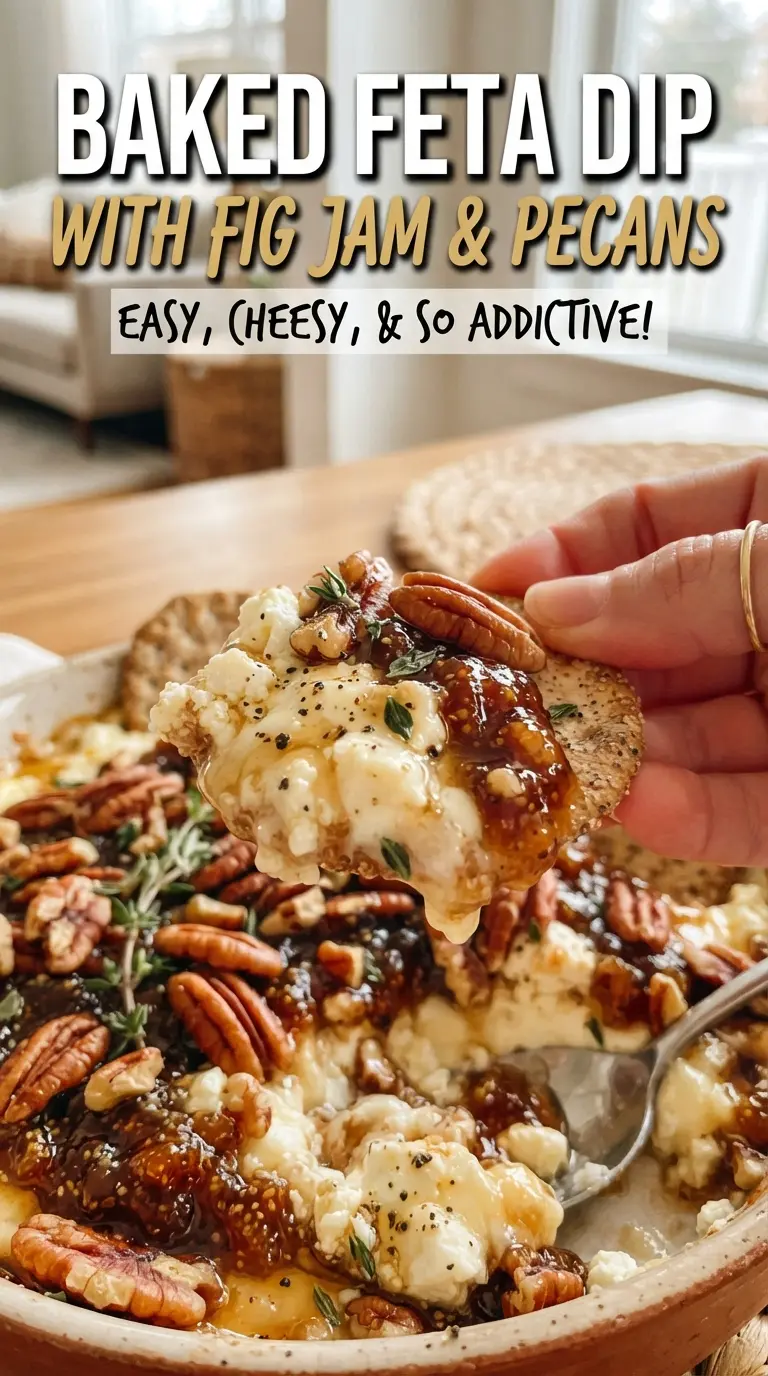
Warm baked feta turns spreadable and plush in the oven, then the fig jam melts into a glossy layer that tastes sweet, tangy, and just salty enough to keep every bite from tipping dessert-like. The pecans bring crunch, the rosemary cuts through the richness, and a little honey at the end pulls everything together into a dip that disappears fast.
What makes this version work is the layering. The feta gets a head start in the oven so it softens before the jam goes on, which keeps the top from scorching while the center stays creamy. The jam needs just enough heat to loosen and bubble, not so much that it dries out, and the pecans go in late so they toast instead of burn. That last drizzle of honey is small, but it sharpens the fruitiness and makes the whole dish taste finished.
You’ll find the timing that keeps the feta silky, plus a few smart swaps if you want to change the nuts, herbs, or sweetness level without losing the balance that makes this dip work.
The feta turned soft and creamy underneath the fig jam, and the pecans stayed crunchy even after baking. I served it with toasted baguette slices and it was gone before dinner.
Save this baked feta dip with fig jam and pecans for the next time you need a warm, sweet-savory appetizer with almost no cleanup.
The Trick to Keeping the Feta Creamy Under the Jam
The biggest mistake with baked feta dip is putting everything in the dish at once. Feta needs time to soften on its own first. If the jam goes in too early, it can overcook before the cheese has turned creamy, and you lose that contrast between the tangy base and the sticky-sweet topping.
Another thing worth paying attention to is the baking dish size. Use a small one so the feta sits snugly and the jam stays pooled over the top instead of spreading into a thin layer. That shallow puddle is what gives you bubbling edges and a center that stays scoopable, not dry.
- Feta — A block of feta works better than crumbled feta because it softens into a spreadable center instead of drying out. Use a sheep’s milk feta if you can find it; it has a creamier finish and a cleaner tang.
- Fig jam — This is the sweet anchor of the dip. If your jam is very thick, warm it for a few seconds so it spreads without tearing the feta. Apricot preserves can stand in, but the flavor will be brighter and less deep.
- Pecans — They add the crunch that keeps the dip from feeling one-note. Chop them fairly small so they toast quickly and cling to the jam instead of sliding off.
- Rosemary — Fresh rosemary brings a piney, savory note that keeps the sweetness in check. Dried rosemary can work in a pinch, but use less and crush it between your fingers first so it doesn’t feel woody.
- Honey — The final drizzle rounds out the salt and fruit. Skip it if your jam is already very sweet, but don’t add it before baking or it can darken too much.
What Each Ingredient Is Actually Doing in This Recipe
- Primary ingredient (the star) — Quality matters most. Choose the best you can find.
- Cooking medium (oil, butter, or broth) — This carries flavors and prevents dryness.
- Seasonings (salt, pepper, spices, herbs) — Layer flavors so nothing overpowers. Build depth gradually.
- Aromatics (garlic, onion, herbs) — Cook with fat to bloom flavors. Become the foundation.
- Supporting ingredients — Complement the main ingredient without overpowering it.
- Sauce or liquid (if applicable) — Brings flavors together. Balance richness with acid.
- Acid (lemon, vinegar, wine, or other) — Brightens and prevents flat-tasting results.
- Final finish (garnish, glaze, or sauce) — Prevents one-dimensional taste and adds visual appeal.
Building the Layers So Nothing Burns Before the Feta Softens
Letting the feta warm first
Set the feta in the baking dish, drizzle it with olive oil, and bake it on its own first. In that first 10 minutes, the cheese should look softer around the edges and slightly glossy on top. That’s the point where it’s ready for the jam. If you skip this head start, the topping will cook too fast while the center stays stubbornly firm.
Adding the jam and toppings
Spoon the fig jam over the softened feta, then scatter the pecans, rosemary, and red pepper flakes across the top. The jam should sit thickly, not run all over the pan, and the pecans should look evenly tucked into the surface. Keep the layer even so the nuts toast at the same pace. A heavy mound in one spot will scorch before the rest is warm.
Finishing in the oven
Return the dish to the oven for 8 to 10 minutes, just until the jam is bubbling at the edges and the pecans smell toasted. You want movement in the jam and a little looseness in the cheese, not a fully melted puddle. If the top starts to darken before the jam bubbles, the oven is running hot; pull it out a minute early and let the residual heat finish the job.
The last drizzle and seasoning
Finish with honey and black pepper right before serving. The honey should shine on the surface, not sink in completely, and the pepper should be fresh enough to show up against the sweetness. Serve it while it’s still warm so the feta stays creamy and the jam remains loose enough to scoop cleanly.
How to Change the Sweetness, Crunch, or Saltiness Without Breaking the Dip
Make it dairy-free with a baked almond-based cheese
A plant-based feta style cheese will give you the salty backbone, but it usually won’t soften as luxuriously as dairy feta. Bake it a little less than the original version and watch closely, since some vegan cheeses go from firm to oily faster than you’d expect. The jam, nuts, and herbs still carry the dish well.
Swap the pecans for walnuts or pistachios
Walnuts give a deeper, slightly bitter edge that works well with the fig jam, while pistachios bring a brighter color and a softer crunch. Use the same amount and chop them small so they toast in the short bake time. Whole nuts won’t pick up enough color before the cheese is ready.
Dial back the sweetness for a more savory appetizer
Use a little less jam and skip the honey at the end if you want the feta to stay front and center. A squeeze of lemon over the finished dip can sharpen the flavor without making it taste sweeter. This version pairs especially well with toasted baguette, which holds up to the stronger salty edge.
Bring the heat up a notch
Add a little more red pepper flakes or a pinch of Aleppo pepper for warmth that lingers under the sweetness. Keep it modest, since too much heat will drown out the fig and make the dip feel scattered instead of balanced. The goal is a gentle lift, not a hot finish.
Storage and Reheating
- Refrigerator: Store leftovers in an airtight container for up to 3 days. The feta firms up and the jam thickens as it chills.
- Freezer: I don’t recommend freezing this dip. The cheese texture turns grainy after thawing and the jam gets watery.
- Reheating: Warm it in a 300F oven until just heated through, about 10 minutes. High heat can make the feta separate and the nuts lose their crunch.
Answers to the Questions Worth Asking
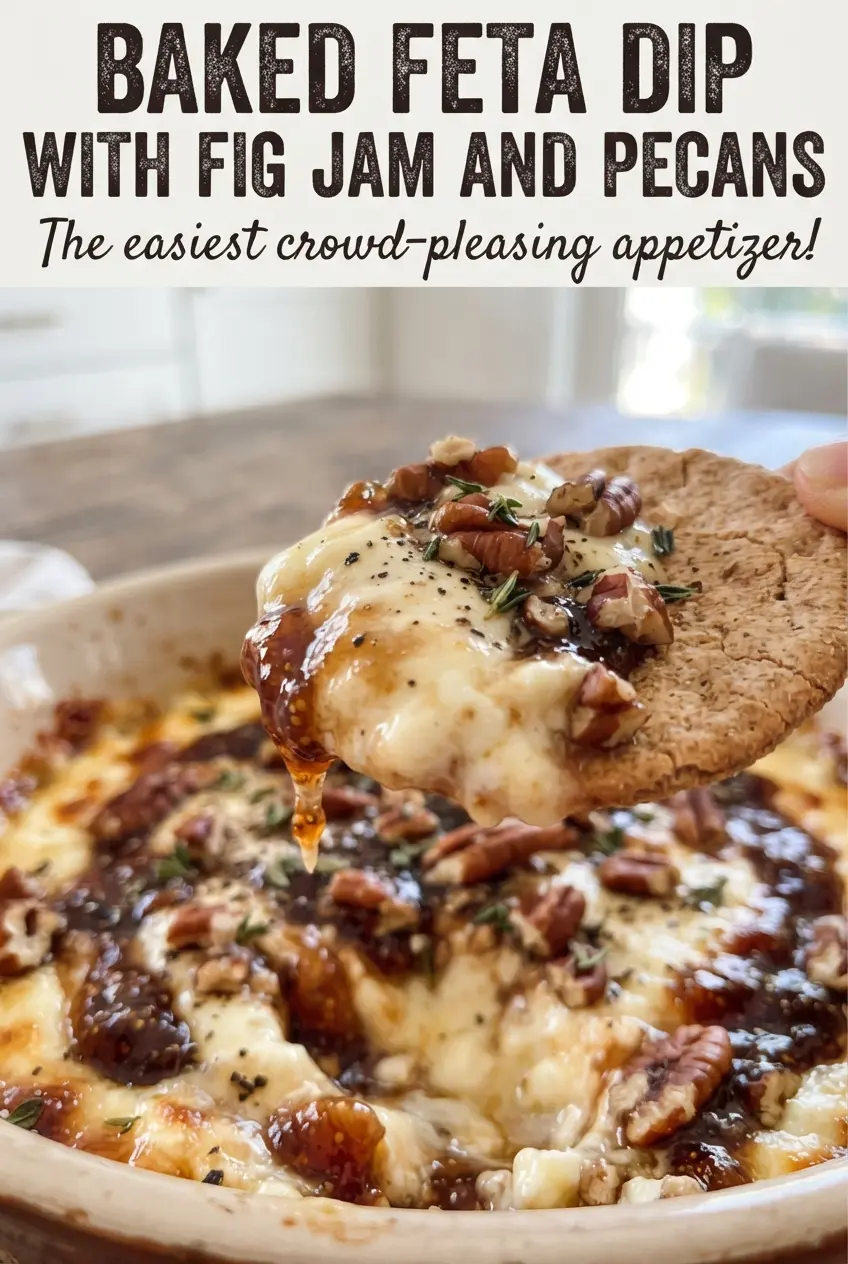
Baked Feta Dip with Fig Jam and Pecans
Ingredients
Equipment
Method
- Preheat oven to 400F. Place the feta in a small baking dish and drizzle with olive oil for a glossy surface.
- Bake for 10 minutes until the feta begins to soften. Look for edges loosening slightly while the center stays together.
- Spread fig jam over the top, then scatter pecans, rosemary, and red pepper flakes. Cover the entire surface so the topping bakes evenly.
- Bake 8-10 minutes more until jam is bubbly and pecans are toasted. Watch for active bubbling at the jam surface and a deeper toasted color on the nuts.
- Drizzle with honey and season with black pepper. Aim for an even honey sheen and visible pepper specks.
- Serve warm with pita chips or toasted baguette. Scoop straight into the creamy center with a chip or bread bite.