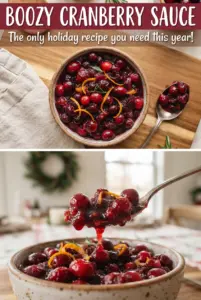
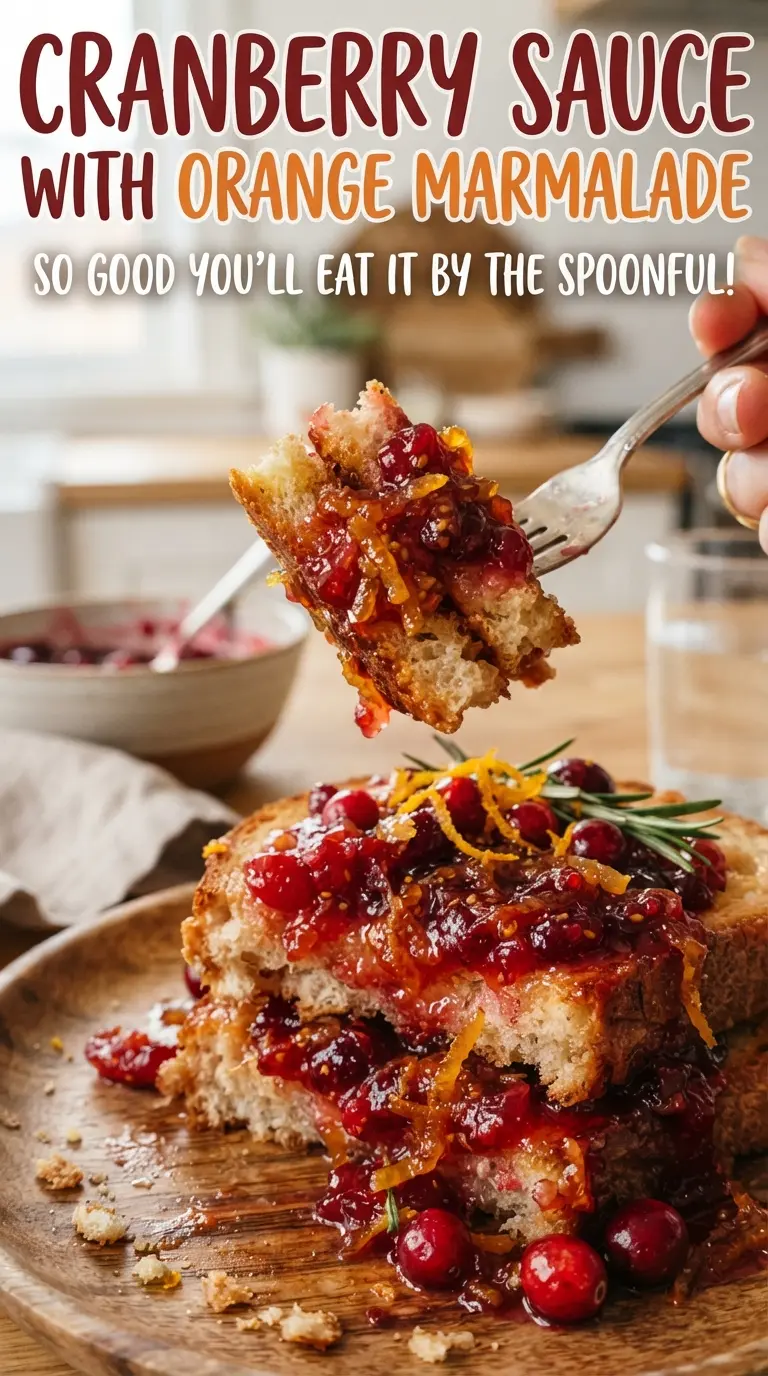
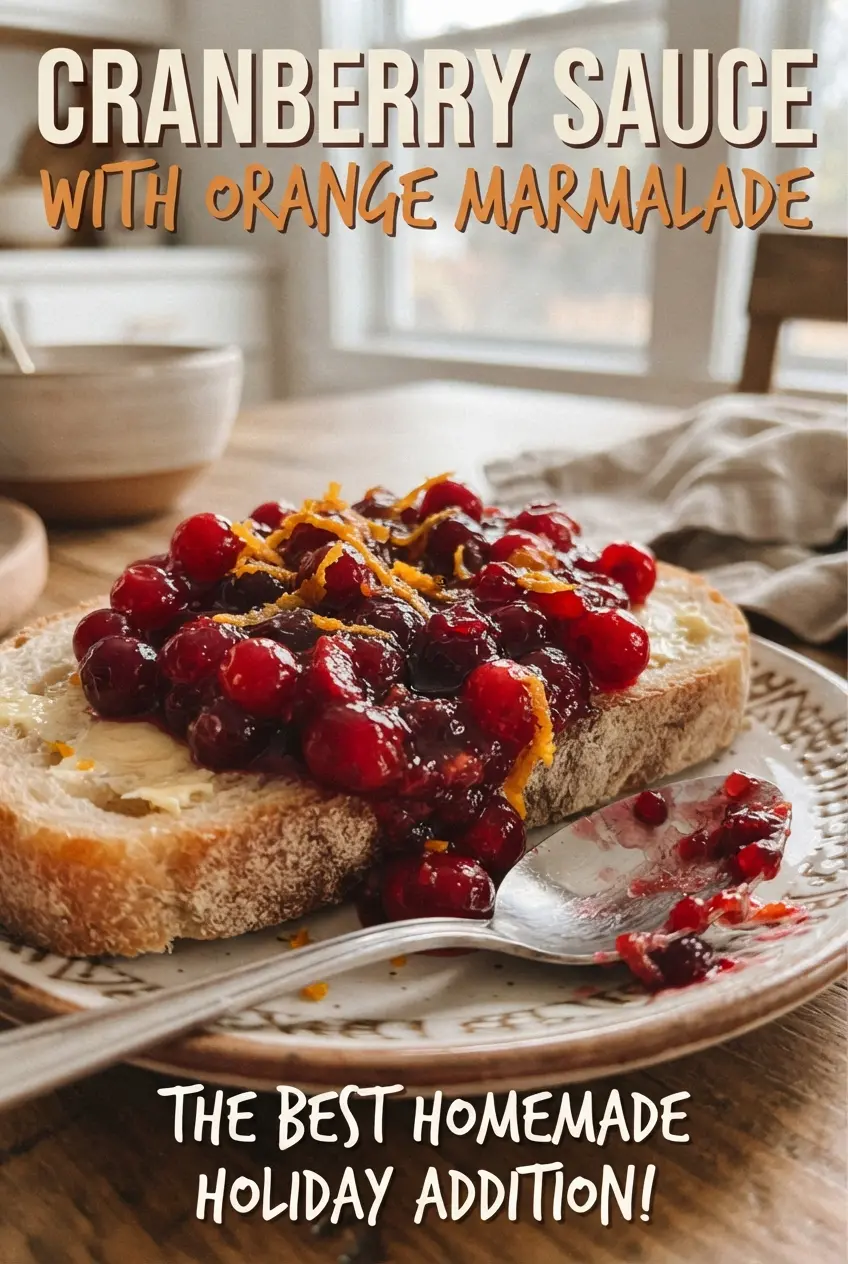
Glossy cranberry sauce with orange marmalade brings a brighter, deeper kind of sweetness than plain cranberry sauce ever can. The berries keep their sharp, clean pop, but the marmalade softens the edge and adds a little bitterness from the peel that makes the whole thing taste finished, not one-note. It’s the kind of side that cuts through rich food instead of just sitting beside it.
The trick is in the order. Sugar and water make a quick syrup first, which helps the cranberries cook evenly before they start releasing their own juice. Marmalade goes in near the end, after the berries have burst, so the peel stays lively and the sauce stays glossy instead of muddy. A little lemon juice wakes everything up, and the pinch of salt keeps the sweetness from flattening out.
Below, you’ll find the small timing details that matter, the swap I use when marmalade is extra thick, and the best way to chill it so it sets up with a spoonable texture instead of turning stiff.
The marmalade gave the sauce this beautiful glossy finish, and it thickened up perfectly after chilling. I used it with roasted turkey, but honestly I ate the leftovers with a spoon.
Save this cranberry sauce with orange marmalade for Thanksgiving, holiday roasts, and any meal that needs a bright, glossy side.
The Secret to Keeping Cranberry Sauce Glossy Instead of Jammy
Cranberry sauce goes wrong when it cooks too hard or too long after the berries burst. At that point the pectin in the fruit starts tightening things up, and the sauce turns thick, dull, and a little pasty once it cools. The fix here is simple: cook the berries until most of them pop, then stop as soon as the marmalade has melted in and the surface looks shiny again.
The other reason this version stays lively is the marmalade itself. It adds sweetness, yes, but it also brings peel and a little bitterness, which keeps the sauce from tasting flat. If your marmalade is very thick, give it an extra minute to dissolve in the pan so you don’t end up with streaks of unmelted jelly.
- Cranberries — Fresh berries hold their shape for just long enough to burst in the pan, which gives you that classic sauce texture with some whole fruit left behind. Frozen cranberries also work; add them straight from the freezer and expect the simmer to take a minute or two longer.
- Orange marmalade — This is what makes the sauce taste layered instead of simply sweet. A good marmalade gives you citrus peel and brightness, while a very sweet, syrupy one makes the sauce taste heavier, so choose one with visible peel if you can.
- Lemon juice — The small amount at the end sharpens the whole pot and keeps the orange from taking over. Bottled lemon juice works here if that’s what you have, but fresh juice tastes cleaner.
- Water and sugar — They form the quick syrup that helps the cranberries cook evenly instead of scorching on contact. Don’t cut the sugar too far; cranberry sauce needs enough sweetener to balance the fruit’s sharp bite.
What Each Ingredient Is Actually Doing in This Recipe
- Primary ingredient (the star) — Quality matters most. Choose the best you can find.
- Cooking medium (oil, butter, or broth) — This carries flavors and prevents dryness.
- Seasonings (salt, pepper, spices, herbs) — Layer flavors so nothing overpowers. Build depth gradually.
- Aromatics (garlic, onion, herbs) — Cook with fat to bloom flavors. Become the foundation.
- Supporting ingredients — Complement the main ingredient without overpowering it.
- Sauce or liquid (if applicable) — Brings flavors together. Balance richness with acid.
- Acid (lemon, vinegar, wine, or other) — Brightens and prevents flat-tasting results.
- Final finish (garnish, glaze, or sauce) — Prevents one-dimensional taste and adds visual appeal.
Cooking the Berries Until the Sauce Finds Its Balance
Starting the Syrup
Bring the water and sugar to a full boil before the cranberries go in. You want the sugar fully dissolved so the berries cook in an even syrup, not in grainy liquid that takes too long to come together. As soon as the boil looks clear and the sugar has disappeared, add the cranberries right away. If the syrup reduces before the fruit goes in, the sauce can turn too thick before the berries have a chance to burst.
Letting the Cranberries Pop
Once the cranberries hit the pan, the boil will settle down into a steady simmer as the berries begin to split. Stir every minute or so, but don’t smash them all early or you’ll lose the mix of whole berries and saucy ones that gives cranberry sauce its texture. The pan is ready for the next step when most of the berries have burst and the liquid looks ruby red around the edges.
Finishing with Marmalade
Stir in the marmalade, lemon juice, and salt after the berries have cooked through. The marmalade should melt into the hot fruit and turn the sauce glossy within a couple of minutes. If it still looks cloudy or you can see chunks of peel that haven’t softened, give it one more minute, then take the pan off the heat. Overcooking this last stage is what dulls the shine and makes the citrus taste cooked out.
Cooling for the Right Texture
Transfer the sauce to a bowl and let it cool before chilling it. It will look loose while it’s hot, then thicken as it sits in the refrigerator. That’s normal, and it’s why cranberry sauce tastes best made ahead. If it seems a little thin at first, don’t chase it with extra simmering; it tightens up as it cools.
Three Smart Ways to Adjust This Cranberry Sauce
Use frozen cranberries without thawing
Frozen cranberries work well here and don’t need any special treatment. Add them straight to the boiling syrup and give the pan an extra minute or two, since the temperature drops when the frozen berries go in. The finished sauce tastes the same, and the texture stays just as bright.
Make it less sweet
If you prefer a sharper sauce, reduce the sugar by 2 tablespoons, not more. Cranberries need enough sweetness to round out their acidity, and cutting too much can make the marmalade taste harsh instead of bright. The sauce will still set, but it will lean more tart than balanced.
Make it dairy-free, gluten-free, and naturally vegetarian
This recipe already fits all three, which is part of why it’s such an easy side dish to bring to a mixed table. Just check the marmalade label if you’re buying a jarred version, since some specialty brands add honey or other extras. Otherwise, the base ingredients are clean and simple.
Swap in another citrus preserve
Apricot preserves or orange-honey spread can stand in for marmalade if that’s what’s in the pantry, but the sauce will lose some of the peel’s gentle bitterness. The result is smoother and sweeter, with less of that classic marmalade edge. If you use a thinner preserve, start with 1/3 cup and add more only if the sauce needs it.
Storage and Reheating
- Refrigerator: Store in a covered container for up to 1 week. It thickens as it chills, so expect a spoonable, set texture.
- Freezer: It freezes well for up to 2 months. Cool completely first, then pack it into a freezer-safe container with a little headspace.
- Reheating: Serve it cold or bring it to room temperature. If you want it warm, heat it gently over low heat with a splash of water; boiling it again can make it lose that glossy finish.
Answers to the Questions Worth Asking
Cranberry Sauce with Orange Marmalade
Ingredients
Equipment
Method
- Bring sugar and water to a boil in a saucepan over medium-high heat, watching for rapid bubbling that coats the spoon with syrup.
- Add fresh cranberries and simmer 10 minutes, stirring occasionally, until most berries burst and the sauce looks thick and ruby-red.
- Stir in orange marmalade, lemon juice, and salt, then return to a gentle simmer so the mixture turns glossy and amber-streaked.
- Simmer 2-3 minutes until the sauce looks glossy and clings to the back of a spoon.
- Cool the cranberry sauce, then chill before serving until set and spoonable.