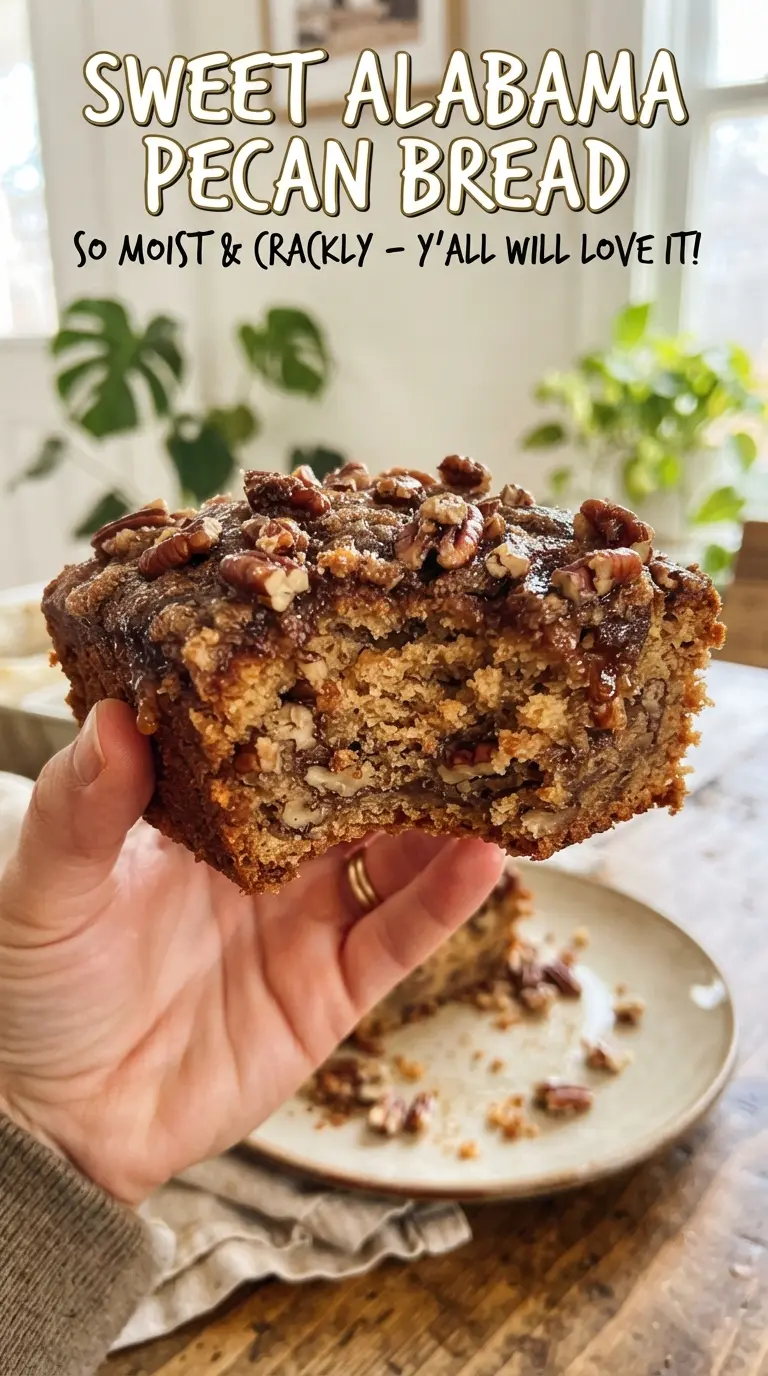
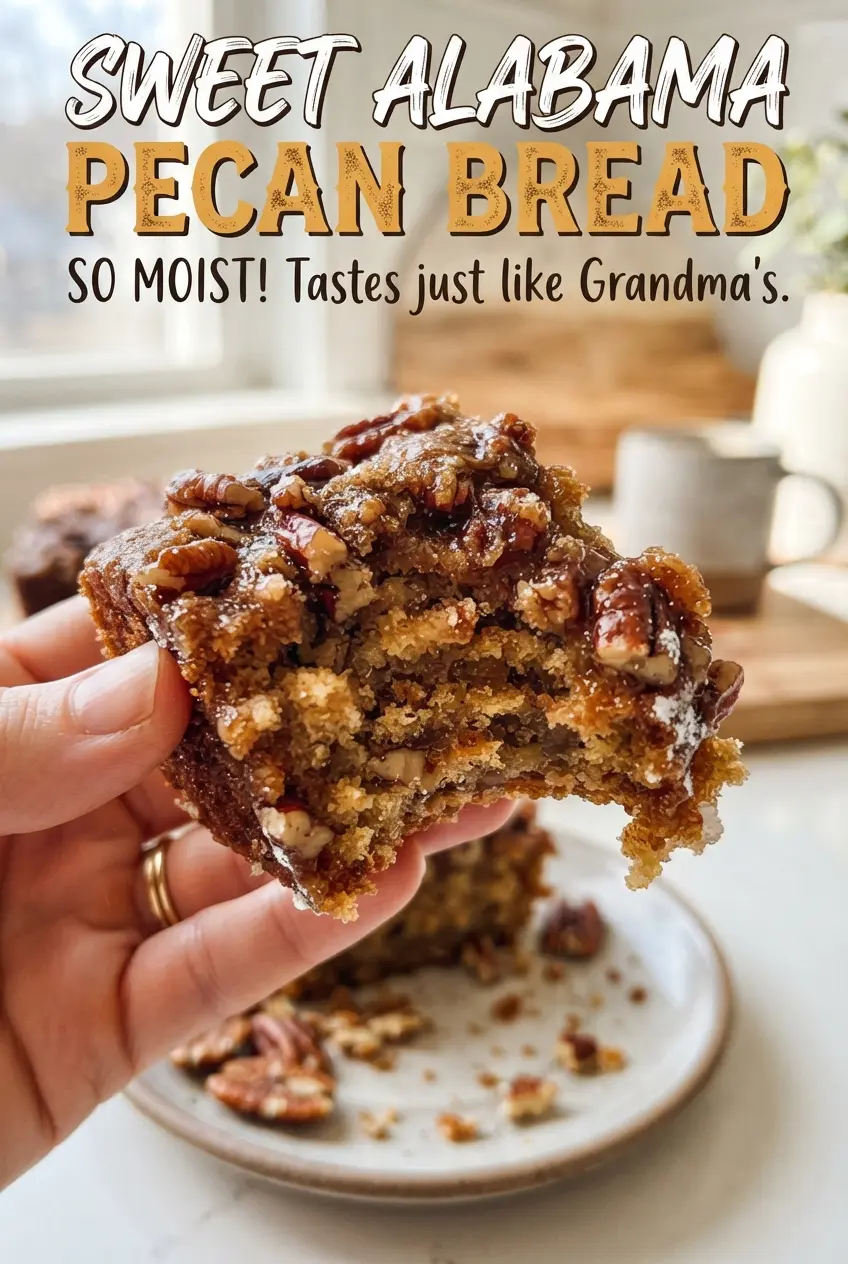
Sweet Alabama pecan bread bakes up with a buttery crumb, a crackly brown sugar top, and toasted pecans in every slice. It lands somewhere between quick bread and coffee cake, which is exactly why it disappears so fast at my house. The loaf stays tender for days, and the top turns deep golden with just enough crunch to make each slice feel special.
What gives this loaf its staying power is the balance of fat, acid, and texture. Buttermilk keeps the crumb soft and lightly tangy, while the butter and brown sugar build that rich, almost caramel-like base. Toasting the pecans matters here because raw pecans can taste flat once they’re baked into a tender batter; a few minutes in the oven wakes them up and makes the whole loaf taste more like itself.
Below, I’ve included the little details that keep the loaf from turning heavy and the topping from sinking. There’s also a few variation notes for making it gluten-free or adding a more dessert-like finish when you want to dress it up.
The loaf rose evenly, the pecans stayed on top instead of sinking, and the center was still moist the next day without being gummy.
Save this Sweet Alabama Pecan Bread for the days when you want a buttery pecan loaf with a crackly brown sugar top and a moist crumb.
The Reason This Loaf Stays Tender Instead of Dense
Quick breads like this one get heavy when the batter is overmixed or the butter-sugar base never gets enough air. Here, the butter and brown sugar need to be beaten until the mixture looks lighter in color and slightly fluffy. That step traps air in the batter, which helps the loaf rise without becoming cakey.
The other thing that matters is how the buttermilk goes in. Alternate it with the dry ingredients and stop mixing as soon as the flour disappears. If you stir until the batter looks perfectly smooth, the gluten tightens and the loaf turns tough around the edges. A few streaks are fine; they’ll vanish in the oven.
- Butter — Use it softened, not melted. Softened butter creams properly with the sugar and gives the loaf its tender, bakery-style crumb.
- Buttermilk — This adds tang and moisture, and its acidity works with the baking soda for lift. Plain milk won’t give the same depth or texture; if you’re out, use milk mixed with a little lemon juice or vinegar and let it sit 5 minutes.
- Pecans — Toast them first. That small step keeps the pecans from tasting bland inside the loaf and makes the topping taste more like caramel and nuts than just sweet bread.
- Brown sugar — There’s brown sugar in the batter and on top for a reason. Inside, it keeps the crumb moist; on top, it bakes into that crackly, candy-like lid.
What Each Part of the Batter Is Doing
- All-purpose flour — This gives the loaf enough structure to hold the pecans without turning crumbly. A 1:1 gluten-free baking blend can work here if it already includes xanthan gum.
- Baking powder and baking soda — Together, they give the bread lift and help it brown properly. The soda needs the buttermilk, so don’t swap that dairy ingredient blindly.
- Cinnamon — It doesn’t make the loaf taste like spice bread; it just warms the pecans and brown sugar. Leave it in even if you want a more classic Southern-style flavor.
- Eggs — These bind the batter and help the loaf hold together when sliced. Add them one at a time so they emulsify cleanly into the butter mixture instead of making it look curdled.
- Vanilla — A teaspoon is enough to round out the brown sugar and pecans. Use pure vanilla if you can, since the flavor shows up in a simple loaf like this.
Mixing the Batter Without Beating the Loaf Tough
Creaming the Butter and Sugar
Start by beating the softened butter and brown sugar until the mixture looks paler and a little fluffy. That usually takes a couple of minutes, and it’s worth the time because this is where the loaf gets its lightness. If the butter is too cold, the sugar won’t cut into it properly; if it’s melted, the loaf will bake up dense and greasy.
Adding the Dry Ingredients and Buttermilk
Stir the flour mixture and buttermilk into the bowl in alternating additions. The batter may look a little thick and slightly uneven at first, and that’s fine. The biggest mistake here is chasing a perfectly smooth batter, which usually means you’ve already mixed too much. Stop as soon as the flour disappears.
Folding in the Pecans and Baking the Top
Fold in one cup of the pecans, then spread the batter into the prepared loaf pan and scatter the rest on top with the extra brown sugar. The topping should sit across the surface in loose bits, not sink into the batter. Bake until the top is deeply golden and a toothpick comes out clean or with just a few moist crumbs. If the top browns too quickly before the center is done, tent it loosely with foil for the last 10 to 15 minutes.
Maple Pecan Finish
Drizzle a little warm maple glaze over the cooled loaf if you want a more dessert-like finish. It adds shine and a deeper caramel note, but wait until the bread is fully cool or the glaze will soak in and disappear.
Gluten-Free Version
Use a good 1:1 gluten-free flour blend in place of the all-purpose flour. The loaf will be a touch more delicate, so let it cool fully before slicing or it can crumble at the center.
Dairy-Free Swap
Use a plant-based butter and make a quick buttermilk substitute with unsweetened non-dairy milk plus 1 tablespoon vinegar or lemon juice. The texture will still be soft, though the flavor loses a little of the classic buttery finish.
Storage and Reheating
- Refrigerator: Store tightly wrapped for up to 5 days. The crumb stays moist, though the topping softens a bit after day one.
- Freezer: Freezes well. Wrap the cooled loaf or individual slices tightly in plastic and foil, then freeze for up to 2 months.
- Reheating: Warm slices in a 300F oven for about 8 minutes or toast them lightly. Microwaving too long makes the pecans soft and the crumb rubbery, so keep it brief if that’s your only option.
Answers to the Questions Worth Asking
Sweet Alabama Pecan Bread
Ingredients
Equipment
Method
- Preheat the oven to 350F, then grease and line a 9x5-inch loaf pan. Keep the pan ready so the batter can go in right after mixing.
- Whisk the all-purpose flour, baking powder, baking soda, salt, and ground cinnamon together. Whisk until the spices are evenly distributed with no visible clumps.
- Beat the butter and packed brown sugar until fluffy, then beat in the eggs one at a time and mix in the vanilla extract. Stop when the mixture looks smooth and slightly lighter in color.
- Add the dry ingredients alternately with the buttermilk, mixing just until combined. Mix only until you no longer see streaks of flour for a tender crumb (do not overmix).
- Fold in 1 cup of the toasted and chopped pecans, then pour the batter into the loaf pan. Scrape the bowl so the batter is evenly filled with pecan pieces throughout.
- Top the batter with the remaining pecans and 2 tablespoons of brown sugar for topping. Aim for an even layer so the top bakes crackly and toasted.
- Bake for 55-60 minutes at 350F, until a toothpick comes out clean. Look for a golden top with toasted pecans and a loaf that pulls slightly from the pan sides.
- Cool the bread for 15 minutes in the pan before slicing. This helps the crumb set so the loaf slices cleanly without falling apart.