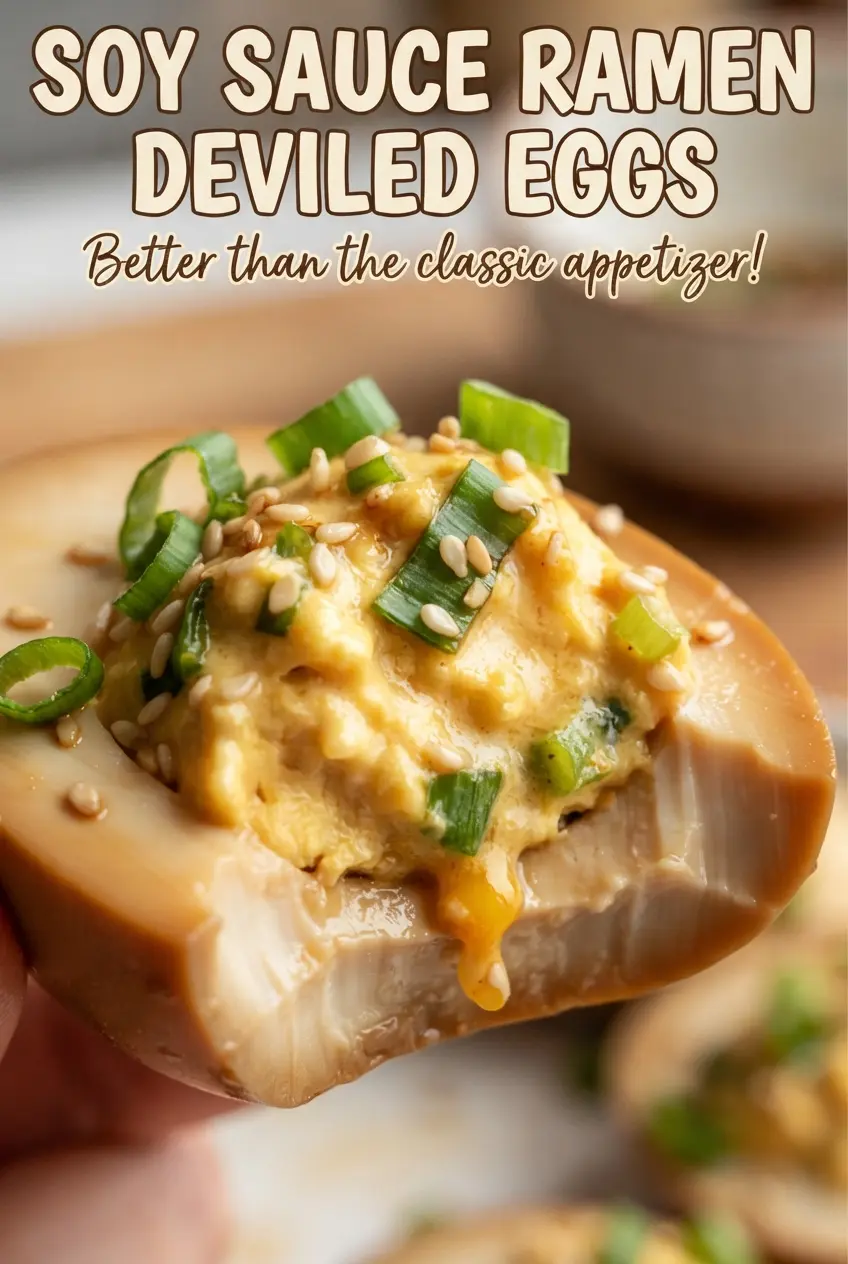
Amber-stained egg whites and a creamy yolk filling make these soy sauce ramen deviled eggs stand out before the platter even hits the table. The whites take on a deep savory edge from the soy-mirin marinade, while the filling stays rich and smooth with just enough sesame and heat to keep each bite moving. They taste familiar in the way a good deviled egg should, but there’s an extra layer of umami that makes people reach for a second one before they finish the first.
The trick is giving the peeled eggs enough time in the marinade for the whites to pick up color and seasoning without turning rubbery. A short bath of soy sauce, water, mirin, and sugar does the job if the eggs are fully submerged. The yolk mixture stays balanced because Japanese mayonnaise is softer and slightly sweeter than standard mayo, which keeps the filling from tasting heavy against the salty shells.
Below, you’ll find the timing that keeps the whites tender, the ingredient choices that matter most, and a few smart ways to adapt these for different diets or make-ahead prep.
The soy marinade gave the egg whites this gorgeous amber color and the filling stayed silky instead of grainy. I brought them to a potluck and the tray disappeared before the mains came out.
Love the amber soy-marinaded eggs and creamy ramen-style filling? Save these deviled eggs for the next appetizer spread.
The Marinade Window That Gives You Color Without Toughening the Whites
The biggest mistake with soy sauce deviled eggs is leaving the eggs in the marinade too long and expecting more flavor to equal better flavor. Egg whites absorb salt fast, and after a point they stop tasting seasoned and start tasting dense. Four hours is the sweet spot here: enough time for that amber color and savory edge, not so long that the texture turns chewy.
The other thing that matters is getting the eggs fully peeled before they go into the marinade. Any bits of shell left behind block the color and leave pale patches. Keep the liquid deep enough to cover the eggs, and turn them once or twice if they float up. That gives you even color all around, which is what makes these look finished instead of spotty.
What the Soy Sauce, Mirin, and Japanese Mayo Are Each Doing Here
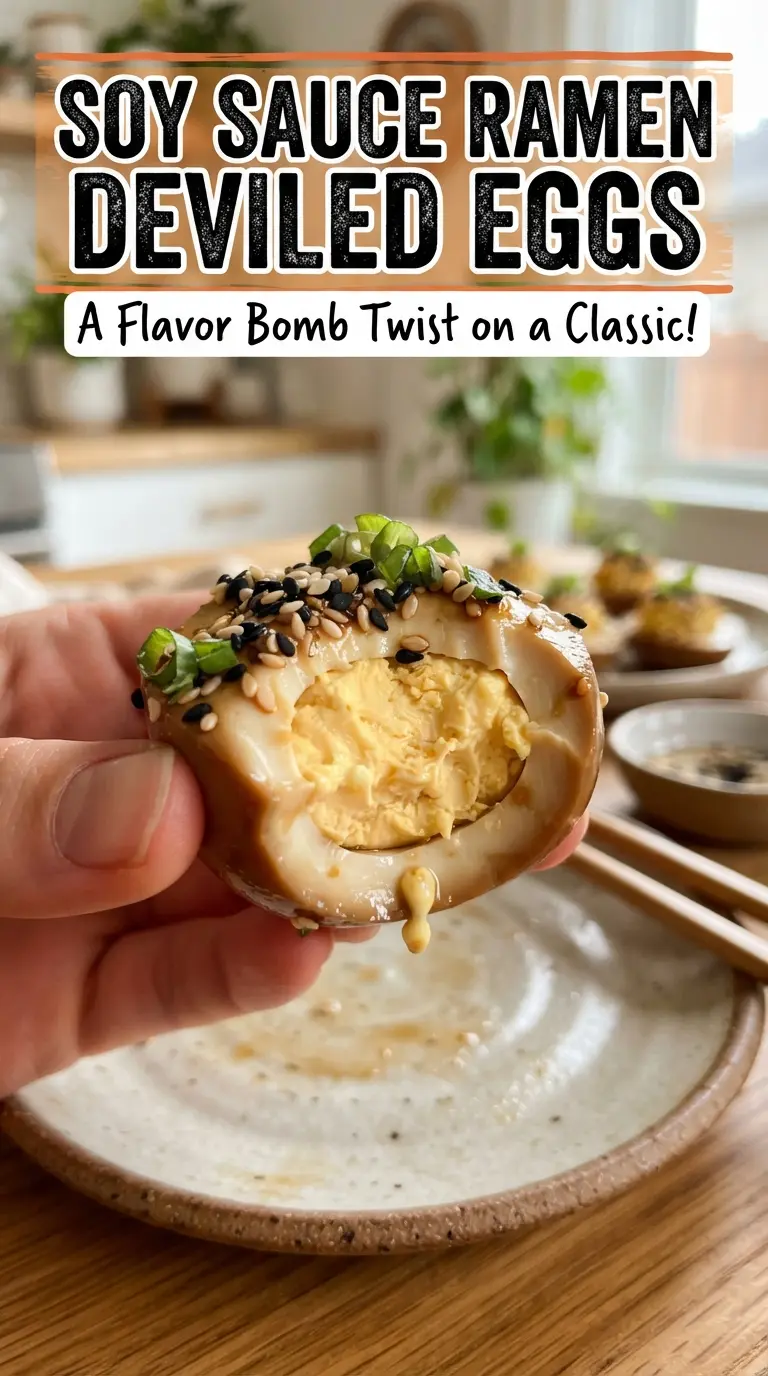
- Soy sauce — This gives the whites their color and the deep savory backbone. Regular soy sauce works best because it stains evenly and brings enough salt to season the egg whites without needing extra help.
- Mirin — This rounds out the soy with a little sweetness and gloss. If you skip it, the marinade tastes flatter and harsher, so a mix of 1 teaspoon sugar plus a splash of rice vinegar is the closest backup.
- Japanese mayonnaise — This makes the filling silkier and richer than standard mayo. Kewpie-style mayo is ideal, but if you only have regular mayonnaise, add a tiny pinch more sugar and a drop more rice vinegar to soften the sharper edge.
- Sesame oil — A little goes a long way. It perfumes the filling without making it greasy, so keep the measure small or the filling will taste heavy.
- Rice vinegar and sriracha — These keep the yolks from tasting flat. The vinegar brightens the filling, and the sriracha adds enough heat to cut through the richness without turning the eggs spicy.
Building the Filling So It Stays Smooth and Balanced
Boiling and Shocking the Eggs
Start with fully cooked yolks and a clean peel, because the rest of the recipe depends on those whites staying intact. A 10-minute boil gives you set yolks that mash smoothly without turning chalky, and the ice bath stops carryover cooking. If the shells cling, the eggs were probably too fresh; older eggs peel more cleanly and save you from tearing the whites.
Marinating for Color and Seasoning
Whisk the soy sauce, water, mirin, and sugar until the sugar dissolves, then submerge the peeled eggs right away. The marinade should taste salty-sweet, not harsh, because the whites will take on even more edge as they sit. Four hours in the fridge gives you that deep amber color; overnight will push them too far and make the texture firmer than you want.
Mashing the Yolks Until Creamy
Break the yolks down while they’re still warm from the fridge, then work in the mayonnaise, sesame oil, rice vinegar, and sriracha until the mixture is smooth. If the filling looks dry or sandy, the yolks weren’t mashed finely enough before the mayo went in. A fork works fine, but a small sieve or the back of a spoon gives you the softest filling if you want a cleaner pipe.
Filling and Finishing the Platter
Dry the egg whites lightly before filling them so the yolk mixture doesn’t slide. Pipe or spoon the filling into the centers, then finish with sesame seeds, thin nori strips, and green onions for crunch and a clean, savory top note. Add the garnishes right before serving; nori softens fast once it hits moisture, and you want that little bit of texture contrast.
How to Adapt These Deviled Eggs for Different Tables
Make Them Less Salty Without Losing the Soy Flavor
Use the full amount of water in the marinade and keep the soak to 3 to 4 hours instead of stretching it longer. That softens the salt hit while still giving the whites their color. You’ll lose a little intensity, but the eggs taste cleaner and the filling has more room to shine.
Gluten-Free Version That Still Tastes Right
Use a certified gluten-free soy sauce or tamari in place of regular soy sauce. The color and savory depth stay nearly the same, and the rest of the recipe is naturally gluten-free. Check the mayonnaise and sriracha labels if you’re serving someone with a strict allergy.
No Japanese Mayo? Use What You Have
Regular mayonnaise works, but the filling will taste a little sharper and less plush. Add a pinch of sugar and an extra few drops of rice vinegar to round it out, then taste before adding more. The texture stays creamy, but it won’t have quite the same gentle sweetness.
Storage and Reheating
- Refrigerator: Store assembled deviled eggs covered for up to 2 days. The whites stay flavorful, but the garnish softens after the first day.
- Freezer: Don’t freeze these. Egg whites turn rubbery and the filling separates once thawed.
- Reheating: These are best served cold. If they’ve been in the fridge, let them sit out for 10 to 15 minutes before serving so the filling loses its chill and tastes fuller.
Questions I Get Asked About This Recipe
Soy Sauce Ramen Deviled Eggs
Ingredients
Equipment
Method
- Bring a pot of water to a boil, then boil the eggs for 10 minutes. As soon as they are done, chill in an ice bath, then peel the eggs.
- Whisk soy sauce, water, mirin, and sugar until the sugar dissolves. Submerge the peeled eggs and marinate in the fridge for 4 hours.
- Halve the marinated eggs lengthwise and remove the yolks. Mash the yolks with Japanese mayonnaise, sesame oil, rice vinegar, and sriracha until smooth.
- Pipe the yolk mixture into the amber egg whites. Top with toasted sesame seeds, thin nori strips, and sliced green onions.