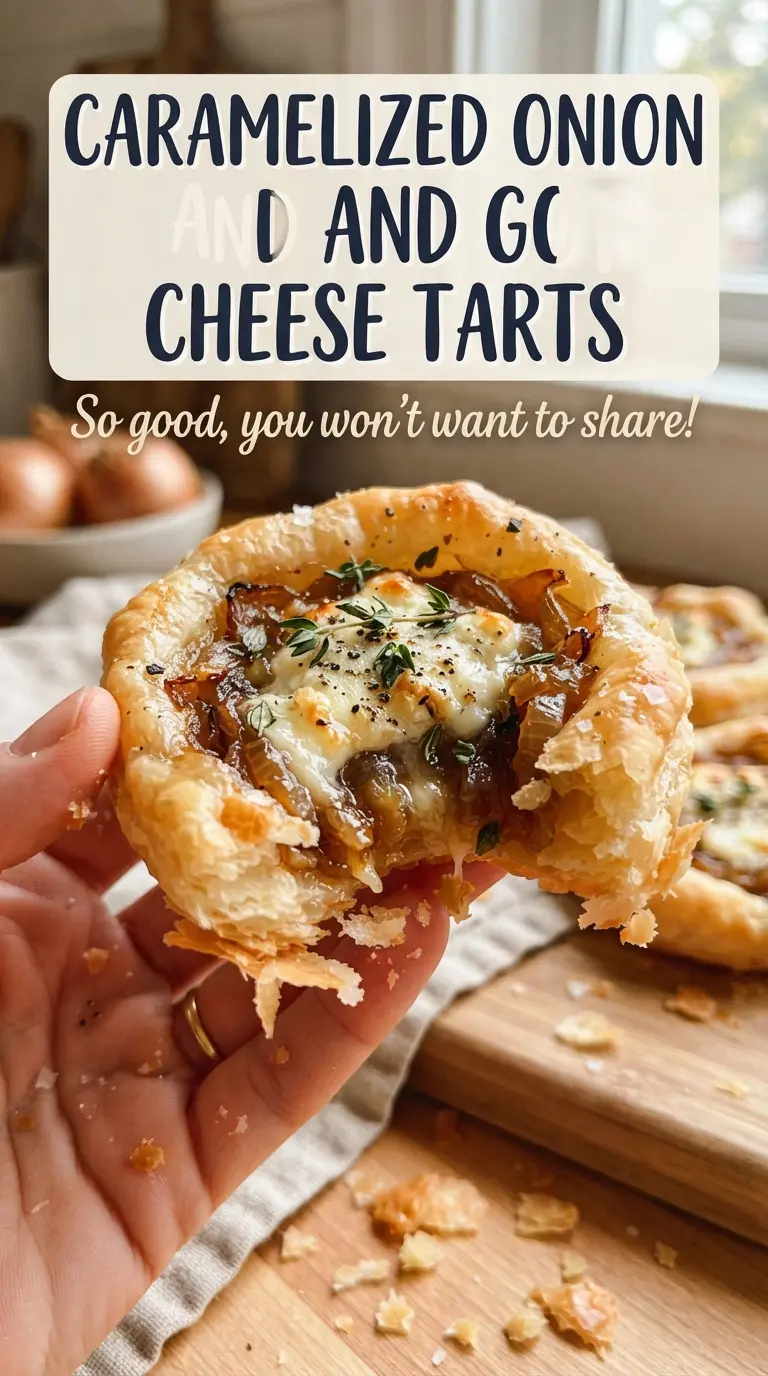
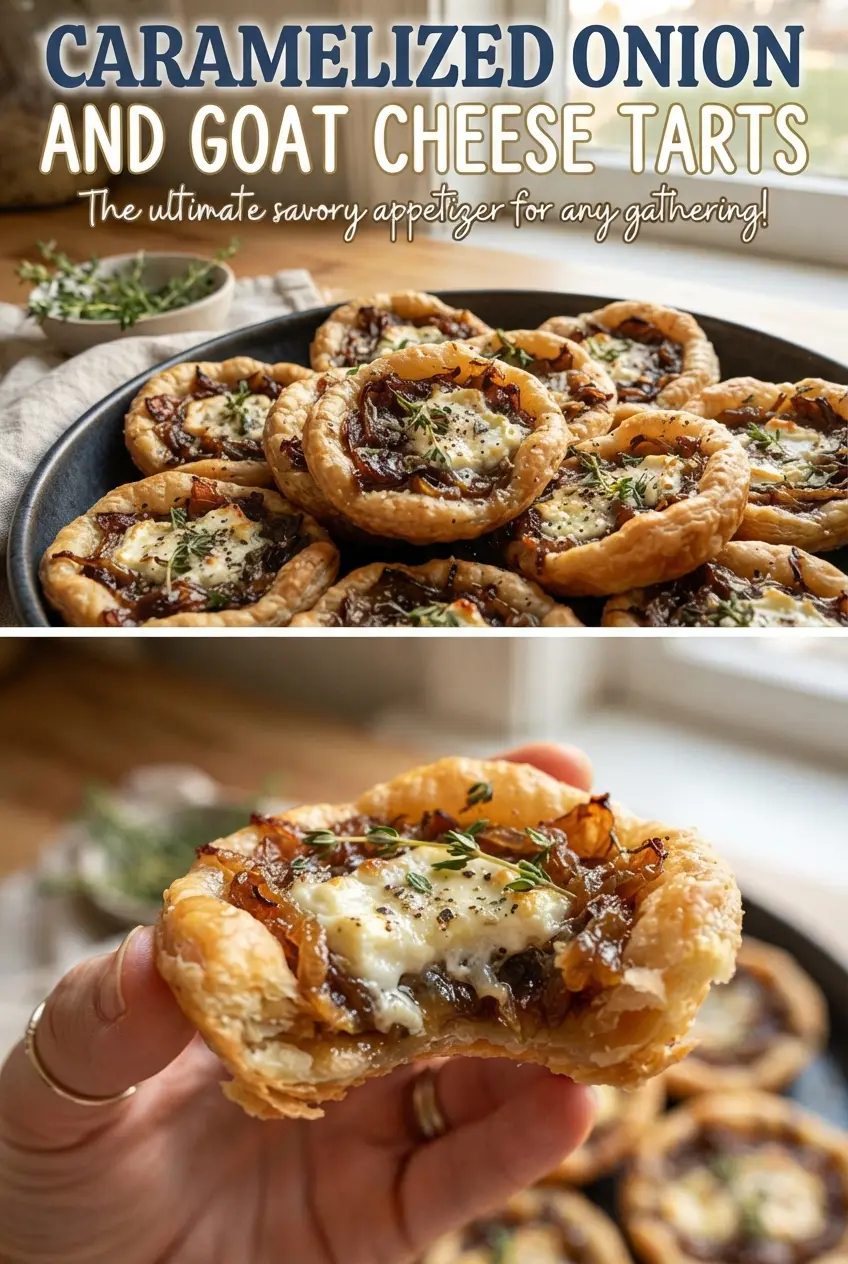
Caramelized onion and goat cheese tarts hit that sweet spot between elegant and easy. The puff pastry bakes into crisp, buttery layers while the onions turn deep amber and jammy underneath, and the goat cheese adds just enough tang to keep each bite from feeling heavy. Finished with a little honey and thyme, they taste like something you’d put out for guests even though the work is mostly just patience at the stove.
The onions are the whole story here. They need low heat and time, not speed, so they soften first, then slowly build color until they taste sweet and concentrated instead of sharp. A splash of balsamic and a pinch of brown sugar deepen that flavor without making the filling sugary, and letting the mixture cool a bit before it goes on the pastry helps keep the centers from turning soggy.
Below, I’ve included the small details that matter most, from getting the onions properly jammy to keeping the pastry edges tall and crisp. There’s also a note on swaps and storage, because these tarts are excellent warm from the oven but still hold up well if you want to serve them later.
The onions got perfectly jammy and the pastry stayed crisp underneath, even after sitting out for our party. The honey at the end made the goat cheese taste even better.
Save these caramelized onion and goat cheese tarts for the appetizer that brings together crisp puff pastry, jammy onions, and a honey finish.
The Reason These Tarts Stay Crisp Instead of Going Soft
The main risk with any puff pastry tart is moisture. Caramelized onions carry a lot of it, and if they go onto the pastry piping hot, the bottom starts to steam before the oven ever has a chance to crisp it. Letting the onions cool just enough to stop sizzling is the difference between a tart with lift and one with a damp center.
Scoring a border around each square matters more than it sounds. That shallow cut gives the edges room to rise while the center stays flatter and acts like a little platform for the filling. Pricking the middle keeps the pastry from ballooning where you want the onions and cheese to sit.
What the Onion, Cheese, and Pastry Are Each Doing Here
- Yellow onions — These are the backbone of the filling. They soften into sweetness and pick up that deep savory edge only slow caramelization can build. Red onions work in a pinch, but they cook a little faster and taste sharper, so the result won’t be as mellow.
- Puff pastry — Buy the all-butter version if you can. It bakes up with better flavor and a more pronounced lift, which matters here because the pastry is carrying the whole tart. Keep it cold until you cut it so the edges puff instead of melting flat.
- Goat cheese — This gives the tart its tang and creaminess. Feta can substitute, but it’s saltier and crumblier, so use a lighter hand. If you want a milder finish, use a soft chèvre log and crumble it loosely over the onions.
- Balsamic vinegar and brown sugar — These aren’t there to make the onions taste sweet; they round out the sharpness and deepen the color. The amount is small, but it makes the filling taste finished.
- Honey — Add it after baking, not before. It would burn in the oven, but on the hot tart it softens into a glossy finish that plays nicely with the goat cheese.
Building the Onions So They Taste Sweet, Not Burned
Slowly softening the onions
Start the onions over medium-low heat with the butter and olive oil, and give them time. They’ll first look wet and slippery, then turn soft and translucent, and only later begin to deepen in color. If the pan is too hot, the edges will brown before the centers melt down, which gives you bitter spots instead of the rounded, jammy texture you want.
Cooking off the moisture
Stir often and scrape the bottom of the pan as the onions release liquid. That liquid has to evaporate before the caramelization really happens. If the pan starts looking dry and the onions threaten to stick, lower the heat instead of adding more fat; extra butter won’t fix heat that’s too high.
Finishing the filling
Once the onions are deep golden, stir in the thyme, balsamic, and brown sugar, then season with salt and pepper. The balsamic should smell sharp for a moment and then mellow into the onions as it cooks off. Cool the mixture a bit before spooning it on the pastry so the tart shells bake up crisp.
Baking the tartlets
Keep the pastry squares cold until they go into the oven. Brush only the border with egg so the center stays lighter and the onion mixture doesn’t slide around. Bake until the edges are tall, flaky, and deeply golden; underbaked pastry looks pale and feels soft in the middle, even if the top seems done.
How to Adapt These Tarts Without Losing the Good Part
Make Them Ahead for a Party
Caramelize the onions up to two days ahead and keep them refrigerated. You can also cut and score the pastry squares in advance, but wait to add the filling and egg wash until just before baking so the pastry stays crisp and doesn’t lose its lift.
Dairy-Free Version
Use a plant-based butter and choose a dairy-free puff pastry if needed. You’ll lose a little of the rich finish from the goat cheese, so add a few extra thyme leaves and a tiny pinch of flaky salt after baking to keep the flavor balanced.
Swap the Goat Cheese for Something Milder
Ricotta works if you want a gentler, creamier center, but it won’t give you the same tang. Drain it first so it doesn’t water down the pastry, and add a little extra pepper or thyme to keep the filling from tasting flat.
Gluten-Free Option
Use a gluten-free puff pastry made for baking, not a pie crust substitute. The texture won’t puff quite as high, but the method stays the same, and the onion filling still gives you that sweet-savory contrast.
Storage and Reheating
- Refrigerator: Store leftovers in an airtight container for up to 3 days. The pastry softens a little, but the flavor stays excellent.
- Freezer: Freeze baked tarts on a tray, then move them to a freezer bag for up to 1 month. Reheat from frozen rather than thawing so the pastry has a better chance of crisping back up.
- Reheating: Warm in a 375F oven for 8-10 minutes, or until the pastry is hot and re-crisped. The microwave makes the crust soggy, so skip it if you want the edges to stay flaky.
Answers to the Questions Worth Asking
Caramelized Onion and Goat Cheese Tarts
Ingredients
Equipment
Method
- Heat butter and olive oil over medium-low heat, then add the thinly sliced yellow onions. Cook for 30-35 minutes, stirring often, until deep golden and jammy.
- Stir in fresh thyme leaves, balsamic vinegar, and brown sugar, then season with salt and pepper. Cool slightly before assembling.
- Preheat the oven to 400°F. Cut puff pastry into 12 squares and place them on a lined baking sheet.
- Score a 1/2-inch border around each puff pastry square, then prick the centers with a fork. Brush the borders with the beaten egg.
- Spoon the caramelized onions into the centers of each scored pastry square. Top each tartlet with crumbled goat cheese.
- Bake at 400°F for 15-18 minutes until the pastry is puffed and golden.
- Drizzle honey over the warm tartlets. Garnish with additional thyme leaves and serve warm.