Apple cider braised pork shoulder turns a humble cut into something soft enough to pull apart with a fork and rich enough to feel like it cooked all day on purpose. The pork comes out deeply savory, the sauce lands somewhere between sweet and tangy, and the apples hold just enough shape to give each bite a little contrast instead of dissolving into mush.
The key is building flavor in layers. Browning the pork first gives the braise a dark, meaty backbone, and the onion, garlic, cider, Dijon, and vinegar pick up every browned bit from the pan. The apples go in later so they soften without disappearing, and the fresh rosemary and thyme keep the sauce from tasting flat or sugary.
Below, I’ve included the small details that matter most: how to keep the braising liquid balanced, when to add the apples so they stay intact, and what to do if you want to make this ahead for an easier dinner later in the week.
The pork shredded perfectly after the full braise, and the cider sauce reduced down to this glossy, savory-sweet gravy that coated everything without being too thin.
Save this Apple Cider Braised Pork Shoulder for the kind of dinner where you want fork-tender pork, apples, and a cider pan sauce with almost no extra fuss.
The Braise Works Because the Pork Stays in Big Pieces First
With pork shoulder, the mistake is rushing straight to shredding. The meat needs time in a covered braise while it stays in large chunks so the collagen can break down slowly and the outside doesn’t dry out before the center is tender. If you cut it too small at the start, it can turn stringy before it ever gets buttery-soft.
The other part that matters is managing the liquid after the sear. You want enough cider and broth to create steam and flavor, but not so much that the pork boils. A gentle braise gives you tenderness; a hard simmer tightens the meat and muddies the sauce.
What the Apples, Cider, and Mustard Are Doing Here
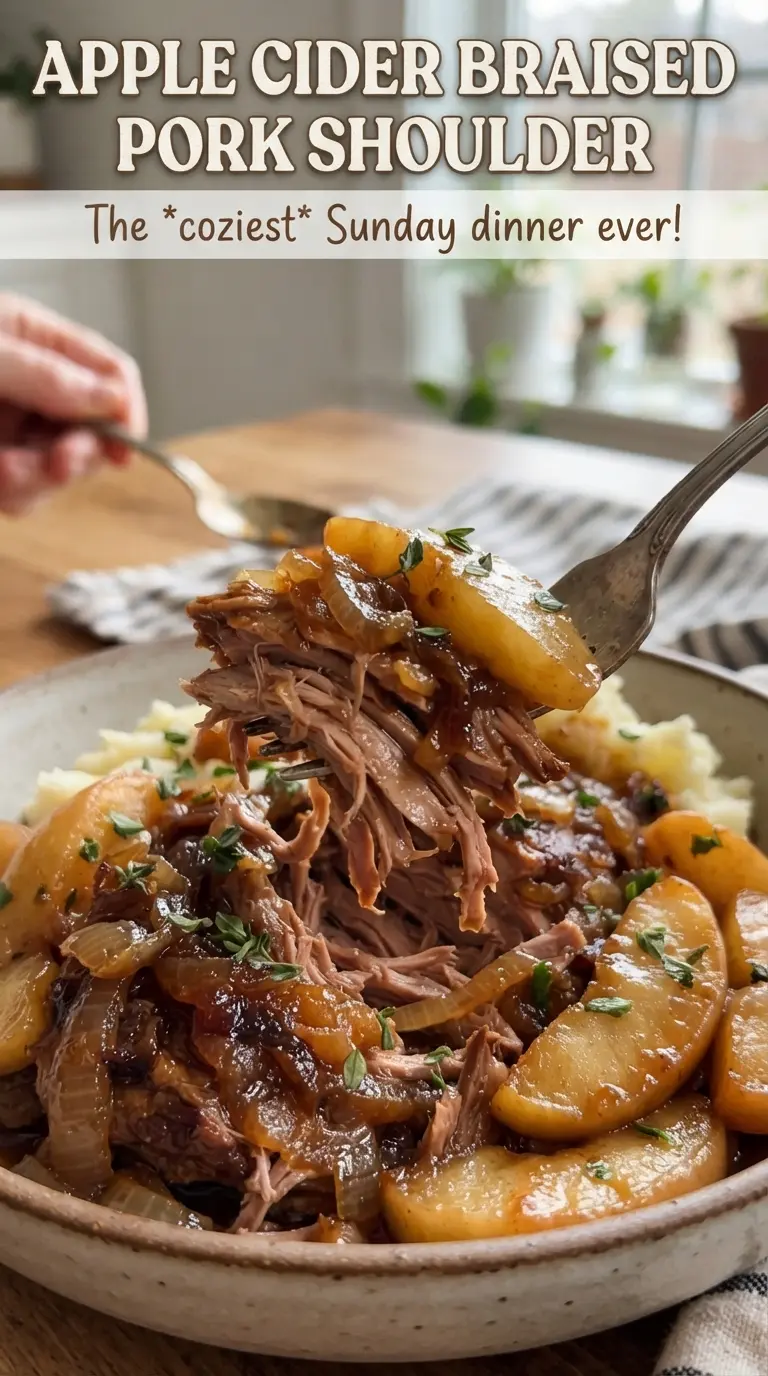
- Pork shoulder — This cut has enough fat and connective tissue to braise into something silky. Loin won’t give you the same result; it dries out before it gets tender.
- Apple cider — Use unfiltered cider if you can. It gives the sauce body and a rounder apple flavor than clear juice, which can taste thin and one-note after a long cook.
- Dijon mustard — Dijon sharpens the sauce and helps balance the brown sugar. It doesn’t make the dish taste mustardy; it keeps the cider from leaning sweet.
- Apples — Choose firm apples that hold shape during cooking. Softer varieties will collapse into the sauce, which is fine if that’s what you want, but you’ll lose those soft, distinct pieces in the finished pot.
- Fresh thyme and rosemary — Dried herbs can work in a pinch, but fresh herbs give the braise a cleaner, woodsy finish that stands up to the cider.
Building the Braise So the Sauce Ends Up Glossy, Not Watery
Seasoning and searing the pork
Coat the pork with salt, pepper, and smoked paprika before it hits the pan. When the oil is hot enough, the meat should sizzle immediately and release only after a deep brown crust forms; if it sticks, it needs another minute. That crust is what gives the sauce its color and depth later, so don’t crowd the pieces or you’ll steam them instead of browning them.
Cooking the onion and deglazing
Let the onion soften in the same pot until it turns translucent and picks up a little color from the bottom of the pan. Add the garlic for just a minute so it smells sweet instead of bitter. When you pour in the cider, broth, vinegar, Dijon, and brown sugar, scrape the pot well; those browned bits dissolve into the sauce and carry most of the flavor.
Braising until the meat yields
Return the pork with the thyme and rosemary, cover the pot, and braise until the meat is beginning to loosen but not yet falling apart. The liquid should stay at a gentle simmer, not a bubbling boil. If the oven runs hot and the sauce starts to reduce too fast, crack the lid slightly or lower the temperature a bit so the pork stays moist.
Adding the apples at the end
The apples go in only for the last 45 minutes. That gives them time to soften and absorb the cider sauce without dissolving into the background. When the pork is fork-tender, lift it out, shred it in large pieces, and simmer the sauce on the stove for about 10 minutes so it turns glossy and lightly thickened before serving.
How to Adapt This Braised Pork Shoulder Without Losing the Good Part
Make it more savory
Add a splash of soy sauce or Worcestershire to the braising liquid. It deepens the sauce without making it taste smoky or salty in a loud way, and it helps the cider feel less sweet against the pork.
Make it gluten-free
The recipe is naturally gluten-free as written if your Dijon and broth are certified gluten-free. Check the labels on both, because those are the two ingredients most likely to hide wheat in a processed version.
Swap the apples
If you don’t have firm apples, pears can work. They’ll soften a little faster and taste sweeter, so pull the pot once they’re just tender instead of waiting for them to take on too much color.
Use boneless or bone-in shoulder
Bone-in pork shoulder works too, but it usually needs a little more time in the oven. Boneless is easier to cut into large pieces and shred cleanly, while bone-in brings a touch more flavor to the pot.
Storage and Reheating
- Refrigerator: Store the pork and sauce in an airtight container for up to 4 days. The flavor gets deeper by day two, and the sauce will thicken as it chills.
- Freezer: This freezes well for up to 3 months. Freeze the pork with plenty of sauce so the meat stays moist when reheated.
- Reheating: Reheat gently on the stove over low heat or covered in a 300F oven until hot. Don’t blast it in the microwave on high; that’s the fastest way to dry out braised pork and make the sauce separate.
Answers to the Questions Worth Asking
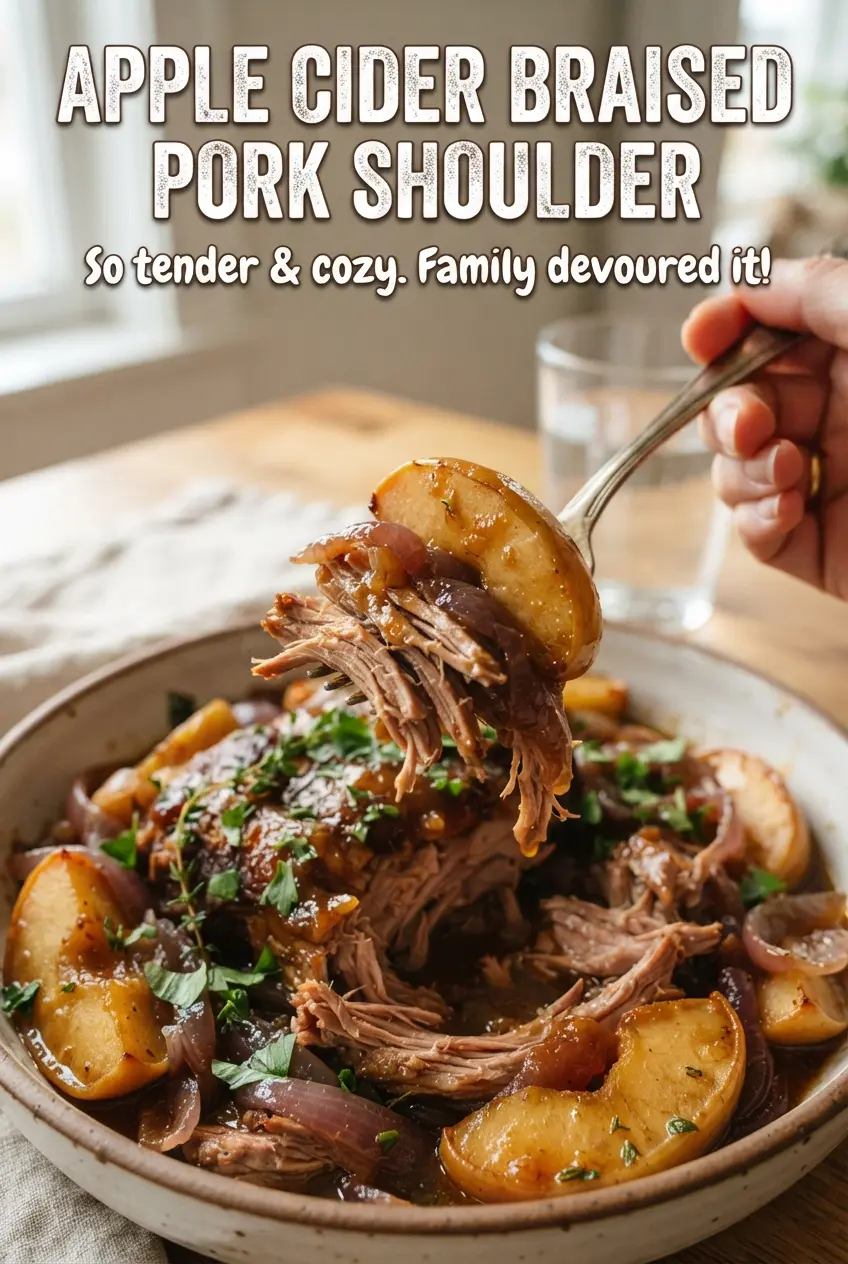
Apple Cider Braised Pork Shoulder
Ingredients
Equipment
Method
- Preheat the oven to 325F, then season the pork with salt, black pepper, and smoked paprika.
- Heat the olive oil in a Dutch oven until hot and ready for searing.
- Sear the pork in the hot oil in the Dutch oven for 4-5 minutes per side until well browned, then remove.
- Cook the onion for 5 minutes, then add the garlic and cook for 1 minute.
- Stir in the apple cider, chicken broth, apple cider vinegar, Dijon mustard, and brown sugar, scraping up the browned bits.
- Return the pork to the Dutch oven with the thyme and rosemary, cover, and braise for 2 1/2 hours at 325F.
- Add the apples, then braise covered for 45 minutes more until the pork is fork-tender.
- Shred the pork into large pieces.
- Simmer the braising liquid on the stove for 10 minutes to reduce, then serve the pork with the sauce and apples.