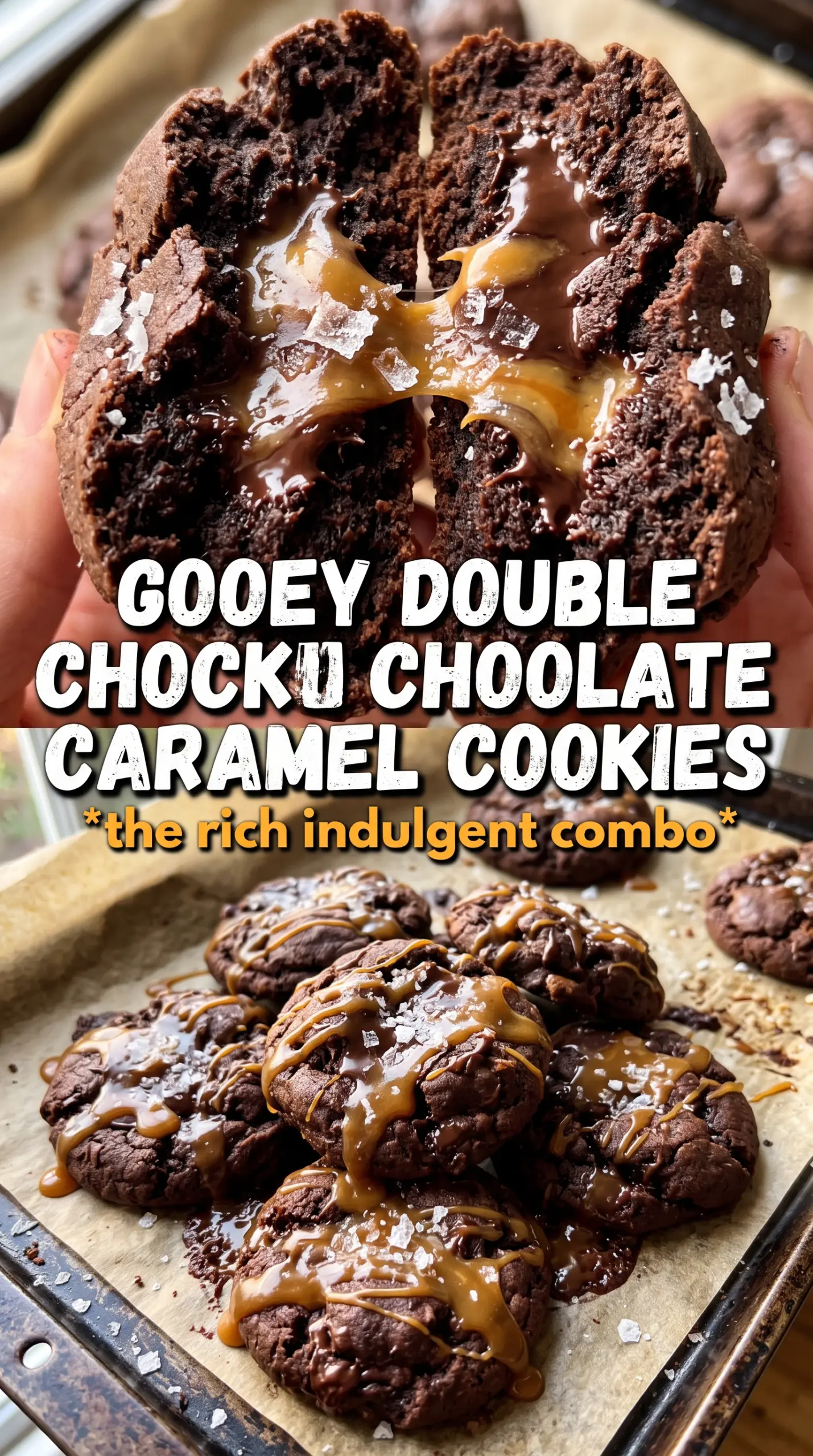
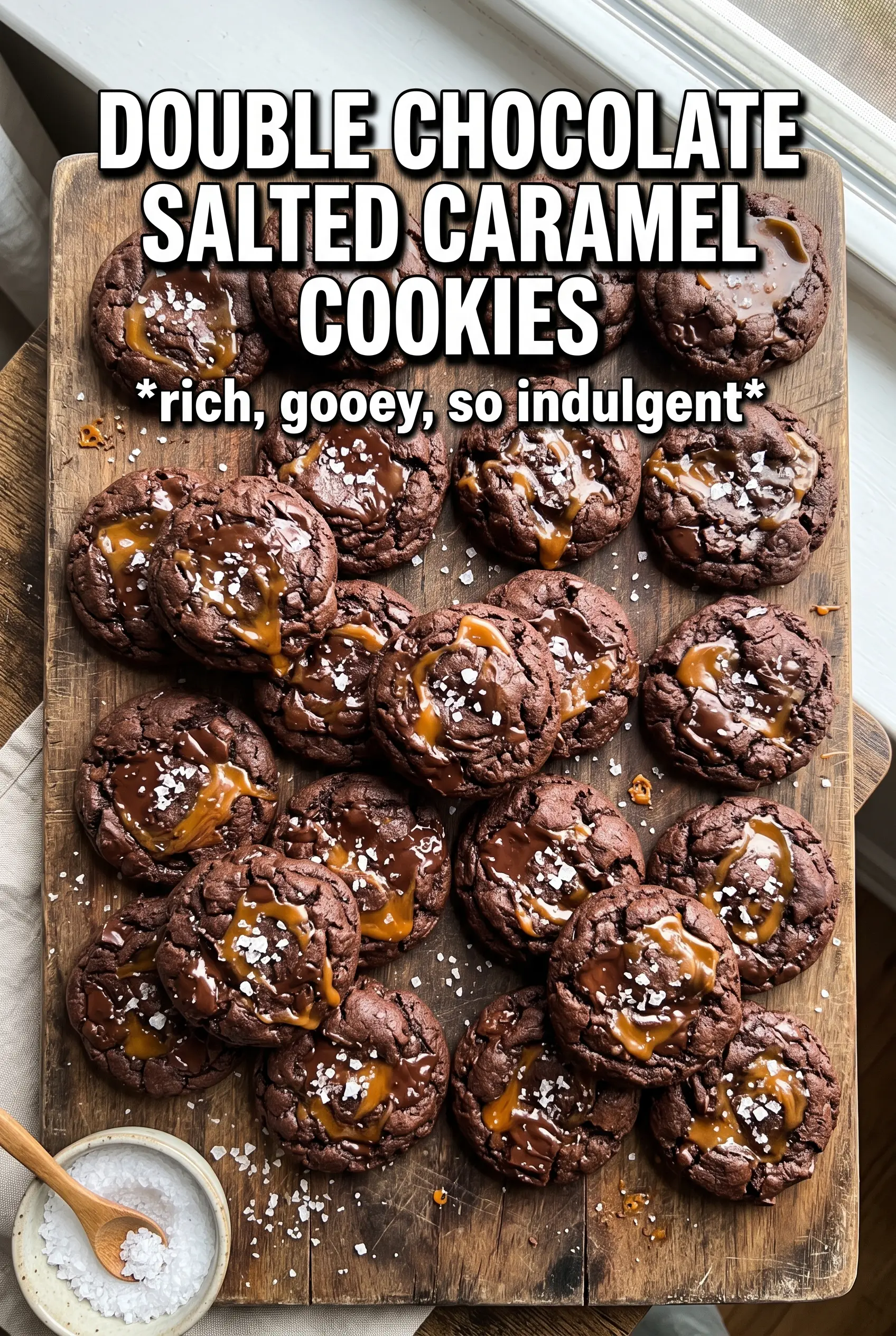
These cookies bake up with crisp edges, a fudgy chocolate center, and a caramel pocket that turns molten the second you break one open. The flaky sea salt on top keeps all that richness in check, so each bite lands with a little crunch, a little chew, and a warm pull of caramel that makes the whole tray disappear fast.
The trick is in the dough texture and the way the caramel gets enclosed. A thick, well-chilled dough seals around the candy better, which keeps the caramel from leaking across the pan. Cocoa powder deepens the chocolate flavor without making the cookies cakey, and the dark chocolate chips give you those glossy puddles that stay soft after baking.
Below, I’m walking through the small details that matter here: how to keep the caramel tucked inside, why the cookies need to be flattened before baking, and how to get that dramatic salted finish while the centers are still hot.
The caramel stayed right in the middle and didn’t leak out, and the cookies were still soft the next day. I baked mine right at 11 minutes and they came out fudgy with those little chocolate puddles on top.
Save these double chocolate salted caramel cookies for when you want fudgy centers, gooey caramel, and a flaky sea salt finish in every bite.
The caramel leak problem nobody warns you about
The difference between a neat molten center and a caramel spill is how well the dough gets sealed. If the caramel sits even a little too close to the surface, it melts out before the cookie sets, which leaves you with a lacy edge and a sticky pan instead of that clean pull-apart middle. Flattening the dough slightly before wrapping it makes it easier to close the seam without overworking the dough.
The other thing that matters is bake time. These need to come out when the edges look set and the centers still look a little underbaked. That short window keeps the cookies fudgy instead of dry, and the carryover heat finishes the middle while the caramel stays soft.
- Cocoa powder — Use natural unsweetened cocoa here. It gives the dough its deep chocolate base without adding extra fat or sweetness, which keeps the cookies from tasting flat.
- Brown sugar — This is what gives the dough chew and moisture. Light or dark brown sugar both work, but dark brown sugar adds a deeper molasses note that pairs nicely with caramel.
- Dark chocolate chips — Chips hold their shape better than chopped chocolate, but chopped chocolate gives you bigger puddles. Either works; choose chips if you want cleaner pockets of chocolate, or chopped bars if you want a more dramatic melt.
- Soft caramels — Use soft, chewy candies, not hard caramels. Hard caramels won’t melt into the center the same way, and they can turn the cookies awkwardly firm in the middle instead of gooey.
- Flaky sea salt — Add it right after baking while the surface is still warm and tacky. That’s what helps the salt cling and gives you the sharp contrast that makes the chocolate taste even deeper.
What Each Ingredient Is Actually Doing in This Recipe
- Primary ingredient (the star) — Quality matters most. Choose the best you can find.
- Cooking medium (oil, butter, or broth) — This carries flavors and prevents dryness.
- Seasonings (salt, pepper, spices, herbs) — Layer flavors so nothing overpowers. Build depth gradually.
- Aromatics (garlic, onion, herbs) — Cook with fat to bloom flavors. Become the foundation.
- Supporting ingredients — Complement the main ingredient without overpowering it.
- Sauce or liquid (if applicable) — Brings flavors together. Balance richness with acid.
- Acid (lemon, vinegar, wine, or other) — Brightens and prevents flat-tasting results.
- Final finish (garnish, glaze, or sauce) — Prevents one-dimensional taste and adds visual appeal.
Building the dough around the caramel without breaking the cookies
Whisk the dry ingredients first
Whisk the flour, cocoa, baking soda, and salt until the color looks uniform and no cocoa streaks remain. Cocoa tends to clump, and those clumps turn into dry pockets if you rush this part. This step also spreads the baking soda evenly, which helps the cookies rise without getting a bitter bite in one corner.
Cream the butter and sugars until the mixture looks pale
Beat the softened butter with both sugars until the mixture turns noticeably lighter and fluffier. That air gives the cookies their lift and keeps the texture tender instead of dense. If the butter is too cold, the mixture stays grainy; if it’s melted, the cookies spread too fast and can’t hold the caramel.
Fold in the chocolate chips and shape the centers
Once the dough comes together, fold in the chips just until distributed. Scoop 2-tablespoon portions, flatten each one slightly, and place a caramel in the middle before sealing the dough completely around it. Any tiny opening becomes a leak in the oven, so pinch the seam closed and roll it smooth before it hits the pan.
Bake until the edges set and the tops look soft
Bake at 375°F for 10 to 12 minutes, watching for set edges and puffy centers that still look a little soft. That’s the sweet spot for a fudgy cookie with a molten middle. Pull them from the oven before the tops look fully dry, then sprinkle with flaky salt right away so it sticks while the surface is hot.
Extra dark and a little less sweet
Use chopped dark chocolate instead of chips and add an extra tablespoon of cocoa. The result is deeper and more grown-up, with less sweetness pushing against the caramel. It still bakes into soft puddles, but the chocolate takes the lead.
Gluten-free version
Swap in a 1:1 gluten-free flour blend that includes xanthan gum. The dough may feel slightly softer, so chill it for 20 to 30 minutes before shaping. That extra rest helps the cookies hold their shape and keeps the caramel centered.
Dairy-free version
Use a plant-based butter that behaves like stick butter and choose dairy-free caramels if you can find them. The texture comes close, though the cookies may spread a touch more and the caramel flavor can be milder. Chilling the dough before baking helps keep the centers sealed.
Storage and Reheating
- Refrigerator: Store in an airtight container for up to 5 days. The caramel firms up as they sit, but the cookies stay soft at room temperature.
- Freezer: Freeze baked cookies for up to 2 months, or freeze the shaped dough balls before baking. If freezing dough, freeze them on a tray first so the caramels don’t fuse together, then transfer to a bag.
- Reheating: Warm a baked cookie in the microwave for 8 to 12 seconds just until the caramel loosens again. Too long and the chocolate turns greasy instead of glossy.
Answers to the questions worth asking
Double Chocolate Salted Caramel Cookies
Ingredients
Equipment
Method
- Preheat the oven to 375F and line baking sheets with parchment.
- Whisk the all-purpose flour, cocoa powder, baking soda, and salt until evenly combined.
- Beat the unsalted butter, brown sugar, and granulated sugar until very light and fluffy.
- Beat in the eggs and vanilla extract until smooth.
- Fold the flour mixture into the wet ingredients just until no dry streaks remain.
- Fold in the dark chocolate chips until distributed throughout the dough.
- Scoop 2-tablespoon portions of dough and flatten slightly.
- Place one soft caramel candy in the center and wrap the dough around it, sealing completely.
- Roll the filled dough into a ball and place it on the prepared baking sheet.
- Bake at 375F for 10-12 minutes, until the edges are set and the caramel stays gooey inside.
- Sprinkle immediately with flaky sea salt, then cool for 8 minutes before eating.